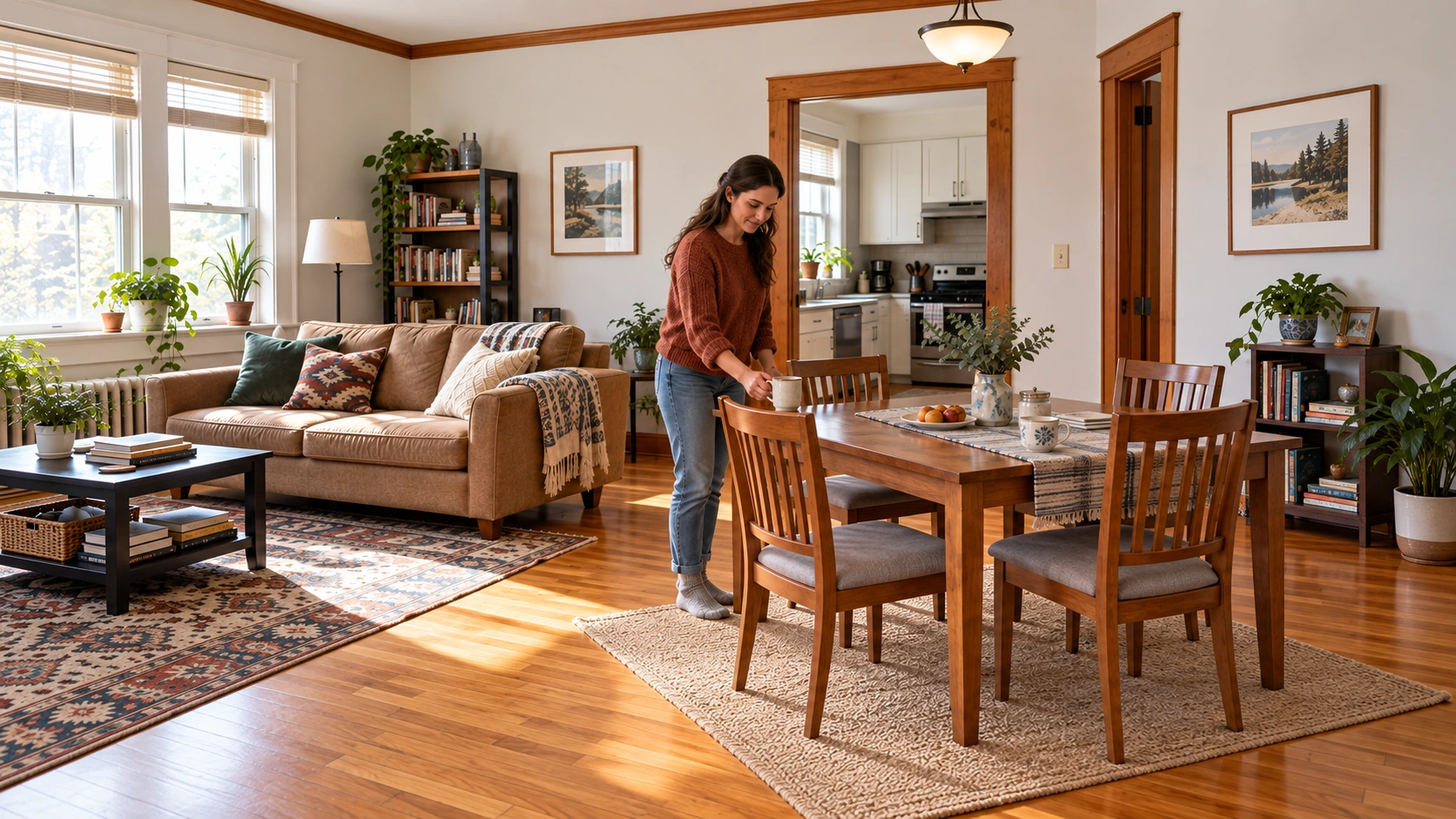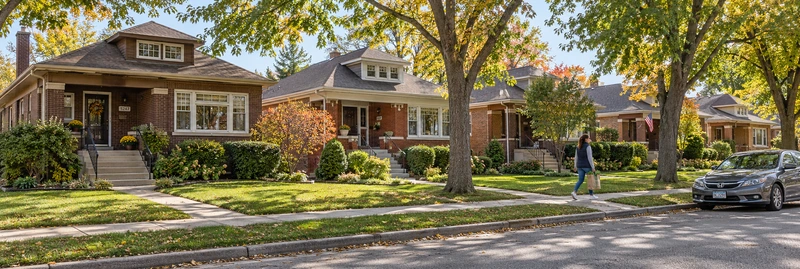
An older man walks a grey dog past Minnesota bungalows and autumn trees

State moving guide

Moving to Minnesota: A Practical Guide

Explore Minnesota’s Twin Cities neighborhoods, Lake Superior surroundings and smaller river and lake communities. Compare places, understand the moving arrangements and prepare the home for delivery.

Minnesota planning

Choose the Minnesota setting that fits your everyday life

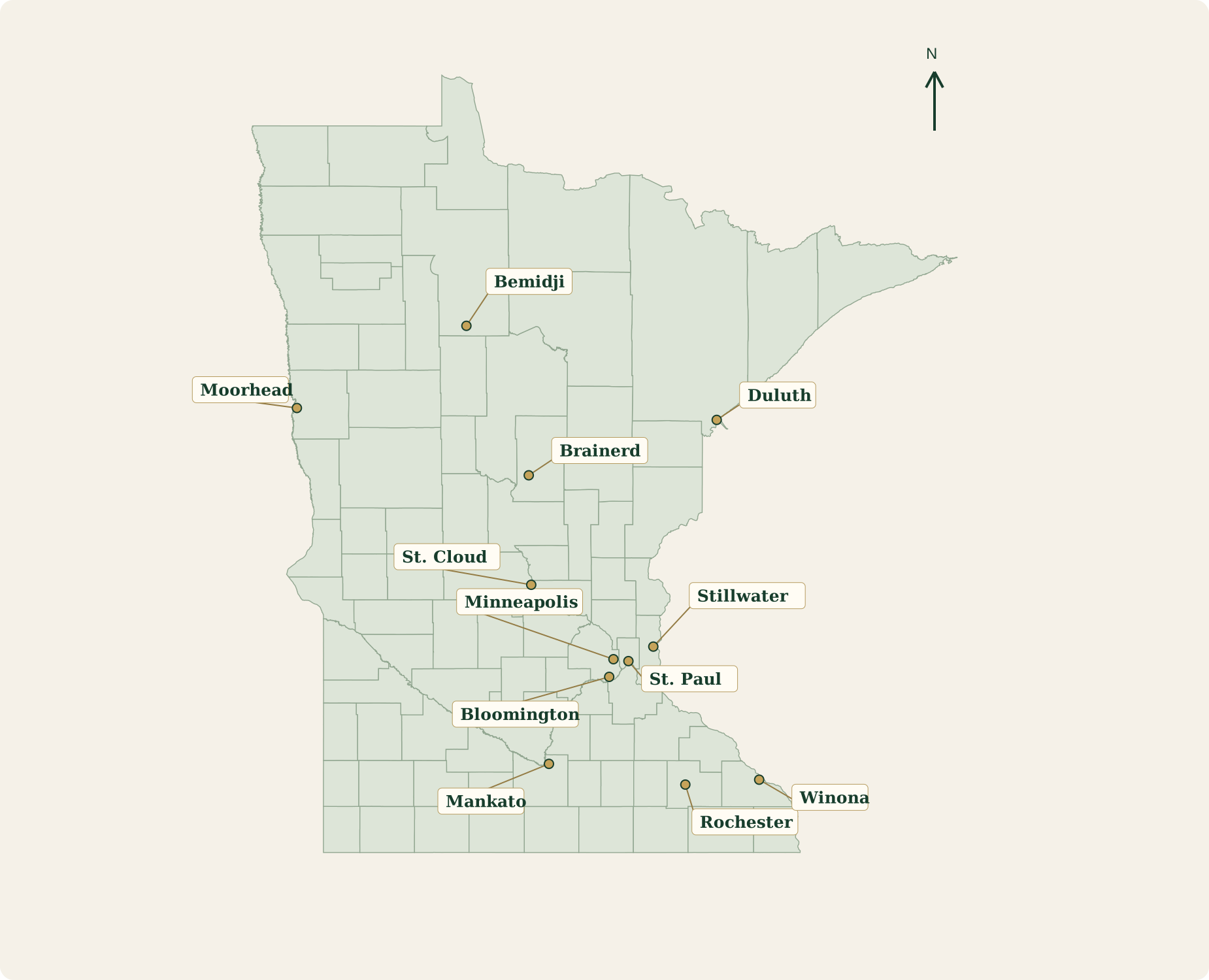
Start with the places you would like to explore. Minneapolis offers distinct river, lake and arts neighborhoods, while St. Paul brings its own cultural corridors and historic city streets. Duluth provides a Lake Superior comparison in the northeast. Rochester, Mankato and Winona offer different southern settings, and the central and northern communities introduce another mix of public life, lakes and woodland surroundings. The map locates twelve starting points; the portraits help you decide which deserve a closer visit.

Give the residential neighborhood as much attention as the attraction that first caught your eye. A gallery district, lakefront path or downtown performance can introduce a place, but your ordinary week also includes the home, services and journeys you would use regularly. Visit the area around the address and compare several possible routines. A regional visitor guide may include destinations in separate cities, so keep their locations clear when building a shortlist.

If you already know where the household is going, start collecting the information needed for the move. Bring together the two addresses, contents, dates and receiving arrangements. Sterling Oakbridge plans interstate household moves involving Minnesota after reviewing the actual journey and work. Use the practical sections to prepare that household brief and discuss a workable plan with the coordinator.

Minnesota cities and regions
Explore twelve Minnesota communities across the Twin Cities, Lake Superior surroundings, western cities and northern and southern river and lake settings.

Minnesota planning

Explore the Twin Cities, northern lakes and southern river communities

Use Minneapolis and St. Paul as two separate city comparisons. In Minneapolis, the Mississippi riverfront, Northeast arts settings, North Loop and lake neighborhoods offer different introductions. St. Paul has Lowertown, Como, West 7th and several cultural corridors. Bloomington is another municipality within the wider metropolitan area, with Minnesota River surroundings and its own public destinations. “Twin Cities” is useful regional shorthand, but it does not replace the actual city or neighborhood name.

Farther north, Duluth’s lakefront and neighborhoods provide a different setting from central Minnesota’s river cities and lake-region communities. St. Cloud’s downtown arts and Mississippi surroundings belong to a region that also contains separate Waite Park, Sauk Rapids, Sartell and St. Joseph. Bemidji and Brainerd bring northern and central outdoor settings into the comparison. A regional outing to a lake, trail or neighboring town should stay distinct from the home you are considering.

In the south, explore Rochester’s downtown cultural places and trails, Mankato’s art and river setting, and Winona’s Mississippi and bluff surroundings. Moorhead offers a western Minnesota city comparison beside a wider cross-state region; Fargo remains in North Dakota. These places give you different reasons to investigate. Narrow the choice by spending time in the residential area, checking the services you need and understanding the household arrangements that would make the move workable.

City portraits

Explore Minnesota’s cities

Explore twelve Minnesota communities through their public life, culture and surroundings, then investigate the neighborhoods and homes that interest you.

Two adults walk beside a river with brick buildings and a city skyline beyondMN

Minneapolis

Minneapolis offers several different city introductions along the Mississippi and around its lakes. Explore Northeast’s galleries and studios, North Loop’s shops and restaurants, or the public life around the Chain of Lakes. Cedar-Riverside, Phillips and other cultural areas add their own food, arts and neighborhood histories. A visitor’s first favorite place need not decide the whole residential choice: spend time on the nearby streets and consider the journeys that would belong to your week. Historic St. Anthony Main is a Minneapolis area, distinct from the separate cities named St. Anthony. Use the city’s variety to build a shortlist, then investigate the particular neighborhood and home.

An older woman holding a book talks with a man outside a bookshop on a brick-lined streetMN

St. Paul

St. Paul brings cultural corridors, historic streets and several different neighborhood hubs to a Twin Cities comparison. Lowertown offers an arts setting near downtown, while Como, West 7th and the East Side provide other starting points. Little Mekong and other business corridors introduce food, markets and community traditions. Choose the public places that interest you, then explore the surrounding residential area and the services you would use between outings. St. Paul and Minneapolis are separate cities within a larger region. Keeping those locations clear helps turn an appealing regional visit into a useful comparison of an ordinary week.

People walk and cycle along a waterfront path beside a harbor and wooded city hillsideMN

Duluth

Duluth’s Lake Superior setting gives the city a different introduction from the Twin Cities and inland lake communities. Explore the shipping-canal surroundings, public waterfront and neighborhoods such as Lincoln Park, or investigate the city’s western and eastern areas. Arts, local food, trails and lake views can suggest different ways to get to know the place. A favorite waterfront stop is one part of the comparison; spend time around the home and the services needed throughout the year. The wider North Shore region extends beyond Duluth, so keep a regional excursion separate from the residential city and the exact address under consideration.

A woman reads a paperback on a bench in a downtown plazaMN

Rochester

Rochester’s downtown offers more than one reason to spend time beyond an appointment. The public library, arts and performance spaces, Peace Plaza, parks and downtown trails provide different starting points for exploring the city. A gallery visit and a walk through the central area can help you notice the surroundings before investigating a residential neighborhood more closely. Compare the services, home and regular journeys that would make up your own routine. Regional visitor material also includes destinations beyond the city, so locate each place separately rather than treating a broad Rochester-area search as one uniform neighborhood.

A woman holds binoculars on a paved path beside autumn wetlandsMN

Bloomington

Bloomington is its own city within the wider Twin Cities region. Alongside Mall of America, its Minnesota River setting, wetlands, parks and trails offer a different way to explore the area. Consider the public places you would enjoy and then look at the residential streets and everyday services behind the visitor introduction. A regional map can make several municipalities appear part of one continuous urban area, while their neighborhoods and property arrangements differ. Use Bloomington as a separate comparison and investigate the particular home, regular journeys and surrounding services rather than relying on an airport or metropolitan-area label.

A man and woman talk over coffee at a small sidewalk tableMN

St. Cloud

St. Cloud offers Mississippi River surroundings and a downtown arts and entertainment setting in central Minnesota. Cafés, local shops and places such as the Paramount Center for the Arts can introduce the central streets, while the East Side provides another history and creative context. The city extends across more than one county. The Greater St. Cloud visitor region also includes separate Waite Park, Sauk Rapids, Sartell and St. Joseph, so regional attractions should retain their actual locations. Explore the part of the city that interests you, then compare the home and the services needed for an ordinary week.

A man looks at paintings and ceramics in a gallery window on a downtown streetMN

Mankato

Mankato’s river setting and arts community offer a southern Minnesota comparison through galleries, performance and public art. The Carnegie Art Center, local creative spaces and the Minnesota River surroundings give you different starting points for a visit. CityArt programming spans the Mankato and North Mankato City Center; the two municipalities remain separate. Broader regional cultural descriptions can also include institutions in other communities, such as St. Peter. Keep each destination in its actual place, then explore the residential neighborhood and the journeys you would use regularly. Art and public life can introduce the area while the home determines the household arrangements.

A woman walks a bicycle along a river path beside low city buildings and autumn treesMN

Moorhead

Moorhead provides a western Minnesota city comparison within a larger region that crosses the Red River into North Dakota. Fargo remains a separate city in another state. Moorhead’s downtown includes an established arts and small-business context, with places such as the Rourke Art Museum helping introduce its public life. The city also describes major downtown redevelopment: treat the emerging vision and completed places as different things when planning a visit. Explore the streets and services available now, then investigate the particular residential area. The Minnesota address and actual home should guide the moving brief, even when a regional name includes both sides of the state line.

People use a riverside park below wooded limestone bluffs and older town buildingsMN

Winona

Winona brings a Mississippi River and bluff setting to a southeastern Minnesota comparison. Arts, historic city streets and public places along the river offer different ways to explore. The Minnesota Marine Art Museum connects art with water, while the surrounding landscape includes the distinctive Sugar Loaf bluff. Choose the places that interest you and then spend time around the residential neighborhood and ordinary services. A scenic outing through the wider bluff-country region can extend well beyond the city. Keep that geography clear when comparing homes and planning the regular journeys between the places you would actually use.

A man photographs a lakeside view from a tree-lined pathMN

Bemidji

Bemidji offers a northern Minnesota introduction through its lake surroundings, public culture, food and outdoor activities. The visitor region combines the town’s daily life with a much wider northwoods and lake setting. Explore the city itself as well as the destinations that draw you to the area. A lakeside visit may help form a shortlist, while the particular neighborhood, services and journeys determine how the household’s week would work. Keep regional lake and trail outings in their actual locations, and investigate the home throughout the seasons rather than assuming that one attractive visitor view describes every residential address.

A woman carries a canvas shopping bag along a tree-lined street of small shopsMN

Brainerd

Brainerd offers a central Minnesota starting point within a broader lake region. Local shops and public life in the city sit alongside regional trails, water activities and other destinations worth exploring. The Brainerd Lakes Area also includes separate Baxter, Nisswa, Crosslake, Pequot Lakes and other communities. A regional itinerary can be useful without turning all of those places into Brainerd neighborhoods. Investigate the city streets and services near the home, then compare the journeys to the places you would visit regularly. The complete address and property arrangements help turn a lake-region idea into a practical household plan.

An older man sketches at a small café table on a sloping historic streetMN

Stillwater

Stillwater introduces historic downtown streets, shops, food and public life in an eastern Minnesota setting. Its older city story and regional visitor activities provide reasons to spend time exploring before narrowing a residential choice. Walk through the places that interest you, then investigate the neighborhood and services behind the visitor experience. A broader outing in the surrounding region may include separate communities and destinations. Keep those locations clear, and compare the actual home and regular journeys alongside the setting that first caught your attention. Use the visit to form a useful shortlist rather than assume that every address shares one downtown arrangement.

Minnesota planning

Use the municipality and the whole journey when describing the move

Give the coordinator the complete collection and delivery addresses, including any unit and the entrance the household will use. A city name, county, mailing address and regional search label can describe different areas. St. Cloud, for example, extends across more than one county, while the Greater St. Cloud visitor region includes separate municipalities. Mankato and North Mankato are separate cities. The exact property information prevents a regional label from hiding an important difference in access or responsibility.

Minnesota also has two incorporated cities named St. Anthony. The directory distinguishes the city in Hennepin and Ramsey counties from the city in Stearns County. Neither should be confused with Minneapolis’s historic St. Anthony Main area. Similar names are a reason to confirm the address and jurisdiction, rather than assume that a familiar map label identifies the right home.

Then describe the complete shipment. A move between Minnesota and Wisconsin, Iowa, North Dakota or South Dakota crosses a state line even when the properties seem close on a regional map. A Minnesota-only arrangement needs the appropriate local provider and records. An interstate shipment requires the federal checks and documents relevant to that journey. Explain any storage stop, separate collection or later handover at the outset so that one short segment does not conceal the overall arrangement.

More places to explore

Keep exploring Minnesota communities

Looking beyond the featured cities? These communities offer more starting points for your Minnesota home search.

Ask about your Minnesota move →

Minnesota planning

Show the approach, the entrance and the interior route

Send a short set of useful photographs before the moving day. Show where the vehicle could stop, the path to the entrance, steps and landings, the door opening, and any interior turn or staircase on the way to the rooms. Include the parts that change the handling plan. A close-up of an attractive front door is less useful than a clear view showing the approach and the space immediately inside it.

Minnesota homes can present very different transitions. An older house may have an enclosed front porch before the main living area. A split-entry home can put the receiving person on a landing between two flights. An apartment may have shared corridors and building instructions. Identify the route the team is actually expected to use, and explain any alternative entrance or restriction without assuming that a listing photograph shows the delivery route.

Outside, check the path and the household’s current arrangements for keeping it available. Snow, ice, rain, stored belongings or parked cars can change a route that appeared straightforward during an earlier visit. Share new photographs when the conditions change. The team can then review the pieces, protection and handling against the real path, while the household obtains any relevant property permissions. A photo review helps planning; it does not itself authorize stopping a vehicle or reserve a shared entrance.

Two movers carry blanket-protected furniture along a front walk beside a stucco bungalow
Two movers carry protected furniture along the front walk.

The moving process

Your move, step by step

  1. 1

    Describe the household

    Send the two addresses, complete contents, dates and the work you want included.

  2. 2

    Confirm the access

    Show the approach and interior route, and obtain building and loading instructions.

  3. 3

    Agree the written plan

    Review the inventory, price, protection, payment and delivery arrangement together.

  4. 4

    Prepare for collection

    Finish the chosen packing, keep essentials apart and make the working path available.

  5. 5

    Receive the goods

    Have an authorized person ready, direct placement and check the inventory and condition.

Ready when you are

Ready to discuss your move?Tell us where you are moving, what is coming with you and the dates you have in mind.

Minnesota planning

Read the rate schedule behind a Minnesota-only estimate

For a move that stays within Minnesota, ask the actual local provider for a written estimate and an explanation of the charges. Describe the same inventory, packing, furniture preparation, collection and receiving conditions to each provider. Find out what is included, what is measured and which additional work could change the total. A low headline figure is difficult to compare when it leaves out contents, access or materials that another proposal includes.

Minnesota’s household-goods tariff law requires a mover to maintain a schedule of rates and charges. Effective tariffs must be available for public inspection at the relevant business locations while the mover is open, and copies or relevant provisions are available on request. The compensation rule ties applicable charges to the tariff, subject to its stated exceptions. Ask to see the provisions that explain your proposed work and how the estimate relates to them.

Keep that Minnesota-only comparison distinct from the company’s reviewed interstate offer. An interstate flat-rate arrangement should define its own agreed scope, inventory, services and delivery terms. Do not assume that the local tariff framework, an internet hourly advertisement and an interstate proposal are interchangeable. Resolve unclear charges in writing before collection, and retain the estimate and relevant rate information with the household’s other shipping records.

County guides

Explore the area around your new home

Start with six county profiles connected to the featured cities, then explore the wider directory. Cities, counties and visitor regions have different boundaries.

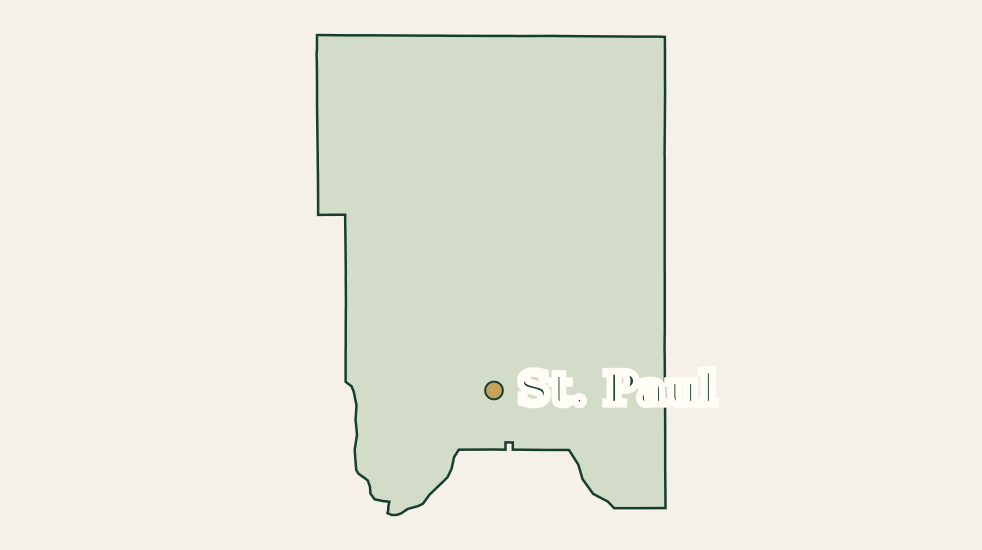
Hennepin County with Minneapolis marked
Minneapolis and the western Twin Cities settingPop. 1,269,496 · 2024

Hennepin County

Minneapolis offers riverfront arts, lake neighborhoods and several different urban introductions. Hennepin County also contains other municipalities and residential settings. Explore the neighborhood and services behind a city visitor description, keeping separate destinations in their actual locations. St. Anthony in Hennepin and Ramsey counties is distinct from Minneapolis’s historic St. Anthony Main area and from the other St. Anthony in Stearns County. Confirm the address and property arrangements for the household you are planning.

Key communities

Minneapolis

Check mover credentials →
Ramsey County with St. Paul marked
St. Paul and the eastern Twin Cities settingPop. 542,945 · 2024

Ramsey County

St. Paul offers cultural corridors, historic neighborhoods and several different public destinations within a wider county setting. Ramsey County and the city are different geographic areas, and regional visitor descriptions include other communities. Explore the streets around the home as well as the public places that draw your attention. Compare the services and journeys needed by the household, and confirm the property instructions before arranging receiving.

Key communities

St. Paul

Check mover credentials →
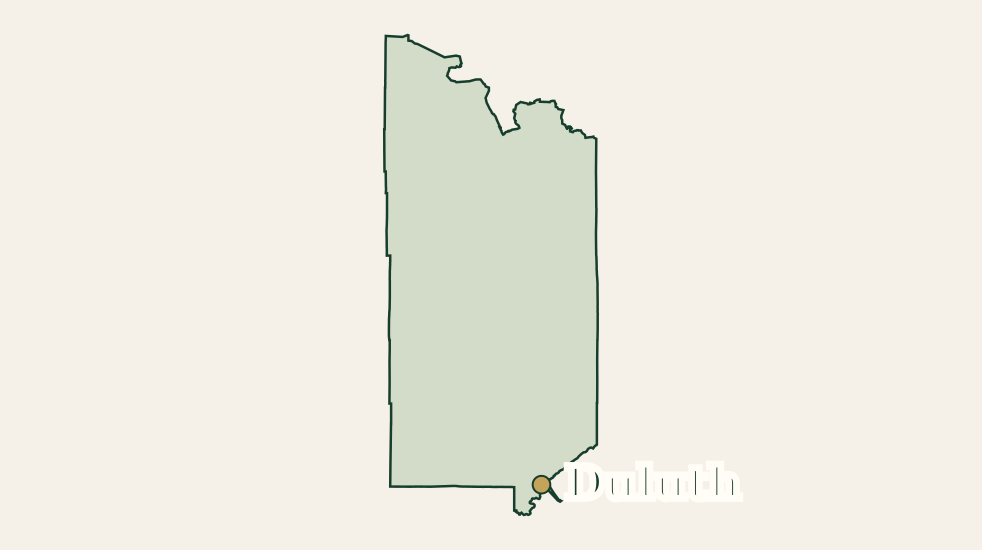
St. Louis County with Duluth marked
Duluth and the wider northeastern countyPop. 200,123 · 2024

St. Louis County

Duluth’s Lake Superior waterfront and neighborhoods offer a northeastern city comparison within a much larger county. St. Louis County includes other municipalities and landscapes beyond the residential city. Keep a wider northern or North Shore outing separate from the home under consideration. Explore the actual neighborhood, ordinary services and seasonal journeys, and review the property approach and receiving arrangements for that address.

Key communities

Duluth

Check mover credentials →
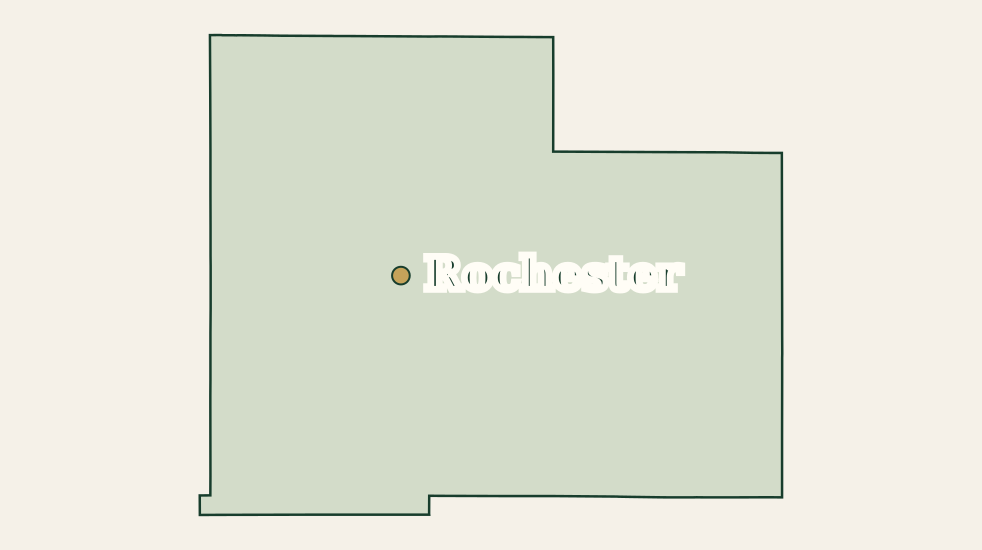
Olmsted County with Rochester marked
Rochester and the southeastern county settingPop. 164,498 · 2024

Olmsted County

Rochester provides a downtown arts, public-space and trail comparison in southeastern Minnesota. Olmsted County also includes other communities and areas. A broad housing-search or visitor label should not assign every regional destination to the city. Investigate the neighborhood and services around the actual home, compare the journeys the household would make regularly, and share the property route and relevant receiving instructions with the coordinator.
Key communities

Rochester

Check mover credentials →
Stearns County with St. Cloud marked
St. Cloud and the central Minnesota regionPop. 160,865 · 2024

Stearns County

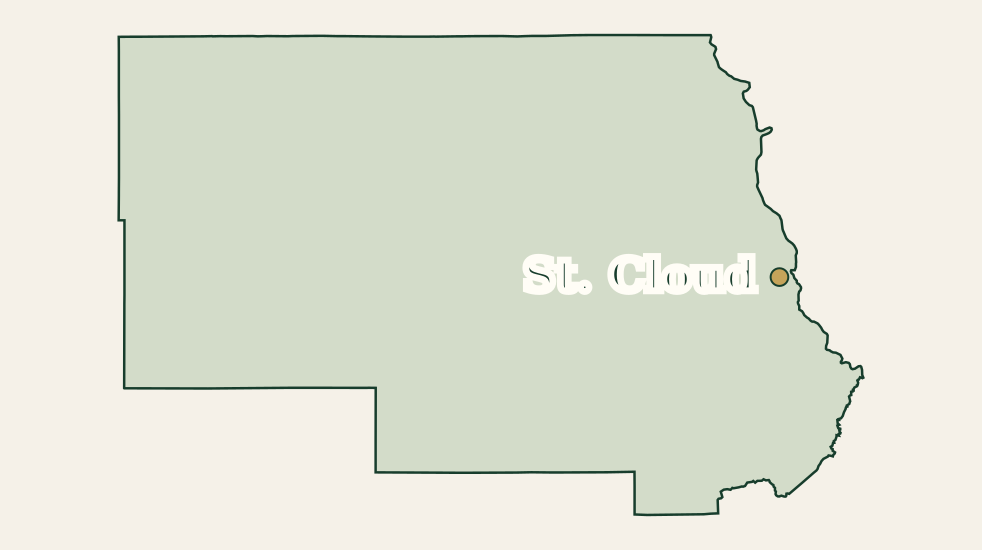
St. Cloud offers a downtown arts and Mississippi River introduction, but the city extends across Stearns, Benton and Sherburne counties. The Greater St. Cloud visitor region also includes separate communities such as Waite Park, Sartell, Sauk Rapids and St. Joseph. Keep the actual municipality and county clear when investigating a home. Explore its neighborhood and services, then confirm the entrance, appointments and other property arrangements needed for the move.

Key communities

St. Cloud

Check mover credentials →
Blue Earth County with Mankato marked
Mankato and the southern river settingPop. 69,871 · 2024

Blue Earth County

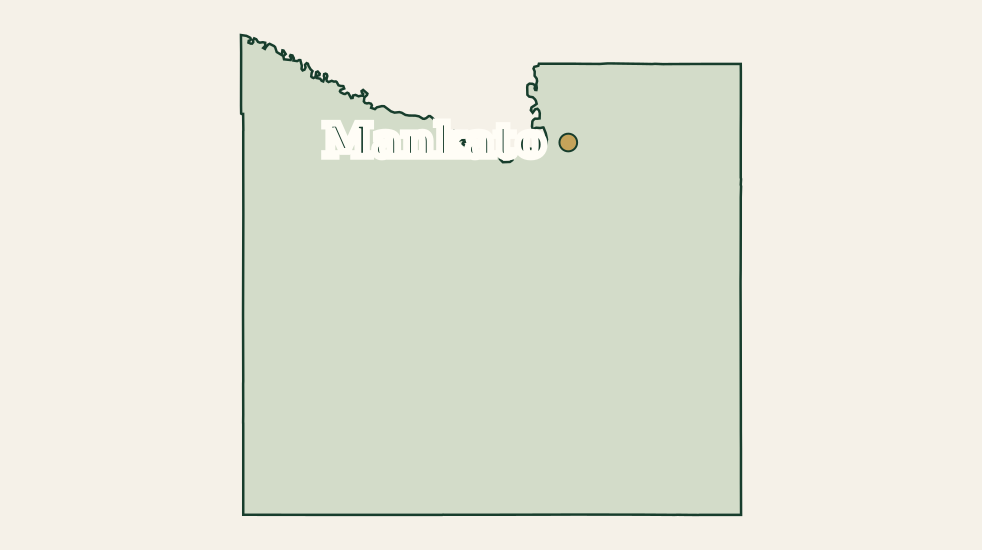
Mankato offers arts, history and a river setting for a southern Minnesota comparison. Blue Earth County contains other communities, while the city of Mankato also extends into Nicollet and Le Sueur counties. North Mankato remains a separate municipality, and regional arts and visitor programs can include both cities and other destinations. Locate the home and the places you would use regularly, then review the actual property approach and receiving arrangement before planning the shipment.

Key communities

Mankato

Check mover credentials →

County population: 2024 ACS five-year estimates, U.S. Census Bureau. These period estimates do not count current movers or available homes. Read the source.

All 87 Minnesota counties

Minnesota planning

Check the tightest opening before preparing a large piece

Measure the piece and the route together when a large item may be difficult to handle. Useful information includes the object’s overall dimensions, the usable doorway, the landing, the staircase and the space needed to turn. Include protruding handles, a deep arm, the upper part of a cabinet and any change in floor level. The opening that matters may be inside an enclosed porch or at a split-entry landing rather than at the street-facing door.

Ask which parts can be removed safely and what basic disassembly the reviewed work should include. Do not force a piece through an uncertain opening or treat specialist construction work as ordinary furniture preparation. The coordinator needs to know about a fragile surface, unusual fixing, damaged joint or other condition that could affect handling. Photographs and measurements help the team identify what needs closer assessment before the appointment.

Agree how the working path and nearby surfaces will be protected. For the company’s confirmed interstate service, ordinary moving blankets, shrink wrap and tape have no separate basic-material charge. Protection still needs to match the object and the route. Keep the entrance available, arrange any required building access and update the team if the chosen room or approach changes. The useful outcome is a workable receiving plan for the actual piece, rather than a late discovery at the narrowest turn.

A mover kneels to smooth a protective runner on a wood floor near a closed door
A mover smooths the edge of a protective floor runner.

Minnesota planning

Keep the records needed to raise a Minnesota moving concern

Check a Minnesota-only provider with MnDOT before relying on an advertisement. The state's household-goods permit process includes operating and financial-responsibility requirements; a business name or a USDOT number alone does not explain every permission needed for the work. Ask which entity will perform the move and keep the name consistent across the estimate, contract and contact information. Review the current MnDOT record for that named provider when arranging the work.

Create and retain a condition record for the goods. Review the inventory and relevant contract terms, including the protection or liability arrangement, before collection. At delivery, check what arrived and note apparent loss or damage. The Minnesota Attorney General’s consumer guidance advises a prompt written claim to the mover and keeping a copy. Include the item, relevant inventory entry, photographs and a clear account of the concern, and preserve the correspondence that follows.

A complaint to an agency and a shipment claim are different actions. MnDOT is identified in the state consumer guidance as a contact for licensing, rate information and complaints about movers. Ask the provider and the relevant authority which requirements apply to your concern. Keep the applicable contract and filing requirements in view while seeking help; do not assume that contacting an agency automatically completes the claim or establishes the amount of a recovery.

Who does what

A little coordination before moving day

You, the moving team and your building contacts each handle a different part of getting the move ready.

01 Moving checklist

The household

Choose what moves, keep the inventory accurate and obtain permission to use both properties.

02 Moving checklist

The moving team

Review the shipment and access, explain the proposed work and identify the coordinating contact.

03 Moving checklist

The building and receiver

Keep the agreed entrance and appointment available and prepare to direct and check delivery.

Minnesota planning

Identify the carrier, any broker and the written interstate records

Before an interstate household move, establish who is arranging the shipment and who will physically carry it. FMCSA distinguishes movers from household-goods brokers. Check the relevant registration, authority and insurance information through the federal source, using the actual business identity. An advertisement, familiar trading name or regional address should not substitute for identifying the entity responsible for the proposed work.

Read the written estimate and the documents that describe the shipment. FMCSA’s guidance explains the estimate, bill of lading and inventory, and says not to sign blank documents. The estimate should describe the services and charges. The bill of lading is a contract and receipt for the belongings. Review the inventory and recorded condition carefully, and keep copies where the household can reach them during the journey rather than packing every record into a carton.

Discuss the protection choice and the arrangements for reporting concerns. Federal liability options and any separate insurance are different matters; ask what the selected terms mean for the goods you are moving. Have someone available to supervise collection and receiving, or arrange an authorized person who can act for the household. Use the checks to resolve the provider’s identity, selected protection and written documents before you sign.

Minnesota planning

Prepare for the conditions the household will actually encounter

Check current weather, road information and the property approach as the appointment approaches. Minnesota’s winter preparation guidance asks households to plan ahead, prepare the home and car, bring pets indoors and stay informed. For a move, turn that preparation into a practical arrangement: a usable entrance, access to essential household supplies and a way to communicate if travel or receiving conditions change.

Decide who will keep the property path available and how the receiver will gain access. A winter-ready household may need to review snow and ice arrangements with the building or property contact. During warmer or wet conditions, protect the people traveling and keep needed supplies accessible. Local conditions can differ across the state and from one property to another, so a seasonal description should not replace the information for the actual journey.

Keep keys, identification, necessary medicines, contacts and first-night supplies with the people traveling. Discuss the needs of children, pets and anyone who requires assistance separately from the truck inventory. Follow current warnings and closures; do not enter floodwater or drive around barriers on a flooded road. If the approach becomes unusable or the household cannot receive as agreed, tell the coordinator promptly and review the next workable arrangement before the problem reaches the door.

Minnesota planning

Check road limits and the stopping place separately

Confirm a suitable stopping place with the property or building contact and share it with the coordinator. Describe the distance to the entrance, any shared space, loading appointment and the route from the vehicle to the rooms. Ask the relevant local authority about street restrictions when needed. A visitor parking map, a convenient curb or space beside another vehicle is not a reservation for a moving truck.
Minnesota’s road permissions also need the right owner. MnDOT’s oversize and overweight guidance concerns the actual vehicle and load; its permits do not cover county, municipal, township or other local roads. The seasonal load-limit information distinguishes state and federal trunk highways from county roads and city streets. The carrier should review the vehicle, proposed route and applicable current restrictions rather than treat one permit as permission for the entire approach.

Use current MnDOT and local information when the move takes shape. Seasonal dates can change, and an earlier year’s timetable is not a standing calendar for future journeys. Keep building permissions, road requirements and the household’s receiving appointment together in the brief. If the stopping place or carry distance changes, explain it before collection so that the team can review the work and written scope against the updated conditions.

Moving routes

Where are you moving?

Describe the complete journey and receiving conditions, then review the appropriate provider, records and delivery arrangement.

Within Minnesota

A Minnesota-only household move

Compare the actual local provider, written estimate and relevant tariff provisions.

Price basis

Ask to see the rate schedule and the provisions explaining the proposed work and charges.

Records

Keep the contract, condition inventory and written correspondence; choose the appropriate claim or agency channel.

Read Minnesota carrier guidance →

Across a state line

A nearby interstate journey

Review both properties and the whole shipment even when the addresses look close.

Work and access

Describe the same contents, packing, furniture preparation and receiving conditions.

Delivery

Choose the reviewed model and window around keys, appointments and an authorized receiver.

Plan interstate moving →

A longer journey

Cross-country or Canada

Agree the delivery model and any border, storage or separate-provider handover.

Transport

Review dedicated direct delivery or suitable smaller consolidation by individual agreement.

Responsibility

Identify the goods, records, charges and next receiving contact for each stage.

Review the full journey →

Direct service uses a dedicated truck and the same pickup and delivery crew. Suitable smaller consolidated shipments use a wider agreed window; confirm the model in writing.

Minnesota planning

Base the packing plan on cupboards, shelves and stored contents

Count the contents as well as the large pieces. Books, kitchen cupboards, decorations, clothing and stored belongings can create substantial preparation even in a compact home. Decide which rooms or selected items you will pack yourself and which need help from the team. Identify delicate ceramics, artwork, awkward shapes or other goods needing separate assessment before assuming that an ordinary carton and a short appointment will cover them.

For the company’s agreed interstate work, packing uses working time and company-supplied boxes are charged separately. Ordinary moving blankets, shrink wrap and tape have no separate basic-material charge. Put the selected packing work and materials into the proposal, and explain what will already be ready for collection. A kitchen-only arrangement and a full household packing service should be described distinctly so that the team can plan the actual task.

Use suitable containers, clear identification and an inventory that matches the shipment. Point out any carton whose condition or contents may need review. Keep personal documents, keys and journey essentials outside the truck shipment, and make provision for the things needed while delivery is pending. The packing plan should leave the goods protected and identifiable while allowing the household to travel and manage the first nights between homes.

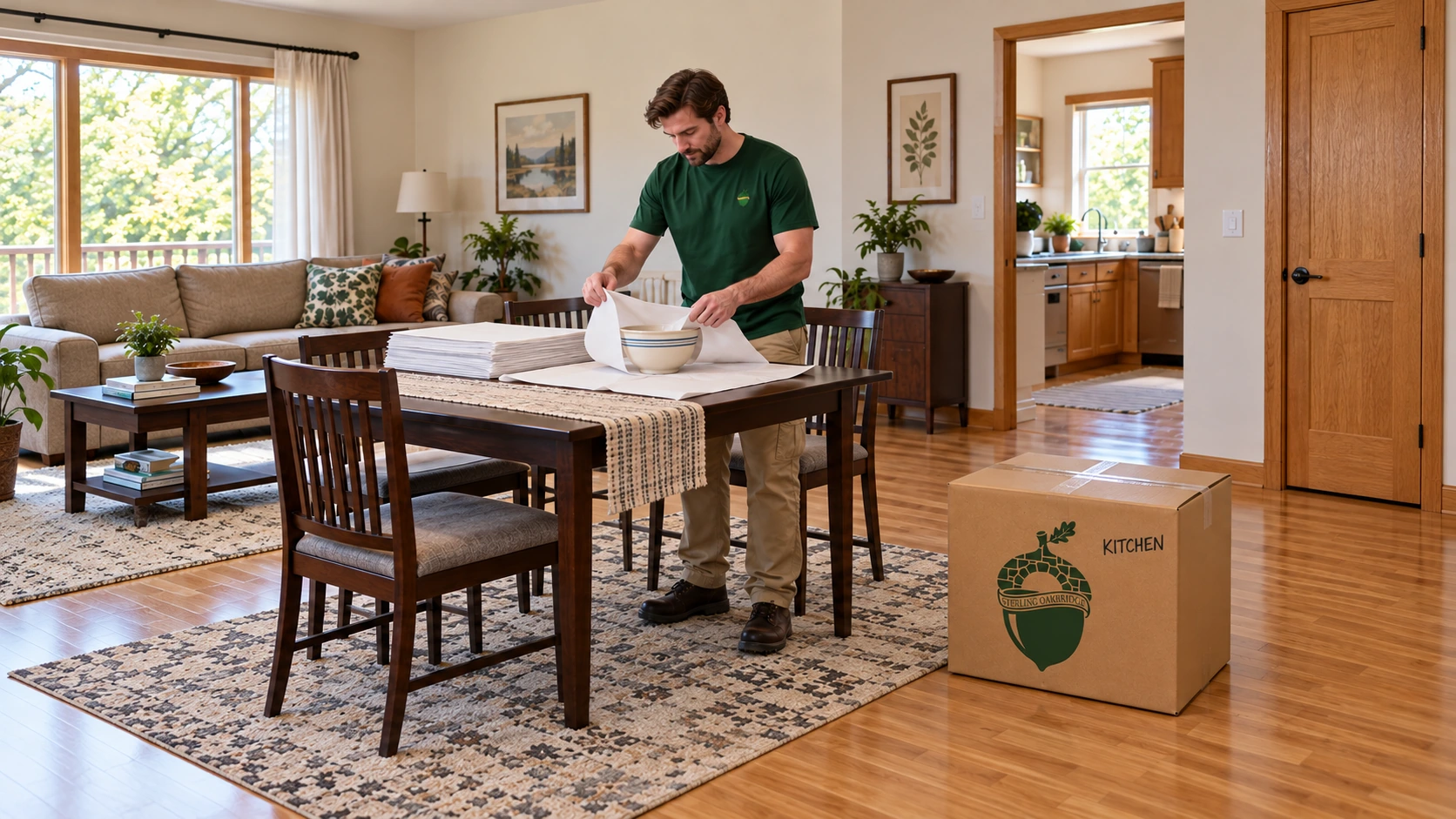
A mover folds white packing paper around a bowl on a dining table beside a marked company carton
A mover folds packing paper around a bowl resting on a dining table.

Minnesota planning

Agree preparation, protection and reassembly together

Identify the pieces that need basic disassembly, special attention or a particular placement at the receiving home. Send photographs and useful dimensions, and tell the team about loose joints, fragile finishes, missing fasteners or previous repairs. Discuss what can be prepared safely before deciding who will remove components. A large object should not arrive at a split-entry landing or narrow porch with its handling questions still unanswered.

For the company’s confirmed interstate service, basic furniture disassembly and reassembly have no separate basic labor fee, but the work takes working time. Explain the reviewed pieces and include that preparation in the agreed scope. Specialist work, unusual installations or a piece that cannot be safely handled in the expected way should be assessed separately. Keep essential hardware and instructions identified so that they remain connected with the correct object.

Protection and receiving belong to the same plan. The team needs a usable route, appropriate protection for the piece and an understood destination room. Have the receiver ready to explain placement before furniture fills the path. Furniture unwrapping is part of the agreed delivery work, while carton unpacking is an optional task that uses time. Discuss packaging and waste arrangements separately so that the household knows what will be usable at the end of the appointment.

Minnesota planning

Use the housing figures to ask better questions about a particular home

Minnesota’s 2024 ACS five-year estimates count 2,545,030 housing units. Detached single-unit homes account for 1,680,195, or 66.0 percent of that total. Homes built in 1939 or earlier account for 395,770, or 15.6 percent. Those statewide figures help explain why a household comparison can include an older house, a later split-entry home and an apartment, but they do not establish the construction or condition of an individual address.

Look at the actual entrance, floor levels, openings and furnishings when inspecting the home. An enclosed porch may form an extra transition before the living room. A landing can sit between receiving levels. A shared building can have instructions and appointments that matter more than the floor area in an advertisement. Ask the property contact about the arrangements that would affect collection or delivery, and show the relevant route to the moving coordinator.

Tenure uses a different denominator. The same ACS five-year source counts 2,307,955 occupied homes: 1,666,687 owner-occupied, or 72.2 percent, and 641,268 renter-occupied, or 27.8 percent. Vacant housing belongs to the all-housing total, not to those occupied-home shares. Keep the period and denominator with the number. Use the figures as context for investigating a place while the property itself supplies the information needed for the move.

Minnesota planning

Read previous-residence figures as a household context

The 2024 ACS one-year mobility figure says that 1.8 percent of Minnesota residents age one and older lived in another U.S. state one year earlier. The measure describes people and their previous residence. It is different from a count of moving-company shipments, an inventory of available homes or net migration after departures are considered. Keep that distinction when using the planning-data table.

The figure can introduce a sensible household question: which parts of an interstate transition need attention alongside transporting the belongings? The people traveling need access to documents, contacts and essentials, while the goods need an agreed collection and receiving plan. Keys, accommodation between homes and new-resident tasks may operate on different schedules. Explain those household arrangements when choosing the proposed service and delivery model.

Use your own inventory and circumstances to request a proposal. The state’s mobility share does not tell the coordinator how much you own, which packing work you need or when a particular property can receive. Give the two addresses, the complete contents, requested work and date constraints. Statistics help describe the broader setting; the household brief makes the work concrete enough to review and agree.

Minnesota planning

Treat the nearby state line as part of the full shipment

A short cross-border journey still deserves a complete review of both homes. Minnesota borders Wisconsin, Iowa, North Dakota and South Dakota, and its northern boundary adjoins Canada. Moorhead and Fargo illustrate why a familiar metropolitan name can include different states. Describe the exact origin, destination and any intermediate stage instead of using the regional label as the whole moving brief.

For a nearby interstate move, compare the contents, preparation, access and receiving arrangement just as you would for a longer shipment. A modest road distance does not remove a building appointment, a tight interior turn or a substantial packing task. Ask the coordinator about the delivery model and timing for the actual work, and make sure that the receiver can use the property when the shipment is expected.

Keep the records applicable to the whole journey. A Minnesota-only rate discussion and an interstate proposal serve different arrangements, while a Canadian arrival adds its own documents and border planning. Explain a separate provider or storage handover before the first stage is agreed. That information helps the household understand who is responsible for each part and what must be ready at the next receiving point.

Minnesota planning

Make receiving readiness part of the date discussion

Start with the first time someone can actually receive the goods at the new home. Confirm keys, possession, the authorized person and any building appointment or entrance restrictions. Explain a fixed closing date or limited access period before choosing a delivery arrangement. Being in Minnesota on a certain day is different from having the property ready and someone available to direct and check the shipment.

Review the proposed delivery model and its agreed timing. For the company’s service, the delivery window begins after pickup and loading are complete. Dedicated direct delivery and suitable smaller consolidated shipments have different arrangements. Consolidation has a wider window and requires individual agreement on the actual Minnesota journey. Keep the start of the window clear so that an inquiry date or an unfinished packing task is not mistaken for the transport clock.

Travel, collection work, current road conditions and receiving access can affect the household schedule. Discuss constraints early, keep contact information available and update the coordinator when the home or appointment changes. Plan the people’s journey and overnight needs alongside the shipment. If a property cannot receive within the proposed arrangement, resolve an appropriate storage or later-delivery plan before the goods are collected.

Minnesota planning

Choose between dedicated direct delivery and suitable consolidation

Discuss the delivery model before arranging the household’s travel and receiving schedule. Dedicated direct delivery uses a truck assigned to the shipment, with the same moving crew at collection and delivery under the company’s confirmed service. Explain the inventory, preparation, both properties and any important date constraints so that the coordinator can assess the actual journey and work.

A suitable smaller shipment may be considered for consolidation. This uses a wider delivery window and needs individual agreement on the route, goods and receiving arrangements. A small floor plan alone does not establish suitability: the contents, handling needs and access also matter. Ask how the proposal describes the window, communication and the conditions for receiving. For both models, the company’s delivery window starts after pickup and loading are complete.

Choose with the practical household needs in view. Keep essentials and documents with the people traveling, decide where they will stay if the goods are still in transit and prepare an authorized receiver. Explain a fixed building appointment or a home that will not yet be available. When the coordinator reviews the same facts that the household is using to plan its journey, the written proposal can address the actual constraints rather than a broad cross-country label.

Common moving situations

How the plan changes with your needs

These are planning examples. Use the decision that fits the actual household and property.

An older St. Paul house with an enclosed porch

A large cabinet has to pass through the porch and turn into the living area.

What to do. Show both openings and the turn, measure the piece and review safe basic preparation before collection.

Why it helps. The handling plan addresses the whole entrance route before the cabinet reaches the narrow point.

A Rochester home with rooms on two levels

The receiver needs some furniture upstairs and other pieces below the split-entry landing.

What to do. Send the interior route, identify the rooms and give the authorized receiver a placement plan.

Why it helps. The team can review the stairs and destinations together, with fewer placement decisions left for a crowded entrance.

A St. Cloud regional search with a fixed appointment

The household has a broad area label, but the building allows receiving only under its stated access arrangements.

What to do. Confirm the complete municipality and address, obtain the property instructions and discuss the appointment before choosing delivery.

Why it helps. The proposal uses the actual home and receiving constraint rather than a regional name.

A Minnesota home with uncertain possession

The household must leave the first home before the receiving address is confirmed ready.

What to do. Review storage, the next receiving contact, charges and later delivery before collection.

Why it helps. The shipment has an agreed intermediate stage while the people keep essentials and documents accessible.

Minnesota planning

Prepare Canadian arrival records and any separate handover

For a household move into Canada, begin the document discussion before collection. CBSA’s guidance distinguishes people establishing their first qualifying residence from former residents returning to Canada. The conditions for personal effects depend on the person’s circumstances and the goods. Give the coordinator the journey and arrival information, and use the relevant current CBSA guidance to prepare the household’s documents.

CBSA asks for two copies of the list of goods, divided between what accompanies you and what will follow. The goods-to-follow section matters when the shipment arrives later. Present the list at the first point of entry and retain the personal-effects accounting record for the later goods. Review the applicable ownership, possession and use conditions and any restrictions on particular items. Keep the household’s arrival records separate from documents buried in a moving carton.

A separate provider or storage stage also needs a clear handover, whether the journey crosses a border or remains within the United States. Identify the goods, condition record, receiving contact, charges and responsibility for the next leg. Explain who will be available when that stage begins. Agree the arrangement for the actual journey, including any border or arrival requirements, before treating several separately described legs as one complete household plan.

Minnesota planning

Compare the same contents, access and included work

Prepare one accurate brief before comparing proposals. List the belongings, selected packing, furniture preparation, both property routes and any special receiving arrangement. Include stored goods and the contents of cupboards or shelves, rather than estimating the shipment from bedroom count alone. Share a fixed appointment, a long carry or an uncertain entrance so that each proposal addresses the same household work.

For the company’s confirmed interstate service, the agreed-scope flat rate remains unchanged if the work or journey takes longer. A change in scope should be reviewed and agreed in writing. That makes the inventory and included tasks important: additional contents, a different receiving property or newly requested work should be discussed rather than left for the moving day. Keep the written proposal and any agreed change together.

Ask how packing time, supplied cartons, furniture preparation, receiving and any storage stage are described. Basic furniture disassembly and reassembly use working time without a separate basic labor fee. Ordinary blankets, shrink wrap and tape have no separate basic-material charge; supplied boxes are separate. Furniture unwrapping and optional carton unpacking are different tasks. Compare the complete written arrangement so that the headline price is connected with the service the household actually needs.

Minnesota planning

Resolve access and receiving before the last week

Begin with the decisions that could change the whole arrangement: the receiving address, possession and keys, the largest pieces, the chosen delivery model and any gap between homes. Send the inventory and useful route photographs early enough to discuss those questions. Identify the coordinator and the person who can make decisions for the household when a detail needs confirmation.

As the appointment approaches, complete the packing you agreed to do and label the containers clearly. Confirm building instructions, the working entrance, stopping arrangements and the authorized receiver. Check current road and weather information for the journey. Tell the coordinator about changed contents, property conditions or date constraints while there is time to review the plan and record an agreed change.

For collection, keep the inventory and relevant documents accessible and explain anything needing attention before it is handled. Keep personal essentials with the people traveling. Before receiving, make the rooms and path available, review placement and have someone ready to check the goods and condition. After delivery, preserve the records, follow up on any concern in writing and work through the household’s first-week and new-resident tasks. The sequence should help the home become usable without hiding an unresolved key or access problem until the vehicle arrives.

Minnesota planning

Prepare the rooms and the person who will check delivery

Arrange an authorized receiver before the shipment arrives. Give them the inventory, placement plan, agreed work and coordinator’s contact information. They should understand which entrance is available, any appointment or building instructions, and where the main pieces belong. Unlocking the door starts the receiving task; directing placement and checking the goods require someone who can remain available.

Make the route to the rooms usable. Explain the upper and lower destinations in a split-entry home, any tight porch transition or shared corridor, and the pieces that need reviewed reassembly. Decide room placement before a large object occupies the turning space. Keep necessary lighting, keys and relevant property permissions available, and update the team if the route differs from the information previously supplied.

Use the inventory and condition records when receiving. Note an apparent missing item or damage and keep the supporting photographs and correspondence. For the company’s agreed service, furniture unwrapping is included; carton unpacking is an optional task using working time. Discuss the selected unpacking and packaging arrangements so that everyone understands what the appointment includes. A prepared receiver helps turn delivery into usable rooms and a clear record of what arrived.

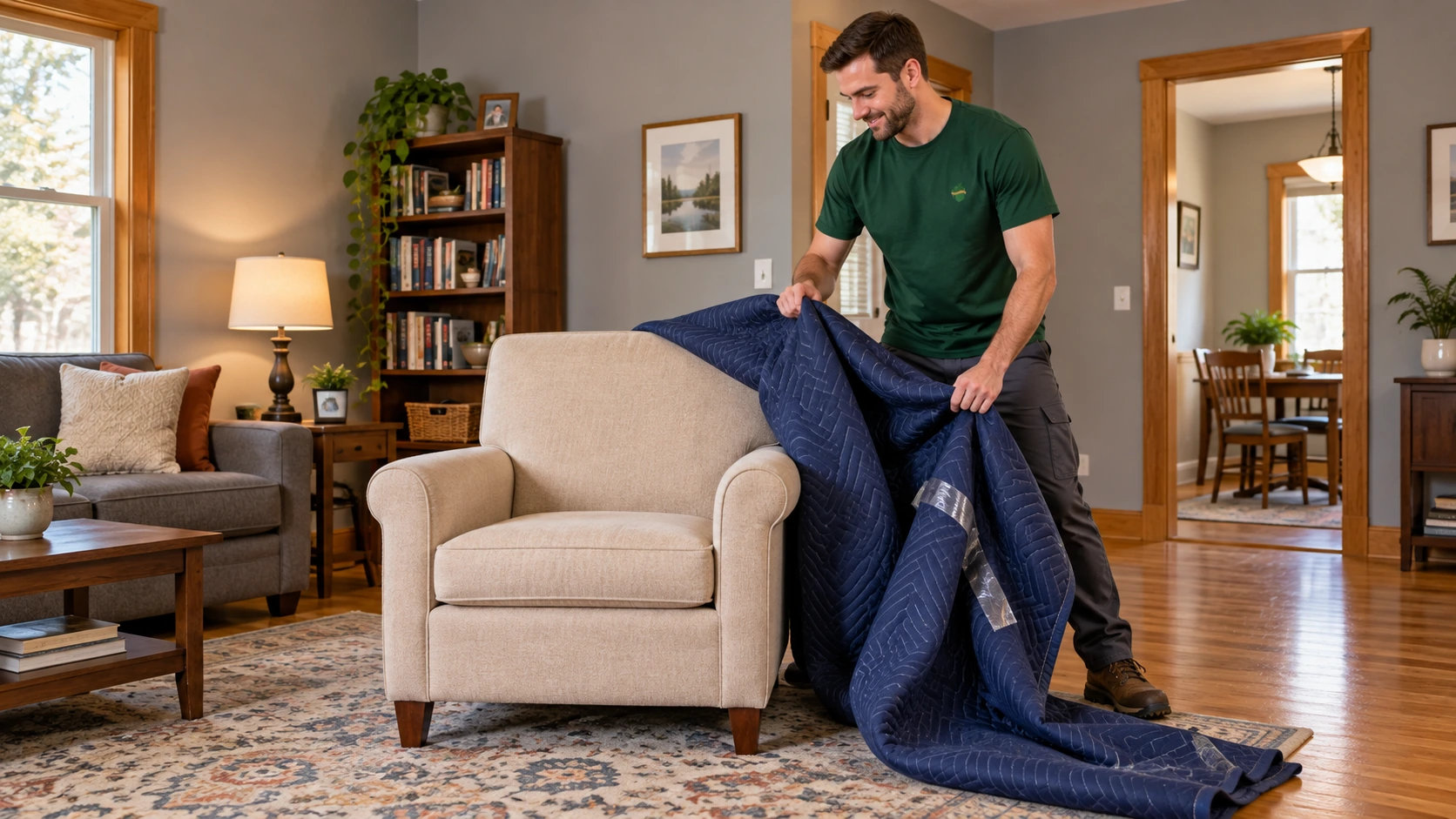
A mover draws a loose quilted blanket away from an armchair in a furnished room
A mover removes a loose blanket from an armchair after placement.

Minnesota planning

Define the storage stage before collection

Tell the coordinator early if the Minnesota home may not be ready when the shipment can arrive. Explain the expected gap, what is known about possession and whether someone can receive elsewhere. A closing uncertainty or unavailable building appointment can change the suitable plan. Review an appropriate storage and later-delivery arrangement before collection rather than relying on a future key date that has not been confirmed.

Agree the storage location, provider, goods and condition record, access arrangements, charges and responsibility for the next stage. Ask what happens when the household is ready for later delivery and how that appointment will be arranged. Keep the inventory and relevant records connected through the handover. If another provider is involved, identify the receiving contact and where one party’s responsibility ends and the next begins.

Plan the people’s needs separately. Keep documents, keys, medicines and the supplies needed between homes accessible, and identify any goods the household will need before the final receiving date. Update the coordinator when the home’s availability changes. A defined storage stage gives the household something concrete to plan around, with the later delivery treated as part of the arrangement rather than an unspecified extension of the first trip.

Minnesota planning

Make the rooms usable and handle Minnesota resident documents

Start with the rooms and supplies the household needs for an ordinary day. Identify bedding, basic kitchen items, clothing and personal documents, and keep the delivery records in a place you can find again. Check the goods and follow up promptly on a concern. Choose any optional carton unpacking as an actual task; ordinary first-week arranging by the residents should not be confused with work included in the moving appointment.

Plan driver licensing and vehicle registration as separate new-resident tasks. Minnesota’s ordinary valid out-of-state or qualifying-jurisdiction driving exemption lasts no more than 60 days after residency; commercial licensing has a separate 30-day period. The licensing test waiver applies to applicants age 21 or older with a valid license from a qualifying comparable jurisdiction. Age, expiration, origin and license type can change the requirements. Review DVS’s applicable checklist, identity documents and vision check before attending.

For ordinary passenger vehicles, motorcycles, utility trailers and house trailers, DVS gives new residents 60 days to register. Expired registration and commercial trailers or trucks require immediate registration. Prepare the relevant ownership, lienholder, odometer, identification and insurance information; leased and imported vehicles have separate records. A registration alternative does not always produce a Minnesota title. Handle each transaction with its own checklist while the household settles into the home and its regular neighborhood routines.

A woman sets a mug on a dining table in an ordinary furnished apartment
A woman sets a mug on the dining table.

Minnesota planning

Turn the shortlist into a complete household brief

Use the city portraits, county profiles and map to choose where to investigate, then bring the moving questions back to the actual home. Keep the municipality and any wider visitor region clear. Look at the property route and everyday services alongside the public places that first interested you. The two cities named St. Anthony and the separate municipalities within larger regional labels show why the complete address matters.

For an interstate proposal, collect the contents, dates, photographs and requested work in one brief. Choose the packing responsibility, identify furniture needing preparation and discuss dedicated direct delivery or suitable smaller consolidation. Explain the receiving person, property appointment, a possible storage gap and any Canadian arrival or separate provider handover. Keep the agreed scope and any changes in writing.

Before collection, review the provider identity and applicable documents, prepare the goods and working path, and keep the household’s personal essentials accessible. Before delivery, confirm keys and an authorized receiver who can direct placement and check the inventory and condition. Use the final checklist to resolve the remaining uncertainties with the coordinator. The result should be a workable plan for the household you described, connected with the place and home you actually chose.
Verified data

Minnesota planning data

Planning factEstimateVintageSource
Total housing units2,545,0302024 ACS 5-yearU.S. Census Bureau
Detached single-unit homes1,680,195 · 66.0% of housing units2024 ACS 5-yearU.S. Census Bureau
Homes built in 1939 or earlier395,770 · 15.6% of housing units2024 ACS 5-yearU.S. Census Bureau
Owner-occupied homes1,666,687 · 72.2% of occupied homes2024 ACS 5-yearU.S. Census Bureau
Renter-occupied homes641,268 · 27.8% of occupied homes2024 ACS 5-yearU.S. Census Bureau
Residents age 1+ from another U.S. state one year earlier1.8% · not net migration or shipments2024 ACS 1-yearU.S. Census Bureau

Planning answers

Minnesota moving questions

Straightforward answers about prices, packing, delivery and getting settled.

Ask about your move
How should I compare places before moving to Minnesota?

Choose a few settings to explore, then investigate the particular neighborhood, home and journeys you would use regularly. Minneapolis and St. Paul offer different city introductions; Duluth, Rochester and smaller communities add other river, lake and cultural settings. Keep regional attractions in their actual locations. The map and portraits help form a shortlist, while time around the residential address helps you compare the services and routines behind the visitor experience.

Does this guide confirm a local Sterling Oakbridge office in every Minnesota city?

No. The company plans reviewed interstate household moves involving Minnesota. The city portraits and directory are geographic references, and they do not establish a local office or availability for every Minnesota-only request. Give the coordinator the full journey, contents, dates and work so that the actual proposal can be assessed. For a Minnesota-only move, check the local provider and the requirements applicable to that arrangement.

Are a Minnesota city, county and visitor region the same area?

No. A city and a county have different boundaries, and a visitor region may include several separate communities. St. Cloud extends across more than one county, while Greater St. Cloud also includes other municipalities. Mankato and North Mankato remain separate cities. Use the complete address and actual property jurisdiction when arranging the move, and keep a regional attraction separate from the residential home under consideration.

Why does the Minnesota directory distinguish two places named St. Anthony?

Minnesota has two separate incorporated cities with that name. One is in Hennepin and Ramsey counties; the other is in Stearns County. The directory retains both identities with county context so that they are not combined. Minneapolis’s historic St. Anthony Main area is different again. Confirm the complete address and municipality whenever a familiar or repeated place name could identify more than one location.

What information is most useful for an interstate moving proposal?

Send the two complete addresses, the full inventory, date constraints and the work you want included. Add useful photographs of the vehicle approach, entrance, stairs and interior turns, with measurements for an uncertain large piece. Explain building appointments, the authorized receiver and any storage or border stage. Include cupboard and stored contents as well as furniture. That brief lets the coordinator review the actual household instead of estimating everything from a bedroom count.

What should I check on a Minnesota-only estimate?

Read the written estimate alongside the inventory, access and requested work, and ask which rate-schedule provisions explain the charges. Minnesota’s household-goods tariff law requires a mover to maintain rates and charges, with public inspection and copies available under the statute. Ask what is included, what is measured and how additional work would be treated. Keep the estimate and relevant provisions with the contract and other shipping records.

How can I see the tariff behind a Minnesota household-goods quote?

Ask the mover for the applicable tariff or the specific provisions explaining your work. Minnesota Statutes section 221.161 requires effective tariffs to be available for public inspection at the relevant business locations while the mover is open, and copies or provisions must be provided on request. Compare the same inventory and services when reviewing different proposals. Keep the applicable provisions with your written estimate and shipping records.

Is a Minnesota-only tariff comparison the same as an interstate flat-rate proposal?

No. They describe different arrangements. For a Minnesota-only move, review the actual local provider, tariff and applicable records. For the company’s confirmed interstate service, review the written scope and agreed flat rate for the complete shipment. That rate remains unchanged if the same agreed work or journey takes longer. Discuss changed contents, access or requested services and agree a scope change in writing.

How should I document loss or damage on a Minnesota-only move?

Keep the inventory, condition photographs, contract and delivery records, and identify the particular item and concern. The Minnesota Attorney General’s guidance advises a prompt written claim to the mover and keeping a copy. Preserve the correspondence and check the applicable contract and filing requirements. If you need agency help, use the relevant MnDOT or consumer channel while continuing to address the shipment claim and its actual requirements.

Does contacting an agency replace a written claim to the mover?

No. An agency complaint and the shipment claim are different steps. Keep the written claim, supporting evidence and provider correspondence, and check the requirements that apply to the shipment. Minnesota’s consumer guidance identifies MnDOT for mover licensing, rate information and complaints. Use the agency channel for the concern it can address, while retaining the records and taking the actions required for the claim itself.

What should I verify before choosing an interstate mover or broker?

Identify the business arranging the shipment and the carrier that will physically move it. Use FMCSA’s resources to check the relevant registration, authority, insurance information and complaint records for those actual entities. Read the written estimate, bill of lading, inventory and protection terms, and do not sign blank documents. Keep copies accessible during the journey and arrange someone who can supervise collection and receiving if you cannot be there.

How does dedicated direct delivery work for the company’s interstate service?

It uses a truck dedicated to the reviewed shipment, with the same moving crew at collection and delivery under the company’s confirmed arrangement. Give the coordinator the complete contents, both properties, preparation and receiving constraints before agreeing the proposal. Review the actual delivery timing and appointment conditions. A regional map or road distance alone does not establish that the household can receive on a particular day.

When is consolidation suitable, and when does the delivery window start?

Consolidation may suit a smaller shipment after the coordinator reviews the goods, route, access and receiving needs. It has a wider delivery window and requires individual agreement for the actual Minnesota journey. For the company’s service, the delivery window begins after pickup and loading are complete. Keep that start point clear, and plan the people’s accommodation, essentials and authorized receiving arrangement alongside the proposed window.

How can I check whether a large piece will fit through the home?

Measure the piece and the tightest parts of the route together. Show the entrance, porch transition, landing, stairs and turns, including projecting handles or deep arms. Ask which basic preparation is safe and included in the reviewed work. Tell the team about fragile finishes, damaged joints or unusual fittings. Resolve a doubtful opening before collection rather than force the piece through it on the moving day.

Are packing time and company-supplied boxes included automatically?

No. Choose the packing work explicitly. For the company’s confirmed interstate service, packing uses working time and company-supplied cartons are charged separately. Ordinary moving blankets, shrink wrap and tape have no separate basic-material charge. Describe the cupboards, shelves, stored goods and delicate items that need attention, and agree what you will prepare yourself. Keep the selected work and materials clear in the written proposal.

Does basic furniture disassembly and reassembly have a separate labor fee?

No separate basic labor fee applies to that work under the company’s confirmed service, but it uses working time. Identify the actual pieces and include the reviewed preparation in the agreed scope. Unusual construction, specialist installations or a damaged item may need separate assessment. Keep hardware and instructions connected with the correct piece, and prepare the receiving route and placement plan for reassembly.

Will the agreed interstate flat rate rise if the same work takes longer?

No. For the company’s confirmed service, the flat rate remains unchanged when the agreed work or journey takes longer. Keep the inventory, included services, access and receiving arrangement accurate. If the household adds contents, changes the property or requests different work, discuss the change and agree the revised scope in writing. A clear proposal helps everyone distinguish the original task from a new request.

Does delivery include opening cartons and removing the packaging?

No. Furniture unwrapping is included in the agreed delivery service, while carton unpacking is an optional task using working time. Discuss the rooms or items you want unpacked and put that work into the proposal. Packaging and waste arrangements should be agreed separately. Preparing first-night essentials and a placement plan helps make the home usable while the household decides which further unpacking tasks it needs.

Can another person receive the goods for me?

Yes, arrange an authorized receiver before delivery. Give them the inventory, room plan, agreed work and coordinator’s contact details. They should be able to provide access, explain placement, check the goods and note concerns. Confirm their availability for the agreed receiving arrangement and any building appointment. Unlocking the door briefly does not cover all the decisions and checks needed while the shipment is being delivered.

What if the Minnesota home is not ready when the goods can arrive?

Review storage and later delivery with the coordinator before collection. Identify the location and provider, goods and condition record, access, charges, next receiving contact and responsibility for the later stage. Explain what is still uncertain about possession or the building appointment. Keep personal essentials and documents with the people traveling, and update the plan when the home’s availability becomes clear.

How should I prepare for a move during Minnesota winter conditions?

Check current weather and road information, confirm the property’s arrangements for keeping the entrance available and tell the coordinator about changed access. Prepare the people’s travel, contacts, keys and first-night supplies alongside the shipment. Minnesota’s winter guidance asks households to plan ahead and prepare the home and car. Follow current warnings and closures, and review a changed receiving arrangement promptly if the property cannot be used as agreed.

When should a new resident obtain a Minnesota driver’s license?

Plan the task promptly. The ordinary exemption for a new resident holding a valid other-state or qualifying-jurisdiction license lasts no more than 60 days after residency; commercial licensing has a separate 30-day period. Applicants age 21 or older with a valid license from a qualifying comparable jurisdiction receive the statutory knowledge and road-test waiver. Age, expiration and origin can change testing, so use DVS’s actual checklist and prepare the required identity records and vision check.

When must a new resident register a vehicle in Minnesota?

DVS gives new residents 60 days for ordinary passenger vehicles, motorcycles, utility trailers and house trailers. Register immediately if the existing registration is expired or the vehicle is a commercial trailer or truck. Prepare the applicable ownership, lienholder, odometer, identification and insurance records; leased and imported vehicles need additional documents. Driver licensing and vehicle registration are separate tasks, and an alternative accepted for registration does not always issue a Minnesota title.

How should I begin a Minnesota–Canada household move?

Describe the full journey, contents, dates and receiving arrangements to the coordinator, then prepare the arrival documents applicable to the household. For entry into Canada, CBSA distinguishes first qualifying settlers from former residents returning to Canada. Prepare the goods list with accompanying and goods-to-follow sections, present it at the first point of entry and keep the personal-effects accounting record. Review the relevant ownership, use and item restrictions before collection.

Primary sources

Sources for the decisions in this guide

Official resources for choosing a community in Minnesota and preparing the move. Figures retain their stated dates; follow current agency guidance for your own circumstances.

Minnesota-only rates, records and consumer channels

5 sources
  • Household-goods mover permitsMinnesota Department of Transportation

    Permit application, USDOT and insurer filing requirements; check the actual provider for the proposed work.

  • Household-goods permit · section 221.121Minnesota Legislature · Office of the Revisor of Statutes

    Application, operating scope and relevant permit conditions.

  • Rate schedules · section 221.161Minnesota Legislature · Office of the Revisor of Statutes

    Tariff maintenance, public inspection and copies of the applicable provisions.

  • Tariff compensation · section 221.171Minnesota Legislature · Office of the Revisor of Statutes

    Compensation under the applicable schedule, with the statute’s stated exceptions.

  • Hiring a moverMinnesota Attorney General’s Office

    Written estimates, contract terms, condition inventory, a prompt written claim and relevant complaint contacts. Read rate-schedule requirements with the current statute above.

Interstate records and Canadian arrival

3 sources
  • Tips for a successful interstate moveFederal Motor Carrier Safety Administration

    Mover and broker identities, written estimate, bill of lading, inventory, protection options and receiving responsibilities.

  • Interstate mover and broker searchFederal Motor Carrier Safety Administration

    Check the current actual business and its role; this link does not imply a company-specific search result.

  • Moving or returning to CanadaCanada Border Services Agency

    Arrival categories, personal-effects conditions and separate accompanying and goods-to-follow records.

Minnesota driver and vehicle documents

4 sources
  • New-resident driving exemptions · section 171.03Minnesota Legislature · Office of the Revisor of Statutes

    Ordinary valid other-state or jurisdiction license period of no more than 60 days after residency; commercial licensing has a separate 30-day period.

  • Comparable-jurisdiction test waiver · section 171.13Minnesota Legislature · Office of the Revisor of Statutes

    Subdivision 1a covers applicants age 21 or older with a valid license from a qualifying comparable jurisdiction.

  • Class D license for a new residentMinnesota Department of Public Safety · Driver and Vehicle Services

    Testing and vision checks, expired and foreign-license cases, and documents for the selected card type.

  • New-resident vehicle registrationMinnesota Department of Public Safety · Driver and Vehicle Services

    Ordinary 60-day registration and immediate-registration exceptions; ownership, lienholder, insurance, lease and import documents.

City settings and the wider region

12 sources
  • Minneapolis neighborhoodsMeet Minneapolis

    River, lake, arts and cultural neighborhood introductions within the city.

  • St. Paul neighborhoodsVisit Saint Paul

    Cultural corridors and neighborhood hubs including Lowertown, Como and West 7th.

  • Duluth neighborhoodsVisit Duluth

    Western, central and eastern city districts, distinct from a wider northern visitor region.

  • Rochester downtown placesRochester Downtown Alliance

    Public arts, theater, library, parks and downtown trail introductions.

  • Bloomington and its settingBloomington Minnesota Travel & Tourism

    Minnesota River surroundings, parks, trails and Mall of America within a separate Twin Cities municipality.

  • St. Cloud and neighboring communitiesVisit Greater St. Cloud

    Downtown and East Side city settings, with separate Waite Park, Sauk Rapids, Sartell and St. Joseph.

  • Mankato arts and cultureGreater Mankato Growth · Visit Mankato

    Galleries, performance and river art; CityArt programming spans the separate Mankato and North Mankato municipalities.

  • Downtown MoorheadCity of Moorhead

    Existing arts and mixed-use districts and the separate emerging downtown redevelopment vision.

  • Winona and bluff-country surroundingsExplore Minnesota

    River, arts and bluff settings, with regional outings kept in their actual locations.

  • Bemidji and northern surroundingsVisit Bemidji

    Town public life and a wider northwoods and lake-region introduction.

  • Brainerd Lakes AreaExplore Brainerd Lakes

    Brainerd and a wider region containing separate Baxter, Nisswa, Crosslake, Pequot Lakes and other communities.

  • StillwaterDiscover Stillwater

    Historic downtown, shops, food and regional visitor activities.

Roads, seasonal conditions and household preparation

5 sources
  • Current Minnesota road informationMinnesota Department of Transportation · 511

    Check changing road and travel information alongside the carrier’s review of its actual vehicle and route.

  • Oversize and overweight permitsMinnesota Department of Transportation

    Vehicle and load limits; MnDOT permits do not cover county, municipal, township or other local roads.

  • Seasonal load limitsMinnesota Department of Transportation

    Current start and end information for state and federal trunk highways, with separate county and city contacts.

  • Prepare for winter weatherMinnesota Department of Health

    Plan ahead, prepare the home and car, protect household needs and stay informed.

  • Flooded-road safetyNOAA · National Weather Service

    Do not enter floodwater or drive around barriers closing a flooded road.

Dated housing, population and geographic evidence

10 sources

Photographs are original representative illustrations, not customer jobs or identified addresses.

Let’s plan your move

Tell us about your Minnesota move.

Tell us where you are moving, what you are taking and your preferred dates. Add any packing, furniture preparation, unpacking or storage help you need.

A Sterling Oakbridge move coordinator in the planning office