

What would make your next ordinary week better?
You can value Baltimore and still be ready for another way of living. Perhaps an unpredictable work schedule leaves too little time for the people you already have. Perhaps you want a home where an older parent can come and go comfortably, or enough room to keep a practical interest alive. Someone else wants to take a particular job, spend more of the year outside, or build a family chapter in another country. Those wishes point toward different searches. Give yours a clear beginning before choosing a destination.
Try finishing one sentence: “The next home would be worth the change if…” Make the answer concrete enough to recognize. You might want two evenings a week that remain free, an extra $450 after the household bills, or a front-door route you can manage without calling for a ride. You can refine the answer as you read. For now, it helps distinguish a place that looks appealing from an arrangement that would improve your life.
Add three things about the present week you would be glad to keep. A familiar colleague, a relative who can come over without arranging a whole trip, and a regular walk can be substantial advantages. So can a well-fitting rental or work you enjoy. Give those benefits the same attention as the frustration that started the search. You are more likely to choose well when the next place has to earn the connections and comfort you would give up.
If two adults are moving, write your answers separately before comparing them. A community-health interpreter may want more predictable assignments while a partner repairing bakery equipment wants room to develop a new specialty. The interpreter’s shorter day and the repairer’s professional ambition may fit the same destination, or lead to different versions of the home search. Seeing that early creates choices. Discovering it after the lease is signed creates pressure.
Use the guide to keep two to four places you can explain in a sentence. Towson, Annapolis and Columbia begin with different ways to remain connected to the Baltimore region. The wider US profiles introduce another scale of work, city or landscape. Four international profiles give equally serious attention to the purpose and practical basis of living abroad, including the harder part of each choice. The maps help you orient yourself; the household examples help you compare the life that would sit around the view.
Start with the section that answers your main wish, then return to the others as the choice develops. You do not need to complete an application or settle every detail to make useful progress. A confirmed work location, two realistic homes or one well-planned weekday visit can reveal more than another long list. By the end, each favorite should have a reason, a compromise you understand and one next action that moves the decision forward.
Keep a Baltimore connection
Try Towson, Annapolis and Columbia through the particular home and journeys you would gain.
Compare three nearby beginnings →Make the household month work
Use dependable income and the full cost of home, travel and practical help.
See what remains after the bills →Choose a wider US chapter
Give the work, city scale or landscape a realistic home and ordinary year around it.
Explore the wider city profiles →Build an international life
Begin with the actual purpose, applicable permissions and a funded week for each person.
Compare four international chapters →Give your present Baltimore life a fair place in the comparison
Begin with a week you have actually lived. Note the journey to work, the errand you can fit around it, the people who are easy to see and the part of home that makes you comfortable. Include the difficult day too: the late assignment, the stairs with laundry, the missed handoff or the evening spent driving. This is a stronger baseline than the average resident’s income or a photograph of the Inner Harbor. Your next home has to work for the particular person or household leaving.
Separate the home problem from the place problem. A narrow staircase, a missing work surface or more maintenance than you want may be solved by another Baltimore home. A confirmed opportunity in a different city cannot. If the main wish is fewer household tasks, compare a realistic lower-maintenance option here before choosing a farther move for the same benefit. You may still decide to leave, with a clearer understanding of what the new setting adds.
Give familiar help a visible place in the month. A cousin who can collect a child, a friend who joins an older parent for groceries or a neighbor who notices a problem can save time and anxiety as well as money. Ask what the arrangement would become from the proposed home. Sometimes it survives a nearby move with little change. Sometimes replacing it means paid care, more driving or fewer hours of work. Enter the actual replacement in the comparison instead of calling the old help free and forgetting it.
MTA’s schedule information separates Baltimore-area bus, rail and commuter services. Use the route and hour you currently depend on as part of the baseline, then compare the whole journey from the new address. A station on the map does not tell you about the approach, transfers or the last usable return. The same care applies to a driving pattern: the workplace entrance, parking and the recurring family stop belong in the trip, not just the distance between two city centers.
Keep Baltimore city and Baltimore County distinct when researching a home. A familiar mailing-area name does not establish the jurisdiction, school or service responsible for an address. Towson and Columbia also have Census-designated-place boundaries that serve a statistical purpose; those boundaries do not answer every property question. Once a particular home becomes serious, use its actual address with the relevant local office, school system and service provider. That small step makes the comparison much more concrete.
An improved Baltimore option can stay on the shortlist. Perhaps a different layout preserves the job and people you value while releasing time for the change you wanted. Perhaps that local option still leaves the central problem untouched, making a regional or farther move more persuasive. Either result is useful. Keeping the present place in the comparison is a way to understand the benefit you are buying, with the home, money and relationships considered together.
The Baltimore life you begin with

Geographic reference

- KeepName the people, useful journeys and ordinary pleasures already working.
- ChangeChoose the frustration the next home should actually remove.
- ComparePut one realistic present-area arrangement beside the farther favorite.
Choose the scale of change that can do the job
A nearby move is often the first useful test when work, family or another regular commitment should remain in the Baltimore region. Towson, Annapolis and Columbia change the relationship among the home, the workplace and the rest of the household week. They do not all shorten the same journey, reduce the same bill or serve the same purpose. Start with the connection you are trying to preserve, then compare the actual home arrangements that could improve the rest.
A regional city can be a new local life with a planned connection back. Philadelphia, Pittsburgh and Harrisburg offer different scales, terrain and working contexts. The meaningful question is whether the particular opportunity, housing arrangement or routine is worth rebuilding familiar support. Decide how often you would return to Baltimore and what those visits would require in time, money and the day after traveling. A place can be within a region you know while still changing how often you see people.
Farther US options are useful when they introduce something your closer choices cannot provide well. Chicago may support a particular larger-city working network. Rapid City may put a smaller urban base beside the outdoor year you want. Honolulu may be a defined island appointment with a clear beginning and end. Give each a reason of its own. Moving farther does not make a choice more ambitious or more successful; it changes the benefit and the transition you must support.
An international chapter adds residence, permitted work, language, currency and the household’s practical life to the decision. A host-supported professional appointment, joining family and an independently funded study plan are different starting points. The same country can be workable for one of those households and unsuitable for another at the same time. Establish the actual basis before spending on a home or shipment that depends on it. A visitor’s experience can help you picture a place, while leaving those longer-term questions unanswered.
Keep one nearer arrangement beside the farther favorite while you compare. If the purpose is an easier home, ask what the farther city adds beyond a well-chosen local layout. If the purpose is a career, ask which opportunity is real and when income begins. If the landscape is the reason, identify the activity and frequency that would make it a valued part of the year. These comparisons clarify what distance is doing for you.
The practical sequence is simple: name the gain, establish dependable income and the right residence basis, compare two plausible homes, then try the week around them. Keep the scale that does the job well enough for the cost and disruption involved. You may find that the next chapter is close, or decide that a bigger change is exactly what you want. In either case, the decision has a reason stronger than the number of miles on the map.
- NearbyPreserve a fixed Baltimore connection while changing the home or daily relationship.
- Another US baseGive the new opportunity or setting a funded household around it.
- An international chapterSettle each person’s actual basis and ordinary week alongside the reason to go.
Three nearby options, three different household questions
Towson, Annapolis and Columbia give a Baltimore household three different beginnings. Towson may keep a northern Baltimore connection central to the week. Annapolis may be about an actual local opportunity and time near the harbor. Columbia may be about fitting two working lives and a child’s routine around the same home. Treat those as distinct questions. A general wish for “the suburbs” would hide the very differences that help you choose.
Nearby also does not mean cheaper in this selection. In the common 2020–2024 ACS five-year comparison, Baltimore city’s median gross-rent point estimate is $1,331 a month. Towson CDP is $1,764, Annapolis city $1,860 and Columbia CDP $2,042. These historical estimates describe occupied cash-rent homes and applicable utilities, with margins of error in the table. They do not price your next apartment. They do make it important to name the improvement that could justify a higher actual payment.
Use the exact home and the real daily anchors. A rotating hospital shift, a Howard County school role, a Baltimore attendance day and a weekend family meal create different travel requirements. MTA, the local Annapolis services and RTA publish information for testing the relevant connections. Check the current route, stop approach, operating day and return. Include driving where the whole pattern needs it, instead of entering a saving because a bus appears somewhere nearby.
The home itself deserves equal attention. More floor area may help a shared household, while stairs, parking, heating or maintenance can create new tasks. A garden is useful when someone wants to use it and can manage it. A shared-building layout may reduce some chores while adding charges and rules that matter to your particular interests. Compare what you receive and what you become responsible for at the property, using the actual terms.
The following profiles begin with a purpose, then make the exchange visible. Keep the nearby option that solves your problem well enough to justify changing homes. If none does, the result still helps: you will know which connection can be preserved and which part of life requires a wider search. Take that clearer question into the regional and national horizons, with the best realistic Baltimore arrangement still beside them.
Three nearby beginnings around Baltimore
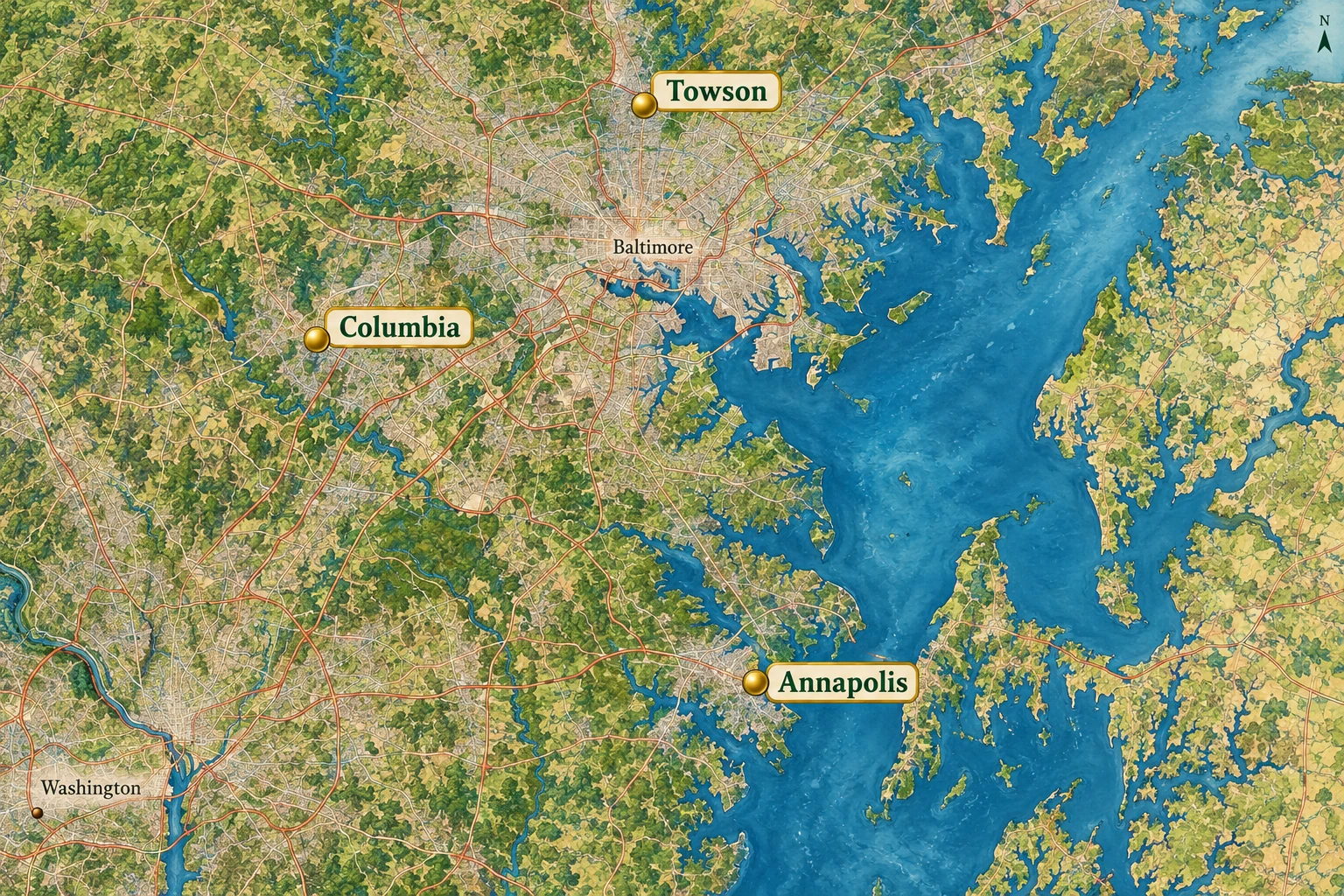
Geographic reference
Towson: change the home without giving up your Baltimore circle

Towson is a useful first comparison when the life you want to preserve is still in Baltimore, but the present home no longer fits. Imagine a laboratory technologist who works rotating shifts and an adult sibling who wants more space for a regular family meal. They are looking for a workable home and a different northern base, rather than a new metropolitan identity. Towson can stay on their shortlist only if both people can still make the journeys that matter.
MTA lists several Towson connections, including CityLink Green and Red and local routes. That gives you real corridors to examine; it does not put every Towson address beside the right service. The technologist needs the trip home after the actual shift, including the walk from the stop. The sibling may need a different connection on Saturday. Try those two journeys before counting on one shared car, and keep parking or paid alternatives in the model where they are still needed.
The historical comparison gives this move a clear financial warning: Towson CDP’s median gross-rent estimate is $1,764, against Baltimore city’s $1,331. The published table includes the survey period and margins of error. Towson is a Census-designated place, not a separate incorporated city; a postal label also does not settle the school, service or tax details of an individual property. Ask the relevant county office and school system about the precise address.
What might justify the higher payment? A layout that makes family meals possible, less upkeep, or a better fit between two adults’ days can be worth paying for. Name that improvement plainly. A home that costs more and leaves the late-shift return harder is a poor answer to this household’s problem, even if the first viewing feels like an upgrade. Compare it with a realistic change of home inside Baltimore before deciding.
Try first: Rehearse the late-shift return and the sibling’s weekend journey from two actual Towson homes, then compare the whole month with an improved Baltimore option.
Local sources: Schedules | Maryland Transit Administration · Towson CDP, Maryland Census historical gross rent.
Annapolis: make the waterfront part of a resident’s week

Annapolis belongs in a water-led search when you want the harbor to become part of ordinary life, with work and errands around it. A marine-electronics technician considering a genuine local position may have a concrete reason to move. A partner who likes drawing outside might value a repeatable waterfront outing. The useful question is whether both can reach those activities from a home they can sustain, including days when they finish at different times.
Keep the technician’s actual workplace separate from the view that first attracted you. A harbor-area stroll, a workshop somewhere else in Anne Arundel County and a Baltimore appointment are three different journeys. Annapolis Transit publishes local routes and on-demand information, while MTA lists the Baltimore–Annapolis commuter connection. Check the current operating days, stops and last usable return for the actual task. A commuter service is not evidence of convenient travel at every hour.
Annapolis city’s historical gross-rent point estimate is $1,860, higher than Baltimore’s $1,331. The model therefore needs an adequate work arrangement or a deliberate decision to spend more for this setting. Price the particular home’s utilities, parking and maintenance. If you are leaving a Baltimore rental whose terms work well for you, compare the real replacement payment rather than treating the citywide survey difference as a quote.
The trade is a smaller waterfront capital-city routine for a potentially higher housing commitment and less spontaneous access to Baltimore people. Visit beyond the favorite waterside hour: do groceries, try a wet evening and return from the workplace. Also ask how often you would actually draw, walk or spend time by the harbor. Annapolis becomes a stronger choice when the water improves the week you have, rather than only the weekend you picture.
Try first: Begin at an attainable home, make the workplace and grocery trips, then take the waterfront outing at the hour you would normally have free.
Local sources: Bus Routes & Schedules | Annapolis, MD · Schedules | Maryland Transit Administration · Annapolis city, Maryland Census historical gross rent.
Columbia: organize two working lives around the same home

Columbia can be a serious nearby option for a household whose two working lives pull in different directions. Picture a clinical-data coordinator with confirmed Baltimore attendance days and a school counselor considering a specific Howard County role. Their purpose is to make the handoff between work, a child’s activity and home less fragile. Choosing a midpoint by eye is only the beginning; the actual destinations determine whether that midpoint is useful.
RTA’s route list shows connections among the Mall in Columbia, village centers, Howard Community College, the hospital area and other destinations. Some routes also connect with the wider regional network. Use the current schedule for the actual home and task, including the child’s activity and the adult who would collect them. If the plan still requires two cars, enter two complete vehicle costs. A pleasant path near the home does not establish a workable commute to a distant office.
This is the most expensive of the three nearby examples in the historical rent comparison: Columbia CDP’s point estimate is $2,042, beside Baltimore city’s $1,331. Columbia is a Census-designated place, and the table is not a quote for a village, apartment type or school area. Confirm the property’s real jurisdiction, assigned school and any association or shared-facility charges with their owners. Keep those costs beside the benefit you are trying to buy.
The potential gain is a more coherent household day, perhaps with a useful local walk or activity between work commitments. The compromise is a larger payment without any automatic reduction in transport. Test the week when one adult is delayed, not only the week when both calendars cooperate. Columbia earns a place if the new arrangement needs fewer emergency favors and still leaves enough money and time for the family life that prompted the move.
Try first: Put both confirmed workplaces, school or care and one recurring activity on the same weekly calendar; test the hardest handoff from two suitable homes.
Local sources: Routes – Welcome to RTA · Schedules | Maryland Transit Administration · Columbia CDP, Maryland Census historical gross rent.
Explore farther places through a life you could actually use
The wider US selection includes eighteen destinations when the three nearby profiles are counted with the five horizons below. It offers another regional base, a southern or south-central working year, interior cities of different scales, a mountain-region or island chapter, and three Pacific-side routines. The groups are starting perspectives rather than rankings. Honolulu appears in a clearly separated inset; its island geography is not continuous with the mainland map.
Read first for the reason that resembles yours. A two-career household may learn more from Fort Worth’s need for two genuine work plans than from a place chosen mainly for scenery. A person with an approved remote arrangement and a smaller-city wish may find Rapid City or Eugene a more useful comparison. Someone considering an actual appointment in Houston or Honolulu needs to understand the accompanying household’s life as carefully as the opportunity itself.
Keep the home search small enough to be real. Begin with the actual workplace, study location or family connection and two plausible home areas. Add groceries, care and the activity that makes the place appealing. A large city can hold a manageable local routine; a smaller one can generate long journeys if the household’s anchors are scattered. The complete circuit tells you more about daily effort than the city’s population or general reputation.
The historical Census comparison under the money section uses the same release and measures for all nineteen exact places, including the origin. Some rows are incorporated cities and others are Census-designated places; each retains its actual name. Use the rent estimate to decide where a current home search may be promising, then replace it with two suitable properties and dependable income. A modest survey difference should not carry a life-changing decision, particularly when the uncertainty or required home type is substantial.
Give each favorite an ordinary difficult day. For Chicago it may be the winter station approach after a late finish; for Houston, a day when the main driver cannot help; for Eugene, a wet-day alternative to cycling. You can accept those compromises and still choose the place. The point is to know whether the benefit remains useful when the first visit’s best weather and free afternoon are gone.
The maps and scenes help make the range tangible. Use the profile’s final action to turn that picture into the next decision. Keep a destination because a specific arrangement improves the household week, or set it aside with a reason you can explain. There is no need to keep every attractive possibility alive. A good shortlist leaves room to investigate the few places whose particular benefits matter most to you.
Six ways to widen the Baltimore comparison
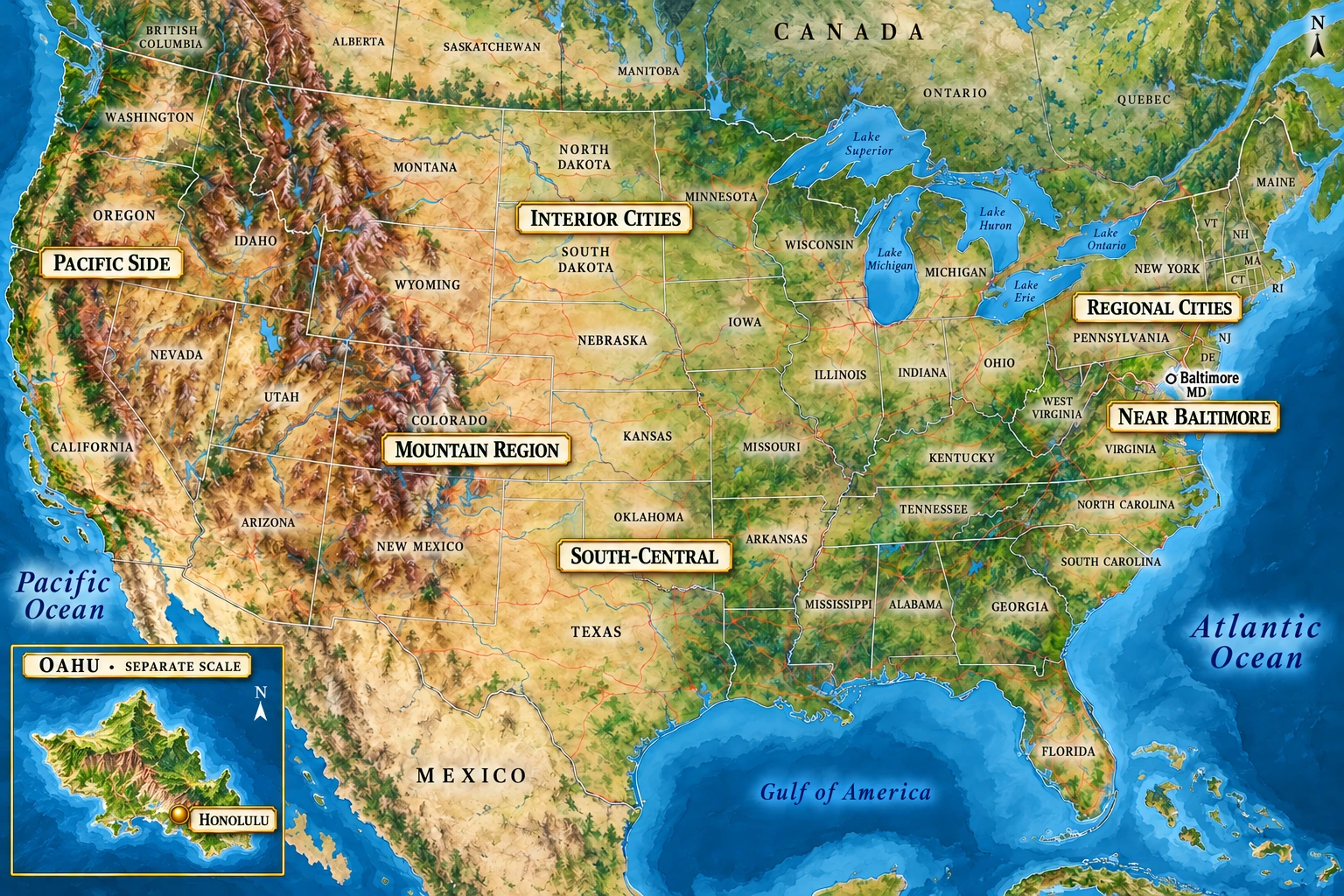
Geographic reference
Three different regional city lives
A larger professional network, a technical appointment or a smaller capital-city base can give a regional move a purpose. Keep the actual home and planned Baltimore contact beside that gain.
A wider regional working circle
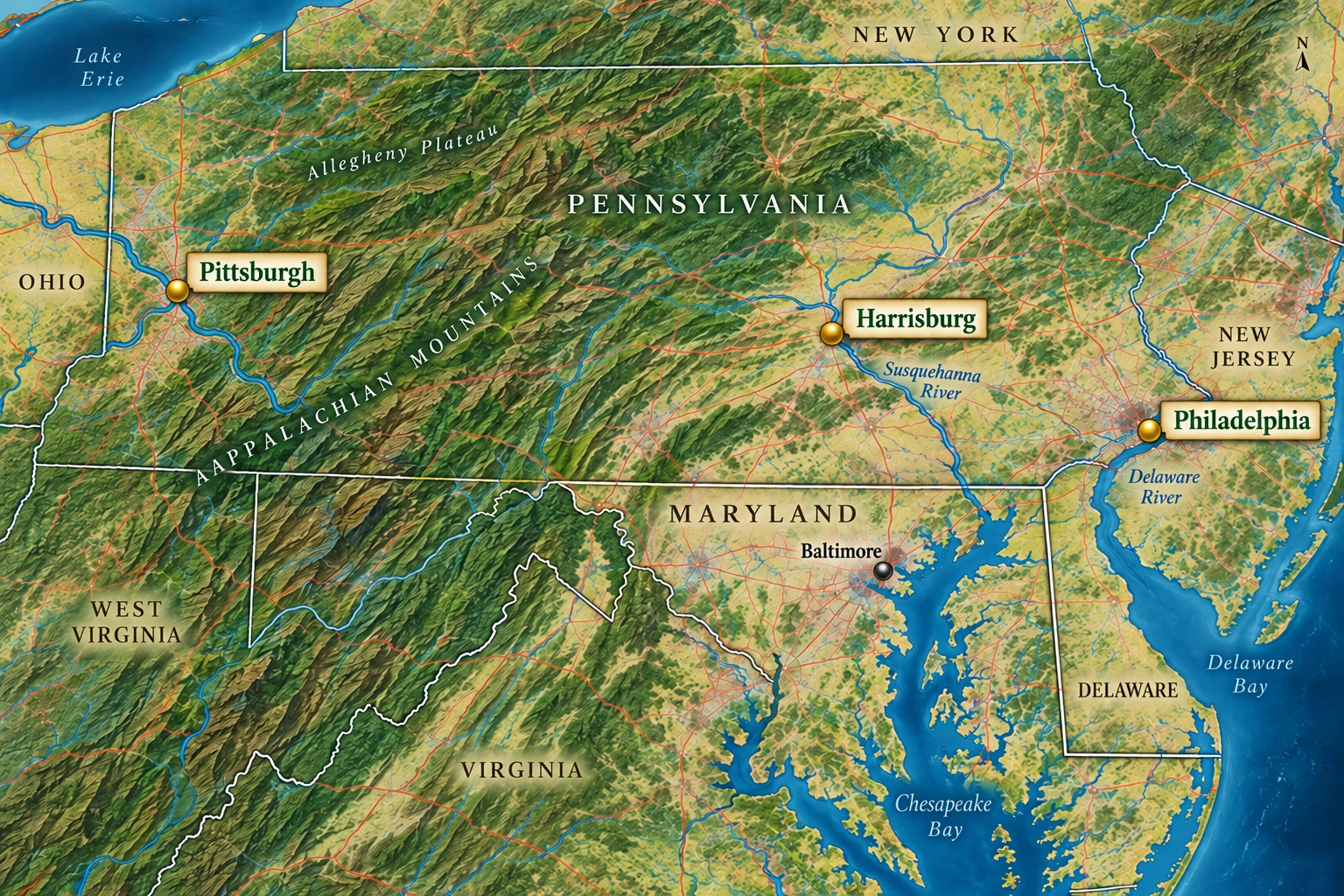
Geographic reference
Philadelphia: give a larger working network a manageable home base

Philadelphia offers a larger-city comparison for someone whose work needs more connections than their current arrangement provides. A costume cutter considering an actual theater appointment and a partner working in a water-testing laboratory would need two dependable daily routes. They may welcome a bigger professional circle while still wanting the familiar scale of a neighborhood shop, a local park and a quiet evening. The city is useful when that smaller life fits inside the opportunity.
SEPTA’s maps distinguish the local and regional services you could use. Start with the two workplaces and attendance times, then look for homes whose complete journeys work. The costume cutter’s late finish deserves a separate test from the laboratory’s morning start. Check station access, transfers and the journey after the performance or shift actually ends. If a car remains necessary for one person, price it alongside the transit plan for the other.
Philadelphia city’s $1,397 historical gross-rent point estimate is fairly close to Baltimore’s $1,331; that modest gap should not decide the move. The table’s margins of error and very broad housing mix matter. Compare homes that give you the same essential space and access, then use confirmed take-home income and recurring costs. Keeping a Baltimore lease because it is unusually suitable may be financially different from comparing two typical new rentals.
The gain could be a particular working network and more ways to build a city life around it. The cost includes rebuilding everyday support and turning casual Baltimore contact into planned visits. Choose an activity that belongs to each adult, apart from work, and test its evening journey too. Philadelphia is a compelling next chapter when both people can explain what becomes possible there, with a home and schedule that let them use it.
Try first: Use the actual late theater finish and the laboratory start to compare two home areas; include one ordinary neighborhood errand and each adult’s own activity.
Local sources: SEPTA system and regional transit maps · Philadelphia city, Pennsylvania Census historical gross rent.
Pittsburgh: compare a technical opportunity with the hills around it

Pittsburgh is worth a close look when a real technical opportunity gives the move a purpose and the household wants room for another adult’s plans. Think of a robotics field-service specialist considering a confirmed base there while a partner develops a food-photography practice. The specialist’s work may involve more than one site; the partner may need delivery access, daylight and time to establish clients. Their best home is the one that supports those actual requirements.
Pittsburgh Regional Transit provides bus and rail information for testing candidate corridors. The local detail that changes the home search is the terrain. Walk the route from the particular front door to the stop and ordinary errands, including the climb home with a bag. A short line on a map can be a demanding journey in rain or winter. Check the specialist’s expected service territory separately from the trip to the base; one good transit connection does not cover every job call.
The historical gross-rent point estimate is $1,261, below Baltimore’s $1,331 by $70. That is a reason to inspect current homes, not a promise of a large saving. If a second vehicle, a workroom or frequent Baltimore trips are needed, those costs can outweigh the difference. Budget the partner’s business income conservatively during the period when the practice is being built, even if the long-term prospects feel encouraging.
What could make the exchange worthwhile is the specific role and a home that gives both adults usable space and time. What becomes harder is familiar help, terrain and the early period of finding local connections. Visit a realistic home area after an ordinary working day and make the uphill return. Keep Pittsburgh when the opportunity remains attractive after you have priced the household that must support it.
Try first: Walk the complete home–stop–errand loop, then compare the confirmed role’s travel requirements with a cautious first-year plan for the second income.
Local sources: Pittsburgh Regional Transit · Pittsburgh city, Pennsylvania Census historical gross rent.
Harrisburg: let a smaller capital city release time for another pursuit

Harrisburg can appeal when a specific state-government, editorial or related role makes a smaller regional base useful. Imagine a policy editor with an actual offer and a partner who wants to expand a bicycle-repair practice gradually. They are not trying to reproduce Baltimore on a smaller map. They want a home whose costs and routine leave room to develop that second pursuit without making the household depend on immediate business success.
Keep the employer, the repair work and the home’s permitted use separate in the search. A spare room may be enough for administration and a small bench, while customer visits, deliveries or larger equipment may require different premises and permission. Ask the property owner and relevant authority about the activity rather than treating a photograph of a garage as approval. Use the local transit operator’s current routes to test work and errands, with driving costs where the complete circuit still needs a car.
Harrisburg city’s $1,062 historical gross-rent point estimate is below Baltimore’s $1,331. The comparison can support a cost-focused shortlist, provided current suitable homes and dependable pay produce the result you need. The city’s household-income estimate is also lower; neither figure tells you what this particular offer pays. Build the model with the editor’s actual terms and only the repair income you can responsibly rely on at the start.
The gain may be a more affordable first chapter for a two-track working household. The compromise is a smaller local network and less casual access to Baltimore friends, family and professional contacts. Plan how the repairer will find recurring local contact before assuming that more free time will automatically feel sociable. A weekday visit with an errand, a prospective activity and the homeward journey is a better test than a quiet Sunday around the river.
Try first: Compare the offer with two suitable homes and any separately permitted workspace, then budget the early months before the second practice is established.
Local sources: rabbittransit Capital Region · Harrisburg city, Pennsylvania Census historical gross rent.
A southern or south-central working year
Tulsa, Houston and Fort Worth introduce different home-and-work equations. Start with the actual opportunity and the accompanying household, then include transport and the less convenient season.
Three different southern and Plains chapters

Geographic reference
Tulsa: use a lower housing baseline to make a career change possible

Tulsa deserves a cost-focused look when you have a credible income arrangement and want room for a change in working life. An aircraft-interiors upholsterer with a genuine offer and a library technician considering a shorter schedule would have a clear question: could the household buy back some time without becoming financially stretched? Their answer begins with the actual offer and two suitable homes, rather than the idea that moving inland must be cheaper in every respect.
Tulsa city’s historical median gross-rent estimate is $1,052, below Baltimore’s $1,331. A difference like that can make a current housing search worthwhile, but the survey mixes many kinds of occupied rentals. The home with the work surface, storage or second bedroom you need may have a very different payment. Compare the complete cost of those actual homes with the take-home income available after the technician reduces hours, including any change in benefits.
MetroLink Tulsa publishes distinct daytime, nighttime and Sunday system maps. Use the version that matches each person’s week. A practical corridor for one workplace may not serve an early workshop start or a weekend library shift. The household can still choose to drive; it simply needs the vehicles, insurance, fuel and time in the same comparison. Preserve a recurring activity outside both jobs so that the new free time has somewhere to go.
The exchange is a possible opening in the budget and a different working pace for a much longer journey to Baltimore people and a new seasonal routine. Include the visits you intend to make, not just the first trip home. Tulsa belongs on the shortlist when the reduced schedule remains affordable and the ordinary week has enough local connection to feel like a gain. Keep looking if the apparent saving depends on a second job, unconfirmed income or more driving than either adult wants.
Try first: Price two homes and the actual shift journeys, then run the month using the shorter schedule and its confirmed pay and benefits.
Local sources: Home | MetroLink Tulsa · Tulsa city, Oklahoma Census historical gross rent.
Houston: build a household around the particular opportunity

Houston can offer a meaningful next chapter when a specific role or family connection is strong enough to organize the move around. Consider a medical-device cybersecurity analyst weighing a confirmed appointment while helping an older parent remain independent. The analyst needs a reliable working day; the parent needs more than a bedroom in the new home. Groceries, appointments, familiar communication and a reason to go out belong in the location decision from the start.
METRORail connects several central destinations, including the Medical Center and Museum District, alongside the wider bus network. That is a useful starting geography, not a claim that every job or suitable home sits on a rail line. Locate the actual appointment and the parent’s likely services, then compare the complete routes. Test the walk, waiting environment and return in the conditions you expect. If the plan still depends on an adult driving every journey, acknowledge that commitment before choosing a larger home farther away.
Houston city’s historical gross-rent point estimate is $1,361, close to Baltimore’s $1,331. It does not establish an automatic housing saving. The particular layout, cooling, transport, insurance and paid help can matter much more than the small survey difference. Use the analyst’s real take-home amount and the parent’s actual arrangement; neither a citywide income estimate nor the prospect of future promotion pays the first year’s bills.
The potential benefit is the genuine opportunity and a household that can share more of daily life. The compromise includes summer conditions, a complex home search and distance from Baltimore support. Discuss what happens when the analyst travels or works late. Houston becomes a stronger choice when the parent’s week still works without the same person solving every practical problem. The most revealing visit rehearses that independent day as well as the commute.
Try first: Compare two homes against the confirmed workplace and the parent’s own errands; test a day when the analyst cannot provide every ride.
Local sources: METRORail | Red Line | Green Line | Purple Line | Houston, Texas · Houston city, Texas Census historical gross rent.
Fort Worth: give two different careers a place in the plan

Fort Worth is useful when the household has a real reason to investigate this side of the wider North Texas region. An aircraft inspector with a confirmed work site and a museum registrar exploring a new position have different daily anchors. They may value the cultural life of the city while needing a quiet home that works around early starts. Begin with the two actual locations and schedules before treating the whole metropolitan area as one convenient employment market.
Trinity Metro’s current bus, rail and other service information helps you test candidate connections. Inspect the whole journey to each destination, including the last part from a stop and the trip at the end of an early or late shift. A rail line that reaches one important destination is helpful only where it fits the particular day. If one adult needs a car and the other can use transit, budget that mixed arrangement instead of assuming either two cars or no cars in advance.
Fort Worth city’s historical gross-rent estimate is $1,509, higher than Baltimore’s $1,331. A solid offer may justify a higher housing payment, but the second adult’s plan must be funded while it develops. If the registrar does not yet have a confirmed role, model that search period honestly. Leave room for licensing, training or employer onboarding where the actual position requires it; a promising conversation is different from an agreed start and paycheck.
The exchange can be a specific career chapter and a new local cultural routine for more deliberate home selection, a different summer and distant Baltimore ties. Choose one activity that each adult would use without the other. Then ask whether the home gives both enough time to attend. Fort Worth earns its place when the move supports two lives and a workable household, rather than asking the second person to build everything around the first person’s opportunity.
Try first: Map both work plans, price the mixed transport arrangement and test the first-year budget before relying on a second unconfirmed salary.
Local sources: Routes & Schedules - Trinity Metro · Fort Worth city, Texas Census historical gross rent.
Interior choices at different scales
Chicago, Rapid City and Milwaukee make different cases for a larger network, a smaller urban base or a hands-on working life. The gain depends on the particular routine, not one general label for inland living.
The Plains and the western Great Lakes
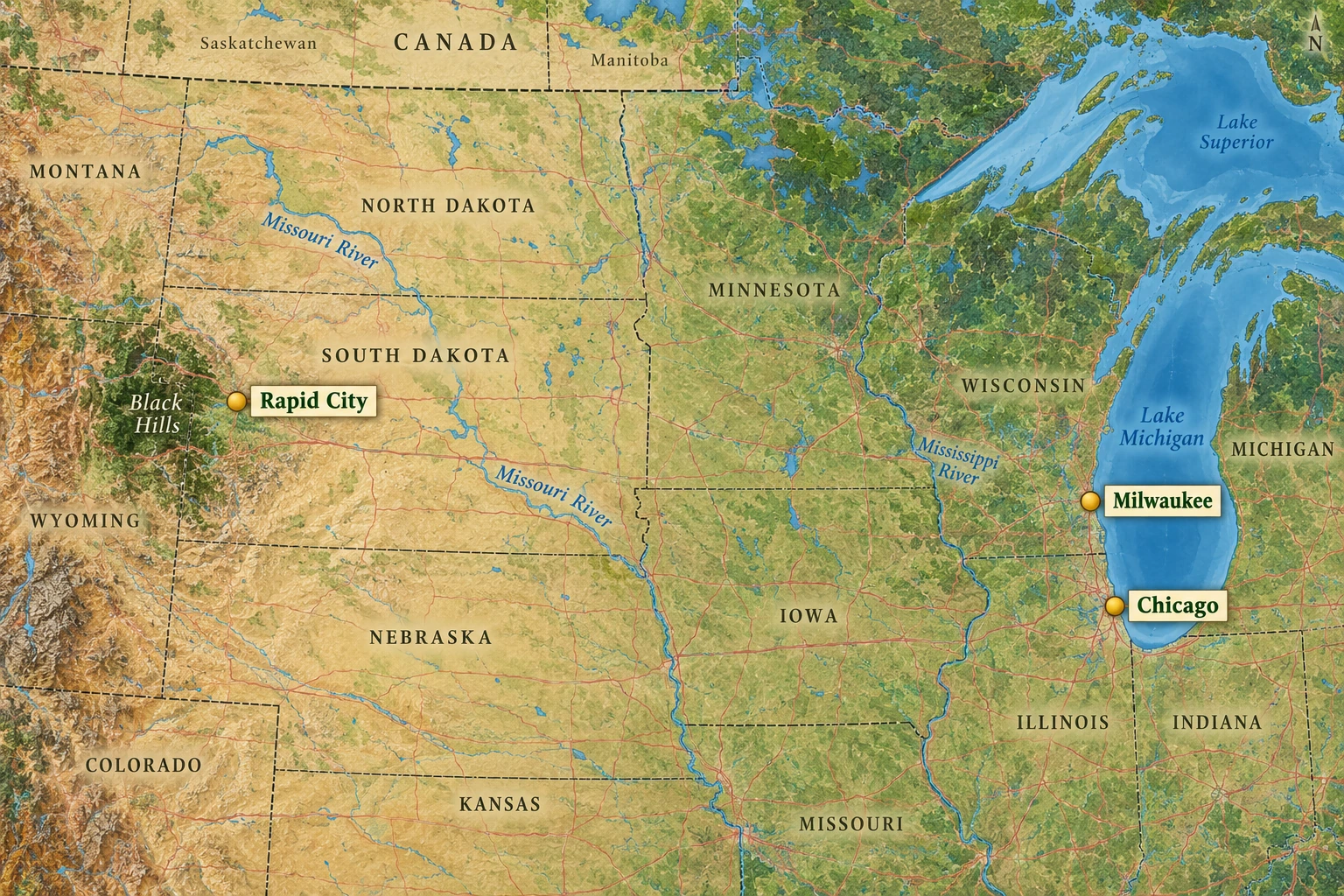
Geographic reference
Chicago: choose the neighborhood where a larger city becomes usable

Chicago is a strong comparison for a household that wants a larger professional or social world without making every ordinary task a drive. An acoustics engineer with a real assignment and a print-shop operator considering a job change might value that possibility. Their search should start with the actual work destinations and the neighborhood life around them. The benefit is a repeatable city week, with enough options to build interests beyond the first job.
CTA publishes bus and rail maps, individual schedules and separate overnight information; regional services have their own networks. Use the correct operator for each part of the journey. Try the engineer’s required site and the print shop’s finishing hour, then groceries and an evening activity. Check the station approach, elevators where needed and the return when you are tired. A good connection may make one-car or car-free life practical at a particular address, but demonstrate the whole pattern before entering that saving.
Chicago city’s $1,440 historical gross-rent point estimate is above Baltimore’s $1,331. The gap alone is modest, while the actual home type and neighborhood can alter the payment substantially. Price heating and other utilities, building charges where applicable and any transport that remains. A move that increases the housing bill but removes an entire vehicle may still improve the month; another arrangement may add both costs. Compare those actual arrangements rather than city labels.
The trade includes a colder winter routine and more planned returns to Baltimore, alongside the opportunity and breadth you came for. Try the walk from a realistic home in the least appealing weather you can reasonably sample. Also test the activity you would attend after work, not only the lakefront on a free afternoon. Chicago is worth the transition when the neighborhood lets you use the larger city repeatedly, with time and money left for a life of your own.
Try first: Test the two work journeys and one late return from a home you can afford, then calculate the month with only the vehicles the trial actually requires.
Local sources: Maps - CTA · Chicago city, Illinois Census historical gross rent.
Rapid City: make the smaller-city choice about your whole year

Rapid City can suit a search for a smaller urban base and more frequent time near the Black Hills, especially when dependable work is already arranged. Picture a GIS technician with a genuine local position and a partner whose pension-administration employer has approved the actual remote location. They want an after-work outing often enough to change their year. That is a more useful purpose than expecting a scenic region to solve every housing or social question.
Start with the office, the remote workspace and two home areas, then the particular outdoor access you would use. A trip you enjoy on a free Saturday may fit poorly after the normal finishing time. Rapid Transit System provides Rapid Ride and Dial-A-Ride information; use the relevant route and eligibility information for the journeys involved. Do not enter a car saving until work, groceries, appointments and the less convenient day have all been tested.
Rapid City’s $1,109 historical gross-rent point estimate is below Baltimore’s $1,331, with a published margin of error that deserves attention. Compare the current home you need and the income terms you can retain. A quiet workspace, heating, transport and the visits back east all belong in the household month. If the remote arrangement changes, the second adult needs a credible alternative, rather than a budget that depends on the approval lasting forever.
The attraction is a smaller daily scale and a setting you intend to use. The compromise includes a different winter, fewer spontaneous Baltimore visits and the work of building a local circle. Plan one recurring indoor activity as well as the outdoor one, and ask what the household does during the least convenient season. Rapid City belongs on the shortlist when the working week is sound and the landscape adds a regular pleasure rather than a promise postponed until vacation.
Try first: Make the office and errand circuit from two homes, then time the specific after-work outing and price the winter month and Baltimore visits.
Local sources: Rapid City Rapid Transit System · Rapid City city, South Dakota Census historical gross rent.
Milwaukee: let the housing search support a hands-on working life

Milwaukee can be a useful comparison for someone who wants a city setting and a household budget that leaves space for a practical craft. A cabinetmaker considering confirmed employment might want to keep a small personal making practice, while a partner hopes to return to a weekly dance class. Their next home needs to support both ordinary interests. The attraction is the arrangement those activities can form, with work and usable local connections around them.
Milwaukee County Transit System publishes routes including CONNECT 1 and other cross-city services. Compare the particular workplace, class and home before assuming that the same corridor serves all three. A cabinetmaker may need to drive tools to work even when the partner can use the bus. Separate job transport from personal errands, and check the class’s actual return time. The most economical arrangement may be mixed rather than identical for both adults.
The historical gross-rent estimate is $1,059, below Baltimore’s $1,331. That makes a current home search worthwhile if earnings are dependable. It does not establish permission for woodworking in an apartment or price a separately suitable workshop. Ask about noise, equipment, storage, permitted use and the practical loading route before choosing space for the craft. Include any separate premises in the comparison, along with heating, transport and visits to Baltimore.
The trade can be a more workable housing-and-activity month for a colder seasonal routine and a new support network. Visit the home area on a normal working day, follow the grocery route and try the dance-class journey. Leave time for a riverfront or lakefront outing only after those ordinary tasks. Milwaukee becomes a strong candidate when the practical week leaves room for the making and social life you wanted, with the costs and permissions settled for the actual spaces involved.
Try first: Compare the complete work-and-class week and the permitted making space; use the confirmed income and all premises costs to test the apparent housing advantage.
Local sources: Routes & Schedules · Milwaukee city, Wisconsin Census historical gross rent.
A mountain-region or island chapter
Denver and Albuquerque invite different mainland comparisons; Honolulu appears in a separate Hawaii inset at another scale. Each needs its own income, seasonal and transition plan.
Two mainland landscapes and a separate island chapter

Geographic reference
Denver: decide how much of the mountain-region life you will use

Denver makes sense as a setting-led comparison when an actual opportunity or approved income arrangement can support its housing costs. Consider a sign-language interpreter with confirmed assignments and a partner who wants to spend more regular time outdoors. The interpreter’s schedule may involve changing destinations, so a home selected only for the easiest route toward the mountains could make the workweek harder. Begin with the assignments you can rely on, then see where the outdoor ambition fits.
RTD’s bus and rail information helps you examine specific urban journeys. An attractive transit connection to one central destination may be less useful for several client sites. Compare the real schedule, including preparation and the trip home, then price the driving that remains. The household can value a city park on weekdays and a longer outing on selected days; those are different benefits, and they need different amounts of travel and free time.
Denver city’s historical gross-rent estimate is $1,831, well above Baltimore’s $1,331. A suitable confirmed income or a deliberate spending choice is needed; the mountain-region setting does not make the increase disappear. Include the particular home’s utilities, vehicle or transit costs and the money needed for returns east. If work bookings vary, build the recurring month from a dependable level and keep the less certain assignments separate.
The exchange is a different urban-and-outdoor year for a higher housing baseline, seasonal adaptation and distant Baltimore help. Try the ordinary work circuit and the local outdoor activity first, then a longer outing on the day you would actually have available. Denver belongs on the shortlist when the setting improves enough of the year to justify the full household cost, including the weeks when work is busy and the mountains remain a plan for another day.
Try first: Build one realistic working week from the confirmed assignments, then add the outdoor outings you could actually repeat and compare the full monthly cost.
Local sources: Routes and Services | RTD-Denver · Denver city, Colorado Census historical gross rent.
Albuquerque: choose the dry-country light with a workable care plan

Albuquerque can appeal to a household seeking a different light, landscape and scale of daily life. Imagine an engineer evaluating a real solar-controls position while an older parent considers joining the household. The engineer may be drawn by a particular project; the parent may value a manageable home and a regular place to meet people. Both reasons deserve equal attention before a view of the Sandias settles the search.
ABQ RIDE publishes route and schedule information for comparing the actual workplace, home and recurring errands. Check each person’s complete journey rather than assuming that the person who drives will handle everything. The parent’s front-door route, shade, crossings and access to appointments matter alongside the engineer’s commute. If the home needs cooling or heating changes, discuss the real condition and running costs with the owner or appropriate provider.
Albuquerque city’s $1,145 historical gross-rent estimate is below Baltimore’s $1,331. A suitable home may produce a useful difference, but the comparison must include income, utilities, transport and any paid help that replaces familiar support. The dry setting is a preference to test, not a medical benefit to infer. For a household with ongoing care, establish the actual local provider and continuity arrangements before letting that assumption carry the decision.
The potential gain is a new professional chapter and a landscape the family enjoys in ordinary life. The compromise includes seasonal comfort, different daily distances and a much longer journey to Baltimore people. Make the parent’s independent outing part of the visit, then try the engineer’s work route and a modest outdoor activity they could share. Albuquerque earns its place when both adults can picture a week they want and the household can explain how it will keep working when one person is unavailable.
Try first: Test the parent’s own errand and appointment circuit, the confirmed workplace journey and the actual home’s comfort and costs in a less convenient season.
Local sources: Routes & Schedules — City of Albuquerque · Albuquerque city, New Mexico Census historical gross rent.
Honolulu: make an island chapter work beyond the first arrival

Honolulu can be a serious, purposeful move when a confirmed appointment or close family connection gives the island chapter a foundation. A marine-policy researcher weighing a fixed-term role and a partner who works as a chef would need to compare two very different schedules. The researcher’s project may be clear while the chef’s employment is still developing. Fund that first stage honestly, rather than letting the prospect of a beautiful setting stand in for a second paycheck.
Keep the actual Oʻahu locations together on the map. Skyline and TheBus serve different parts of the travel pattern, and an airport rail connection does not mean a train reaches every home, workplace or beach. Use current operator information for the route you would need and the hour the restaurant shift would finish. Test groceries and the trip carrying what you normally carry. Retaining a car may be sensible; its real cost belongs beside the home, parking and other recurring bills.
The survey row is Urban Honolulu CDP, with a $1,823 historical gross-rent point estimate against Baltimore city’s $1,331. It does not describe all of Oʻahu, price a specific neighborhood or guarantee a furnished home for the project term. Check the exact lease period and practical setup. Island travel and the shipment or replacement of household belongings also need separate provider terms and cash; a mainland driving estimate is not a model for this transition.
The reward could be meaningful work and an everyday relationship with an island setting you value. The compromise is a higher housing baseline, less casual mainland contact and a more deliberate exit or renewal plan after the appointment. Ask what would make you stay and how you would fund returning if the term ends. Honolulu is worth the move when the whole household can enjoy the chapter without being trapped by the cost of changing course.
Try first: Compare the actual appointment term, two suitable leases, the chef’s likely working hours and the full arrival-and-return allowance before committing.
Local sources: Honolulu Skyline and TheBus information · Urban Honolulu CDP, Hawaii Census historical gross rent.
Three ways to build a Pacific-side week
A coastal activity, a smaller cycling-and-transit circuit or a capital-city opportunity can lead to different home searches. Compare the setting with the actual household month and the journeys it would create.
Three distinct Pacific-side home searches

Geographic reference
San Diego: decide what a coastal week is worth to you

San Diego is a coastal comparison for a household with dependable income and a clear idea of how it would use the setting. A maritime-instrument calibration technician considering an actual role may want a home that leaves room for an evening near the water. A partner might prefer a small community class and reliable errands over a distant view. Both uses matter: a coastal move can be worthwhile without every member of the household wanting the same beach routine.
MTS publishes Trolley information alongside the wider travel network. Place the real workplace, the class and two plausible homes on that network, then test the last part of each trip. A port-related or technical job is not necessarily beside the station you first notice. Keep the errands and late return in the comparison, and price the vehicle that remains necessary if the complete pattern does not support giving it up.
San Diego city’s $2,313 historical gross-rent point estimate is the highest among these selected US examples, compared with Baltimore’s $1,331. The useful case therefore needs an adequate confirmed income or an explicit choice to spend more for the coast. Use actual suitable homes and ask what the payment includes. Do not balance a stretched housing budget with a hoped-for promotion or assume that a pleasant outdoor year removes other recurring costs.
The trade is a setting and opportunity you may use often for a substantial housing commitment and faraway Baltimore support. Try the coastal outing after the real workday, including the return to a home within budget. Give the partner’s class the same attention. San Diego belongs on the shortlist when those regular pleasures remain worth the cost in an ordinary month and the household has enough reserve to enjoy living there, rather than spending the new chapter worrying about the next payment.
Try first: Compare two sustainable homes against the workplace and each adult’s repeatable activity, then calculate the monthly amount left before deciding how much coast you can afford.
Local sources: Trolley | San Diego Metropolitan Transit System · San Diego city, California Census historical gross rent.
Eugene: build a smaller-city routine that also works in the wet season

Eugene can be a useful Pacific-side alternative when the desired change is a smaller city and an everyday routine with more outdoor travel. A library-systems administrator with a confirmed role and a partner returning to regular cycling might value that shape of week. They need a home that works for the office, ordinary errands and the rides they will actually take. The city’s scale can help focus the search, but it does not make every address equally convenient.
Lane Transit District publishes its system map and route information, including EmX. Use the actual stop and timetable for the workplace and the errands that cycling will not always cover. Try the trip in wet weather, carrying a grocery load or the work bag you normally use. Decide how bicycles can be stored and maintained at the particular home, and what happens when one person cannot ride. Those small practical details determine whether the new habit is comfortable enough to keep.
Eugene city’s historical gross-rent point estimate is $1,402, above Baltimore’s $1,331. This is not a clear cost-saving move on the survey figures. A confirmed income and the actual home-and-transport arrangement must make the month work. Price the space you need for two people’s daily activities rather than assuming a smaller city means a larger affordable home. Include visits east and any temporary gap between the two adults’ income plans.
The possible gain is a manageable local circuit and an outdoor habit that becomes part of ordinary life. The compromise is a different wet-season routine and more deliberate contact with Baltimore people. Visit a realistic home area on a working day and include an indoor activity that would remain appealing in bad weather. Eugene is worth keeping when the routine works through the year, with enough social life and practical flexibility to survive the days when cycling is not the answer.
Try first: Test the office, groceries, bicycle storage and the wet-day alternative from two attainable homes; include the actual household income and returns east.
Local sources: Routes, Maps, & Schedules - Lane Transit District · Eugene city, Oregon Census historical gross rent.
Sacramento: organize a new chapter around a reliable weekly base

Sacramento can interest a household with a specific California opportunity and a wish for a different annual setting. A water-resources planner with a confirmed position and a partner teaching ceramics might need a home that supports an office schedule, class preparation and a child’s routine. Their purpose is to build a reliable base for those activities, rather than treating the capital city as an interchangeable substitute for the coast.
SacRT’s network information helps you compare light rail and bus connections to the actual workplace, teaching location and ordinary errands. Check the complete school or care handoff as well as the adult commute. If the ceramics work requires a studio, kiln access or deliveries, inspect the real arrangement and permissions separately from the home. A spare room can support preparation while still being unsuitable for the activity itself.
Sacramento city’s historical gross-rent point estimate is $1,779, above Baltimore’s $1,331. The planner’s actual income, the teacher’s dependable schedule and the home’s full costs need to support that difference. Include cooling, transport, any studio payment and the early period before classes are established. Use the recurring month you can responsibly fund, keeping possible future enrollment and pay increases outside the baseline.
The gain could be a particular professional chapter and a home that gives the household a coherent weekly rhythm. The compromise includes hotter summer conditions, a higher housing baseline and distant Baltimore help. Test the child’s longest day and the teacher’s evening return, then add the outdoor activity that makes the setting appealing. Sacramento earns a place when those ordinary pieces fit together well enough to justify the transition, with reserves for the months when the timetable or second income is less settled.
Try first: Compare the confirmed job, school or care, permitted teaching space and summer home costs on one weekly calendar before selecting the home area.
Local sources: SacRT system maps · Sacramento city, California Census historical gross rent.
Compare what remains after the whole household month
Begin with the amount left after recurring essentials, then ask whether the life around that amount is the one you want. Dependable take-home income minus housing, utilities, transport, food, care, insurance, debt and other continuing commitments gives you a common starting calculation. Use the same categories for the present arrangement and every destination. Add a separate line for an expense that genuinely changes, rather than quietly leaving it out of one option.
The four examples below use invented monthly inputs to show why the result matters. The current household keeps $1,100. A cheaper home with reduced income leaves $700. An arrangement where income and handoffs fit leaves $1,550. More driving and paid help reduce a fourth option to $300. None of these figures is a Baltimore or destination price. They demonstrate the questions you need to answer with real homes, agreed pay and the practical support each arrangement requires.
Consider the interpreter and equipment repairer from the opening. A more predictable interpreting schedule may reduce earnings while restoring evenings they value. That can be a deliberate, worthwhile exchange if the household can afford the resulting month. The repairer’s hoped-for specialty income should stay separate until it is dependable. Compare the life supported by the lower, reliable amount, including the time released; do not make every future possibility arrive at once to balance the model.
Keep transition spending separate from the later month. Travel, moving, setup, temporary accommodation, overlapping housing and a gap before earnings begin can use savings even when the recurring arrangement improves. In the stronger example, the improvement is $450 a month: $1,550 rather than $1,100. A chosen $6,300 of unrecoverable transition spending takes fourteen such months to recover arithmetically. A refundable deposit still needs cash up front, and the emergency reserve should remain a separate decision.
Try a weaker month before committing. Delay the second paycheck, use fewer freelance bookings or include the paid help you would need when a relative cannot come. Decide which uncertainty the household can carry and what would change the timing of the move. This gives you choices before a viewing deadline creates pressure. An affordable first year is more useful than a model that becomes comfortable only after several unconfirmed improvements.
The historical table gives a consistent background, with important limits. Gross rent is a survey measure for occupied cash-rent homes, including applicable utilities; it is not today’s asking rent. Household income is annual and before tax, may include several earners and is not an offered salary. Each estimate has a published 90% margin of error. Differences from Baltimore subtract point estimates; they are not a significance test or personal saving. Compare actual suitable homes and the pay you can rely on before deciding.
For an international option, make a recurring model in the currency used for the bills, keeping the exchange assumption visible. Add the relevant insurance, residence and work arrangements, education or care, and returns to Baltimore. Test a less favorable exchange rate and an uneven beginning without assuming that foreign living must save money. A move can be chosen for family, work, language or setting; a clear budget helps you enjoy that purpose without leaving the household’s funding to chance.

Chosen monthly US-dollar inputs · illustrative arithmetic, not city quotes
| Monthly result | Current household month | Cheaper home, reduced income | Income and handoffs fit | More driving and paid help |
|---|---|---|---|---|
| Money left each month | $1,100 | $700 | $1,550 | $300 |
| Take-home income | $6,800 | $5,900 | $7,100 | $7,000 |
| Recurring essentials | $5,700 | $5,200 | $5,550 | $6,700 |
Current household month
$1,100Money left each month
- Take-home income
- $6,800
- Recurring essentials
- $5,700
Cheaper home, reduced income
$700Money left each month
- Take-home income
- $5,900
- Recurring essentials
- $5,200
Income and handoffs fit
$1,550Money left each month
- Take-home income
- $7,100
- Recurring essentials
- $5,550
More driving and paid help
$300Money left each month
- Take-home income
- $7,000
- Recurring essentials
- $6,700
The cheaper-home example leaves $700 instead of $1,100 after the income change. The third arrangement leaves $1,550 because income, transport and household handoffs work together. The fourth leaves only $300 once driving and paid help are included.
See the hypothetical inputs
| Recurring expense | Current household month | Cheaper home, reduced income | Income and handoffs fit | More driving and paid help |
|---|---|---|---|---|
| Housing and utilities | $2,200 | $1,800 | $2,050 | $1,950 |
| Transport | $700 | $850 | $600 | $1,450 |
| Food and household basics | $1,050 | $1,050 | $1,050 | $1,050 |
| Care and insurance | $850 | $850 | $900 | $1,350 |
| Debt and other recurring essentials | $900 | $650 | $950 | $900 |
Current household month
- Housing and utilities
- $2,200
- Transport
- $700
- Food and household basics
- $1,050
- Care and insurance
- $850
- Debt and other recurring essentials
- $900
Cheaper home, reduced income
- Housing and utilities
- $1,800
- Transport
- $850
- Food and household basics
- $1,050
- Care and insurance
- $850
- Debt and other recurring essentials
- $650
Income and handoffs fit
- Housing and utilities
- $2,050
- Transport
- $600
- Food and household basics
- $1,050
- Care and insurance
- $900
- Debt and other recurring essentials
- $950
More driving and paid help
- Housing and utilities
- $1,950
- Transport
- $1,450
- Food and household basics
- $1,050
- Care and insurance
- $1,350
- Debt and other recurring essentials
- $900
These invented inputs describe no quoted home, city salary, care rate or insurance offer. Replace them with the actual household amounts you can support, keeping possible future earnings separate.
Here the recurring improvement is $450 a month: $1,550 minus $1,100. A chosen $6,300 in unrecoverable transition spending would take fourteen such months to recover. Deposits and the emergency reserve still require separate cash even when they are not final expenses.
- The recurring monthUse dependable income and every continuing household commitment.
- Cash for the transitionSeparate final spending from deposits or other recoverable cash tied up.
- A reserve that stays availableFund the less settled beginning without using the same savings twice.
Hypothetical example · $450 more left per month · $6,300 transition spending
The model assumes the improvement continues each month. A delayed paycheck or extra expense changes the timing. Deposits and the reserve remain separate cash decisions.
Six household comparisons: which change resembles yours?
These invented examples keep the household circumstances visible beside the arithmetic. They describe no local price, offered salary or available care place. Replace the inputs, including the separate transition allowance, with the terms that apply to your own move.
Hypothetical household inputs · USD per month
Dependable income and a useful transport pattern release more of the month. The new home still needs a reachable recurring activity and room for the person’s practical interests.
Read the chosen inputs
Take-home income: $4,100 current; $4,300 compared. Recurring essentials: $3,300 current; $3,250 compared.
| Expense | Current month | Compared month |
|---|---|---|
| Housing and utilities | $1,450 | $1,350 |
| Transport | $300 | $250 |
| Food and household basics | $650 | $650 |
| Care and insurance | $350 | $400 |
| Other essentials and Baltimore visits | $550 | $600 |
Chosen unrecoverable transition spending: $5,000. A continuing $250 monthly improvement would recover the chosen $5,000 transition spending in 20 months arithmetically.
Hypothetical household inputs · USD per month
The funded income change covers a higher home payment in this example. Add tuition or program charges wherever the actual funding leaves them to the student.
Read the chosen inputs
Take-home income: $2,900 current; $3,200 compared. Recurring essentials: $2,450 current; $2,630 compared.
| Expense | Current month | Compared month |
|---|---|---|
| Housing and utilities | $1,100 | $1,250 |
| Transport | $250 | $200 |
| Food and household basics | $480 | $480 |
| Care and insurance | $220 | $250 |
| Other essentials and Baltimore visits | $400 | $450 |
Chosen unrecoverable transition spending: $4,800. A continuing $120 monthly improvement would recover the chosen $4,800 transition spending in 40 months arithmetically.
Hypothetical household inputs · USD per month
The lower housing payment does not recover the income reduction and extra paid care. The actual care place, hours and payment must fit before the household relies on this move.
Read the chosen inputs
Take-home income: $8,500 current; $8,200 compared. Recurring essentials: $7,300 current; $7,600 compared.
| Expense | Current month | Compared month |
|---|---|---|
| Housing and utilities | $2,600 | $2,300 |
| Transport | $750 | $900 |
| Food and household basics | $1,150 | $1,150 |
| Care and insurance | $1,900 | $2,300 |
| Other essentials and Baltimore visits | $900 | $950 |
Chosen unrecoverable transition spending: $12,000. This arrangement does not produce a recurring improvement to recover the transition spending. It needs a valued purpose and a funded way to carry the resulting month.
Hypothetical household inputs · USD per month
Higher dependable pay leaves a little more despite a larger home and support payment. The school-day handoff must also work when one adult is delayed.
Read the chosen inputs
Take-home income: $7,900 current; $8,400 compared. Recurring essentials: $6,000 current; $6,350 compared.
| Expense | Current month | Compared month |
|---|---|---|
| Housing and utilities | $2,350 | $2,550 |
| Transport | $650 | $550 |
| Food and household basics | $1,100 | $1,100 |
| Care and insurance | $850 | $1,050 |
| Other essentials and Baltimore visits | $1,050 | $1,100 |
Chosen unrecoverable transition spending: $9,000. A continuing $150 monthly improvement would recover the chosen $9,000 transition spending in 60 months arithmetically.
Hypothetical household inputs · USD per month
The smaller-home arrangement leaves more while allowing extra help and family visits. Entrance, maintenance terms and an independent errand route are part of making the simpler life real.
Read the chosen inputs
Take-home income: $4,600 current; $4,600 compared. Recurring essentials: $4,200 current; $3,950 compared.
| Expense | Current month | Compared month |
|---|---|---|
| Housing and utilities | $1,800 | $1,500 |
| Transport | $500 | $350 |
| Food and household basics | $700 | $700 |
| Care and insurance | $650 | $750 |
| Other essentials and Baltimore visits | $550 | $650 |
Chosen unrecoverable transition spending: $7,500. A continuing $250 monthly improvement would recover the chosen $7,500 transition spending in 30 months arithmetically.
Compare historical rent and household-income estimates
Exact Census places, including the named cities and CDPs · 2020–2024 ACS five-year estimates · 2024 US dollars. Gross rent covers occupied cash-rent homes and applicable utilities, not current listings. Income is annual household income before tax, not a salary or take-home amount. The ± figure is the published 90% margin of error. Differences subtract Baltimore point estimates; they are not a significance test or personal saving. Scroll the table sideways on a narrow screen.
Build the move around the work you will actually do
A useful work-led move begins with the real location, duties, dependable pay, hours and start conditions. An offer that clearly supports the first year gives you something to build around. A citywide income estimate, a list of employers or an encouraging conversation gives you a research lead. Keep those stages separate so that the household does not sign a home commitment on the strength of income that has not become available.
Put both adults’ work on the same calendar. The aircraft inspector and museum registrar considering Fort Worth need two locations and two possible schedules, even if only the inspector’s role is confirmed. Fund the second search and decide how long the household can support it. The same care applies when one person is retraining, caring for a relative or developing a small practice. Their chapter deserves a place in the home search before the first opportunity takes all the space.
A hands-on occupation changes what a useful home or workspace looks like. The upholsterer comparing Tulsa may need suitable separate premises, loading access or storage. The bicycle repairer considering Harrisburg needs permission for the actual activity, not only an extra room. A ceramics teacher may need a kiln and an approved teaching space elsewhere. Establish those practical terms with the property owner and relevant authority, then put the travel and payment beside the home budget. More square footage is valuable only when you can use it for the purpose that matters.
For work with changing sites, use a realistic spread of assignments. An interpreter or field-service specialist should not choose the home around the easiest single trip if the ordinary month includes several locations. Ask the actual employer or client about attendance and travel requirements. Price the vehicle, tools, parking or unpaid travel that remains. A clear schedule can be worth as much to the household as a nominal pay increase that disappears into longer days.
Remote work also needs an actual destination agreement. Confirm the employer’s location, pay, hours and practical conditions in writing, then test the home’s internet and workspace. Think through calls when another household member is studying, sleeping or using the same room. Abroad, the employer’s approval and the applicable residence and work permissions are separate matters. Settle both for the intended arrangement before treating the remote job as portable household funding.
Where a credential is required, ask the actual licensing or professional authority about the destination and proposed duties. Include any assessment, examination, supervision or delay in the first-year plan. An overseas host appointment also needs the appropriate permission and start sequence. You do not need to predict every later career step, but you do need a credible account of the work you can begin and the income that arrives while the next stage develops.
Finally, choose the life that surrounds the work. A stronger role may justify moving farther, while a more predictable one may justify earning less. Ask which evenings, relationships and ordinary activities the arrangement makes possible. A city becomes a better home when the opportunity supports a whole week you want to live, with a clear place for every person relying on the move.


Make the move work for the people sharing it
A shared move becomes much clearer when each person has a week of their own in the plan. Put work, study, care, ordinary errands and one valued activity on the same calendar. Notice who can travel independently and which handoffs depend on the same adult. The aim is a household that can use the new home, rather than a strong opportunity for one person surrounded by unresolved arrangements for everyone else.
For a household with a young child, compare the actual care place, hours, availability and payment. A lower housing bill can be outweighed by paid care that replaces a familiar relative’s help. Ask what happens when a shift changes or the usual collector cannot come. The useful home is one where the plan has a manageable fallback, with the required cash and adult time available. Do not use a hoped-for place or informal promise as though it were confirmed.
For school-age children, begin with the address and the school system responsible for it, then confirm enrollment and the daily route. Add the gap before school, the afternoon activity and the journey home. The Columbia household in the nearby profiles needs the school counselor’s workday and the data coordinator’s attendance days to fit the child’s actual timetable. A house halfway between the adults’ destinations may still leave the child with an awkward day.
A teenager may need independence as much as an extra room. Ask which friendship, class, sport or practical interest they hope to keep, and how a similar activity could work in the new place. Try the evening journey and consider the cost and safety of the actual route. Give the young person a real question to help answer during a visit. A move is easier to discuss when their concern has a place in the choice, alongside the adults’ reasons.
When an older adult is moving too, start with the continuous route from the home to a useful errand, activity or appointment. A one-floor interior is helpful, while steps at the entrance, an unreliable lift or a difficult crossing can change its value. Discuss the day when the usual driver is at work or away. Include professional care or paid help where it is part of the actual arrangement, and establish continuity with the appropriate provider before the move depends on it.
An accompanying partner also needs more than a waiting period. If employment, language learning or a credential will take time, fund that chapter and choose a home that gives them practical independence and recurring local contact. Abroad, check the applicable residence and work position for each household member separately. One adult’s appointment does not by itself answer the other adult’s ability to work or a child’s education arrangements.
Finish the household conversation with two versions of the week: the expected one and the one where somebody is unavailable. If both remain manageable, you have a stronger basis for choosing the home. If the second version depends on the same exhausted person doing everything, change the address, timing or support plan while you still have options. The move should create room for the people sharing it, with its benefits and obligations visible to all of them.

- The expected dayMake both adults’ work and the child’s or parent’s own routine fit.
- The difficult dayTry the handoff when somebody is delayed, away or unable to drive.
- The useful adjustmentChange the home, timing or support while the choice remains open.
Choose how you will belong, alongside where you will work
A new place feels more like home when your week contains people you can see again without arranging a special occasion. Begin with an activity you enjoy enough to repeat: a practical class, a choir rehearsal, a library group, a community garden task or a regular volunteering session. Choose for interest and access. A large list of possible groups is less useful than one real session you could comfortably attend after the day you expect to have.
Ask about the next session, the cost, availability and what a newcomer needs. Then try the journey from a realistic home area, including the return. The cabinetmaker and partner considering Milwaukee might need very different activities and finishing times. Each should have a way to make local connections without depending on the other person’s workplace or transport. A shared interest can help, but separate interests also give a household resilience.
Moving alone makes ordinary contact especially worth planning. A person can enjoy solitude and still want familiar faces at a shop, class or place to walk. Look for a small circuit you would use repeatedly and inspect it at your actual hour. A home that is peaceful on a viewing may leave you isolated after work if every interesting activity requires a journey you will rarely make. Choose the level of quiet you want with that practical difference in view.
Keep old connections deliberately. Decide which Baltimore people you want to see, how often and in what form. A nearby home may preserve spontaneous visits; a farther one may need planned weekends, travel money and time off. Talk about that before treating the relationship as unchanged. Include some ordinary contact between trips, with a rhythm both people would welcome rather than an ambitious calendar that soon feels like another obligation.
Language, culture and family can be central reasons to move. An international household may value the chance to use another language every day or be closer to a relative’s ordinary life. Give that reason positive space in the comparison. Also establish practical ways to handle appointments, home terms and unfamiliar paperwork while language skills develop. A host, local contact or appropriate professional can help with a particular task; that support should supplement the household’s own growing independence.
Building relationships takes time even in a place you choose well. Leave some room in the first months for repeated, modest participation. You do not have to fill every evening or become confident immediately. A useful next home gives you a reachable beginning and enough energy to return. When two destinations are otherwise close, the one where you can picture that recurring life may be the more comfortable choice.


Use the home’s layout to change the work of living
A smaller home can be a substantial improvement when it removes tasks you no longer want and keeps space for the life you do. Begin by naming the work you would like to stop: carrying laundry between floors, maintaining rooms rarely used, managing a large garden or paying for storage without enjoying what is inside it. Then name the activities that must survive the change. Fewer rooms help only if those activities still have somewhere comfortable to happen.
Think of a retired theater dresser who wants less upkeep but still repairs clothing for family and enjoys having a friend to stay. A one-floor home with a stable work surface, useful light and a flexible guest arrangement may serve better than a larger house with several inconvenient levels. Measure the equipment and furniture that make the sewing possible, together with the clear paths around them. Do the same for cooking, a musical instrument or the practical interest that belongs to your household.
Inspect the route beyond the floor plan. Thresholds, the building entrance, lifts, a bin store, parking and the trip to an ordinary shop can matter as much as the bedroom count. Ask how deliveries, rubbish and laundry work on an inconvenient day. For a shared building, establish the actual maintenance responsibilities and charges. A smaller interior may remove some chores while adding rules, fees or journeys that need a place in the decision.
Keep the cost comparison complete. Include the payment, utilities, shared-building charges where applicable, storage, maintenance and transport from the actual address. A paid storage room can quietly preserve both the cost and the unfinished sorting work of the old home. Decide what you will use in the next place, what has another clear destination and what can be released before the move. The point is to make the home easier to enjoy, not to create a second home’s worth of belongings somewhere else.
Test three ordinary moments in the proposed layout: a morning when people need the same space, the household task you find most tiring and a visitor staying longer than an afternoon. If remote work or study shares a room, try the sound, light and privacy needed at the actual hour. These small rehearsals reveal whether the apparent simplicity of the floor plan carries through into real use.
Compare an attainable smaller home in Baltimore with the same idea in your favorite destination. You may discover that layout supplies most of the improvement, or decide that another place adds a family connection, setting or opportunity you also want. Either answer is useful. A successful smaller-home move leaves less work you dislike and enough room for the interests and relationships you intend to keep.


Choose the season and setting you will live through
Landscape can be a serious reason to move. A harbor walk, a dry-country morning, a lakefront or foothills after work can change how you spend the year. Make the benefit specific: which activity, from what access point, at what hour and how often? A view you enjoy once on a visit and an outing that becomes part of ordinary life are different gains. Both can matter, but the recurring one gives you a clearer home-search question.
Annapolis and San Diego offer different coastal routines, with different costs and daily geography. Denver’s mountain-region setting is different from a weeknight city-park walk. Rapid City’s Black Hills interest still needs a working local base. Honolulu adds island geography, arrival and return decisions that a mainland comparison does not cover. Let the activity determine the useful area to investigate rather than treating every place in the same broad landscape as interchangeable.
The NOAA comparison below uses 1991–2020 monthly mean temperatures at four named airport stations. Baltimore–Washington is 34.3°F in January and 78.3°F in July; Houston Intercontinental is 53.8°F and 85.1°F; Chicago O’Hare is 25.2°F and 75.4°F; Honolulu International is 73.6°F and 81.6°F. Monthly means include days and nights. They are historical station averages, not daily highs, a forecast or the temperature of every neighborhood.
Use the contrast to begin a practical conversation. Would you use the outdoor activity in the warmer or wetter part of the year? Does the actual home provide the comfort you need, with costs you can fund? How does the station approach or ordinary errand feel when the weather is least appealing? A milder January can be welcome while summer still changes the hour you go outside. A colder winter can be acceptable when the household likes the year it supports and has a workable daily route.
Property exposure is an address question. Once a home becomes serious, use the appropriate public records, owner disclosures and actual insurance terms for it, with qualified advice where needed. A city’s climate average does not establish flooding, building condition or the price and availability of cover. Keep those concrete property findings beside the payment, rather than assuming that the regional setting answers them.
Try the landscape from a home within budget, at the hour you would normally be free. Add the journey back, the equipment or access conditions that apply and a realistic alternative for a day you stay indoors. The destination is a stronger choice when the outdoor pleasure remains useful through an ordinary year. You can then decide how much money, distance or household change you are willing to exchange for it.

NOAA 1991–2020 airport monthly means · Fahrenheit · common 0–100°F bar scale
The means combine days and nights. They begin the seasonal comparison, without predicting a day, property condition or neighborhood temperature.
| Station | January | July |
|---|---|---|
| Baltimore–Washington airport | 34.3°F | 78.3°F |
| Houston Intercontinental | 53.8°F | 85.1°F |
| Chicago O’Hare airport | 25.2°F | 75.4°F |
| Honolulu International | 73.6°F | 81.6°F |
Airport-station monthly means, not a forecast or property condition. NOAA climate normals.
Give an international chapter a purpose and a workable basis
Moving abroad can be about joining family, accepting a particular appointment, studying or building a life in another language. Begin with that positive purpose. Then establish the residence and work basis that applies to each person, the income you can use and the ordinary household arrangements around it. Those foundations make the exciting part more concrete. They also distinguish a place you can enjoy visiting from one where the intended next chapter is actually possible.
The four profiles below are equally serious comparisons with very different starting conditions. South Tarawa in Kiribati is a host-supported, island-life question rather than a generic remote-work escape. Havana is a family-led possibility requiring attention to both Cuban status and the rules applying to people under US jurisdiction. Algiers is a professional or family chapter with its own language and daily geography. Fukuoka offers a Japanese city routine around an applicable appointment or other lawful basis. None is a universal recommendation for a Baltimore household.
Use the linked official route for the actual purpose and nationality. An employer’s agreement, a visa, permission to reside and permission to perform the intended work are related but distinct questions. A partner’s or child’s position also needs to be established separately. Do not let a visitor entry, a family visit or an attractive apartment listing answer a longer-term question it does not cover. Where the case needs legal or tax advice, obtain advice for that case before making dependent commitments.
Build the recurring month locally, with actual home terms, utilities, transport, communications, appropriate insurance and any care or education involved. State which currency funds it, what exchange assumption you used and what happens if that assumption weakens. Add the journey back to Baltimore, time differences and an exit or renewal plan. A short appointment can be a worthwhile chapter without becoming a permanent move; it still needs a funded way to finish or continue.
Give the accompanying adult a week of their own. A host may support one professional appointment while leaving the other person to arrange language learning, work permissions and local contact. Discuss that position before assuming they can simply carry on their US job. Choose a home whose practical routine lets both people participate, with the actual internet, transport and space their days require.
The primary information here was checked for this October 2026 edition; individual source pages keep their own dates. Conditions can change, so the next action points toward the actual authority, host and household terms that matter. Treat the maps as an introduction to relative places and settings. The useful outcome is a possible life you can explain, with its benefit and harder part visible enough to decide whether to investigate further.
Kiribati: a supported island chapter in South Tarawa
Closer profile: South Tarawa. Other place horizons: Betio · Bikenibeu.
South Tarawa within a much wider island country

Geographic reference

South Tarawa is worth considering when a genuine host-supported appointment or established family connection gives an island chapter a clear purpose. A Baltimore water-quality trainer weighing an actual fixed-term role would be choosing meaningful work and a deeply different daily setting together. The appeal could include being closer to the community around the project and living a more locally focused week. That is a different proposal from keeping the same remote-work life beside a tropical view.
Kiribati’s immigration authority publishes separate visitor, work, study and other visa information and an immigration manual. Establish the route for the actual activity, employer and each person moving. The host’s invitation is an important beginning, while the applicable permission and conditions still need to match it. Ask for the role, term, pay, work location, accommodation support and practical arrival arrangements in writing. This profile describes a possible decision, not a vacancy or a conclusion that a particular reader qualifies.
Tarawa is an atoll; South Tarawa is its connected southern urban area, with places such as Betio and Bikenibeu. They are not three distant mainland cities. The wider country also includes the Phoenix and Line island groups across a very large Pacific area. The atlas separates those geographies rather than making a neighboring-island commute out of them. Use the actual work and home locations to understand the routine the appointment would create.
The daily test should be quite concrete: a home with a known water and power arrangement, the real journey to work, groceries and communications that support the household. Canadian official travel information identifies limited facilities and communications in parts of the country, difficult road conditions and specific health and water concerns. It also warns against swimming in the polluted South Tarawa lagoon. A beautiful shore can be valued as a setting without being treated as a safe swimming place. Obtain appropriate current professional advice for the household’s health and insurance needs.
Build the month in Australian dollars using the host’s actual terms and current home costs. Include communications, transport, the goods you would need to obtain, suitable insurance and the journeys back to Baltimore. Do not assume an imported or specialized item is available at the time you need it. Ask the host how the appointment handles an interruption, a medical need or an earlier return, and budget what remains the household’s responsibility. A funded transition and exit are part of making the professional chapter usable.
The accompanying adult needs a plan beyond waiting for the trainer’s workday to finish. Their permitted activity, local contact, language learning and practical independence deserve attention before accepting accommodation. Try the home-to-errand route and a recurring activity with a knowledgeable local contact, using the transport actually available. A place can offer close community life while still requiring time and care to learn how to participate comfortably.
The exchange is a purposeful island appointment and a very different local year for a more involved household system and distant Baltimore support. South Tarawa is a stronger choice when the host and actual permissions support the whole household, with reliable answers about ordinary services and a funded return. If those pieces remain vague, keep the professional conversation open while choosing a different arrangement for the household rather than asking the shore view to carry the uncertainty.
Try first: Obtain the actual host and permission terms, then compare two home arrangements through water, power, work, groceries, communications and a funded return.
Local sources: Immigration – Ministry of Foreign Affairs & Immigration · Kiribati travel advice · Eutan Tarawa Council: Discover.
Cuba: give a Havana family chapter its own careful plan
Closer profile: Havana. Other place horizons: Santiago de Cuba · Camagüey.
Havana and two other Cuban city horizons
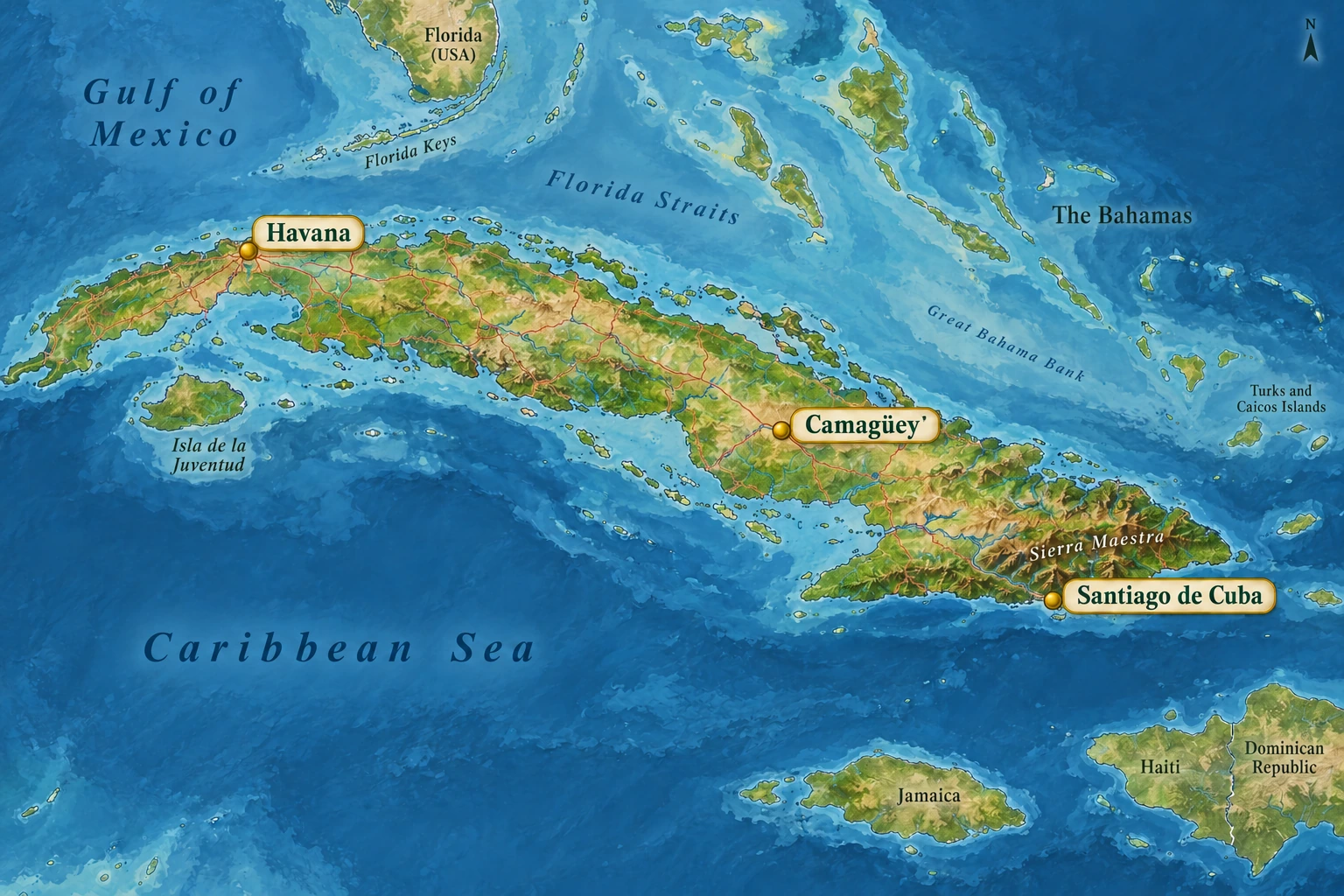
Geographic reference

Havana can enter a Baltimore household’s comparison because of an established family connection rather than a general search for cheaper tropical living. Someone may want to be part of an older relative’s ordinary week, share language and family life, or explore a longer chapter with a spouse. Those are meaningful reasons to investigate. They need a lawful, funded arrangement for the actual people and duration before a family visit can become a residential plan.
There are two separate legal sides to establish: the Cuban entry, residence and intended-activity position, and the rules applying to people under US jurisdiction. OFAC’s current guidance describes authorized categories and conditions for travel-related transactions, with recordkeeping and restrictions affecting certain entities and accommodation. Tourism is not an authorized shortcut. The September 2026 changes also mean that an older account of professional or educational travel may no longer describe the current authorization. Use the actual applicable rule, not a label chosen to fit a preferred itinerary.
For a household comparing a longer stay, begin with each person’s nationality, existing status, intended duration, activities and actual host address. Confirm the Cuban position with the responsible authority and obtain qualified advice for the US sanctions and transaction questions that apply. Permission for a family visit does not establish a general right to reside, take local employment or keep working remotely. Spain’s consular guidance describes an employer-led process for foreign work and a separate residence framework; it is useful orientation with its own date, not an individual approval or a substitute for current Cuban confirmation.
Once the legal basis is real, the household question becomes very practical. Which relative lives where, what help do they actually want, and how would the accompanying adult spend a normal day? Havana, Santiago de Cuba and Camagüey are different local settings rather than interchangeable versions of one family arrangement. Compare the actual home and the recurring family journey. Give language, company and mutual support positive space in the decision, without assuming that proximity alone settles care or independence.
Current US official information reports unreliable electricity and serious difficulties with basic services and supplies in Cuba. Use those conditions in the home decision rather than assuming the first pleasant street scene describes the whole day. Establish the actual water, power, food, communications and appropriate care arrangements, including what happens during an interruption. A household relying on continuous connectivity or a particular medical service needs those needs resolved specifically; the general idea of living nearer family cannot answer them.
Use current lawful payment and accommodation arrangements to build the month, with the applicable currency and exchange assumptions stated. Include insurance, travel, the spending rules relevant to your case and a funded ability to return to Baltimore. Do not assume that the cards, transfers or purchases used elsewhere will work or be permitted here. Keep a reserve for interruption separately from the recurring household budget, and avoid making irreversible home or shipment commitments while the legal and service questions remain unsettled.
The gain could be family presence and a cultural life that matters deeply to the household. The compromise is a more complex legal and practical arrangement, with current infrastructure limits that may make the timing unsuitable. Havana stays on a serious shortlist when those realities can be supported for the specific chapter intended. If they cannot, a different lawful family-contact arrangement may serve the immediate purpose better while a longer move remains under investigation.
Try first: Define the actual family purpose, duration, status and spending plan; settle the applicable Cuban and US requirements, then test the home’s ordinary services and return arrangements.
Local sources: 695 | Office of Foreign Assets Control · Trabajar · Establecerse · US official Cuba current travel and basic-service information.
Algeria: build an Algiers chapter around a real appointment
Closer profile: Algiers. Other place horizons: Oran · Constantine.
Algiers within northern Algeria

Geographic reference

Algiers is a useful international comparison when a genuine appointment or close family connection makes an Arabic- and French-speaking daily setting meaningful. Imagine a Baltimore technical translator weighing a confirmed engineering-project role and a partner who wants to develop language skills and a local circle. The value would be the actual work and participation in a different city life. An assumed low cost or a Mediterranean view alone would leave too much of the household plan unanswered.
Algeria’s foreign ministry distinguishes work, temporary-work, study, family and other entry routes. The official work information connects the application with the employment arrangement and the relevant authorization. Begin with the employer’s actual role, term, pay, duties and support, then confirm the applicable entry, residence and work sequence for the particular person. A visitor or business visit should not be treated as permission to perform whatever work the household hoped to continue. This is a possible professional scenario, not a job offer or an eligibility finding.
Algiers has a coastal-and-hillside geography that matters to the home search. The metro operator publishes its network and service information, giving you a concrete way to investigate useful corridors. Test the full route to the actual project office, including the climb or connection at each end. A station near a familiar central place does not establish access to every employer, home or service. Compare two plausible areas and the household’s evening return as carefully as the main work journey.
Build the month in Algerian dinars from the actual home and appointment terms. Include utilities, transport, communications, suitable insurance and the family visits you intend to keep in Baltimore. Ask how the household will make the ordinary payments and handle the income arrangement that applies. Keep the exchange assumption visible and test a weaker month. A supported appointment may resolve some setup questions while leaving deposits, accompanying-family costs or an early return to the household.
Give language a practical place in the plan. The translator’s working competence may be strong while the partner still needs help with a lease, an appointment or an ordinary service conversation. Arrange appropriate assistance for the important transaction and choose a reachable recurring activity for learning and local contact. The partner’s residence and permitted activities need their own confirmation. Moving together works better when both people have a reason to go out and a way to build independence around the professional chapter.
Current US travel guidance distinguishes Algiers and the general national situation from several higher-risk border and remote areas. Read the actual geographic advice for any travel you intend rather than treating a country label as a description of every destination. Oran and Constantine are other city horizons on the atlas, with different home and daily-route questions; they are not routine commuting substitutes for Algiers. A household choosing the capital can keep the first chapter focused on the local life it can realistically use.
The exchange is a particular professional and language chapter in a Mediterranean capital for new administrative, transport and household arrangements, alongside less spontaneous Baltimore contact. Try an ordinary workday, a shopping conversation and the partner’s independent activity from a realistic home. Keep Algiers when the actual permissions, appointment and household week support one another well enough to make the new setting a lived benefit rather than only an interesting view.
Try first: Confirm the appointment and applicable permissions for each person, then test the home–work–errand circuit and the accompanying partner’s independent local routine.
Local sources: Algeria MFA entry visa categories and work documentation · SEMA · US official Algeria geographic travel advice.
Japan: make a Fukuoka city week part of the opportunity
Closer profile: Fukuoka. Other place horizons: Osaka · Sapporo.
Fukuoka and two other Japanese city horizons
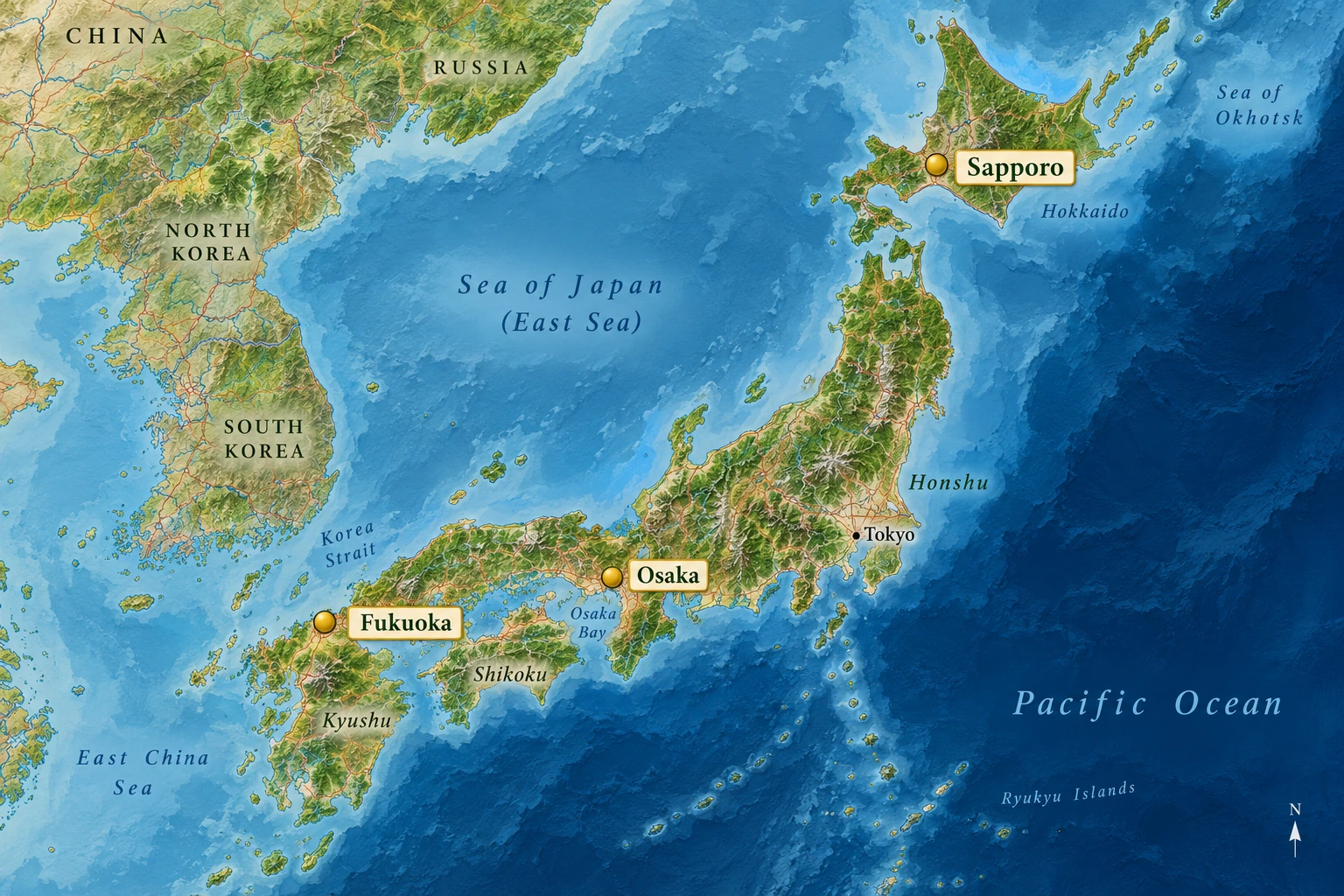
Geographic reference

Fukuoka is a strong comparison for a household that wants a Japanese city chapter and has an applicable professional, study or family basis for it. A Baltimore software-localization tester considering a real appointment might value work that uses their skills while building an ordinary life in another language. A partner with an interest in textile conservation needs a chapter of their own, whether that is an accepted course, a permitted role or a deliberately funded period of learning. Establish both purposes before choosing the apartment.
Japan’s foreign ministry describes working-visa categories and the supporting-document process, including the Certificate of Eligibility. The actual activity and qualifications must match the relevant route; a job title alone does not settle that match. A Certificate of Eligibility is also not a guarantee of visa issuance. Confirm the appointment, the sequence and the applicable position for every accompanying person. An employer’s willingness to hire and a partner’s hoped-for course are important leads, while the household still needs the permissions and terms that make them usable.
Fukuoka City Subway publishes the Airport, Hakozaki and Nanakuma line geography and connections. Use the actual office or course and two plausible home areas to test the daily circuit. Include the station approach, transfers where needed, groceries and an evening return. A compact-looking route can still be inconvenient for a particular timetable or access need. The useful home is the one that lets each person participate in the city with the transport they can comfortably use.
The city’s foreign-resident resources and Japan’s living-and-working guidance provide practical starting points for the household setup. Follow the current information for the actual municipal, housing and other tasks that apply, rather than copying another newcomer’s checklist as though every status and lease were the same. Give important documents appropriate language support while you learn. A host’s help can be valuable, with responsibilities and any limits made clear before the household relies on it.
Build the month in yen with the actual pay, deductions and home terms, including setup charges, utilities, transport, communications and insurance or other required arrangements relevant to your case. Price the space and storage you need for work and the partner’s interests. Keep the exchange assumption visible when income or savings come from the United States, and budget Baltimore visits. An appealing rental figure does not by itself tell you what the complete first year will require in cash.
Give the partner a practical route into local life beyond the tester’s workplace. Confirm the actual course or activity, its language and attendance requirements and the journey home. A weekly class can be a useful beginning when it is reachable at the hour the household will have free. Also discuss the time difference for keeping Baltimore contact and what happens after the first appointment term. A defined chapter can be worth choosing without requiring a promise to stay forever.
Osaka and Sapporo are other Japanese city horizons on the atlas, with different scales and seasonal questions; they are not interchangeable home areas for a Fukuoka job. The exchange here is a particular professional and language experience for new administrative and household systems and distant familiar support. Keep Fukuoka when the applicable permission, reliable funding and each person’s ordinary week make that experience accessible. The best comparison visit tries a service conversation and normal workday, alongside the part of the city that first made you curious.
Try first: Settle the actual appointment or other residence basis for both adults, then compare two homes through work, groceries, the partner’s activity and a realistic first-year yen budget.
Local sources: Japan MOFA working visa · ROUTE MAP | FUKUOKA CITYSUBWAY · 福岡市 Life in Fukuoka - 福岡市で生活する外国人の方へ · 外国人生活支援ポータルサイト | 出入国在留管理庁.
Use a visit to answer the question that could change your mind
A comparison visit works best when it begins with one unresolved decision. Can the second adult get home after the class? Does the parent have an independent errand route? Will the outdoor outing fit after the real working day? Choose the question that would make you keep, change or set aside the option. Then arrange the visit around a plausible home area and the actual hour involved, with enough time to compare a second arrangement where that could change the answer.
Start one part of the day as though you already lived there. Make the journey to the workplace or study location, including the approach, waiting, transfers, parking and final entrance that apply. Use the transport you expect to have and carry what you normally carry. A quiet midday trip may be useful for one household and almost irrelevant to another. Record the actual trial conditions so that a convenient day does not silently become a promise about every day.
Add an ordinary errand and the activity that gives the move its purpose. Buy a few groceries, find the approach to the appointment or try the path to the class. If the setting is the reason, do the coastal walk, park outing or other permitted activity from the home area after the work trial. Include the trip back when you are tired. This makes the comparison about a repeatable week rather than a collection of attractions reached from a hotel.
Let each person lead one part. The child can investigate a real activity; the accompanying partner can test an independent evening; the older adult can inspect the route that matters most to them. Listen to what became easier and what felt awkward without forcing immediate agreement. Different reactions can reveal that another home area would work better, or that the destination’s main advantage matters much more to one person than another.
Notice the home as well as the neighborhood. Light, noise, temperature, storage, stairs and the entrance can change the value of an appealing location. Ask the owner or appropriate provider about the actual terms, condition and permitted uses that affect your plan. A visit cannot establish every hidden property issue, but it can help you identify the specific evidence or professional inspection needed before making the commitment.
Finish with a short decision note: what improved, what became harder and what remains unresolved. Keep the destination with a named next action, change the home search, or set it aside for a reason. For an international visit, settle the permitted purpose and relevant travel arrangements first; a trial routine does not create residence or work permission. The visit has done useful work when you return with a clearer choice, even if the place you liked most in pictures leaves the shortlist.

- Choose a questionName the uncertainty that would change your shortlist.
- Rehearse the dayUse an attainable home area, real hour and expected transport.
- Compare another arrangementTry the second location or household member’s concern.
- Leave with an actionKeep, change or set aside the option with a reason.
Keep two to four places you can explain clearly
Choose a small enough shortlist that you can investigate the real arrangements. Give each place one sentence: the gain you want, the important compromise and the next piece of evidence that would change the decision. “Chicago could support both work plans and reduce our driving if this home corridor handles the late return” is useful. So is “Annapolis may be worth a higher payment if the actual job and harbor routine fit.” A place without a household reason can wait.
Include the strongest realistic Baltimore arrangement if it remains a genuine option. Compare suitable homes on the same terms, using the income, space, access and support you need. Do not place an ideal future apartment against only the most frustrating part of the present week. The comparison is fairer when both options receive a plausible home and an honest account of what they make easier or harder.
Use the worksheet below to hold the choices together. Start with what must change and three things to keep. For each place, enter the actual income basis, suitable home, complete monthly result, the people or services you must reach and the unresolved question. Dates help you distinguish an agreed term from an old lead. You can print the sheet or keep your own notes; its purpose is a clearer conversation, without an application or registration.
Decide the next action before adding another destination. You may need the employer’s written location terms, the price and availability of a suitable home, a care arrangement or a weekday journey trial. Choose the action that could change the choice, then update the comparison with what you learned. If two places remain close, try their least convenient ordinary day. A clear compromise is often more informative than another general advantage.
Begin arranging the physical move when the destination, real home, funding and dates are sufficiently established. Obtain terms from providers suited to the actual route and household, including any island or international arrangements. The destinations in this information guide do not expand Sterling Oakbridge’s service coverage or promise an overseas moving service. Keep the relevant local and long-distance information beside the transition plan for the service that actually applies.
You do not have to prove that one place is best for everyone. The useful result is a next home whose purpose you understand, whose ordinary month you can support and whose harder part you are willing to accept. Keep the decision open where a material fact is still missing. Once the main pieces fit, the shortlist can become a practical plan for the chapter you actually want to live.
Compare two to four places you could call home
Baltimore, Maryland origin · date:
What must change?
Three things to keep:
| My comparison | Place 1 | Place 2 | Place 3 | Place 4 |
|---|---|---|---|---|
| Reason to choose this place | ||||
| Actual income and start terms | ||||
| Suitable home and full costs | ||||
| Money left each month | ||||
| Work, school and care journeys | ||||
| Each person’s independent week | ||||
| Layout, access and work space | ||||
| Season and recurring activity | ||||
| Permissions and family returns | ||||
| Transition cash and reserve | ||||
| Next decision, evidence and date |
Use two to four real options, including an improved Baltimore arrangement if it remains useful. Add dates to confirmed terms; keep possible future income separate. For each place, name the gain, the important compromise and the next question that could change your choice. Update the sheet after the comparison visit or new evidence.
Questions when choosing where to move from Baltimore
Where should I start when choosing where to move from Baltimore?
Begin with one improvement you could recognize in an ordinary week and three things you would be glad to keep. Then keep two to four places with a specific reason to investigate. Compare the actual income, suitable home and daily routes, alongside a realistic improved Baltimore option. The next useful action should answer a question that could change your choice.
Could another Baltimore home be enough of a change?
Yes. If the main problem is stairs, maintenance, missing workspace or a difficult journey, compare a realistic Baltimore home that addresses it. Keeping familiar work and people can be a substantial benefit. Widen the search when a farther place adds an opportunity, connection or setting the local change cannot provide well enough.
Which nearby places does this guide compare?
Towson, Annapolis and Columbia offer different nearby questions. Towson can keep a northern Baltimore connection central; Annapolis can combine an actual local opportunity with harbor life; Columbia can help test two working lives around one home. The right choice depends on actual addresses and hours. None automatically shortens every journey or improves the household budget.
Are the nearby options cheaper than Baltimore?
Their historical gross-rent point estimates are higher in this comparison: Towson CDP $1,764, Annapolis city $1,860 and Columbia CDP $2,042, against Baltimore city $1,331. These are 2020–2024 ACS five-year estimates, with margins of error, not current asking rents. A nearby move needs an actual affordable home and a benefit that justifies its complete cost.
Which selected places have lower historical rent estimates?
Pittsburgh, Harrisburg, Tulsa, Rapid City, Milwaukee and Albuquerque have lower gross-rent point estimates than Baltimore in the common 2020–2024 ACS comparison. The differences vary and the table includes uncertainty. Use them to begin a suitable-home search, not as a ranking of available properties or a promise that your own household will save money.
Does the income column show what I could earn there?
No. It is an annual before-tax household-income survey estimate for the exact Census area and can include several earners. It is not a salary offer or take-home pay. Fund the comparison with your actual agreed employment, dependable existing income and the household expenses the proposed home would create.
Why compare the money left rather than rent alone?
A lower payment can be outweighed by reduced income, another car or paid help replacing familiar support. In the hypothetical examples, the cheaper-home option leaves $700 while the current arrangement leaves $1,100. The stronger arrangement leaves $1,550. Those invented inputs demonstrate the arithmetic; replace them with the actual amounts your household can support.
How does the guide account for the cost of moving?
It separates the recurring month from unrecoverable transition spending, refundable cash tied up and the reserve kept available. In the worked example, $450 more left each month takes fourteen months to recover a chosen $6,300 transition allowance. A deposit still needs cash up front, and a weaker month can extend that recovery period.
Can a higher-rent place still be the right move?
Yes. A confirmed opportunity, family connection or setting can justify spending more when the household can sustain the whole month. Denver, Honolulu and San Diego illustrate different versions of that decision. Name what the extra spending buys, compare actual suitable homes and keep enough reserve to enjoy the chapter without depending on unconfirmed future earnings.
How should two adults compare work plans?
Put both actual destinations, hours and income stages on one calendar before selecting the home. If only one role is confirmed, fund the second person’s search, course or other chapter explicitly. Include travel and any required workspace. A move is stronger when both people can build a useful week around the opportunity.
What needs confirming before I rely on a remote job?
Confirm the actual destination, pay, hours and practical requirements with the employer in writing, then test the home’s internet and workspace. A different country also requires the applicable residence and permission for the intended activity. Employer approval does not answer the destination’s rules, and a visitor entry does not by itself make the job portable.
When can I count on giving up a car?
When the complete routine works from the specific home for everyone relying on it. Try work or study, groceries, care, appointments and the late return, with current routes and the real approach at each end. Keep the vehicle or paid alternative in the budget for journeys the trial does not cover. Mixed transport can be a sensible result.
What should we check for children beyond the house itself?
Confirm the school or care arrangement for the actual address, availability and hours, then try the route and the gap around adult work. Include the activity the child hopes to keep and the day the usual collector is unavailable. For a teenager, an independent evening journey may matter as much as an extra bedroom.
How can an older adult keep practical independence after moving?
Test the continuous path from the home to a useful errand, activity or appointment, including the entrance, lifts, crossings and return. Discuss the day the usual driver is away. Establish actual care arrangements and paid help where needed. A convenient interior is valuable when the wider daily circuit works too.
How do I know a smaller home will feel easier?
Name the tasks you want to remove, then measure the furniture and space needed for the interests you want to keep. Try a busy morning, a tiring household task and a visitor in the proposed layout. Include entrance, laundry, storage, shared-building charges and maintenance responsibilities before deciding that fewer rooms mean less work.
How should I compare a coastal or mountain-region move?
Choose the activity, access point, hour and frequency that would make the setting useful. Try it from an attainable home after the ordinary workday, including the return and a less convenient season. Then decide what the benefit is worth in housing, transport and distance from Baltimore support. A regional view alone cannot answer that household question.
What do the climate numbers describe?
They are NOAA 1991–2020 January and July monthly mean temperatures at four named airport stations, in Fahrenheit. The means include days and nights and describe neither daily highs nor a forecast. Use them to start a seasonal comparison, then inspect the actual home’s comfort, recurring journeys and the activity you hope to use throughout the year.
What makes an overseas option more than a good visit?
A specific purpose, an applicable residence and work basis for each person, dependable funding and an ordinary household week that fits. Add language, home terms, communications, appropriate insurance, care or education where relevant, and a funded return. A host appointment or family connection gives the search a reason while leaving those actual arrangements to establish.
Can I treat a Havana family visit as permission to move or work?
No. Establish the Cuban entry, residence and intended-activity position separately from the US rules applying to the actual people and transactions. OFAC authorization for a qualifying family visit does not settle a general residential or working plan. The current home’s services and a funded return also matter. Resolve the applicable case before making dependent commitments.
Why is Honolulu shown separately from the mainland?
It is on Oʻahu, so the atlas uses a clearly separated Hawaii inset rather than implying continuous mainland geography. The household comparison also needs real island arrival, belongings and return arrangements. The Census rent row is Urban Honolulu CDP, not all of Oʻahu. Use the actual work and home locations when testing the island week.
Can I use the atlas to choose a route or property?
Use it to understand relative places, terrain and water. The detailed maps are original editorial AI atlases checked against geographic references. Use current operators for actual journeys and the appropriate address-level records, property terms and advice for the home. City and household scenes illustrate possible lives; they do not document an available home, job or customer.
When should I begin arranging the physical move?
When the actual destination, home, funding and dates are clear enough to support the transition. Obtain terms from providers suitable for the route and household, with island or overseas needs handled explicitly. This guide’s destinations do not expand Sterling Oakbridge’s service coverage or promise international moving. Keep unresolved conditions visible before making commitments that depend on them.
Sources and method
Official records and page extracts were checked for this October 2026 edition, with original dates retained where relevant. Sources sit beside the passages they support. The US table uses a common 2020–2024 ACS five-year release for the exact named Census areas and keeps the published margins of error. NOAA 1991–2020 airport monthly means begin the seasonal comparison. Actual home prices, offers and property conditions require their own current evidence; the household budget inputs here are illustrative arithmetic.
All city scenes, household illustrations and twelve atlases were newly made for this Baltimore edition. Scenes illustrate possibilities, not documented customers, available homes or job offers. The detailed AI atlas maps use checked geographic references to picture settings and relative places. Use current provider information and the actual address when choosing a home or planning a journey.
- Albuquerque city, New Mexico Census historical gross rent
- Routes & Schedules — City of Albuquerque
- US official Algeria geographic travel advice
- Algeria MFA entry visa categories and work documentation
- SEMA
- Annapolis city, Maryland Census historical gross rent
- Bus Routes & Schedules | Annapolis, MD
- Schedules | Maryland Transit Administration
- Chicago city, Illinois Census historical gross rent
- Maps - CTA
- Columbia CDP, Maryland Census historical gross rent
- Routes – Welcome to RTA
- US official Cuba current travel and basic-service information
- Establecerse
- 695 | Office of Foreign Assets Control
- Trabajar
- Denver city, Colorado Census historical gross rent
- Routes and Services | RTD-Denver
- Eugene city, Oregon Census historical gross rent
- Routes, Maps, & Schedules - Lane Transit District
- Fort Worth city, Texas Census historical gross rent
- Routes & Schedules - Trinity Metro
- 福岡市 Life in Fukuoka - 福岡市で生活する外国人の方へ
- ROUTE MAP | FUKUOKA CITYSUBWAY
- Harrisburg city, Pennsylvania Census historical gross rent
- rabbittransit Capital Region
- Urban Honolulu CDP, Hawaii Census historical gross rent
- Honolulu Skyline and TheBus information
- Houston city, Texas Census historical gross rent
- METRORail | Red Line | Green Line | Purple Line | Houston, Texas
- 外国人生活支援ポータルサイト | 出入国在留管理庁
- Japan MOFA working visa
- Kiribati travel advice
- Immigration – Ministry of Foreign Affairs & Immigration
- Milwaukee city, Wisconsin Census historical gross rent
- Routes & Schedules
- Philadelphia city, Pennsylvania Census historical gross rent
- SEPTA system and regional transit maps
- Pittsburgh city, Pennsylvania Census historical gross rent
- Pittsburgh Regional Transit
- Rapid City city, South Dakota Census historical gross rent
- Rapid City Rapid Transit System
- Sacramento city, California Census historical gross rent
- SacRT system maps
- San Diego city, California Census historical gross rent
- Trolley | San Diego Metropolitan Transit System
- Eutan Tarawa Council: Discover
- Towson CDP, Maryland Census historical gross rent
- Tulsa city, Oklahoma Census historical gross rent
- Home | MetroLink Tulsa
Census ACS methods · 2024 Census Gazetteer
Download the comparison data (CSV) · Download the model inputs (JSON)