
Maryland · Germantown service planning
Packing and unpacking in Germantown, MD
Choose full, partial or fragile-only packing in Germantown, with optional help after delivery.
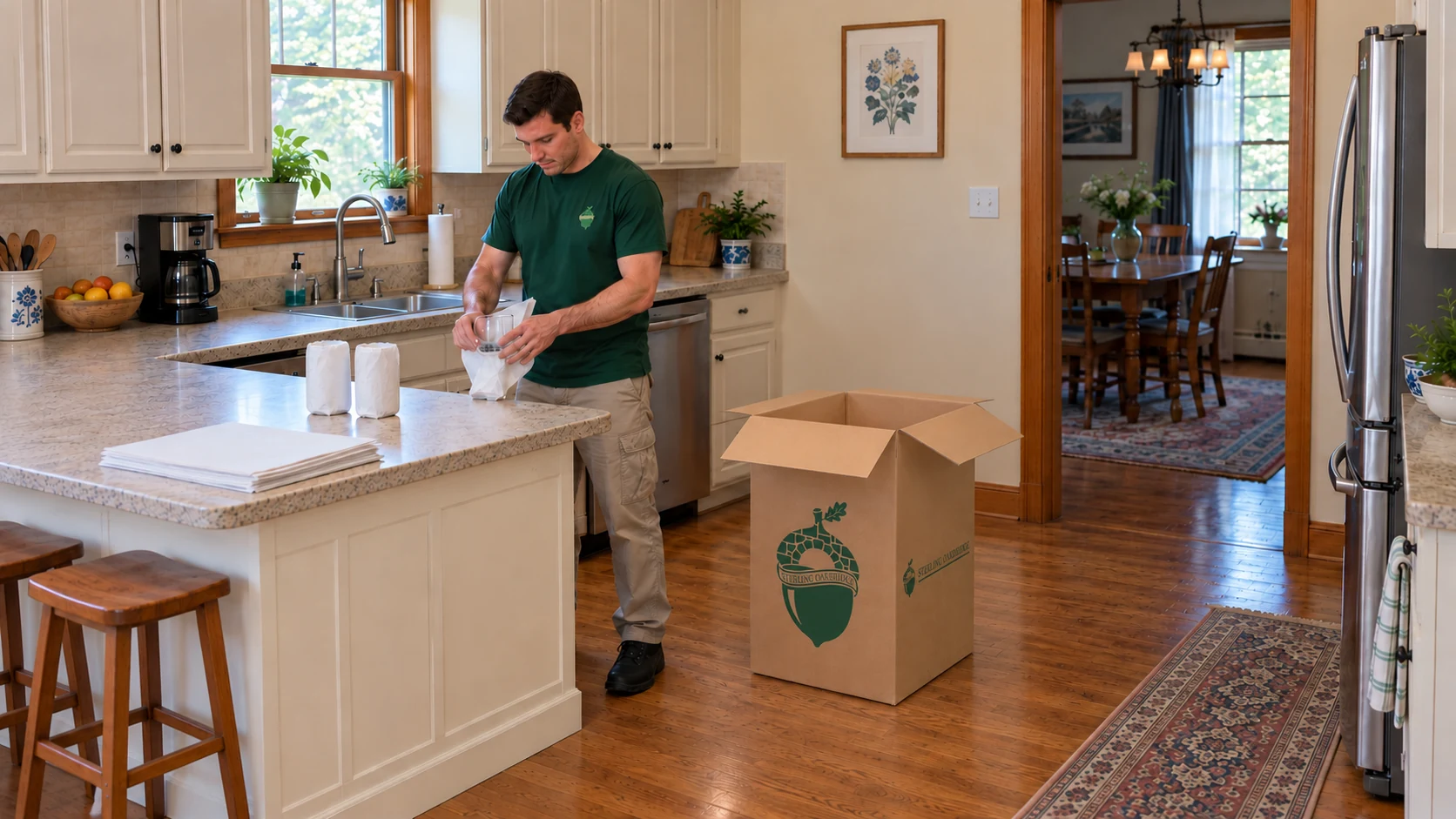
Sterling Oakbridge can prepare the contents you select, preserve a useful final night and plan the receiving work separately. Start with the belongings and routines you need to keep available.
Explore packing, costs and local examples
Choose full packing, selected rooms or fragile items
Sterling Oakbridge can prepare the retained contents included in your packing plan. Full packing covers the agreed household contents; partial packing gives the crew selected rooms or groups; fragile-only packing focuses on the breakables you identify. For example, you might pack clothing yourself and leave kitchen glass, books and framed pieces for review.
Decide what stays, goes to storage, is sold or leaves the household before it is wrapped. Packing transfers preparation work to the crew, while the household still chooses what to keep. An undecided cupboard is a decision task as well as a supply estimate. Mark it separately and name someone who can resolve it.
Choose help around the hours you actually have. Wrapping after work can consume several evenings, especially when dinner, children's routines and a functioning home office still matter. Paying for selected packing may release the most difficult part without handing over every room. The useful comparison is the work and disruption removed from your own week.
The Germantown moving page covers transport and property access. The relocation guide helps compare the receiving home and everyday arrangements. Here, turn those decisions into a packing boundary and a useful first arrival.
Let the contents determine the supplies and labor
Show open cupboards, drawers, closets, bookcases, pantry storage and the contents of any garage or separate storage area. Include fragile collections, hanging clothes, books and things stored high or behind other objects. A video survey, photographs or an on-site review can reveal work that a bedroom count misses.
A lightly furnished room and a room with full cupboards can need very different preparation. An initial guess of 20 cartons might become 60–100 after hidden contents are reviewed; those numbers illustrate the risk of guessing, not a Germantown average or an allowance. Count the retained contents, then review carton types and packing time.
Existing cartons can be considered if they are sound, clean, dry and suitable for their contents and later handling. Show what is already packed and identify anything uncertain. A weak reused box or a very heavy mixed carton can need repacking. Do not buy a large uniform batch before the fragile groups and heavier contents are understood.
Plan preparation access separately from loading
A smaller, reviewed studio or one-bedroom move may fit packing and moving into one day. Dense cupboards, fragile collections, a larger home or a short loading period can make an earlier packing visit more useful. Neither room count nor an early start guarantees completion in one day.
Each visit needs admission, permitted hours, a place for supplies, safe working surfaces and an indoor place for finished cartons. Confirm those details for preparation as well as loading. A reserved elevator on moving day does not approve a packing crew or material delivery the day before. Leave doors, shared landings and routes through occupied rooms clear.
The adopted Germantown Town Sector plan documents detached, townhouse and multifamily housing in Churchill Village. Use that housing context to identify the questions for your own property; its layout and rules still need review. Show the actual entrance, stairs and rooms when planning your own visit.
A townhouse keeps the home office working until the last afternoon
Imagine a household leaving a Germantown townhouse while one person works from home. The upstairs desk, router, laptop and a few kitchen items must remain usable. Spare books, seasonal contents and most kitchen breakables can be prepared earlier, with completed cartons kept in an agreed room instead of along the stair.
Make a written pack-last group and a handover time after the final work session. Personal work equipment and essential papers remain under the household's control. Show every stair turn before choosing the staging room. This sequence preserves a usable workday and makes the remaining preparation visible to the loading plan; it does not promise that every townhouse has the same access.
Keep a deliberate last-night group
Set aside bedding, toiletries, next-day clothing, a simple meal set and the familiar items a child needs before bed. Give that group a location and final packing time. Keep medicine, identification, valuables, keys, essential documents and journey supplies with the household throughout the move.
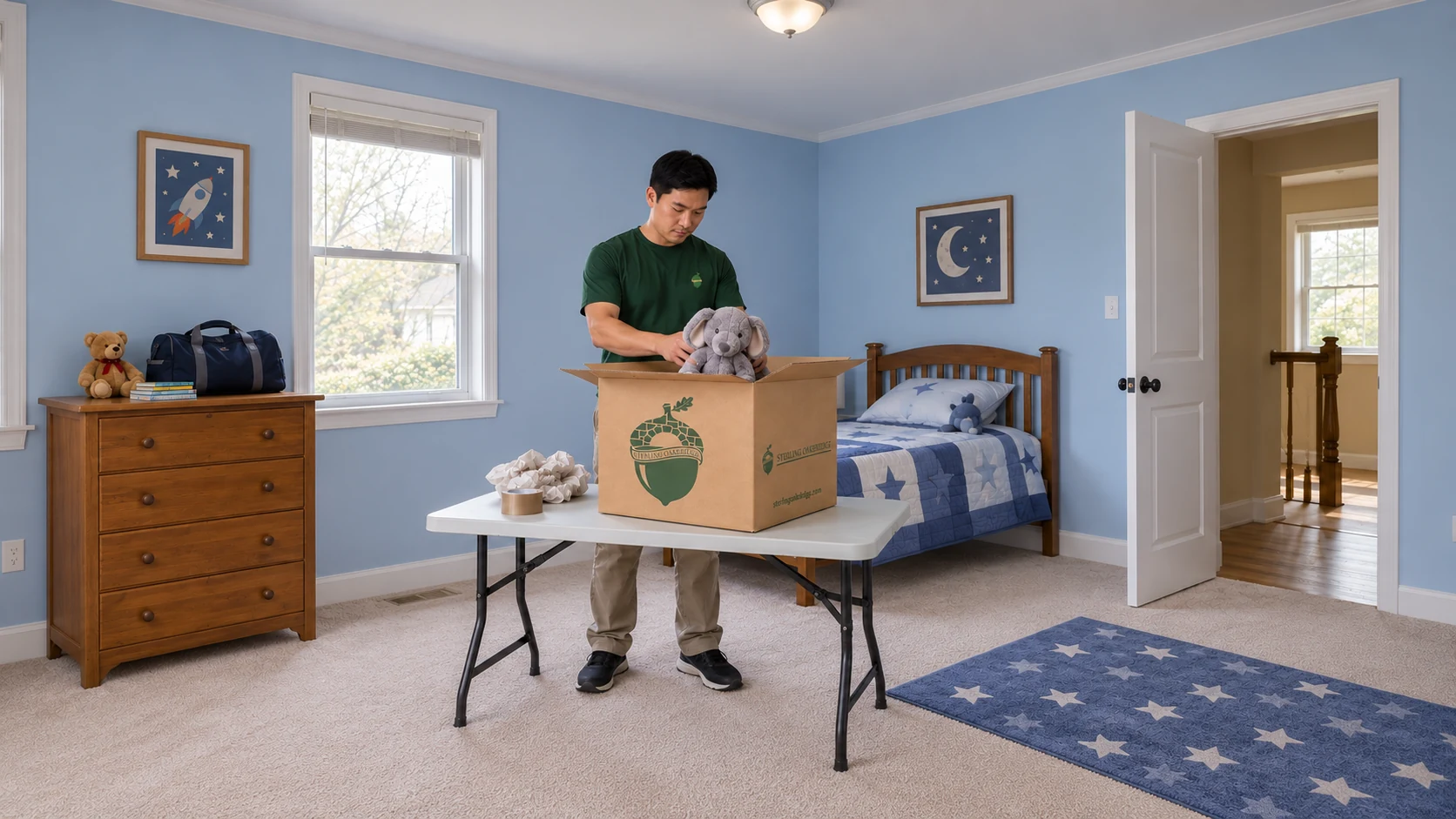
An apartment family packs the spare contents before the final night
Consider a family in a garden apartment that chooses kitchen packing and preparation of books and spare toys. They keep the current bedding, tomorrow's clothes and a small breakfast group accessible. If their entrance uses a court, path or shared stair, the review includes that full route rather than only the apartment door.
The prepared cartons remain inside an approved area with the bedroom and exit usable. At the final handover, the crew prepares the remaining agreed group; the family's travel bag stays separate. Matching first-opening labels then identify bedding and breakfast at the receiving home. The benefit is a workable last evening and first morning, with the actual property conditions checked in advance.
Match protection to the object and handling
Protection must suit carrying, support, stacking, restraint and transport. Kitchen glass needs individual wrapping and cushioning inside a suitable carton; books need manageable weight; hanging clothing needs a different container. A tidy carton can still let fragile contents shift inside.
Show glass doors, removable shelves, framed pieces and valuable collections individually. The construction and condition determine which parts should remain attached. Ordinary drawers can often stay secured in protected furniture when their contents and condition allow; removable glass and loose fittings need separate attention and identification. Do not remove every visible component simply because it can move.
Basic moving blankets, stretch wrap and tape do not carry an extra material charge under our moving terms. Packing labor still uses working time, supplied cartons are separate, and specialist packing or crating needs individual review. Use fine art and antiques moving for objects needing a specialist plan.
A purchase waiting at a shop or private seller is a different pickup, with a release address, authorized contact and collection window. Furniture delivery covers that pathway. Include it explicitly rather than treating a seller collection as part of packing the existing household.
Separate destinations before the cartons leave the room
Mark each carton with its destination, receiving room and useful contents. A carton number connects it to an inventory; opening priority helps the receiving crew find what matters first. Color can support the wording. A large HOME–FIRST or STORAGE–LATER group label does not replace the individual room and contents labels.

A smaller receiving home needs two retained groups
Imagine a household moving from a house to a smaller Germantown home. Daily kitchen contents, current clothing and selected books go to the home; retained display pieces and seasonal belongings go to storage. First decide which duplicates and large pieces will leave the household. Otherwise they create packing, transport and storage work before the decision is made.
Give the two retained groups separate staging places and inventories, with a clear exit. Confirm the stop order, receiving people, storage intake and later release or delivery through the storage plan. A written label is a routing instruction, not a storage reservation. The result is a usable first shipment and a defined later group, with fewer unwanted items being handled repeatedly.
Choose the useful result of unpacking
Basic unpacking opens the agreed cartons and places contents on suitable surfaces. Linen on a clean table or dishes on a clear counter can be a useful first stage. It does not automatically put everything into its final cupboard or drawer. Name the priority cartons, the ready surfaces and any groups that should remain closed.
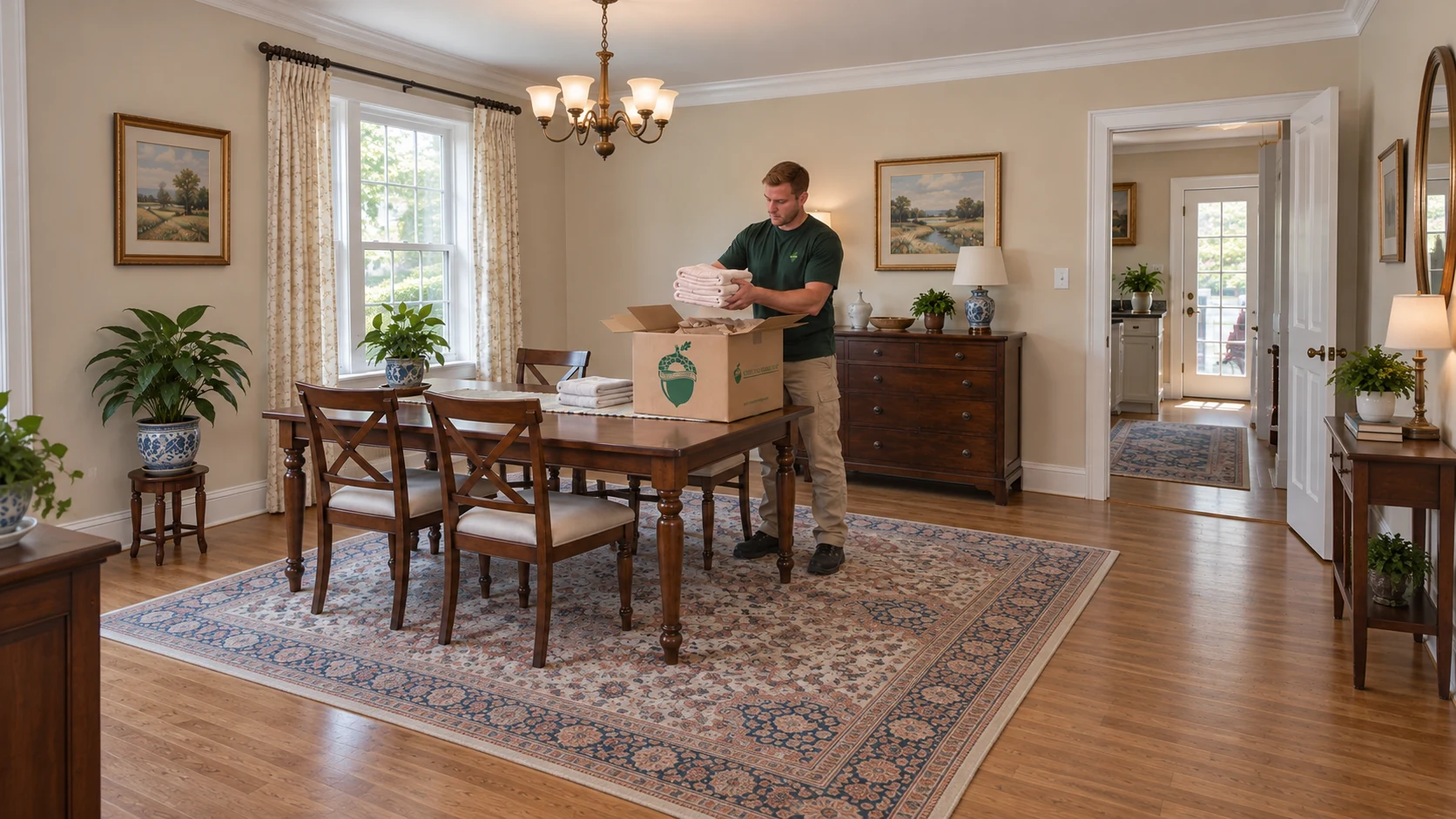
A receiving home opens only the rooms that are ready
Consider an arrival where the kitchen and bedroom are ready but another room is still awaiting agreed finishing work. The household can request unpacking of meal and linen cartons onto suitable surfaces while the later-room group stays closed in an accepted dry holding area. Name the person who decides when that room is ready.
A later visit may suit the remaining cartons better than keeping the whole moving crew. Confirm the work, access, available crew and new date separately. For a small selected group, an illustrative three or four hours of unpacking or a later two-person visit may be useful to discuss; neither is a standard duration or guaranteed booking. Opening only the ready groups avoids moving loose contents away from unfinished work a second time.
Home organizing adds final placement under your instructions. Agree the cupboards, shelves, room priorities, directing person and individual scope and price. A smaller team may be easier to direct when decisions remain. Ask for home organizing when the desired result is assigned storage, rather than simply empty cartons.
Distinguish reassembly, organizing and finishing work
Basic furniture disassembly and reassembly use moving labor time without a separate basic assembly surcharge. Complex first-time flat-pack work and specialist pieces require their own review. Send the model, instructions, fittings and condition so the proposed work can be identified.
Agreed picture, mirror or television mounting is individually scoped handyman work. Permissions, wall construction, hardware, safe method and executor must be confirmed. Packing or organizing does not establish electrical work, utility hookup or a general repair service. Describe the actual finishing result before treating it as booked.
If a piece already at the property later needs another room or floor, in-home moving provides the separate carrying plan. Show where the piece is now, where it must finish and every doorway, turn, stair and landing between them. Ready shelving and a clear carry are separate conditions from having cartons open.
Give empty packaging an accepted next route
Inspect used paper and cartons for small parts, keys and personal items before gathering them. Keep the floor route open as unpacking proceeds. Empty board, paper, plastic film and foam should remain distinguishable rather than becoming one unexplained removal load.

The photograph shows indoor gathering in progress, including paper temporarily held in a plastic bag. Separate that paper from the bag before presenting it for recycling. Maryland Department of the Environment guidance says to keep recyclable paper clean and dry and keep plastic bags out of curbside recycling. Accepted materials depend on the local program.
For a Germantown property, identify the actual collection arrangement before move-out or receiving day. Ask the responsible manager or collection provider where each material may be placed, how it should be presented and when it can leave the property. MDE's county recycling directory lists Montgomery County's program. The directory does not confirm service at your address or a contractor's right to use a drop-off site. A convenient shared entrance is not an agreed collection area.
Packaging removal by the crew is charged separately. Agree the quantity, material, route and stage when it will be taken away. Reusable sound cartons can have a different next use from unwanted furniture or electronics; those items need a separately accepted collection, donation or removal route. Junk removal and disposal planning covers that separate review.
Compare the complete packing and receiving scope
Packing labor is charged for working time, and company-supplied cartons are separate. Optional box unpacking also uses working time. Add any separate preparation visit, organizing, specialist work, storage, later carry or packaging removal that you want in the comparison.
| Work | What to include in the estimate |
|---|---|
| Household packing | Working time, reviewed contents, suitable supplies and separately supplied cartons. |
| Basic protection and furniture work | Moving labor time; no extra material charge for basic blankets, stretch wrap and tape, or separate basic disassembly/reassembly surcharge. |
| Receiving help | Optional box unpacking uses working time; directed organizing and handyman work have individually agreed scope and price. |
| Materials leaving the property | Packaging removal is separately charged; unwanted belongings require a separately accepted route. |
Packing and moving a full household can approach twice the budget of moving the same household already properly packed, depending on the work and supplies. Treat that as a reason to compare complete scopes, not a multiplier for a quote. Partial packing may be the useful choice when your own time is available for straightforward contents. Sorting out unwanted items before preparation can also avoid paying to handle them repeatedly.
For a move within Maryland, read the written estimate's scope, fees and binding or nonbinding status. The Germantown estimate guidance explains the verified Maryland terms and their limits. Do not apply an interstate flat-price statement to every local packing booking.
For an interstate or Canadian move, include preparation and the desired receiving work before agreeing the shipment scope. The agreed long-distance flat rate does not rise merely because travel or delivery takes longer when the shipment and work stay the same. Added items or services require a separate written review. The delivery clock starts after pickup and loading are complete; an earlier packing visit does not start it. Use Germantown long-distance moving to choose the delivery model before fixing an unpacking appointment.
Send enough detail to plan both ends
Send both addresses and units, desired dates, the retained inventory and the groups you want the crew to pack. Add open-storage photographs or video, fragile-item details, the full carrying route, property hours and the person who can authorize access at each visit.
Identify the last-night group and what travels with you. At the destination, name the ready rooms, suitable surfaces, cartons that stay closed and any desired organizing or finishing. If the timing can change, name who decides readiness, the safe holding arrangement and the fallback visit to review. These details let us recommend the appropriate survey, supplies and sequence rather than guess from room count.
Sources for the Germantown preparation plan
Montgomery Planning: adopted Germantown Town Sector plan supplies historical housing context. Maryland Department of the Environment: recycling guidance explains material separation, and its county program directory identifies local program owners. Actual property permission, collection service, quantities and booking terms must be confirmed for the job.
Germantown packing and unpacking questions
Can I book only fragile-item packing in Germantown?
Yes. Choose full household packing, selected rooms or an agreed fragile group. Identify what the crew will prepare and what you will finish yourself, including contents still inside cupboards. Unpacking and final placement should be identified separately.
Will the crew decide what we should keep?
The household makes keep, sell, donate, discard and storage decisions. Sort those groups before packing and keep undecided belongings separate with someone who can resolve them. This avoids paying to prepare and move items you do not want.
Can packing and moving happen on the same day?
A smaller reviewed studio or one-bedroom move may fit one day. Dense contents, fragile groups, access and permitted hours can require earlier preparation. Show the actual inventory and restrictions before choosing the visits; bedroom count alone cannot establish the duration.
Does our loading reservation cover an earlier packing visit?
Confirm the earlier visit separately. It needs admission, permitted hours, a supply drop and an indoor staging area, even if an elevator or loading period is reserved for moving day. Keep shared entrances and landings clear.
How many cartons will our home need?
Review the retained contents rather than guessing from the number of bedrooms. Show open cupboards, closets, books, collections and separate storage. The article’s 20 versus 60–100 example illustrates hidden contents; it is not a local average or a fixed allowance.
Can we use cartons we already have?
Suitable existing cartons can be reviewed for reuse. Show their strength, condition, size and contents, including anything already packed. Weak, damp or unsuitable boxes may need replacement or repacking so they can withstand the planned handling.
Are packing time and boxes included in the moving price?
Packing is charged for working time, and company-supplied cartons are separate. Basic moving blankets, stretch wrap and tape do not have an extra material charge. Make sure the estimate identifies your packing work, visits and any specialist supplies rather than assuming a single included package.
How do we keep the townhouse office working until departure?
Identify the desk equipment, router, papers and kitchen group that must remain usable. Pack less-used contents first and agree the final group’s handover after work. Keep personal equipment and essential documents controlled, and stage finished cartons away from the stair route.
What should stay out for the last night?
Keep bedding, toiletries, tomorrow’s clothing, a simple meal set and familiar bedtime items available until their agreed packing time. Medicine, keys, identification, valuables, essential documents and journey supplies stay under the household’s control throughout.
What access details matter for a garden apartment?
Show the complete route through any court, path, entrance, stair and landing, plus the usable indoor packing and staging areas. Confirm the actual property rules and hours. The description of a garden apartment does not establish permission or a standard layout.
Do furniture drawers and shelves always need removal?
No. Ordinary drawers may remain secured in protected furniture when condition and contents allow. Removable glass, loose shelves and other detachable parts need individual review and identified fittings. Show construction and access before choosing disassembly.
How do we separate home and storage cartons?
Use written destination, room and useful contents labels, with carton numbers and opening priority. Stage the home and storage groups separately without obstructing the route. Confirm stop order, storage intake and later release or delivery; labels do not book those services.
What is included in basic box unpacking?
It opens the agreed cartons and places contents on suitable surfaces, such as dishes on a clear counter or linen on a table. Name the priority groups and those that stay closed. Final cupboard placement is separate organizing, and taking packaging away is separately charged.
Can some cartons stay closed while a room is being finished?
Yes. Identify the later-room group and agree a safe, dry holding area with a clear route. Open priority cartons only in ready rooms. Name who decides readiness and review any later visit or carry before treating its date as confirmed.
Can you return after delivery for selected unpacking?
A later visit can be arranged subject to the work, access and crew availability. Show the remaining cartons, ready surfaces and priorities. Discuss the appropriate team and duration; an illustrative two-person visit or three to four hours is not a guaranteed booking.
Does unpacking include putting everything into drawers?
Basic unpacking places contents on suitable surfaces. Home organizing adds final placement under your instructions, with individually agreed scope and price. Identify the shelves, cupboards, priorities and person who can direct the work.
Is there an extra charge for basic furniture reassembly?
Basic disassembly and reassembly use moving labor time without a separate basic assembly surcharge. Complex first-time flat-pack work and specialist pieces are reviewed separately. Send the exact model, instructions, fittings and condition.
Can the visit include hanging pictures or a television?
Agreed hanging or mounting can be scoped separately after reviewing permissions, wall construction, hardware, method and executor. A packing or organizing booking does not establish electrical work, utility hookup or general repairs. Describe the finishing task before confirming it.
Will the crew take the used packaging away?
Packaging removal can be arranged and is charged separately. Agree the materials, quantity, access and stage of removal. Check the used paper for small parts and personal items first; gathering it indoors does not itself include taking it off the property.
Can paper collected in a plastic bag go straight into recycling?
Separate the paper from the bag before presenting it for recycling. Maryland guidance says to keep recyclable paper clean and dry and keep plastic bags out of curbside recycling. Confirm the actual property and collection provider’s instructions for each material.
Where should an apartment household leave empty cartons?
Ask the responsible property manager or collection provider for the accepted location, presentation and collection time. Keep entrances and shared routes clear while you wait. The County program directory identifies the program owner; it does not approve a particular property’s setout or contractor drop-off.
Can unwanted furniture leave with the packing waste?
Identify unwanted furniture separately. It needs an accepted collection, donation or separately reviewed removal route; it is not automatically part of empty packaging removal. Decide that route before paying to pack the item into the retained shipment.
Does packing day start the long-distance delivery window?
No. The delivery clock starts after pickup and loading are complete. Plan optional receiving help around the accepted direct or consolidated delivery arrangement and actual access to the destination. An earlier packing date does not establish a distant unpacking appointment.
Can a longer journey increase the agreed interstate price?
The agreed long-distance flat rate stays the same when the shipment and work stay the same, even if travel or delivery takes longer. Added items, packing, stops or receiving services need separate written review. Include the help you want before agreeing the scope.
What should we send for a packing estimate?
Send both addresses and units, dates, retained contents, the packing boundary and open-storage photographs or video. Include fragile items, the full access route, property hours, last-night essentials and receiving priorities. These details support the right survey, supplies and visit sequence.
Choose your Germantown packing and receiving plan
Send the contents, both addresses, access and dates, with the work you want before departure and after arrival.