
Maryland / Moving services
Movers in Pasadena, MD
Sterling Oakbridge movers help Pasadena homes, townhomes and businesses with local and interstate moves, packing, storage and specialist services. Share your addresses, dates and inventory so we can review the work and prepare your estimate.
01 /
Start with the route and the work you need
A move within Pasadena, a delivery from another state and a household going into storage need different plans. Start with the actual properties and the work between them. A familiar mailing address does not tell us whether the entrance has steps, who controls a shared parking court or how far belongings must travel from the truck.
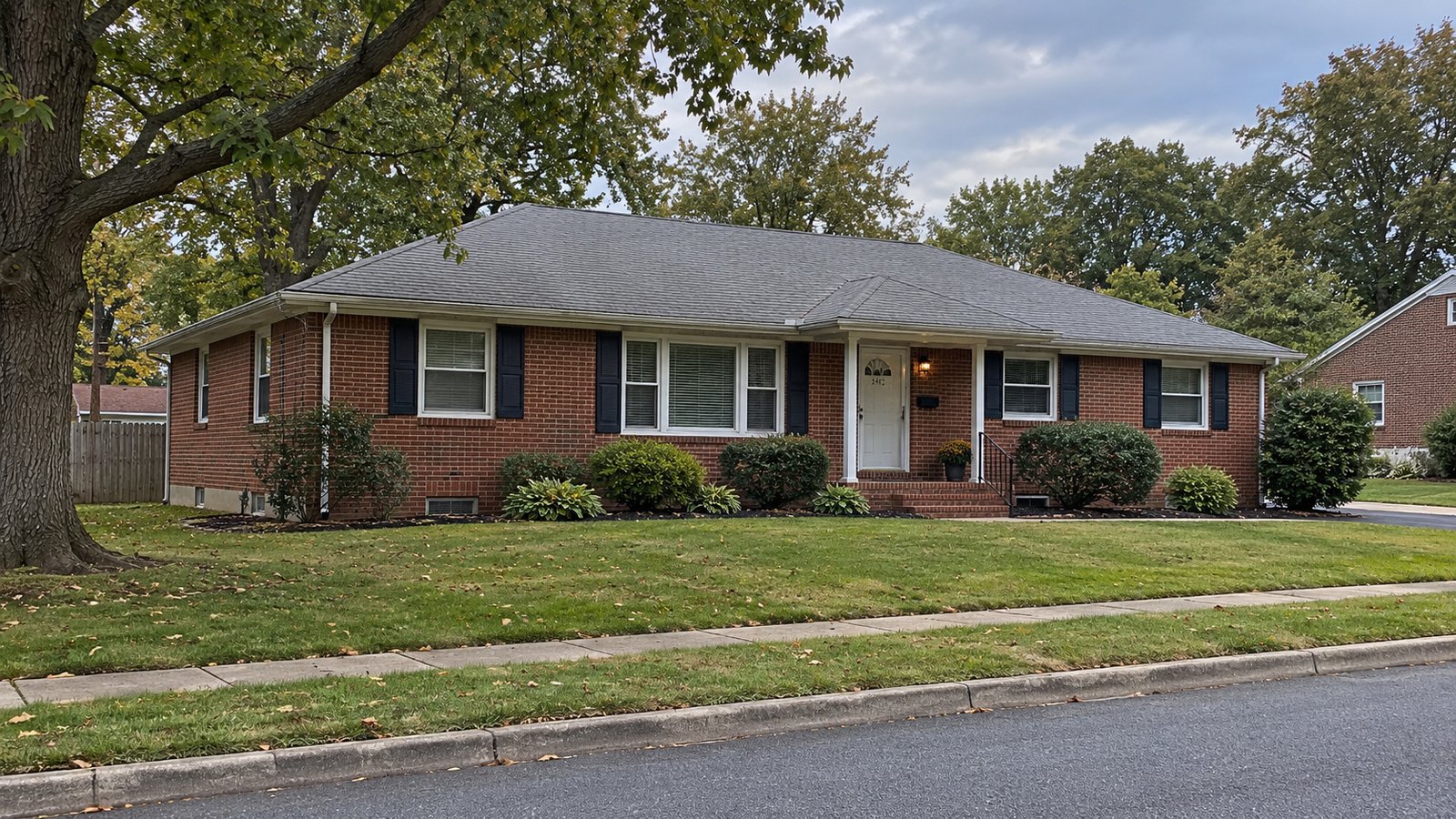
This page covers Pasadena in Anne Arundel County, Maryland. Pasadena is an unincorporated census-designated place; county departments provide the local checks described below. A postal Pasadena address can extend beyond the statistical boundary. The separate Pasadena guide helps you verify school enrollment, utilities, waste collection and daily trips before settling on an address.
For a house, include the basement, garage, shed and outdoor pieces in your inventory. For a rental or shared building, add the manager’s move rules and the complete route to your unit. For a business, identify what must resume first. We use those details to review the crew, vehicle, packing and timing your job actually needs.
02 /
Choose your moving scope
Sterling Oakbridge provides local and interstate household moves, commercial moving, packing and storage. Choose the work you need, then let us review the inventory, access and timing for your estimate.
| Moving help | What we can include | What to send |
|---|---|---|
| Local residential moving | Loading, transport, delivery and basic furniture disassembly and reassembly | Both addresses, inventory, dates and the route through each property |
| Interstate moving | Pickup, transport and delivery arrangements, with storage when needed | Destination, date constraints and the person receiving the shipment |
| Commercial moving | Office and business furniture, equipment and agreed preparation, including moves with building restrictions | Business type, equipment list, building rules and the work schedule to protect |
| Packing and unpacking | Selected-item or full packing, preparation before move day and optional box unpacking | What you will pack and what you want us to prepare |
| Storage and staged delivery | Storage between addresses and an agreed receiving and delivery plan | Expected dates, contents and anything you need to access during storage |
| Designer and hotel furniture receiving | Receiving, storage and delivery of furniture to an agreed plan | Expected shipments, delivery instructions and the final receiving site |
Describe the stages rather than assuming everything happens in one day. A pack followed by a local delivery, an interstate shipment and a delivery after storage each have different dates, receiving arrangements and access questions. Let us know if some possessions are going to a second address or should remain available during storage.
For a small job, a clear list may be enough to begin review. A large inventory, full packing, specialist pieces or constrained access can require a closer survey. We will help determine the useful next step from the information you provide. The Baltimore moving page is a regional planning reference; the arrangements for your Pasadena addresses still need their own review.
03 /
Check the entire carrying route
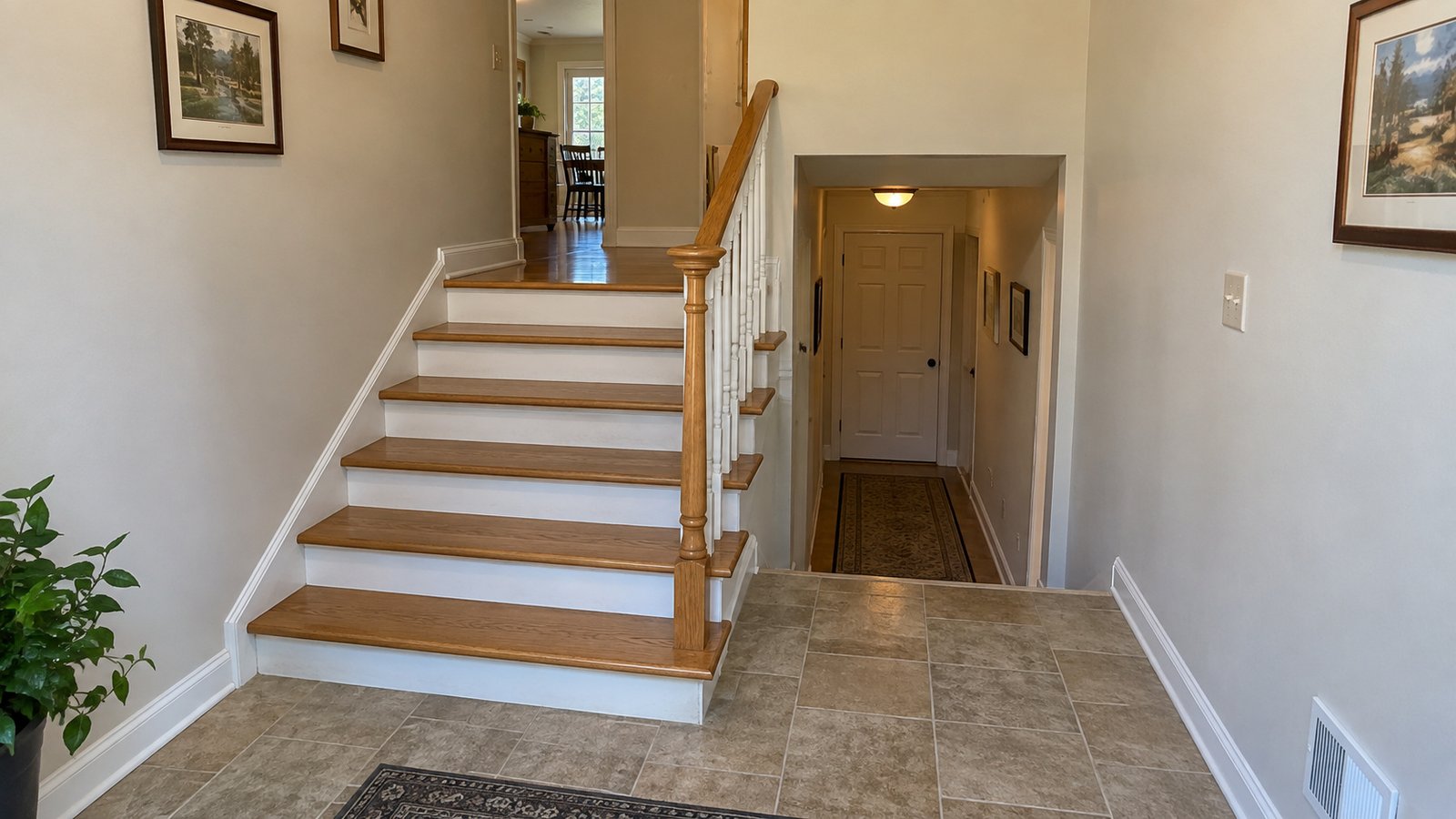
Walk from the intended truck position through the entrance to each receiving room. Record steps, thresholds, doors, landings and turns. In a split-level home, include each short stair run and the change of level inside. A ground-floor entrance does not establish that a basement, upstairs bedroom or large cabinet has a level route.
Measure the largest pieces against the actual openings. Photographs should show the complete stair and landing, the door swing and the approach outside. If a sofa has been difficult to move before, explain where it caught and whether it was taken apart. Tell us about delicate flooring and any route protection expected by the owner.
For a shared building or HOA community, obtain written move windows, entrance rules and the person who can authorize the truck position. Resolve competing use of the route before moving day.
We can coordinate building COIs, moving-truck permit arrangements, elevator scheduling and moves that require union labor. Send the building instructions and management contact early. We can also arrange materials and packing before the carrying window when the property permits that access.
The agreed plan should identify who submits each request, who approves it and which municipal or building charges apply. An application is one step; the required access and time still need confirmation.
04 /
Agree on a lawful truck position and an alternative
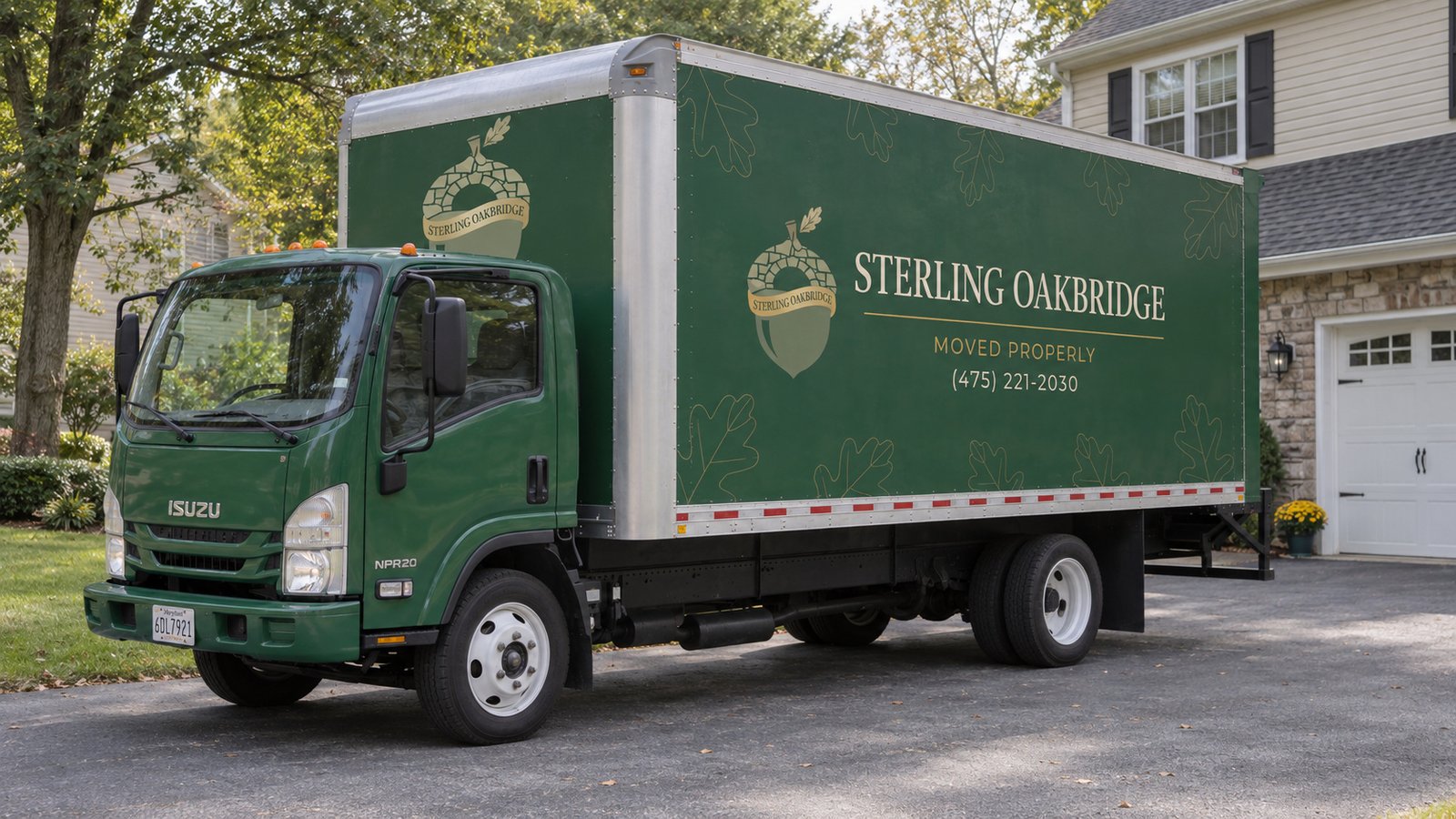
A private driveway is one possible loading position, subject to the owner’s agreement and the vehicle’s ability to use it. Check width, slope, turning space, overhanging branches, the surface, door clearance and the distance to the entrance. A car fitting in a driveway does not establish that a loaded moving truck can use it.
For street loading, a shared court or a constrained receiving area, ask the responsible property manager and road authority what applies to that location. The County Bureau of Highways can direct county-road questions at 410-222-7321; state and private roads have different owners. Do not treat an unconfirmed permit or curb-reservation procedure as permission to occupy a space.
Keep pedestrians, entrances, hydrants and collection access clear. The county’s curbside guidance specifically warns against containers behind parked vehicles. Arrange loading and set-out together if the dates coincide. Agree on an alternative position before the date, and tell us how it changes the carry. A cone or an informal promise from a neighbor does not reserve public space.
05 /
Choose packing and preparation item by item
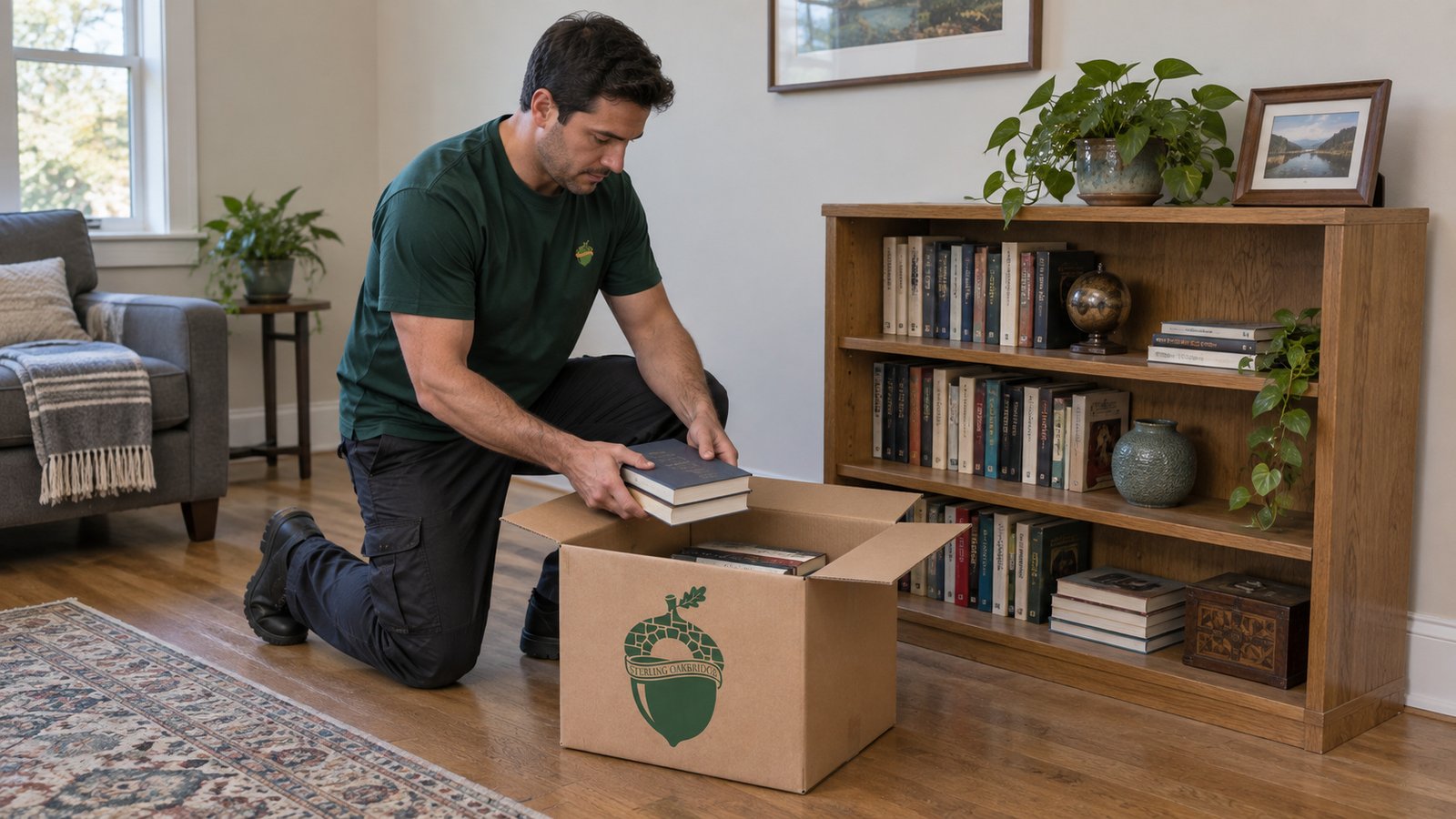
Decide what you will pack and what you want the crew to prepare. Include fragile kitchen contents, books, clothing, framed items, tools and possessions in less-used rooms. Keep a written list of things excluded from the shipment and items you will take personally. One room marked “packed” is not enough if loose glass, a full closet or a shed remains.
Use small book cartons for books rather than making a heavy medium carton. Keep fragile packing as its own task, with appropriate wrapping and dividers. Label cartons by destination room and contents, then leave a clear carrying route. Tell us about anything damp, leaking, sharp or requiring special preparation before it is packed.
Labor, materials and optional work
| Item or task | How it is charged |
|---|---|
| Basic furniture disassembly and reassembly | Part of your moving labor time, without a separate basic assembly fee |
| Moving blankets, shrink wrap and tape | No separate charge for these basic protection materials |
| Boxes supplied for your move | Charged separately |
| Packing | Charged for working time; boxes are separate |
| Unwrapping furniture | Part of delivery |
| Unpacking the contents of boxes | Optional work, charged for working time |
| Packaging and waste removal | Charged separately |
| Complex furniture and other specialist work | Individually quoted after review |
Tell us which tasks you want completed and which materials you need. Your estimate should distinguish moving labor, boxes, specialist work and removal charges.
Specialist services by individual quote
| What needs attention | Work available for review |
|---|---|
| Complex furniture | Bunk beds, Murphy beds, large flat-pack wardrobes and specialist sofa disassembly and reassembly |
| Heavy items | Pianos and grand pianos, safes, gym equipment and pool tables |
| Art and collections | Fine-art handling, soft packing, custom crates and crating to an agreed museum or collection specification |
| Hanging and installation | Pictures, mirrors, wall-mounted TVs, curtain hardware and chandeliers, with the removal, installation and any technical work scoped separately |
| Business equipment | Office furniture systems, restaurant refrigerators and ranges, and industrial equipment assessed for the specific item and route |
Send photographs, dimensions, make or model where relevant, and the route through both properties. Describe exactly what needs to be taken apart, moved or installed. We review the method and required work before providing an individual quote.
For specialist work, send dimensions, photographs and the route at both ends. Describe whether the job involves moving only, disassembly, reassembly or installation. Do not assume that transport includes disconnecting utilities or making the receiving property ready.
06 /
Plan a business move around the restart
An office, shop or equipment move starts with the work that must run at the destination. List furniture, workstations, shelving and equipment separately. Identify the person receiving delivery, the authorized entrances and the hours during which each property can be used. If a building has an elevator or dock, confirm booking and clearance through its manager.
Set a sequence for essentials: which desk, equipment group or stock should arrive first, where it belongs and who checks it in. Have your IT or equipment specialist handle any technical shut-down and restart that falls outside the agreed moving scope. Keep confidential records and items that require special custody on a separately confirmed plan.
IT transport and disconnection are available; arrange reconnection and system startup with your IT team. Crane work is outside our service scope.
We can also quote island moves, recycling, move-out cleaning and car shipping. For an island destination, provide the exact address so the vehicle or freight crossing, receiving arrangements and final delivery can be reviewed together.
For staged receiving, record expected shipments, storage dates and the final placement plan. A delivery window should be agreed with the receiving site; the local road or a photographed loading area cannot establish access on its own.
07 /
Understand the estimate and what can change it
Local moves: estimated hours, not a fixed total
Most local moves are priced by working time. Your estimate sets out the hourly basis, any minimum hours and the work and materials to be charged separately. Estimated hours help us plan the crew and whether the work can fit the proposed day; they are not a maximum charge or a promise that the move will finish within that time.
A move estimated at six hours may take eight if traffic delays the truck, an elevator is shared rather than reserved, packing is unfinished or the inventory or plan changes. Tell us about changes early. If the work needs preparation on another day or a separate delivery stage, we will review those arrangements with you. Charging follows the written terms for the move.
Long-distance flat rates: the same scope, the same price
For a long-distance move quoted at a flat rate, the agreed price stays the same when the shipment and agreed work stay the same. Added belongings, omitted items, extra packing or changed access and delivery requirements can change the scope and price. Keep the inventory, packing responsibilities and pickup and delivery conditions in writing, and have additions reviewed before the affected work begins.
Volume, access and preparation determine the work. A longer carry, stairs or a tight turn can add handling time; packing and separately quoted specialist tasks add their own scope. Storage and a second delivery stage need their own arrangements. Describe these conditions at the start so the written estimate reflects the job.
Ask what assumptions support the estimate: the inventory, packing responsibility, vehicle access, dates and receiving arrangements. If an item is added or the destination changes, report it before the crew arrives. Compare estimates on the same scope, including boxes, unpacking and removal, rather than comparing a single headline number.
A county bulk collection appointment and separately arranged disposal are different from the main moving shipment. Have unwanted items routed before the loading day. Do not put an unconfirmed disposal service into the inventory as though it were automatically included.
08 /
Prepare for a slipped closing or a staged delivery
Possession, a moving booking and a utility date should form one workable sequence. Confirm who supplies keys and when the receiving property is usable. If the closing can slip, discuss the alternative before pickup: revised dates, temporary storage, redelivery access and who can authorize each change.
Separate first-night essentials from possessions that may go into storage. Keep documents, medications, chargers, a change of clothes and necessary household supplies with you. If you need something during storage, identify it before packing and agree on access rather than burying it in the main shipment.
For a staged move, distinguish each load and destination in writing. Record who receives it and which rooms are ready. A backup plan should name an action and a contact; “we will work it out” gives neither the household nor the crew enough to respond when keys are delayed.
09 /
Confirm the scope before the first carry
Direct and consolidated long-distance moving
Our direct long-distance service uses a dedicated truck and the same moving crew at pickup and delivery. For a suitable small shipment, ask about consolidated delivery with a wider agreed receiving window. We serve destinations throughout the United States and Canada. Confirm pickup, delivery and any storage stages in the written move plan. The planning team performs a separate role from the moving crew.
Before moving day, resolve the inventory, packing responsibility, access at both ends and the receiving plan. Keep the person who can authorize changes reachable. The crew should know which items have specialist instructions and what work was quoted separately.
On arrival, walk the route with the crew lead, identify fragile or excluded items and point out the rooms for delivery. At the destination, maintain one clear staging area and label rooms consistently. Check placement before the crew finishes the agreed work, while the people responsible are still available.
Choose protection before the move
Discuss the basic liability option and higher protection available at an additional charge before moving day. Have the selected level, cost, limits and claims process recorded in your moving documents. Tell us about artwork and other high-value items in advance so their declared values and any special requirements can be reviewed.
For interstate household-goods moves, Full Value Protection applies unless you select Released Value through the required written waiver. Valuation is the mover’s level of liability; it is different from a separate insurance policy. Review the FMCSA explanation of liability and protection and the terms for your particular move.
10 /
Keep the entrance usable in rain and winter weather
Check the forecast and actual surface conditions before loading. Wet leaves, a slippery threshold or a driveway softened by rain can change a route that looked straightforward at the survey. Agree who will clear and prepare the property and when the crew should be notified of a problem.
The county’s snow guidance distinguishes road responsibilities and levels of service. County main roads are treated toward bare pavement; remaining roads are made passable, which does not mean bare pavement. Use “Who Plows My Street?” for the particular road. A published road target does not promise safe loading at your driveway by a booked hour.
Arrange sidewalk clearing with the responsible owner or manager and recheck the entrance on the day. If weather or a key handover changes the plan, contact us early to review the date and storage alternative. Busy summer and month-end periods can make scheduling harder; ask about availability and keep a practical alternative without assuming a citywide fixed busy calendar.
11 /
Prepare the day you booked
Before the crew arrives, keep the agreed truck position available and the route clear. Remove small loose obstacles, secure pets and keep children out of the carrying route. Have the keys, moving documents and receiving contact ready. Protect access to household essentials that must travel with you.
Show the crew lead the actual route and any condition that changed after the survey. Identify items staying behind, pieces going to another address and cartons that should be accessible first. Confirm room names at the destination so possessions do not need repeated rearranging.
If the truck cannot use the agreed position, an entrance is locked or the receiving room is unfinished, pause and review the alternative with the responsible people. Report a delay while options remain. Do not improvise public parking, utility work or unsafe handling to recover the original schedule.
12 /
Send one complete request for your estimate
Let the scope determine the survey
A clear item list may be enough for a small, straightforward job. More belongings, full packing, specialist items or restricted access can call for a video review or an in-person visit. Floor area helps describe the property, but the contents and work matter too.
Start by sending what you know. Our move-planning team will recommend the right level of review so the estimate reflects the job. You do not need to choose a survey method or work out every measurement before contacting us.
The survey helps us choose staffing, time and preparation for the actual job. The person reviewing your move is not necessarily part of the moving crew.
Send both addresses, preferred dates and an alternative, a room-by-room inventory, floors and stairs, photographs of difficult turns and the outside approach. Include packing choices, specialist pieces, storage stages, other destinations and the building’s written timing rules. Name the person who can authorize access and the receiving contact.
For an interstate household shipment, review the carrier’s operating identity and written documents. The FMCSA planning checklist and valuation guidance explain the federal framework. Ask which protection option and claim process applies to your agreement before pickup.
13 /
Choosing where to live?
Check address responsibilities, schools, utilities, transport, collection and three county parks in the separate Pasadena household guide.
14 /
Questions before you move
Can I request a local or interstate Pasadena move?
Yes. Send both addresses and the work required so we can review the route, inventory, packing and dates. Storage or additional destinations should be included in the original request.
Where can the truck stand?
Agree on a suitable position with the property owner or manager and the responsible road authority when needed. Check the vehicle’s full approach, doors and turning room. Do not assume a driveway or public curb is usable without that review.
Can you help with a business move?
Yes. Provide the furniture and equipment list, receiving arrangement, access and operating hours. Identify specialist or technical tasks for separate review.
Can storage cover a delayed closing?
Discuss storage and redelivery before pickup. Identify dates, contents, what you need to keep with you and who can authorize the next delivery. Availability and arrangements require confirmation.
Can the county take unwanted furniture?
For addresses receiving county curbside service, the bulk guidance permits up to three large trash items on the weekly day; large metal and appliances need a separate appointment. Confirm the item category and service for your property.
Are basic furniture work and materials included?
Basic furniture disassembly and reassembly use your moving labor time without a separate basic assembly fee. Moving blankets, shrink wrap and tape have no separate material charge. Boxes are charged separately. Complex furniture and specialist work receive individual quotes.
Can boxes be unpacked and packaging removed?
Furniture is unwrapped as part of delivery. We can also unpack the contents of boxes as optional work charged for time. Packaging and waste removal are charged separately; include the help you want in your request.
What happens if the inventory or access changes?
Tell us before moving day. Additional items, another destination or a longer carry may change the scope, timing and estimate. Confirm the revised arrangements in writing.
Sources & useful local resources
Official procedures and local resources are linked beside the answers above. Reopen the relevant page when arranging a date: fees, schedules and application requirements can change.
Planning sources
- curbside guidanceOfficial source
- snow guidanceOfficial source
- FMCSA planning checklistOfficial source
- valuation guidanceOfficial source
- bulk guidanceOfficial source
Your next step
Tell us about your Pasadena move
Send your properties, inventory and timing so we can review your Pasadena moving scope.