
New Jersey · Cherry Hill service planning
Packing and Unpacking Services in Cherry Hill, NJ
Choose full-household, partial or fragile-only packing in Cherry Hill, New Jersey, with the contents and the work divided clearly before the visit.
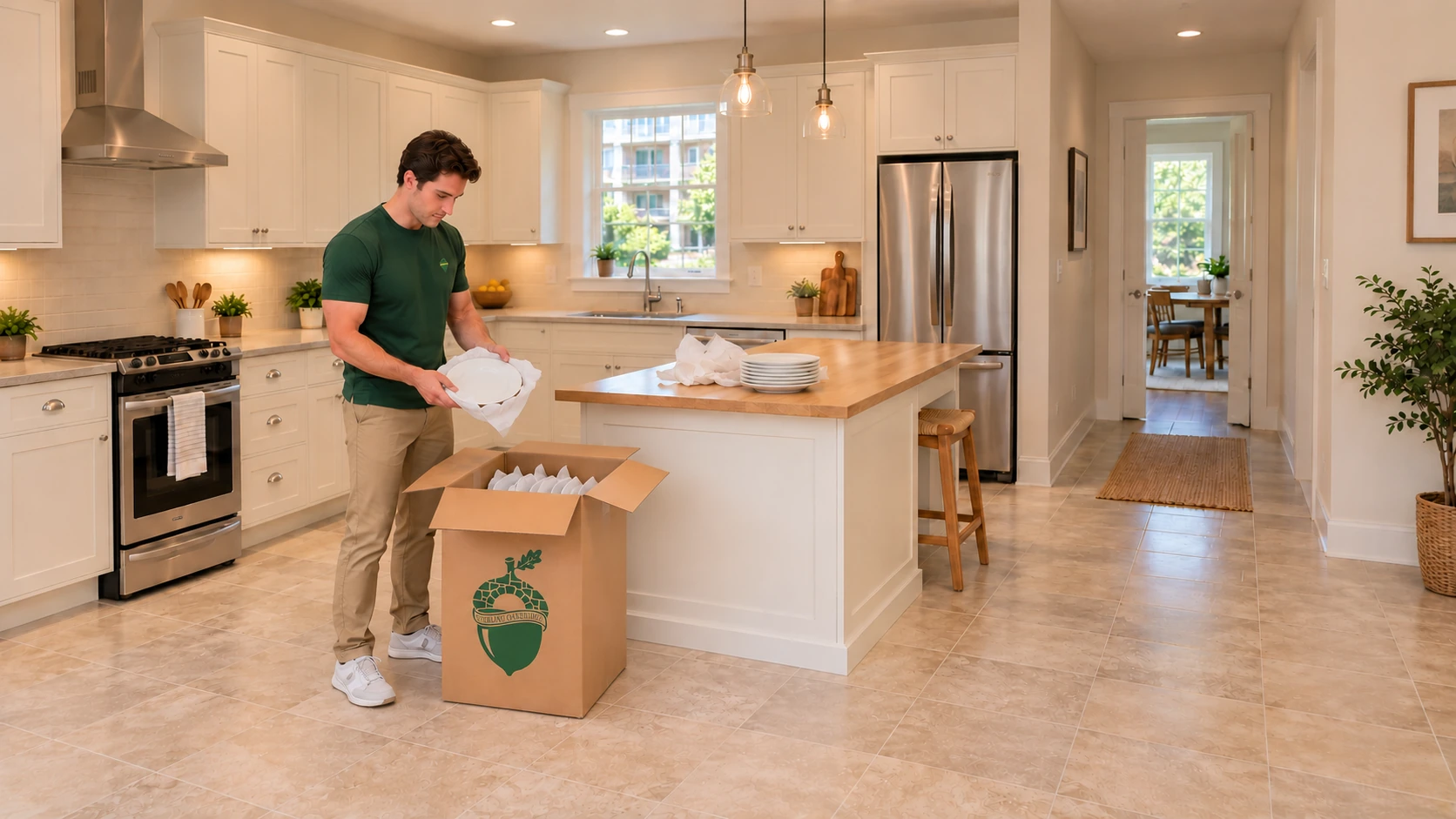
Sterling Oakbridge can prepare the agreed belongings and provide optional box unpacking at the receiving home. Packing and unpacking use working time; company-supplied cartons cost separately. Directed home organizing, finishing work and removal of used materials each need their own agreed scope and price.
The useful starting point is the work you want to hand over. You may want evenings back before moving, protection for selected kitchen contents, or help opening the cartons that still occupy the new home. Include what must remain usable at the old address and what must be ready first at the new one. Those decisions determine the preparation, materials and visits to review.
Explore packing, costs and local examples
Choose the contents the crew will prepare
Full packing covers the retained household contents in the agreed inventory. Partial packing assigns named rooms or groups to the crew while you prepare the rest. Fragile-only packing can focus on suitable dishes, glassware or other selected breakables. State the boundary in terms of actual belongings: “the kitchen cupboards and the glass cabinet contents” is more useful than “some help upstairs.”
Decide what will travel before packing begins. Separate belongings for the new home, storage, another recipient, donation or removal. A piece still awaiting that decision can consume materials and handling, then need another agreed stage. Keep the household's private documents, medicines, keys and valuables under its own control.
The Cherry Hill moving page covers the wider move and access plan. The local relocation guide covers housing and settling in. This page explains the preparation and receiving work you can select, including the work that remains with the household.
Review cupboards, closets and storage before counting cartons
Show the inside of cupboards, wardrobes, drawers and bookcases, along with retained contents in the basement, attic, garage and separate storage. Include the small objects around the furniture. A photograph of a closed cabinet describes its outside, but leaves much of the packing work unseen.
For illustration, a household expecting 20 cartons might discover enough retained contents for 60–100 after reviewing its cupboards and storage. That is a possible planning difference, not a Cherry Hill average or a carton allowance. The actual contents, suitable carton sizes, weight, cushioning and handling route determine the materials to discuss.
The Township's 2018 Land Use Element describes single-family and multi-family housing. Treat those planning categories as background. Inspect the particular home: a ranch can still have basement contents, and a split-level can add short flights between everyday rooms. Follow the items from each space to the accepted loading position.
Consider: a split-level family home that must work until morning
Imagine a family whose cupboards, books and clothing need preparation while work and school continue. Assign the kitchen storage, selected shelves and most clothes to an earlier packing visit. Agree which room groups the household will finish itself and where completed cartons may remain without filling the short stair flights or landings.
Keep a small usable meal set, bedding, toiletries and the next day's clothes out until their agreed packing time. Leave the children's bedtime belongings accessible. Suitable hanging clothes can transfer to wardrobe cartons while the closet doors and the route beside the bed remain usable. Mark the final group so it does not disappear into the earlier shipment preparation.
A separate visit can leave fewer packing tasks for moving day. It also adds its own labor, materials delivery and access arrangements. Compare that sequence with packing and moving on one day using the same inventory. The family gains a defined division of work and a usable final evening, rather than an assurance based on its bedroom count.

Protect ordinary breakables for the whole handling route
Protection must support the contents inside the carton through carrying, stacking and the journey. Review individual wrapping, cushioning, carton strength, weight and closure for the selected objects. Dense books and small fragile items need different packing choices. A large carton filled with heavy contents is not automatically a useful unit to carry.
Glass doors and shelves, framed pieces and collections require a review of their construction and matching parts. Identify any specialist method while the scope is being prepared; fine-art and antiques work has its own requirements. Clean surfaces and suitable handling materials matter, while the appropriate gloves and grip depend on the object.
Empty ordinary drawers and normally retain them secured within the protected whole piece. Account for removable shelves and fittings. Safely detachable long table or desk legs need a construction-specific preparation method and an identifiable protected parts set. Integral supports remain a different construction; avoid assuming every component detaches.
Consider: fragile-only work in a condominium
Consider a household that has packed its clothing and books but wants help with ordinary kitchen breakables and a few glass cabinet contents. Identify those groups before the visit. Show the crew the already packed cartons that will join the move so their condition, weight and closure can be reviewed where needed.
Ask management about preparation access, materials delivery, work hours and the complete route. A moving-day lift reservation does not automatically admit an earlier packing visit. Forward the actual insurance-certificate instructions and booking contact. If a glass shelf, framed piece or other item needs a different method, agree that work separately instead of treating every fragile object as dishware.
The result is a prepared selected group with clear responsibility for the remaining contents. Keep completed cartons inside an accepted area, with shared doors and escape routes usable. If the permitted visit cannot cover the reviewed work, arrange another accepted period before relying on the moving-day schedule.
Choose one day or a separate preparation visit
Packing and a smaller local move can sometimes fit into one day when the contents, carrying work and permitted hours allow it. Full cupboards, several storage areas, individual fragile preparation or short building windows can justify an earlier packing visit. A room count helps describe the home; review its contents and access before agreeing that sequence.
Confirm who can admit the crew and materials for each visit, where prepared items may remain, and when the area must be clear. A split-level landing or a condominium corridor should not become an improvised carton store. Keep the final-night group and the household's travel essentials separate from the belongings already prepared.
For substantial contents, the preparation team and moving-day team may need different sizes and work periods. Compare the full sequence and its paid stages with the coordinator. Additional people still need useful working space and decisions they can act on; staffing alone cannot resolve an unavailable entrance or an undecided inventory.
Give each carton its next destination
Write the next destination, receiving room and useful contents on each carton. Add a carton number or opening priority where it helps the household follow its plan. Color can reinforce the words, while the written instruction remains understandable to the person receiving the group.
A destination label needs a matching arrangement. Confirm the stop sequence, the permitted entrance and the person who can receive at each address. Storage and later delivery require accepted intake, suitable holding conditions and later release. A label on a box does not reserve that capacity or include another trip.
Consider: a ranch inventory going to a smaller home and storage
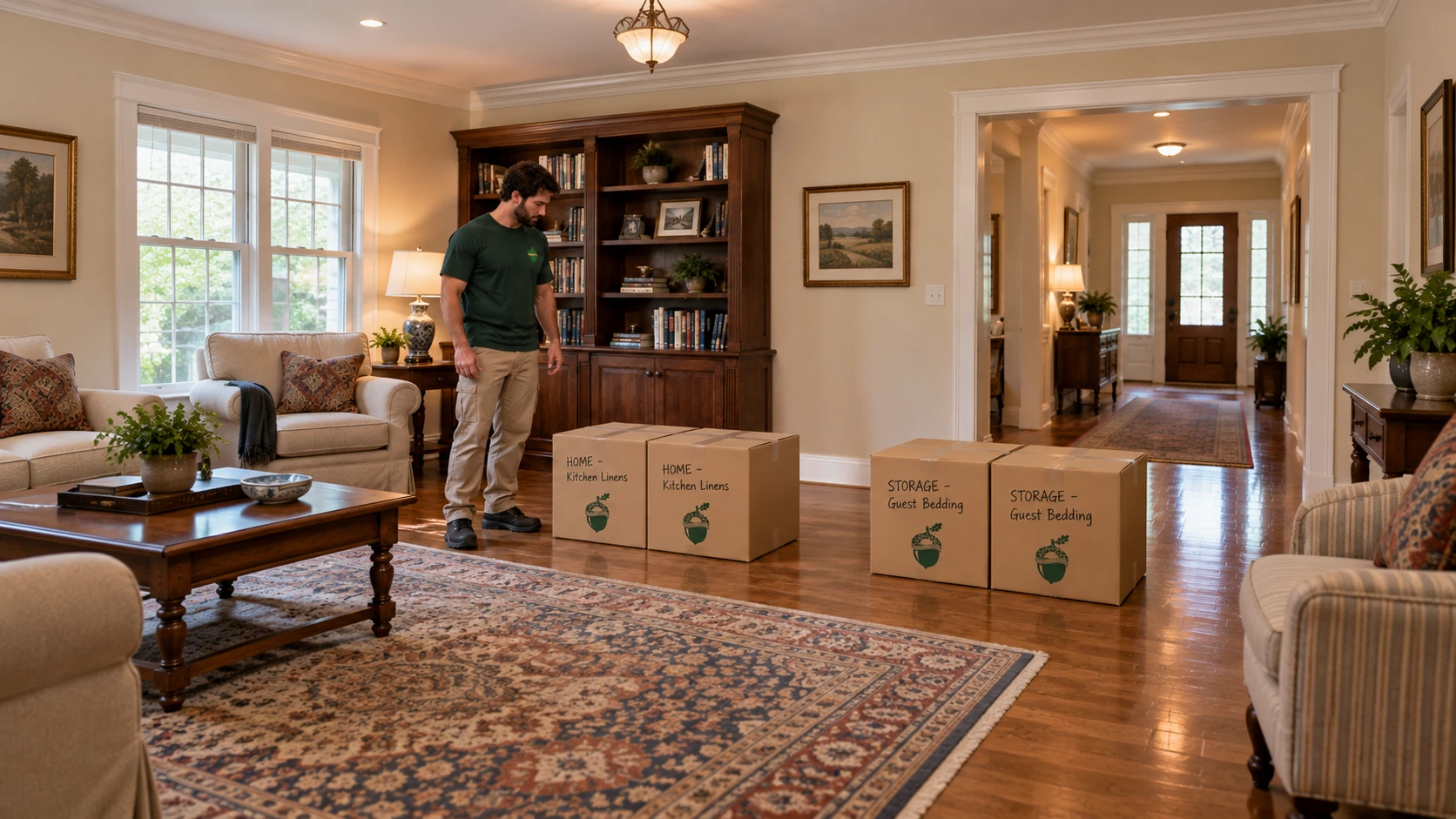
Imagine a household retaining some belongings for a smaller home and sending a second group to storage. Start with the main-floor cupboards, basement shelves, guest bedding and garage contents. Decide what will travel, remain, use an accepted donation route or need removal before those groups are packed.
Identify the home group by room and contents, and keep the storage group physically distinct in an agreed staging area. For example, home kitchen linens and stored guest bedding need different next instructions even though both fit similar cartons. Confirm storage intake and the receiver for the home, together with the order in which each group will be handled.
Review the final furniture and carton footprint at the smaller home before loading. If a retained piece will not fit the planned room or complete route, resolve that choice while the household can still change the shipment. Keep unwanted pieces on a separate removal list with their accepting route and charge. Packing everything first can leave the household paying for work it did not need.
Open selected cartons onto useful surfaces
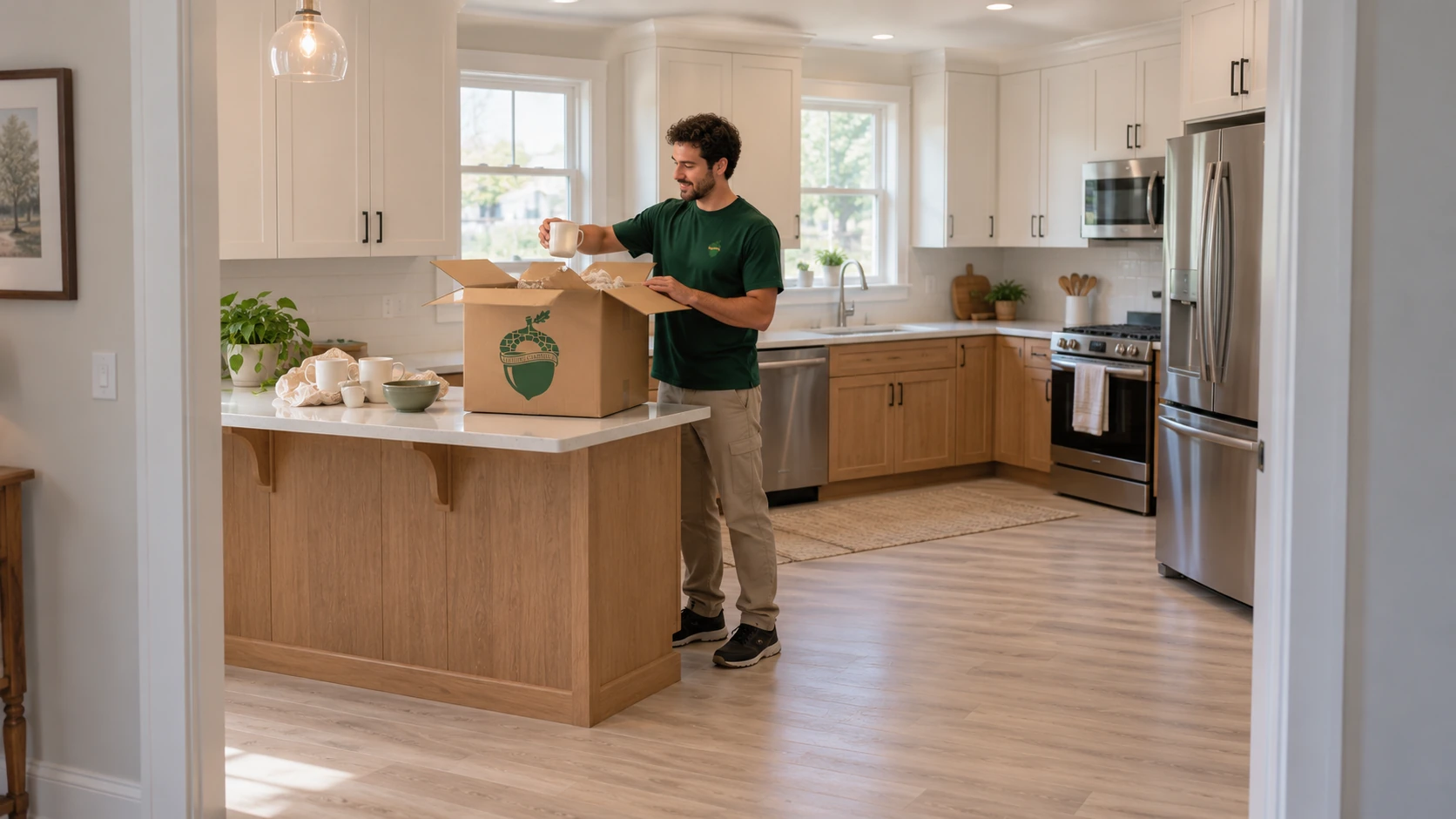
Basic box unpacking opens the agreed cartons and places their contents on suitable designated surfaces. Choose the first-use groups and clear stable work areas before the visit. A usable kitchen worktop, table or bed can support that work without turning every floor area into an unpacking surface.
Gather protective paper and empty cartons in the agreed area, checking for small fittings and retained belongings as the work proceeds. Keep unopened groups and the walking route separate. The immediate result can be useful access to selected contents while the household still has final placement decisions to make.
Home organizing adds final placement according to the customer's instructions. Identify the cupboards, shelves, retained contents and positions, with someone available to direct choices. A smaller team may be easier to guide when the next placement depends on a decision. Agree that work and price separately from opening cartons onto surfaces.
Consider: a rental handover followed by a later unpacking visit
For a Cherry Hill rental, confirm possession before connecting delivery and unpacking appointments. The Township's rental inspection process requires a Certificate of Occupancy before the incoming tenant occupies the unit and advises allowing two weeks for scheduling. The unit must be vacant for inspection, with utilities on. Have the responsible owner resolve that process; a requested moving date does not release the property.
If handover remains uncertain at the agreed checkpoint, contact the access controller and coordinator before dispatch. Choose an accepted later window or suitable storage with confirmed intake and later release, and agree the receiver, extra handling and charges. Keep accommodation and essentials for the household separate. Resume when lawful possession, keys and the usable receiving arrangement are confirmed.
After handover, the household may want the kitchen contents opened first and a separate visit for remaining cartons and directed cupboard placement. Show the actual unopened groups and available surfaces when requesting that return. An illustration such as another 3–4 hours during delivery or a later two-person visit can frame the discussion; it is not a promised duration, crew allocation or available appointment. Agree the selected work before treating it as booked.
Separate furniture work and finishing from opening cartons
Basic furniture disassembly and reassembly use moving labor time without a separate basic assembly surcharge. Complex models need individual review. Furniture is unwrapped as part of delivery; optional box unpacking concerns the contents inside cartons. Show the relevant furniture, fittings and receiving space so each task has a clear scope.
A new purchase belongs in a furniture delivery plan. Moving an existing piece between rooms or floors belongs in in-home moving. Those are useful handoffs when the receiving layout changes, but each needs its own inventory, route and agreed work.
Picture, curtain or television mounting can be reviewed as separate handyman finishing work. Provide the object, intended position, wall or fixing details and any permission requirements. Confirm the method, executor and price. Physical mounting does not establish that electrical work, appliance connections or general repair is included.
Plan what happens to used packaging
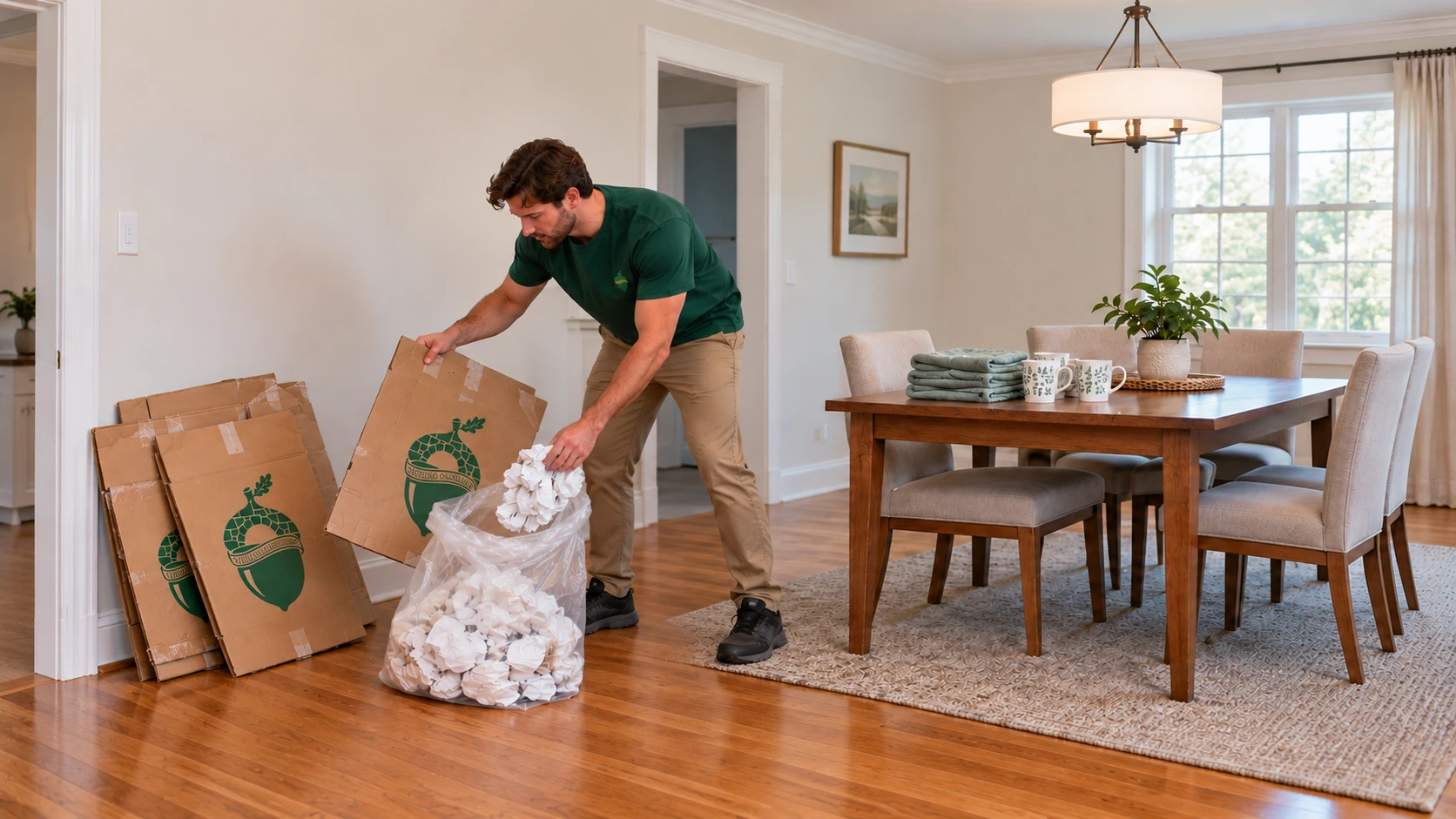
Gathering used materials indoors and transporting them away are different tasks. Removal needs its own agreed scope and price. Identify the quantity, material groups, carrying route, collecting party and accepting destination. Keep retained belongings and any newly unwanted furniture out of the used-packaging group; removal and disposal own those further arrangements.
For eligible municipal collection, Cherry Hill's current guidelines require large cardboard to fit inside the recycling cart without jamming it. Loose material beside the cart and overloaded carts are not collected; plastic bags stay out of the recycling cart. Verify the property's actual arrangement with its responsible contact. The guidelines also exclude municipal collection at properties being remodeled or without a valid Certificate of Occupancy. Arrange an accepted alternative before depending on pickup.
Compare the whole paid scope
Packing labor is charged for working time, and company-supplied cartons are separate. Basic moving blankets, shrink wrap and tape have no separate material charge. Add selected unpacking, organizing, specialist protection, finishing work, return visits, storage and materials removal to the comparison. Distinguish the work included in an agreed shipment scope from separately itemized stages.
Compare the same retained inventory and access with and without preparation. As a conditional budget illustration, adding substantial packing to transport can approach twice the budget for moving the same already packed shipment. Actual work can fall below or above that comparison; there is no standard multiplier or published rate implied. Decide which evenings, sorting and finishing work the household wants to keep as well as what it wants to pay the crew to do.
For local work, estimated or minimum hours help plan staffing and time; they are not a completion cap or a fixed total. For an interstate or cross-border move, travel taking longer does not itself change the agreed flat rate for the same inventory, access and services. Added belongings or requested stages need a revised written scope and price. Use the Cherry Hill long-distance plan for the delivery model and window; packing earlier does not start that delivery clock.
Send the contents and the visits you want reviewed
Send both addresses, the firm dates, photographs inside cupboards and storage, the retained inventory and the complete carrying routes. Identify full, partial or fragile-only packing, what you will prepare yourself, separate destinations, unusual items and the final-night group. Add receiving priorities, suitable surfaces, organizing or finishing requests, materials collection and the people who control access and can make decisions.
For a household move entirely within New Jersey, the Division of Consumer Affairs requires an onsite or video inspection before the written moving estimate, including a small household move. Lists and photographs can start planning but do not replace that inspection. A standalone packing visit has its own reviewed service scope; confirm the applicable arrangements for the work you are requesting.
Cherry Hill packing and unpacking questions
Can I choose only part of the packing work?
Yes. Choose full-household, partial or fragile-only packing, then name the contents assigned to the crew and those you will prepare yourself. Include cupboards, clothing, storage and any unusual pieces. Agree the materials, visits and receiving help you want. A specific division of belongings lets the estimate describe the work you are handing over.
What should the inventory show beyond the furniture?
Show inside cupboards, closets, drawers and bookcases, plus retained belongings in the basement, attic, garage and separate storage. Decide what will travel and what stays or uses another accepted route. Closed cabinet photographs and bedroom counts can hide substantial packing work; they do not establish a carton allowance or a local average.
Can packing and moving happen on the same day?
They can sometimes share a day when the reviewed contents, carrying work and permitted hours fit. A smaller prepared inventory may suit that sequence; full cupboards, fragile preparation or a short building window can justify an earlier visit. Review the actual work, access and receiving arrangement before accepting the schedule.
Who needs to approve a separate preparation visit?
Confirm the person who controls property access, along with any manager's work hours, materials-delivery rules and insurance-certificate instructions. Include the complete route and the area where prepared items may remain. A moving-day lift or carrying reservation does not automatically admit the crew for an earlier visit. Agree another accepted period if the work cannot fit.
What should stay usable through the last night?
Keep agreed bedding, toiletries, a simple meal set, the next day's clothes and familiar child belongings accessible until their packing time. Mark that final group separately. Keys, medicines, private documents, valuables and travel essentials stay with the household, including the instructions and contacts it will need before delivery.
Can suitable clothes travel on hangers?
Suitable hanging clothes can be reviewed for wardrobe-carton preparation, while other clothes are folded and packed in appropriate cartons. Show the garments, closet opening and working space. The actual carton opening, supported rail and access need to suit the clothes; keep the closet doors and room route usable during the transfer.
How do kitchen breakables differ from glass furniture or art?
Ordinary dishes may use individual wrapping, cushioning and suitable cartons for the handling ahead. Glass doors, removable shelves, framed pieces and collections need their own construction and fragility review. Identify specialist methods and their price while planning. An agreement to pack dishes does not specify the method for every unusual fragile object.
Can the crew use cartons I already own?
Show their condition, sizes, contents, weight and closure so suitable use, replacement or repacking can be agreed. A carton that is available is not necessarily ready for the carrying, stacking and journey. Include any already packed groups that will join the shipment rather than assume their preparation needs no review.
Should drawers and all furniture legs be taken out?
No. Empty ordinary drawers and normally retain them secured in the protected whole piece. Identify removable shelves and fittings. Safely detachable long table or desk legs need a construction-specific method and an identifiable protected parts set. Integral supports are different; show the piece and restricted turn before choosing how to prepare it.
What should labels say when some belongings go to storage?
Write the next destination, receiving room and useful contents on each carton. Add a number or opening priority where useful; color can support the words. Keep the home and storage groups distinct. Confirm both receiving arrangements and the stop sequence, including accepted storage intake, later release and any separate transport or handling charges.
How should we prepare for downsizing from a ranch home?
Review the retained contents of every included space, including any basement, attic or garage. Decide the new-home, storage, donation and removal groups before packing. Check the final furniture footprint and complete receiving route at the smaller home. Keep unwanted pieces on their own accepted route and price so they are not prepared and transported by mistake.
What does basic box unpacking leave ready?
It opens the agreed cartons and places selected contents on suitable designated surfaces, with used materials gathered in the agreed work area. Choose priorities and clear stable surfaces first. Final cupboard placement and transport of packaging away are separately selected tasks; opening cartons does not imply an entirely organized home.
How is home organizing different from opening cartons?
Home organizing adds final placement according to your instructions. Identify the cupboards, shelves, belongings and intended positions, and have someone available to direct decisions. Agree the scope, working period and price separately. A smaller team can be easier to guide when the next placement depends on your choice.
Can I request unpacking after trying some of it myself?
Yes. Show the remaining unopened groups, useful surfaces, room priorities and access when requesting a return. The coordinator can review the work and availability, including any organizing or materials removal you want. The later visit has its own agreed paid scope and confirmed appointment; a preferred date is not automatically reserved.
Can delivery and unpacking start before a rental is released?
Resolve lawful possession first. Cherry Hill requires the rental Certificate of Occupancy before the incoming tenant occupies the unit; the owner must arrange the applicable process. Confirm keys, receiving access and the accepted appointment before dispatch. If release is uncertain, agree a confirmed later arrangement and its costs, keeping the household's accommodation and essentials separate.
Do all the rooms need to be unpacked together?
Choose the first-use rooms and contents that have usable surfaces and access. Keep other groups closed in an accepted area outside the carrying route. Agree any later unpacking or directed placement visit and its charge, and confirm the rooms can actually be used. This lets selected contents become accessible without spreading every carton through the home.
How are packing time, cartons and basic materials charged?
Packing and optional box unpacking use working time; company-supplied cartons are separate. Basic moving blankets, shrink wrap and tape have no separate material charge. Review unusual protection, specialist work, extra visits and removal individually. Estimated or minimum local hours help plan the work and are not a fixed completion cap.
How can I compare packing with preparing everything myself?
Compare the same retained inventory and access with and without preparation. Include labor, cartons, transport, selected unpacking, organizing, finishing, extra visits, storage and removal. Decide which evenings and tasks you will keep. A conditional comparison such as substantial packing approaching twice an already packed move's budget is not a standard multiplier or a quote.
Is furniture reassembly included in box unpacking?
They are different tasks. Basic furniture disassembly and reassembly use moving labor time without a separate basic assembly surcharge, while complex models need review. Furniture is unwrapped as part of delivery. Optional box unpacking opens the agreed carton contents onto surfaces. Identify the furniture, fittings and receiving space for the work you want.
Can you finish by mounting a television, pictures or curtains?
Those requests can be reviewed as separate handyman work. Provide the object, intended position, wall or fixing details and permission requirements. Agree the method, executor and price for the actual task. Physical mounting does not establish that electrical work, appliance connections or general repair is included.
Will the used cartons and paper leave with the crew?
Only when removal is separately agreed and priced. Gathering materials indoors during unpacking is different from transporting them away. Identify the quantity, separated materials, carrying route, collecting party and accepting destination. Check paper for retained belongings or small fittings, and keep any unwanted furniture on a separate authorized list.
Can all packing leftovers go beside a Cherry Hill recycling cart?
No. Large cardboard must fit inside the cart without jamming it; loose material beside it and overloaded carts are not collected. Plastic bags stay out. Confirm the property's actual arrangement and eligibility; the Township excludes municipal collection at properties being remodeled or without a valid Certificate of Occupancy. Agree an accepted alternative where needed.
How should unpacking connect to a long-distance delivery?
Use the accepted delivery model, receiving arrangement and separately requested unpacking scope. The delivery window starts after pickup and loading are complete, not at an earlier packing visit. Travel taking longer does not itself change an agreed interstate or cross-border flat rate for the same inventory, access and services; added work needs revised written agreement.
What can I send now for a packing estimate?
Send the addresses, firm dates, cupboard and storage photographs, retained inventory and complete routes. Identify full, partial or fragile-only work, what you will prepare, separate destinations and receiving priorities. Add access contacts and requested finishing or removal. For an entirely New Jersey household move, arrange the required onsite or video inspection before the written moving estimate; confirm standalone packing scope separately.