
Pennsylvania · Philadelphia service planning
Junk Removal & Disposal in Philadelphia, PA
A washer can need to leave before replacement. A workbench can remain after a studio closes. Fitness equipment can stay unused until an interstate move. Sterling Oakbridge helps review agreed carrying and disposal in Philadelphia as a stand-alone visit or moving-day add-on. Establish the actual tasks, appropriately authorized transportation and accepting receiver in the written estimate before booking.
Put useful belongings first in the moving budget
Disposal can save the cost of handling things the next household no longer needs. Compare removal and any necessary replacement with avoidable preparation, carrying, packing, shipment capacity, unloading, storage and later disposal. Keep valued and useful pieces. Confirm the revised inventory and written scope before relying on a saving: excluding an item does not automatically reduce an existing flat quote.
A moving date does not arrange waste collection. The responsible town and collector have their own bulky dates and exclusions, while drop-off access depends on the actual vehicle and permit. A building's bins or an ordinary garbage subscription may not cover a refrigerator, mattress or furniture clearance. Confirm the property and collector's actual instructions before leaving anything out. An unwanted object still needs a receiving decision and someone to get it there.
Look first for repair, a committed recipient or an eligible household arrangement that can meet the deadline. Suitable reuse can avoid unnecessary disposal. A tentative offer to collect next month does not clear the room before tomorrow's delivery, and a recycling address does not supply indoor labor. Compare complete options rather than assuming the cheapest receiving charge solves access, transportation and timing.
Philadelphia rowhouses, managed residences and business properties can have different carrying routes and waste arrangements. Confirm the actual property and its collector rather than assuming every building has the same service. Show a basement stair, narrow turn, shared doorway, long driveway or actual legal vehicle position. Do not assume a large lot makes every approach suitable for a loaded truck. The moving guides cover broader relocation planning; the removal estimate should describe this property's selected items and carrying route.
Send an item list with the access photographs
Include quantities, dimensions, approximate weight, condition, room and floor. Show stairs, thresholds, doors and the distance to vehicle access. State who authorizes removal, which belongings remain and the date the space must be clear. A new appliance order, property handover or interstate departure makes the deadline important without creating an automatic collection appointment.
Identify connections, batteries, liquids, contamination and unknown contents before the visit. A freestanding piece differs from fixed equipment requiring a qualified disconnect. A garage can contain household objects, fuels and tools that need separate decisions. Keep uncertain ownership, papers, valuables and sold items outside the removal group until their owners have decided.
- Furniture removal. Sofas, armchairs, dressers, tables and bookcases. Identify each piece, its dimensions, the carrying route and whether a recipient or removal has been agreed.
- Mattress disposal. Used mattresses and box springs after a bed replacement or downsizing. Give the size, quantity and condition; disclose pest concerns and confirm covering instructions and an accepting destination.
- Appliance removal. Refrigerators, freezers, washing machines, dryers and microwaves. Give the model and utility preparation. Refrigerant appliances need a suitable receiving chain; appliance removal does not include utility disconnection or installation unless separately confirmed.
- E-waste and electronics. Televisions, monitors, computers and associated covered equipment. Confirm the exact device and approved electronics route. An appliance and a covered electronic device can follow different disposal programs.
- Gym equipment. Treadmills, exercise bikes, weight benches and loose weights. Identify weight, stairs, dismantling, screens and embedded batteries before choosing the carrying and receiving plan.
- Outdoor items. Worn patio furniture, loose play equipment and unwanted garden equipment. Describe fuel, batteries, anchoring and any dismantling. A fixed shed or play structure needs a separate review of permissions and work.
- Yard waste. Branches, brush, leaves and trimmings remaining after a small clearance. Review material, quantity, bundling and the local green-waste route. Soil, stumps, fuel and equipment are different loads; garden work itself is not included automatically.
- Light construction debris. Small quantities of loose drywall offcuts or other identified remnants from a minor repair. Send photographs, material types and quantity for acceptance review. Confirm the receiving route and charges; demolition, unknown or contaminated materials need a different plan.
- Used packaging and floor protection. Flattened cartons, packing paper, plastic film and clean protective sheeting. Separate materials and identify contamination or attached debris. Agree the staged quantity and separately charged collection.
These categories describe requests, rather than promise acceptance of every material. Furniture, electronics, refrigerant appliances, vegetation and light repair remnants may require separate receiving arrangements. Do not add an unreviewed item at loading merely because the room is being cleared. Changing the list can change labor, capacity, preparation and the receiver.
Example 1: an old washer before replacement on Spruce Street
Imagine a Spruce Street household replacing a freestanding washing machine that no longer completes a reliable wash cycle. A repair review has not produced a useful solution, and nobody has committed to taking the old appliance. The replacement cannot use the same space until the selected machine leaves. Useful laundry supplies and other appliances remain separate.
An actual seller take-back arrangement can be worth checking before ordering removal. Confirm whether the delivery includes the old machine, indoor carrying, preparation and the property's route. A promise to leave a new appliance at the entrance does not clear the old one from the room. A possible recipient also needs a definite collection plan rather than a vague offer.
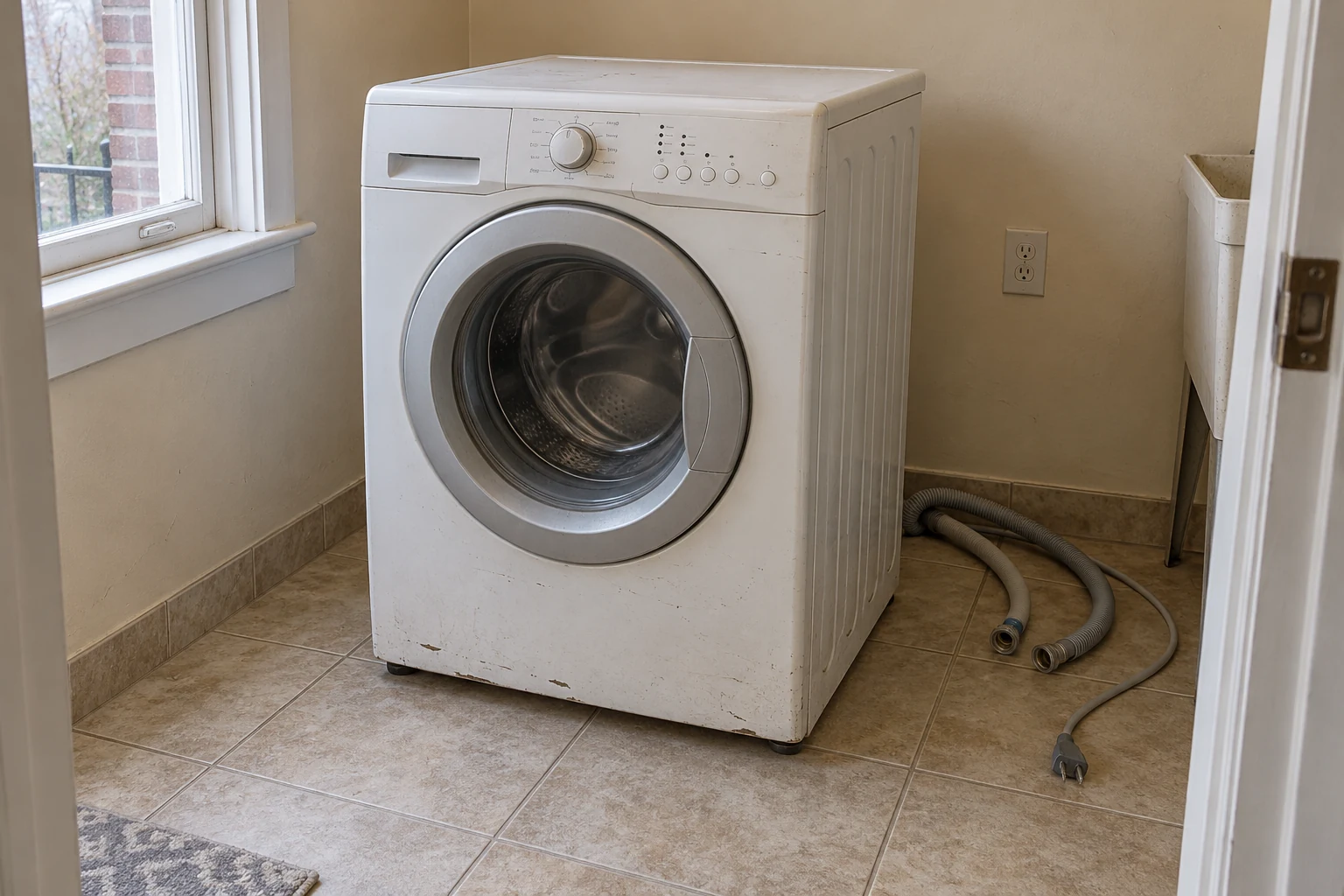
The photograph shows stationary inventory with an unplugged cord, disconnected hoses and the whole appliance body. It does not show qualified disconnection being performed or prove the machine's internal condition. Send the model, dimensions, weight, utilities and full route, including stoop, landing turns and any elevator reservation. Keep remaining water or cleaning products outside the ordinary removal assumption.
Philadelphia's appointment bulk programme lists eligible major appliances. That is different from regular compactible furniture collection, and the programme's property rules matter. Ask about the selected washer and actual appointment before choosing a method. A curb collection appointment also does not include the City's crew entering the home to carry it out.
A separate visit can suit the replacement deadline. An add-on may share mobilization with an agreed move when labor, suitable transport, separation and receiving fit. Utility disconnection and new installation need appropriate separate arrangements. Name the actual Sterling work and accepting route before booking rather than assuming spare space in a moving truck settles everything.
Example 2: a workbench left after a studio closure on Germantown Avenue
Consider a small Germantown Avenue studio closing at the end of its lease. Its ordinary wooden workbench no longer has a destination. The owner has sold useful tools and selected records and equipment that will travel elsewhere, but no recipient has committed to collecting the spare bench. Clearing that remainder is different from moving the business's retained inventory.
Resolve ownership, leased goods, client property and documents before giving instructions. A work surface can conceal tools, batteries, liquids or sharp material. This example concerns one old wooden bench after those contents are reviewed separately; it does not include industrial machinery, chemical stock or demolition. Photograph the actual piece and name anything attached.
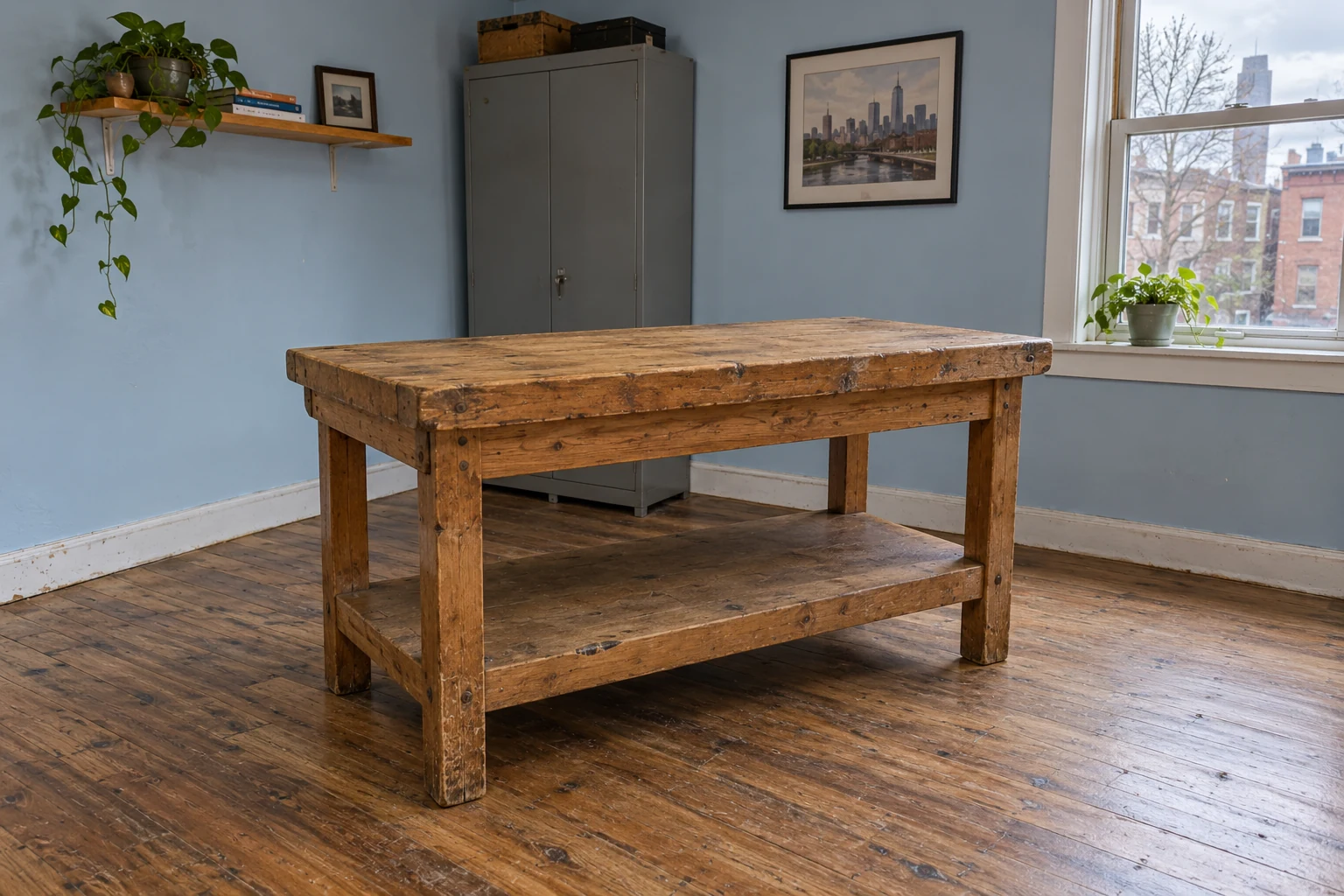
The image shows the stationary whole bench with its supports attached. It is a condition and inventory review, rather than a packed transport stage or a room already cleared for renovation. Identify joints, removable components, weight and the full doorway and stair route before carrying. A bench fitting a room does not establish that it fits a shared hall or legal loading position.
The City's residential bulk appointment programme excludes commercial properties. A studio cannot turn commercial waste into an eligible household appointment by using a nearby resident's address. Identify appropriate private receiving, the actual hauling party and any applicable documents in the estimate. The building's release deadline and loading rules need their own confirmation.
A stand-alone visit may suit an earlier lease handover. An add-on can coordinate with retained business furniture when the work, truck arrangement and receiving hours align. Compare the full charge and extra stages for the same outgoing piece. Donation receiving, private hauling, records handling and moving labor are distinct arrangements; none is automatically completed by the decision to close the studio.
Example 3: unused fitness equipment before an interstate move on Frankford Avenue
Imagine a Frankford Avenue household preparing for Minneapolis, Minnesota after nine years at the same address. A used rolled exercise mat and two manual push-up bars have remained in a dry storage room. They have no planned place in the next home. Useful exercise equipment is selected separately, so the decision concerns this small group rather than every object in storage.
Review condition, committed reuse and the actual receiving material. Foam or rubber exercise equipment and metal supports are not ordinary clean-paper recycling. This group has no motor, battery, display, fuel or hydraulic connection. If the actual inventory contains those features, send them for separate review rather than treating every fitness item as the same object.
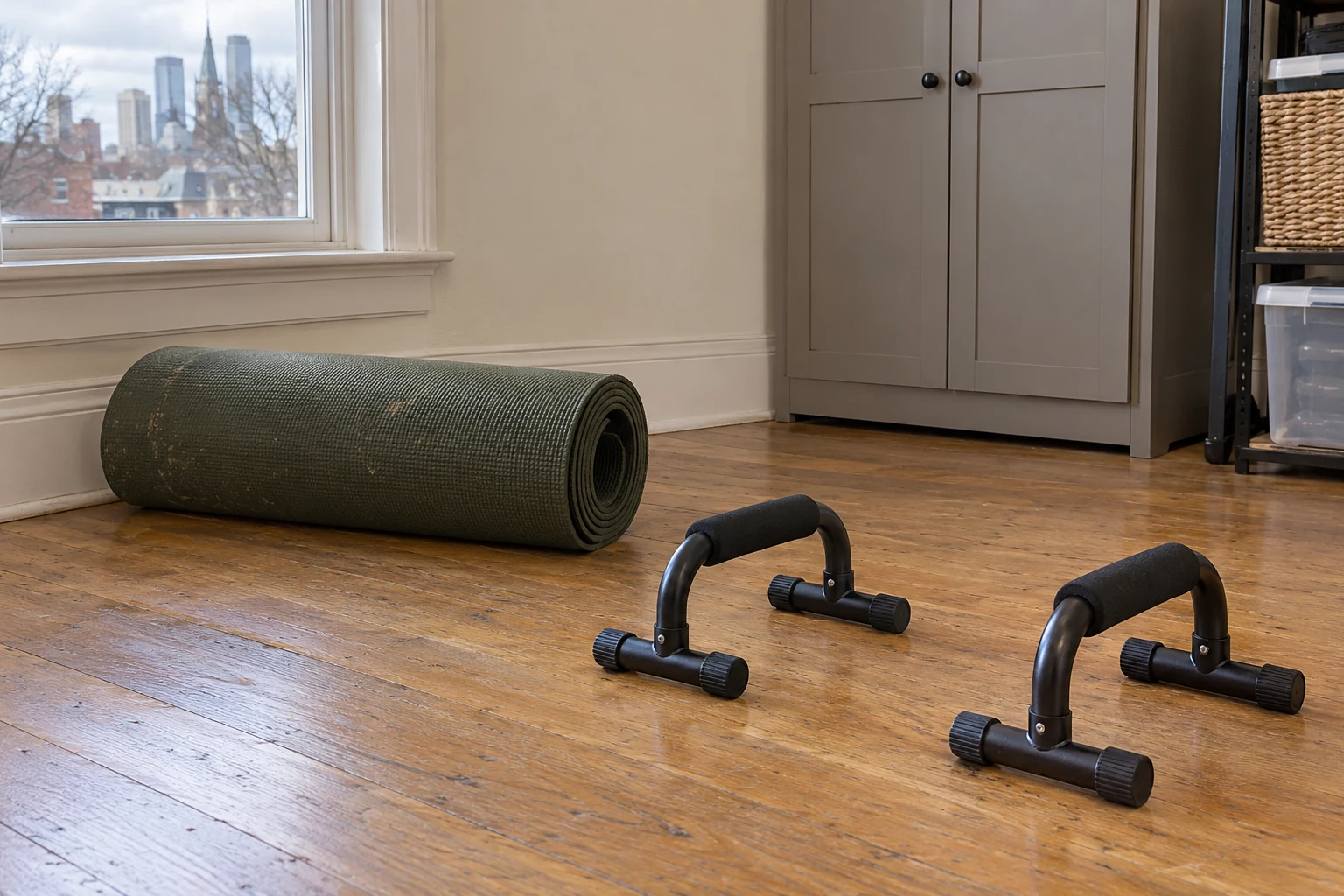
The illustration shows the whole stationary group before preparation. Each grip has its own stable supporting feet, which belong to the equipment. Identify sharp edges, contamination and any additional stored items before carrying. The private storage floor is a review area, not a public collection location or a declaration that the room has already been cleared.
For long-distance moving, even a forgotten small group can add sorting, preparation, shipment space and handling only to need disposal after arrival. Compare local removal and necessary replacement with those avoidable stages. Keep valuable and useful belongings. A theoretical charge per cubic foot does not establish the actual estimate or an automatic deduction from an already agreed flat price.
An early visit can settle the inventory before packing. An add-on may combine suitable carrying with the main day when receiving and transportation fit. Another trip or date can remain necessary. Agree which pieces leave, which travel and who can authorize a change so the disposal group does not reappear in the final moving inventory.
Other reasons to clear a room or property
The same decision can apply to local downsizing, a household separation, a temporary relative's stay, a sold home's outdoor equipment or packaging left after unpacking. Commercial office furniture, damaged gym equipment and small repair remnants need their own material and access review. State the exact contents and deadline; a room name does not identify every item to remove.
View 21 removal situations and what to check
Swipe the table sideways to read all columns.
| Situation | What needs to change | What to agree first |
|---|---|---|
| A furniture replacement | A worn armchair, sofa, dresser or old table makes way for a new purchase. The old piece needs to leave before the new room layout can work. | Agree removal versus retailer haul-away, access, recipient acceptance and the delivery deadline. |
| A television or monitor upgrade | A broken or unwanted screen remains after the replacement arrives. The old device needs an approved recycling route and space needs to be cleared. | Identify the model and an accepting electronics program; ordinary trash is not the route. |
| A local move to a smaller home | Parents choose a smaller home after the children leave; spare furniture no longer fits. Avoid carrying and storing pieces that have no role in the receiving home. | Use the new floor plan, a keep list, a removal list and a separately reviewed quote. |
| A household separates | People move to different homes and a shared surplus remains. Unallocated items should have a destination before the rooms are cleared. | Confirm the authorized owner and each person's keep/remove instructions. |
| A temporary family stay ends | A relative returns home and the spare bed, chair or temporary setup is no longer needed. Clear a useful room instead of keeping furniture without a future use. | Verify ownership and which pieces are being returned, retained or removed. |
| Accumulation before a move | After seven to ten years, forgotten garage, attic or basement belongings reappear. Avoid packing and transporting contents that would be discarded after delivery. | Sort early, photograph the group and distinguish ordinary items from special materials. |
| A long-distance keep-or-replace decision | Bulky low-value furniture competes for space with useful, valuable or sentimental possessions. Removing unwanted bulk can avoid shipment, handling and storage costs. | Compare two actual moving quotes with removal and destination replacement costs; no automatic per-cube discount. |
| An estate's remaining contents | After retained and sold pieces leave, ordinary unwanted furniture remains. The property needs to be cleared for its next agreed use. | Identify the authorized representative and preserve items awaiting sale, collection or family decisions. |
| Rental turnover or a possession deadline | A property must be handed over after tenancy, including situations involving lawful eviction processes. Ordinary unwanted contents may prevent the agreed handover. | Confirm lawful possession and authority over the items; removal is not eviction enforcement or legal advice. |
| An office lease ends | Old desks, chairs or shelving are no longer needed in the new office. Release the old premises without moving a surplus into the new workspace. | Separate business waste, IT/data decisions, landlord instructions and the commercial receiving route. |
| A business changes its space | Unused shop fixtures, storage furniture or equipment need to leave. Make the leased space usable for its next purpose. | Confirm the actual equipment, utilities and materials; resident-only programs do not serve business loads. |
| Outdoor items at a home sale | Patio furniture or children's outdoor items are not wanted at the next home. Clear agreed contents before move-out and property handover. | Confirm the sale agreement, ownership, anchoring, item size and ordinary material acceptance. |
| An unwanted shed or play structure | A shed or fixed children's play structure is no longer useful. It may need a separate dismantling and collection plan rather than transport to the new home. | Review foundations, utilities, dismantling, permissions and receiving material limits; structural demolition is not automatically part of ordinary collection. |
| Broken outdoor equipment | An old mower, grill or other outdoor equipment has stopped being useful. Avoid taking a repair or disposal problem to the new property. | Identify fuel, oil, propane and batteries separately; arrange the applicable material route. |
| A broken household appliance | A washer, refrigerator, freezer or other appliance is being replaced. The old appliance takes up receiving or working space. | Review utilities, access and model; refrigerant-containing appliances need an appropriate processor. |
| Unused or broken gym equipment | A treadmill, exercise bike or weight system is not going to the new home. Avoid a difficult carry and shipment for equipment with no planned use. | Identify weight, dismantling, stairs, electronics and any battery before quoting. |
| Packaging after unpacking | Used flattened cartons, paper and plastic wrapping fill the available space. Restore useful rooms and clear the agreed collection area. | Group used flats in large open boxes near a clear exit; separate material types and agree the collection date. |
| Protective materials after renovation | Clean floor-protection paper or plastic film remains after work ends. The finished space needs to be made usable again. | Identify contamination, wet paint or attached debris; protective packaging is not automatically construction or hazardous waste service. |
| A mattress or box spring replacement | An old bed surface remains after replacing a mattress or changing bed size. Clear the receiving room without carrying an unwanted bulky piece to another home. | Confirm size, condition, covering instructions, local collection eligibility and accepting destination. |
| A prepared yard-waste pile | Identified branches, brush, leaves or trimmings remain after a small clearance. Clear agreed outdoor space before a handover or after work is finished. | Confirm quantity, bundle/container rules and actual green-waste acceptance; tree work, soil and stumps are separate. |
| Light debris after a minor repair | A small photographed quantity of identified drywall offcuts or repair remnants remains. Clear the completed room without mixing construction material into ordinary household pickup. | Review the material, quantity, carrying route, charges and accepting destination; unknown or contaminated material needs a different plan. |
For rental turnover or an estate, confirm ownership and authorization before work. For an office, identify retained records, customer property, leased equipment and data-bearing devices separately. A scheduled clearance is not authority to remove somebody else's belongings. Fixed structures, utility disconnects, demolition and contaminated material are separate scopes, not automatic additions to household carrying.
Compare a stand-alone visit with a moving-day add-on
A stand-alone visit has its own dispatch and removal window. It can create space before replacement delivery, clear a property before handover or settle an inventory before interstate packing. Its price depends on the selected group, labor, access, transportation, receiving and any necessary separate trip. A household drop-off fee alone is not the price of indoor service.
An add-on combines agreed carrying with the main move. It may avoid another dispatch because the crew and vehicle are already onsite. Additional labor, suitable capacity, material separation, receiving charges or another trip can remain necessary. Retained belongings and waste loads have different requirements; spare space does not establish permission to enter a facility or use a resident programme.
Compare written estimates for the same items and clear-by date. Identify dispatch, preparation or dismantling, carrying, transport, receiver fees and extra trips. Include connections or specialist work only within an agreed appropriate scope. Coordinating the schedule can save money when it avoids real work, without a fixed discount or a promise that disposal becomes free on moving day.
Choose the correct Philadelphia collection method
Philadelphia has several routes. The regular collection rules allow eligible households up to two compactible furniture items weekly. Mattresses and box springs need sealed plastic bags at the curb. Property eligibility and private collection arrangements still matter; this is not permission for an unlimited move-out pile.
Other items use the separate appointment bulk programme. It lists major appliances, metal-frame furniture, large toys, flat-screen televisions and certain other items, with its own exclusions and preparation. Check the actual piece before dismantling it: municipal metal-frame collection instructs households to keep that furniture intact. Private carrying preparation needs its own review.
The City service page excludes larger apartment buildings, condominiums and commercial properties from that appointment programme. The booking portal describes household eligibility through six units but does not repeat every condominium detail. Confirm the particular property's entitlement before scheduling; ordinary collection eligibility and appointment eligibility are separate questions.
A managed building may also set its own moving and disposal instructions. Get the actual written rules, entrance, shared-area protection and receiving window. A citywide programme does not settle who carries from an upstairs room, where a private vehicle can stand or whether a manager permits temporary staging. Keep a continuous usable route through the property.
Resident drop-off differs from commercial receiving
The sanitation convenience-center page requires Philadelphia residency proof and sets a vehicle-weight limit below 6,000 pounds. It permits a resident's personal or commercial vehicle within that limit, but excludes commercial contractors and commercial loads. The type of vehicle alone does not make a paid disposal load eligible.
The centers list ordinary household, oversized, electronics, refrigerant equipment and selected universal-waste materials with separate limits. Construction debris is excluded. Confirm the exact item, delivery and frequency before travel. A resident receiving benefit does not include Company labor or make a private truckload free.
For agreed private removal, identify the appropriately accepting commercial destination and actual transportation arrangement before booking. Ask about materials, origin, vehicle, quantity, appointment and charge. Different outgoing streams may require separation or another trip. A nearby municipal address is not a substitute for an accepting plan for the real load.
Pennsylvania transportation and commercial records
Pennsylvania's waste transportation programme has vehicle-based authorization requirements and defined exemptions. Establish the actual operator, vehicle, waste and receiver, together with applicable current documents. Another state's credentials or a household moving arrangement do not settle every Pennsylvania requirement.
Before booking, confirm Sterling's actual tasks and appropriately authorized hauling where required. Receiving permissions and the applicable waste plan also matter. Do not choose a disposal destination solely by distance or assume an exempt vehicle carries every material. Indoor labor, waste transportation and specialist handling should be concrete parts of the written scope.
Philadelphia's commercial compliance guidance separates property waste and recycling plans from hauler reporting. A studio clearance does not remove the property's reporting obligations or establish that the mover files every business form. Identify the responsible business representative and retain relevant receiving information for the actual arrangement.
Commercial furniture is different from confidential records or customer-owned equipment. Agree authority and the outgoing list before work begins. Data-bearing devices, leased goods and items promised to another recipient need separate decisions. Emptying a room should not become an instruction to dispose of everything visible there.
Appliances, electronics and mattresses need item review
The City's special-items guidance separates appliances, electronics, refrigerant equipment and universal waste from ordinary collection. Name screen types, utility connections, battery packs, stored data, weight and condition. A flat-screen television listed in one programme does not make every electronic device ordinary trash.
For refrigerators, freezers, air conditioners or dehumidifiers, establish suitable receiving and preparation. Qualified utility disconnection, installation and regulated refrigerant work need appropriate separate arrangements. A removal appointment is not a promise that every technical task is included. Keep leaking equipment or unidentified products outside an ordinary furniture assumption until reviewed.
For mattresses, send size, quantity, condition and any contamination. Curb preparation and resident drop-off differ: the City's center page lists unwrapped mattresses and box springs. Confirm the chosen route's actual handling. Ask a replacement seller about committed take-back, including access and labor, rather than assuming a purchase clears the bedroom automatically.
Gym equipment can range from a small manual grip to a heavy powered machine. Identify attachments, batteries, displays and the route. Outdoor furniture and toys need their own material and dismantling review. An equipment foot or integral wheel is part of the object, and does not establish how the crew will transport it.
Packaging, garden material and light repair remnants
Used packing material can contain clean cardboard, paper, film, foam and contaminated pieces. Separate the streams and confirm actual receiving. Carton unpacking, putting belongings away and packaging removal are different tasks. Photographs of opened used collection cartons should show what needs review, rather than suggesting every carton is newly purchased shipment packaging.
The 2026 leaf programme runs November 2 through December 19, with dated drop-offs and scheduled mechanical areas. Bagged leaf drop-off uses biodegradable paper bags and excludes brush and tree limbs. It is different from ordinary trash, which does not compost those leaves, and from a private garden clearance.
Confirm the actual address schedule and material before staging. Outdoor furniture, toys, soil, building debris and vegetation do not share one receiving entitlement. Gardening, tree work, land clearance or dismantling a fixed structure needs separately agreed scope. A seasonal leaf date does not establish availability for an old shed or broken play equipment.
For light repair remnants, send the origin, material, quantity and contamination. Construction material needs an appropriate private receiving route; it is excluded from sanitation convenience centers. Unknown building products, asbestos, extensive demolition and contaminated material require a different review. Keep them separate from the ordinary household group until qualified work and accepting arrangements are clear.
Match the clear-by date to real access and receiving
The appointment bulk programme allows up to four items and one appointment per household weekly, with limited availability up to a month ahead. Its published instructions require the pickup code and timely accessible set-out, and the City does not enter the home. A submitted request is different from indoor preparation and an actual confirmed slot.
Regular set-out times vary by season and by the defined Center City area. The booking portal gives its own appointment instructions. Confirm the selected programme's actual window rather than treating one time as the rule for every Philadelphia address. A private visit still needs legal vehicle positioning and the property's carrying window.
The holiday guidance explains that City trash and recycling are not collected on observed holidays and shift a day for the remaining week. Convenience centers also close on City holidays. Recheck the current schedule and actual receiver for your date; a private commercial appointment does not automatically follow an office calendar.
For reserved street space, use the current Philadelphia truck-parking procedure covered by the local guide. Assign application, review, issuance and required signs, and confirm the approved position. A residential parking permit or an application alone does not reserve a usable loading route. An alley or driveway needs property permission and actual vehicle and route review.
Household hazardous waste needs a separate arrangement
The 2026 household hazardous-waste calendar lists October 10 and November 7 events, 9 a.m. to 3 p.m., for residents of the five-county Philadelphia region. No advance registration is required for those listed events. Businesses must use a private service. Confirm the actual event, material and eligibility before travel.
Name paint, fuel, oils, chemicals, cylinders, batteries, lamps, medical material, asbestos and unknown contents before the estimate. Ordinary furniture removal is not universal hazardous-material service. The household event's electronics exclusion and the separate bulb or battery receiving routes matter; do not conceal special products inside a furniture load.
Use the programme's actual preparation guidance and appropriate qualified service for regulated material. A date, resident address or available truck does not establish every person's eligibility or material acceptance. If a special route does not align with the household's move, agree a separate arrangement while retaining a clear ordinary outgoing inventory.
Agree the list, authority and clear-by date
Separate retained, recipient-bound and removal items in writing. Empty furniture where appropriate, identify remaining preparation and preserve unresolved ownership, family papers and sold belongings. Disclose weight, connections, contamination, batteries and liquids before the estimate. An item added at loading can change receiving and cost, so keep it outside the agreed group until reviewed.
Confirm who authorizes access, the complete carrying route, legal vehicle position and accepting arrangement. Use packing services for useful belongings chosen to travel and storage for a defined future purpose or receiving gap. Compare the complete stand-alone and add-on estimates for the same list and deadline; deliberate removal avoids repeated carrying of things the next household does not need.
Philadelphia junk removal and disposal questions
Can disposal save money before a Philadelphia move?
Compare removal and necessary replacement with avoidable preparation, carrying, shipment capacity, storage and later disposal. Keep useful and valued pieces, then agree inventory and scope revisions before relying on savings. Removing an item does not automatically lower an existing flat quote.
Can furniture use ordinary City collection?
Eligible regular collection allows up to two compactible furniture items weekly. Mattresses and box springs need sealed plastic bags at the curb. Confirm the property, actual item, collection day and set-out time rather than leaving an unlimited move-out pile.
Does appointment bulk collection cover every property?
No. The City service page excludes larger apartment buildings, condominiums and commercial properties. The booking portal describes household eligibility through six units. Confirm the actual property and selected item; appointment eligibility differs from ordinary collection.
Is a moving-day add-on always cheaper?
It may avoid another dispatch when crew and vehicle are already onsite. Labor, separation, capacity, receiving fees or another trip can remain necessary. Compare complete estimates for the same outgoing list and clear-by date.
What should I send for an old washing machine?
Send dimensions, model, weight, utilities, condition and the whole carrying route. Confirm any qualified disconnection, real seller take-back or accepting removal route. A new appliance delivery or municipal curb appointment does not automatically include indoor carrying.
Can a studio use a residential bulk appointment?
The residential appointment programme excludes commercial properties. Resolve ownership, leased equipment, records and client property, then establish appropriate private receiving and transportation for the actual surplus inventory.
Should unused exercise equipment travel across states?
Review condition and future use first. Compare local removal with preparation, handling, shipment space and later disposal, keeping valued or useful equipment. Name any motor, battery or display separately and agree the inventory revision before relying on savings.
Can a paid removal use resident convenience centers?
The centers require resident proof and a vehicle below 6,000 pounds, while excluding commercial contractors and commercial loads. A resident can use an eligible personal or commercial vehicle, but that does not make a paid commercial load eligible. Confirm the actual delivery.
Do NJ documents establish Pennsylvania hauling authority?
Pennsylvania has its own vehicle-based requirements and defined exemptions. Establish the actual Sterling tasks, operator, vehicle, applicable current documents and accepting destination before booking. Another state’s credentials do not settle every requirement.
Must a mattress be wrapped for every route?
The City requires bagging and sealing for curb collection, while its convenience-center page lists unwrapped mattresses and box springs. Confirm the chosen receiver’s preparation, condition limits, labor and charges; receiving and indoor carrying are different arrangements.
Can the seasonal leaf programme take construction debris?
No. The 2026 leaf programme has dated mechanical areas and paper-bag drop-offs, which exclude brush and tree limbs. Construction material needs appropriate private receiving; outdoor equipment, vegetation and repair remnants need separate review.
How do holidays affect the clear-by date?
City trash and recycling are not collected on observed holidays and shift for the rest of the week. Convenience centers close on City holidays. Recheck the actual programme and receiver, and separately confirm property access and any private appointment.
Can special chemicals and electronics go with furniture?
Name fuel, oils, paint, chemicals, cylinders, batteries, lamps, medical material and unknown contents before the estimate. Household hazardous-waste events exclude businesses and electronics have a different route. Ordinary removal does not establish universal specialist acceptance.