
Pennsylvania · Upper Darby service planning
Full packing and unpacking in Upper Darby, PA
A packing plan should leave you with a usable home before departure and a clear start at the receiving address.

Sterling Oakbridge can prepare all agreed retained contents or selected groups in Upper Darby Township, with optional box unpacking and separately agreed help placing belongings where you want them.
Explore packing, costs and local examples
Choose the work you want to hand over
Packing competes with dinner, work, school preparation and decisions about what to keep. Even a household that can manage the physical work may have little uninterrupted time. Start by deciding which tasks you want to finish yourself and which you want the crew to take over. The useful boundary is an agreed group of contents, rather than a vague promise to help wherever time remains.
Full packing covers the retained household contents in the agreed inventory. Partial packing can cover the kitchen, a book collection, selected rooms or the fragile pieces you would rather hand over. Fragile-only preparation still needs an actual list: ordinary dishes, glazed frames and a cabinet with removable glass shelves do not share one universal method. Show unusual items before their surfaces and construction are hidden.
If you pack some groups yourself, record what will be completed before the crew arrives. Include what happens to unfinished cupboards and extra contents discovered later. A clearly agreed handoff keeps a separate preparation visit useful and lets the moving plan reflect the work still to do. The Upper Darby moving page explains wider service choices; the relocation guide connects the new home with daily arrangements.
Count contents and protect the last usable day
Show open cupboards, drawers, wardrobes and bookcases, including contents stored above or below the main living rooms. A spare room used as a study, a basement collection and an attic of occasional-use belongings can matter more than the bedroom count. The Township's 2018 Comprehensive Plan describes varied Bywood and Drexel Hill housing. Its historical examples help explain why the actual dwelling and storage areas need review; they do not tell us the layout of your home.
A household expecting twenty cartons might discover sixty to one hundred once the cupboards and storage areas are included. This is an illustration of an incomplete inventory, not a prediction for an Upper Darby address or a box allowance. Photograph what is inside before estimating the time, supplies and space needed for finished cartons.
Keep an agreed pack-last group available through the final night and morning. That may include a small breakfast set, bedding, towels, school clothing and the equipment needed for work. Put keys, identification, medicine, chargers and personal papers in a separate group that travels with the household. Something essential inside a correctly labelled shipment can still be inaccessible when needed.
In a smaller room, nominate a place for sealed cartons that leaves the exit, stairs and frequently used cupboards available. Do not fill the route first and then try to retrieve the belongings needed overnight. Identify what the crew will pack at the end and who checks that the personal group stays outside the shipment.
Choose one day or an earlier preparation visit
A small, reviewed local move may support packing and moving on the same day. A cupboard-heavy apartment can require a different arrangement from an almost empty house. Larger inventories, delicate groups, a long private carry or limited building work hours can make an earlier packing visit useful. A separate visit changes the sequence; it is not automatically faster or cheaper in total.
Compare the actual work periods. One conditional plan might use six movers on moving day and four packers on an earlier day; another needs different staffing or a smaller selected preparation visit. Those numbers illustrate separate roles, not a standard crew for a bedroom count. Agree the retained inventory, preparation responsibilities and access before choosing the team and dates.
For a shared building, obtain the actual entrance, lift reservation, work hours, certificate wording and approving contact. An earlier packing visit or materials drop-off also needs accepted access. A resident vehicle permit does not reserve a moving-truck position. Use the actual vehicle and proposed space when following the Township's parking instructions.
Receiving readiness is a separate decision. Upper Darby's Use & Occupancy guidance states that Temporary Access does not permit new occupants to move in. Resolve the actual certificate, keys, possession and usable route before delivery. A room awaiting work needs a safe, agreed holding arrangement or a later receiving stage; an unconfirmed garage is not a default solution.
Match protection to the contents and journey
Protection must work while an item is carried, supported, stacked, restrained and transported. Clean-looking wrapping alone does not establish that the contents are supported inside a carton. Review material, weight, shape, vulnerable edges and what can safely be removed. Ordinary dishes need individual cushioning; frames, glass doors and collections may need an object-specific method and separate specialist review.
Use suitable cartons for the contents and a stable existing surface or floor arrangement for the work. A small book carton can make a retained group more manageable than a large box filled with books. Heavy contents, weak reused cartons and a partly open bottom need attention before the carrying route is used. Close and identify the agreed group when its preparation is complete.
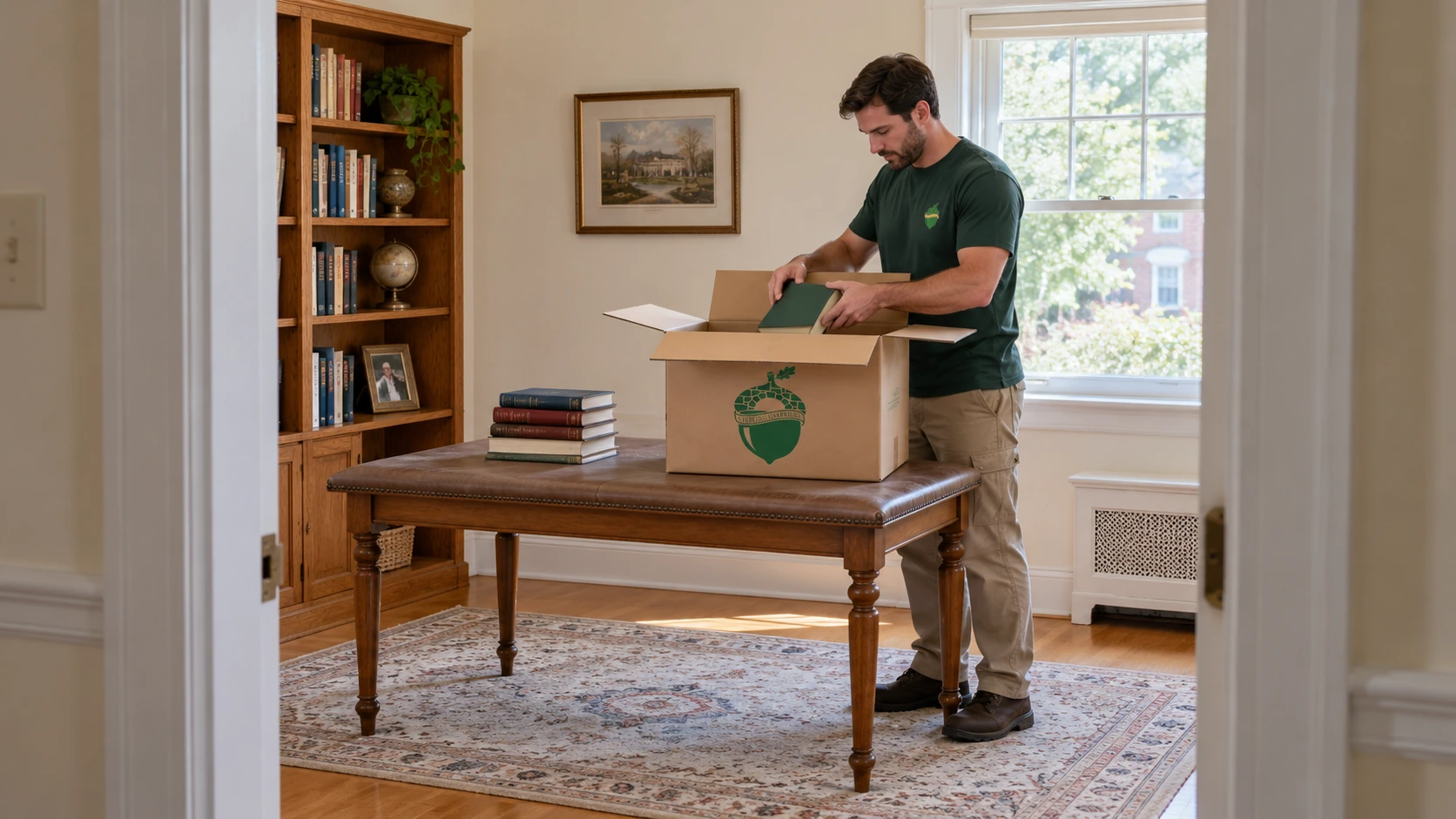
Furniture preparation should follow its construction and the actual doors, steps and turns. Empty ordinary drawers and normally secure them within the protected piece; removable shelves and fittings need their own identification. Basic furniture disassembly and reassembly use moving labor time without a separate basic assembly surcharge. Complex work receives an individual quote. The fine-art service provides specialist packing and crating; a separate purchased piece belongs with furniture delivery.
Separate the next home from storage before loading
Write the next destination, room and useful contents on each carton. Color can help someone distinguish the groups quickly, but it should support a written label that remains understandable under different lighting or when another person receives the shipment. Use the same destination names on the inventory and the agreed delivery plan.
Separate home, storage and any other accepted address while the contents are still accessible. Identify items needed during storage before the unit or shipment is packed around them. A box labelled Study is incomplete when two destinations both have a study. A personal bag outside the shipment is different again: it should not join either group during a hurried handoff.
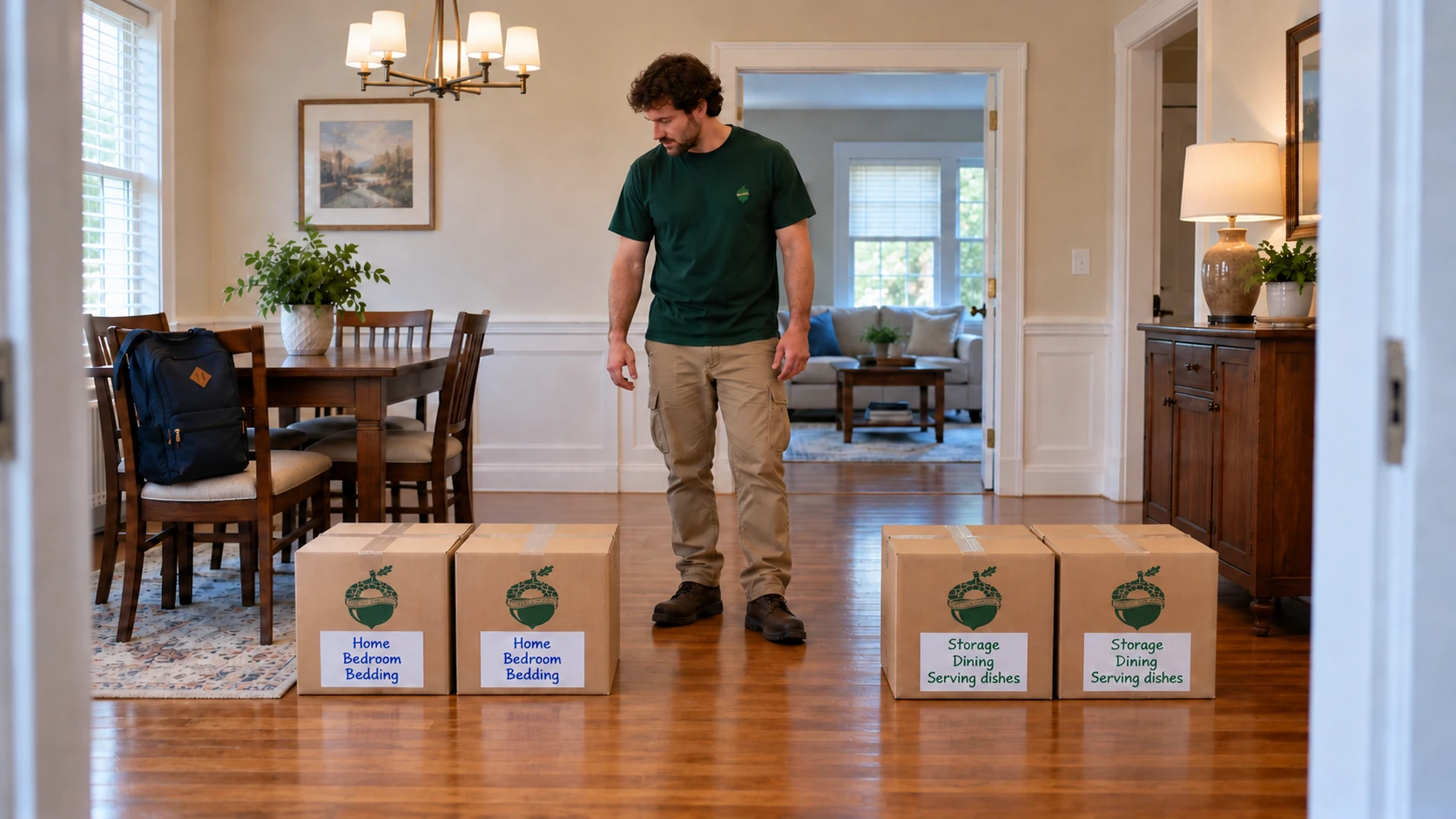
For a move beyond the area, the Upper Darby long-distance page explains direct and consolidated delivery. The delivery window begins after pickup and loading are complete. Packing before that point and the household's interim needs still require planning. Storage and staged delivery should identify the actual receiving period, access needs and additional handling rather than serve as an undefined pause.
Decide what a useful unpacking visit should achieve
Basic box unpacking opens the agreed cartons and places their contents on suitable available surfaces. Choose the first rooms and provide enough clear counter or table space. It does not automatically include final cupboard arrangement, cleaning, decoration or removal of every used packing material. A useful small visit may restore the kitchen and essential clothing while less urgent groups remain closed.
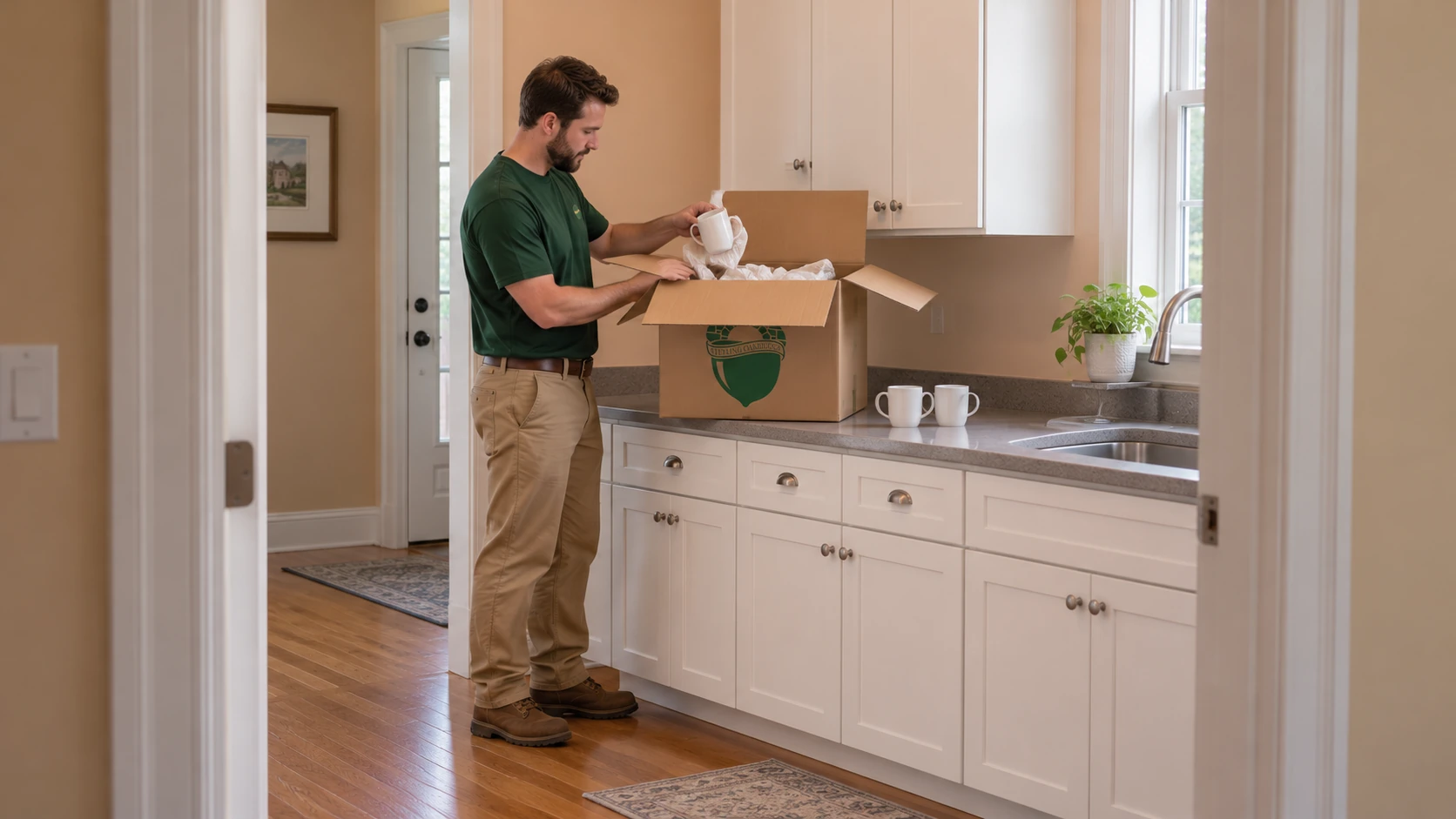
Home organizing adds final placement according to your instructions. Decide where documents, kitchen contents, clothing or school supplies should go, and who can direct the work. A smaller team can sometimes be easier for one person to guide. Opening everything at once may create more decisions and clutter than the household can usefully handle.
A larger unpacking plan might add three or four hours to a reviewed job, or use a later visit by two people. These are planning illustrations, not a duration or staffing promise. Compare the desired result, contents, available surfaces and customer availability. Handyman finishing work is a separate individually agreed task; hanging, hardware, wall suitability, permissions and the executor need review. Do not assume technical or electrical connections are included.
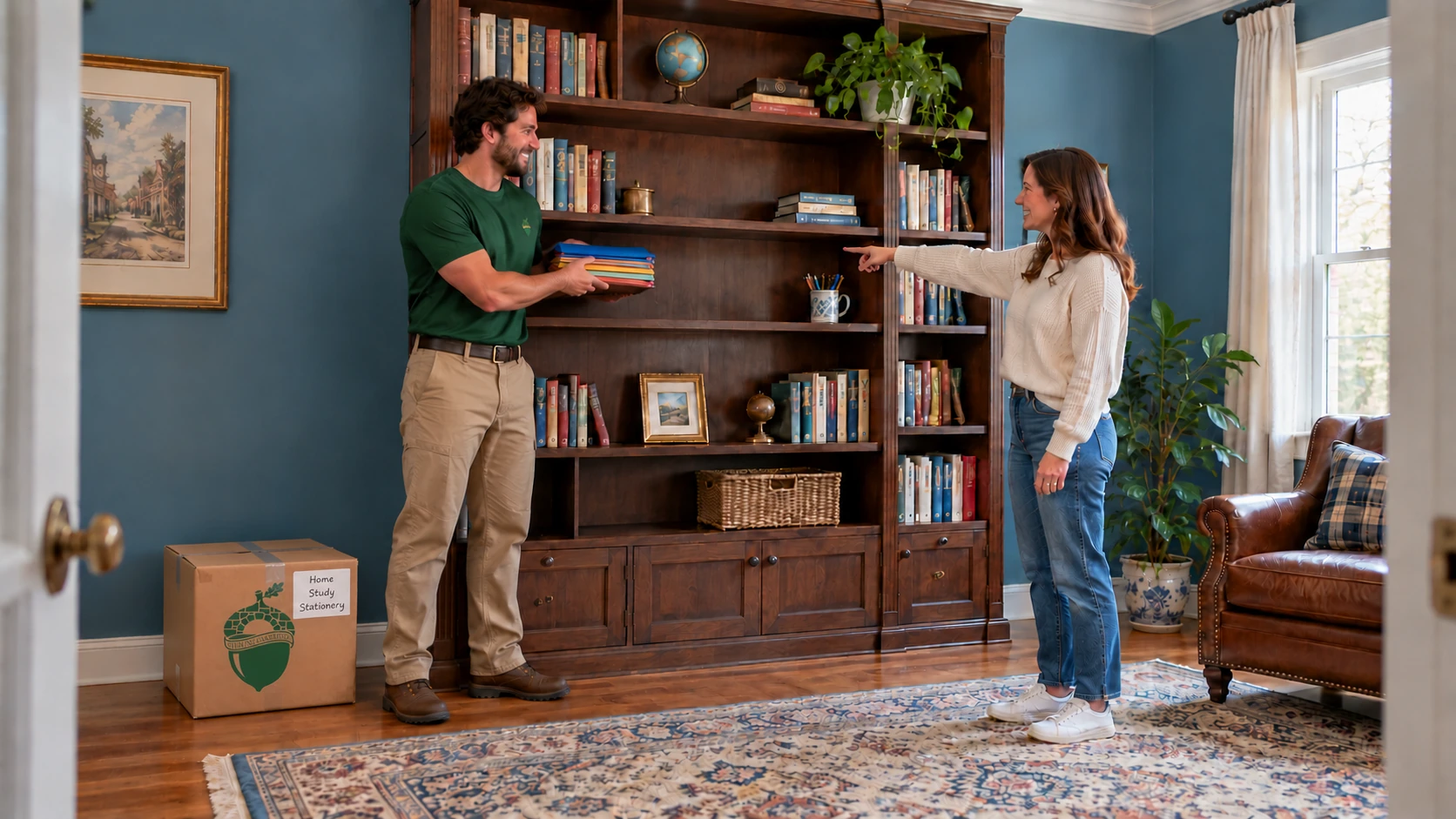
Check empty paper for small fittings, keys and personal items before anything leaves. Furniture unwrapping is part of delivery. Optional box unpacking, final organizing and packaging removal have different work and charging arrangements; request the steps you want in the estimate.
Four household plans in Upper Darby
The following are conditional examples, not accounts of completed customer jobs. Each begins with a different decision and a result the household can use.
A Bywood household preserves the last school morning
Imagine a household leaving a Bywood row home while children still need school clothes and one adult needs work equipment. The less-used dishes can be prepared ahead, but sealing every kitchen cupboard would remove breakfast and create another task on departure morning. Identify a small breakfast group, the last bedding and the bags each person will keep.
Agree where completed cartons will wait without occupying the entrance or stair. Packing in spare evening periods over a couple of weeks may suit some households; this family might prefer an earlier crew visit for the less-used contents and a defined pack-last group on moving morning. Neither option follows from the number of bedrooms. The workable result is a prepared retained shipment and one usable final morning, with school bags and personal papers still accessible.
A Drexel Hill downsizing plan follows the retained collection
Consider a household moving from a Drexel Hill house to a smaller flat while keeping family china and a selected book collection. Decide which contents and furniture are staying before packing begins. Review the china cabinet's glazing, removable shelves and fittings separately from the dishes inside it. A familiar cabinet can conceal more fragile work than a room photograph suggests.
The retained books can be divided into suitable small cartons; ordinary dishes receive individual protection. Identify what the new flat can actually receive and where the finished groups will wait. An unwanted cabinet should not be wrapped, carried, stored and delivered merely because the decision about retaining or removing it was left until moving day. Set a separate accepted removal route in advance. The municipal bulk page does not provide unrestricted clearance for a sale-related household cleanout.
A Highland Park apartment separates the new home from storage
Suppose an apartment household is sending everyday belongings to a ready flat and occasional-use dining and study contents into agreed storage. List both destinations before the first carton is sealed. Write the receiving destination, room and contents, then keep the two groups physically separate outside the shared passage.
The first-night needs travel with the household; they are not simply a brightly coloured box somewhere inside storage. Confirm the actual building access and collection arrangement, who receives each group and whether anything must remain reachable during storage. If possession or the receiving appointment changes, review the later stage and its charges before loading. The result is an inventory and handoff that another person can follow without guessing what a colour means.
A Stonehurst household opens only the rooms ready for use
Consider a receiving home where the kitchen and study are usable while a bedroom awaits separately managed finishing work. Agree a safe indoor location for that bedroom's closed cartons and a clear route to the rooms being opened. Readiness includes permission to occupy and accepted access, as well as paint appearing dry.
Basic unpacking can make everyday dishes available on a clear counter. For the study, the customer can choose the shelf for school folders while a worker places the selected group. That final placement is separately agreed organizing, rather than an automatic part of opening boxes. Leave the later-room group closed until its space is ready. If furniture already delivered to an accepted location needs a later transfer within the home, in-home moving is the relevant separate operation.
Give used materials and unwanted objects their own route
Gather empty materials in a safe agreed place after checking for small belongings. Separate ordinary cardboard and paper from film, foam and mixed materials. Flattening empty cartons can reduce the holding space; it does not establish that every material or contractor load is accepted by the local collection stream.
The Township's current Pickup Guide describes regular household collection for private homes and apartment houses with fewer than five units. It lists paper and ordinary cardboard, excludes plastic bags and coated cardboard, and excludes sale- or lease-related residential cleanouts and contractor debris. A larger building needs its actual property collection instructions. Confirm the accepting stream and preparation for the material you have.
The paid bulk service lists metal household items; it is not an unrestricted household clearance. Removal from the property needs its own agreed scope and price. Packaging removal is charged separately, and an old piece of furniture is a different inventory item from empty wrapping. Use the removal service to review unwanted objects and their accepting destination rather than leave an unconfirmed pile at the curb.
Compare the cost of the complete selected plan
Packing labor is charged for working time, and company-supplied cartons are separate. Moving blankets, shrink wrap and tape have no separate material charge. Optional box unpacking uses working time; packaging removal is separately charged. Organizing, specialist work and handyman finishing receive an agreed individual scope and price.
Compare the same retained inventory, preparation responsibilities, access and receiving result. A combined packing-and-moving budget might approach two budgets for a move already packed by the household. That is a conditional illustration of added work, not a fixed multiplier or a published Upper Darby price. Earlier preparation can preserve evenings and reduce unfinished work on moving morning, but its labor, supplies and extra visit still belong in the full comparison.
For a move entirely within Pennsylvania, the PUC guidance describes hourly tariff charges for moves of forty miles or less and weight-and-distance charges beyond forty miles. The written-estimate rule calls for at least forty-eight hours unless the shipper agrees in writing to shorter notice. For interstate and cross-border work, the written long-distance flat rate remains the same for the same agreed shipment and services; extra contents, changed access or added stages require revised written agreement.
Send the retained contents, both addresses, open-cupboard photographs, stairs or lifts and proposed dates. Identify the pack-last group, personal essentials, storage split and the receiving rooms you want usable first. This lets the estimate describe the work, responsibilities and complete selected cost.
Upper Darby packing and unpacking questions
Can you pack only selected cupboards or fragile belongings?
Yes. Partial packing can cover agreed rooms, cupboards or categories while you prepare the remainder. Identify what you are retaining, what the crew should handle and what you will complete. Show unusual fragile items before wrapping hides their construction; fragile-only is not one universal packing method.
How much can you estimate from the bedroom count?
A bedroom count provides context but does not describe the contents. Show open cupboards, bookcases, wardrobes and drawers, plus the basement, attic or separate storage included. Retained collections and a heavily used study can change supplies and working time without changing the bedroom count.
Can the house remain usable after an earlier packing visit?
Plan a named pack-last group, such as breakfast dishes, bedding, towels, school clothes and essential work equipment. Agree where completed cartons will wait without occupying the entrance or stairs. Keep medicine, keys, identification and personal papers outside the shipment so the final night and morning remain workable.
Do I need to do everything myself if I have time in the evenings?
You can prepare the agreed groups yourself and hand over the rest. Compare the usable evening time with sorting decisions, meals, work and school routines. A couple of weeks of spare-time preparation is an illustration, not a required schedule. Agree the unfinished work before choosing a crew visit.
Is packing and moving on the same day always possible?
A small reviewed local move may support that sequence. Cupboard contents, fragile groups, access and building work hours can make an earlier preparation visit useful. Larger homes are not automatically impossible to self-pack; the inventory and available time determine the plan rather than a fixed bedroom threshold.
Are boxes, blankets, wrap and tape charged the same way?
Packing labor is charged for working time, and company-supplied cartons used for the job are charged separately. Moving blankets, shrink wrap and tape have no separate material charge. Ask the estimate to identify the preparation, cartons and other selected services so you can compare the complete cost.
Can I use cartons I already own?
Show their size, condition and intended contents during the review. A sound carton suitable for light clothing may be unsuitable for a heavy book group or delicate dishes. Review the bottom, closure and internal cushioning before filling it; existing supplies do not automatically fit every retained item.
Why show the china cabinet as well as the dishes inside?
Its glass, shelves, fittings and route may require separate decisions from the dishes. Show the whole piece, construction and access before preparation. Identify removed parts and hardware with their furniture, and agree any specialist packing rather than assume one wrapping method covers the complete cabinet and its contents.
How should I divide a Highland Park shipment between home and storage?
Write the next destination, room and useful contents on each carton and use the same destination names on the inventory. Keep the completed groups physically separate outside the carrying route. Identify anything needed during storage before loading; keep the household's personal first-night group outside both shipments.
Are different label colors enough for two destinations?
Color helps people distinguish groups quickly, but written destination, room and contents labels are still needed. Another receiver should be able to follow the plan without knowing a private color code. Study alone can be ambiguous when both destinations have a study; write which address or storage group receives it.
Can you start receiving work when I only have Temporary Access?
Upper Darby's Use & Occupancy guidance says Temporary Access does not permit new occupants to move in. Resolve the actual certificate, keys, possession and accepted access before delivery or unpacking. Ask the property representative and Township about the actual status; a packing appointment does not establish permission to occupy.
Does a resident parking permit reserve space for the packing truck?
No. The resident vehicle program is different from approval of the proposed moving work position. Review the actual truck, space, date and carrying route with the applicable Parking Enforcement instructions. An earlier packing visit or materials drop-off also needs accepted access; a convenient curb space is not a confirmed work area.
What does basic box unpacking include?
It opens the agreed cartons and places the contents on suitable available surfaces. Choose the rooms and provide clear counter or table space. Final cupboard arrangement, cleaning, decoration and packaging removal are separate questions. You can request a useful selected-room result while less urgent cartons remain closed.
How is organizing different from unpacking?
Organizing adds final placement according to your instructions. For example, you can choose the study shelf for school folders rather than have the crew decide where everything belongs. Agree priorities, who can direct the work and the individual scope and price. A smaller team may be easier for one person to guide.
Can unpacking happen on a later visit?
Yes, with the actual date, contents, available rooms and access agreed. A larger plan might add three or four hours or use a later two-person visit, but those are illustrations rather than staffing or completion promises. Compare the receiving result you want with the work and household availability.
What if one receiving room is still being finished?
Identify the ready rooms and an agreed safe indoor place for the closed later-room group. Keep passages clear and verify permission to occupy and access. If the arrangement is not ready, review a later visit or an actually available storage stage before delivery; do not assume a garage can serve as an unrestricted holding area.
Can you finish furniture assembly or hang items?
Basic furniture disassembly and reassembly use moving labor time without a separate basic assembly surcharge. Complex furniture and handyman finishing receive individual review. Hanging or mounting needs the actual object, wall, hardware, permission and executor agreed; electrical and other technical connections are not automatically included.
Is taking away all empty packing material included?
No. Furniture unwrapping is part of delivery, while optional box unpacking uses working time and packaging removal is separately charged. Identify what should leave, when and through which accepting route. Check paper and cartons for small fittings, keys and personal belongings before material is taken away.
Can all used wrapping go into Upper Darby recycling?
Keep ordinary cardboard and paper separate from film, foam and mixed materials. The current Pickup Guide lists paper and cardboard but excludes plastic bags and waxed or plastic-coated cardboard. Confirm the accepting stream and preparation for the actual material and property; a clean appearance alone does not establish acceptance.
Does a larger apartment building use the same household collection plan?
The Township's regular household collection description covers private homes and apartment houses with fewer than five units. A larger building needs its actual management and collection instructions. Arrange safe temporary holding and any separately quoted removal instead of assuming the household curb arrangement applies.
Can unwanted furniture be left with the empty cartons after a downsizing move?
Give unwanted objects their own agreed inventory and accepting route before packing. Upper Darby excludes residential cleanouts linked to a sale or lease expiry and contractor debris; its paid bulk page lists metal household items. Neither is a promise to clear every object from the property. Removal requires its own scope and price.
Does a long-distance delivery window include the packing day?
The window starts after pickup and loading are complete. Earlier packing and the household's interim needs are separate stages. Review direct or consolidated delivery on the Upper Darby long-distance page, and identify the receiving person and anything that must stay accessible before the furniture arrives.
What pricing and estimate rules apply to a move within Pennsylvania?
For an entirely Pennsylvania household move, the PUC describes hourly tariff charges at forty miles or less and weight-and-distance charges beyond forty miles. The written estimate is due at least forty-eight hours before the move unless the shipper agrees in writing to shorter notice. Do not apply every interstate flat-rate term to an in-state move.
What should I send to request a complete packing estimate?
Send the retained contents, both addresses, open-cupboard photos, stairs or lifts and proposed dates. Mark what you will finish, the pack-last group, personal essentials and any storage split. Describe the receiving rooms and whether you want unpacking, customer-directed organizing, finishing work or separately charged material removal.
Plan your Upper Darby packing and receiving
Show the contents you are retaining, the access and dates, and what must stay usable before departure. Tell us which receiving rooms need help first.