
Arlington, Virginia · household preparation
Full Packing and Unpacking in Arlington, VA
Choose the packing help that gives you a usable last evening and a workable receiving home.
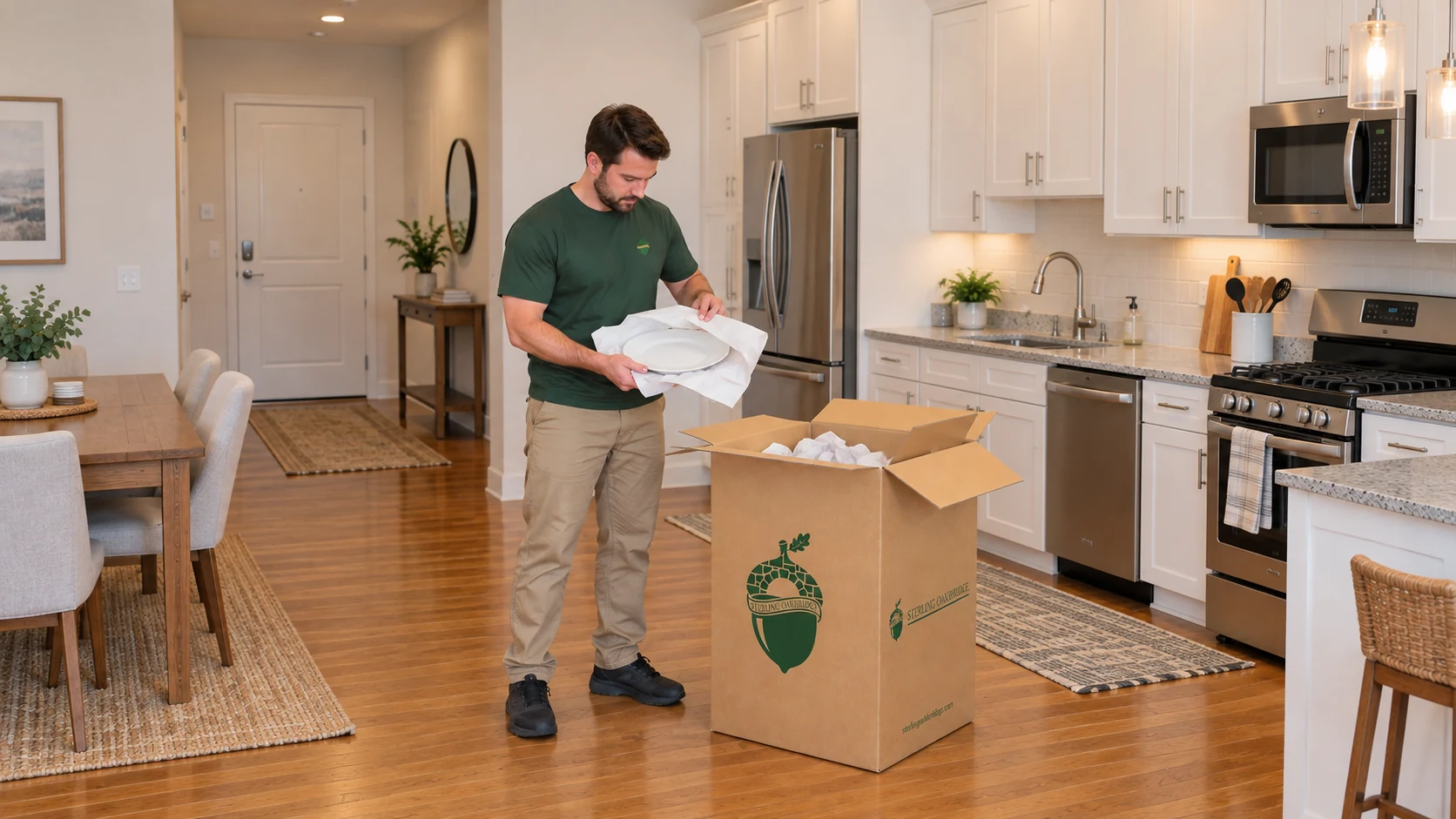
Sterling Oakbridge can pack the agreed household contents, handle selected fragile belongings, or return to open boxes and lay their contents on suitable surfaces. Home organizing follows your placement instructions as a separately agreed service. Start with what is actually in the cupboards, closets and other rooms, then decide which work you want to hand over before and after transport.
For a written estimate, send the inventory, both addresses, access information and the preparation you want. Include anything that must stay available overnight or travel with you. A smaller apartment with a full kitchen and collections may need more preparation than a larger, lightly furnished home; room count alone cannot settle the crew, supplies or schedule.
Explore packing, costs and local examples
Choose the contents you want us to pack
Full packing means preparing the household contents included in the agreed inventory. Partial packing transfers a defined part of that work: perhaps the kitchen, hanging clothes and a collection, while you pack the remaining ordinary belongings. Fragile-only help focuses on the named breakable items. Write down the division so that a cupboard is not left untouched because each side expected the other to empty it.
You can also arrange unpacking without having booked full packing at the old home. Show the remaining boxes, the rooms they occupy and the surfaces available for opening them. The useful first result may be a usable kitchen and bedroom, with the rest scheduled later. A return visit needs an agreed date, crew and scope; it is not automatically reserved with the original move.
Separate personal decisions from the packing work. Decide which belongings are kept, donated, removed or reserved for another person before the team seals them. Packers can prepare the agreed items efficiently, but they cannot choose which family papers, photographs or inherited pieces matter to you. Keep personal documents, medicines, keys and other travel essentials with you rather than in the shipment.
Show the cupboards, not just the room names
An inventory review should include the inside of kitchen cabinets, closets, bookcases and storage furniture, together with any attic, basement or other space included in the move. Show dishes, glass shelves, framed pieces and unusually shaped belongings separately. Note what is already packed, what still needs sorting and any boxes you plan to supply. This gives the estimate a useful basis for labor and materials.
Carton counts can be easy to underestimate. A household expecting twenty boxes might discover that its actual contents need sixty or a hundred; those are illustrations of a possible difference, not a forecast for an Arlington apartment. Opening the storage spaces during a video review is more useful than multiplying the bedroom count. The team can then discuss suitable carton types, protective materials and the work still left to you.
Company-supplied boxes used for the job are charged separately. Packing work is charged for working time. Moving blankets, shrink wrap and tape have no separate material charge, but that does not make the time spent preparing belongings free. If you have your own cartons, show their size and condition so the plan can account for weak, damp or unsuitable containers before packing begins.
Keep the final evening habitable
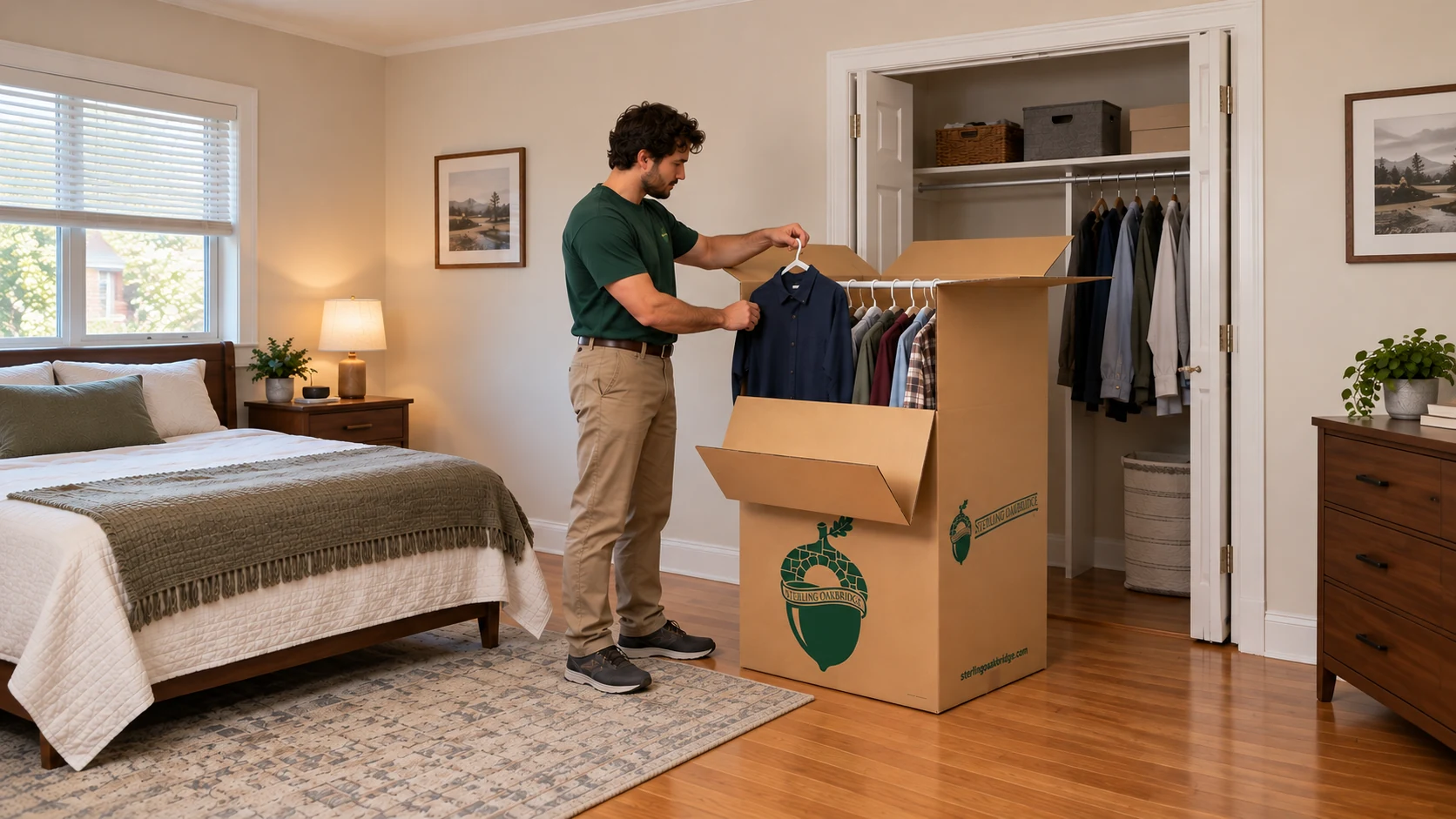
Packing can take place before move day or, where the actual inventory and access allow it, as part of the same day's work. A lightly filled studio or one-bedroom may fit a combined local plan. A full two-bedroom or a larger household may benefit from a separate preparation visit. Neither size guarantees the arrangement: the review needs to cover cupboards, fragile contents, stairs, carrying distances and any building work window.
Set aside an overnight group before the team starts. Include bedding, towels, toiletries, chargers, medicines, clothes for the next day and the food or simple kitchen items you still need. Tell the team when those remaining items can be packed and how they will reach the new home. A box marked “first night” is useful only if it contains the right things and can actually be reached when you arrive.
Imagine a condo move after a full working week
Two residents have evening work commitments, a stocked kitchen and several cupboards they have not emptied. Rather than using every evening for hurried preparation, they ask for a defined packing visit before the move. They show the cupboard contents and mark the work bags, medicines and overnight bedding that must stay out. The estimate can separate the preparation work from the carrying and transport day.
The residents obtain their actual moving and service-access arrangements from management, including whether a separate preparation visit needs approval. They also ask where used packaging may be kept at the receiving building. Arlington's multifamily recycling guidance assigns the property's recycling system to its owners or managers; it does not create an elevator reservation or a universal collection arrangement. The result is a planned final evening and a clearer division of work, rather than a promise that every condo can follow the same timetable.
Protect belongings for the whole handling route
Fragile packing should match the object and the journey from its shelf to its receiving position. Dishes need suitable wrapping, separation and support inside an appropriate carton. A glass shelf, cabinet door, mirror or framed piece may need a different method. Show the construction and condition before the estimate; a familiar item name does not establish how it comes apart or how its fragile surfaces are supported.
The package must remain useful during carrying, stacking, restraint and road travel. Loose objects inside a sealed box can still move. Protection that looks tidy on a kitchen floor may be inadequate if the contents are unsupported. For art, antiques or unusual fragile pieces, use the art and antiques service to review the required preparation individually. A custom crate is a choice for an assessed item, not the automatic treatment for every household mirror.
Clean handling and suitable gloves depend on the material and the grip needed. The team should be able to handle the object safely without transferring dirt or losing control. Do not assume that the same white cotton glove suits every glass object, carton and heavy load. Tell the planner about delicate finishes, existing damage or parts that are already loose.
Consider fragile-only help in a garden apartment
A household is comfortable packing its books and ordinary clothing but wants help with the kitchen's dishes and stemware. The residents show the exact cabinets and identify which contents remain for the team. They also show the route from the apartment to the loading position, including any steps, so the fragile preparation and the carrying plan fit together.
The written scope names the selected kitchen contents, the cartons required and the customer's remaining packing. Packing labor and supplied boxes remain separate parts of the cost. This arrangement can transfer a difficult part of the work without buying full packing for every room. The saving depends on what the household actually completes; leaving unlisted contents for move day changes the work that must be reviewed.
Give every group a destination and a priority
Useful labels say where a carton goes and what the receiver needs to know: destination, room, a short contents description, carton number and any opening priority. Color can support that information, but written words remain important when several people are unloading. Avoid a label such as “miscellaneous” on the box containing the kitchen items needed that night.
If some belongings go to storage, a second recipient or a later delivery, separate those groups while packing. Make a short matching inventory and identify any group that must remain unopened. Tell the planner which items are needed first at the receiving home and which should be loaded or handled as a separate stage. A destination label guides an agreed plan; it does not turn two deliveries or storage handling into one included job.
Keep the personal overnight group physically separate from the moving cartons. At the new home, identify the priority surfaces and the places where unopened boxes may stand without blocking a doorway or the next large item. If your room names differ from the labels, explain the match before unloading rather than sending every carton through the same narrow room twice.
Unpack onto suitable surfaces first
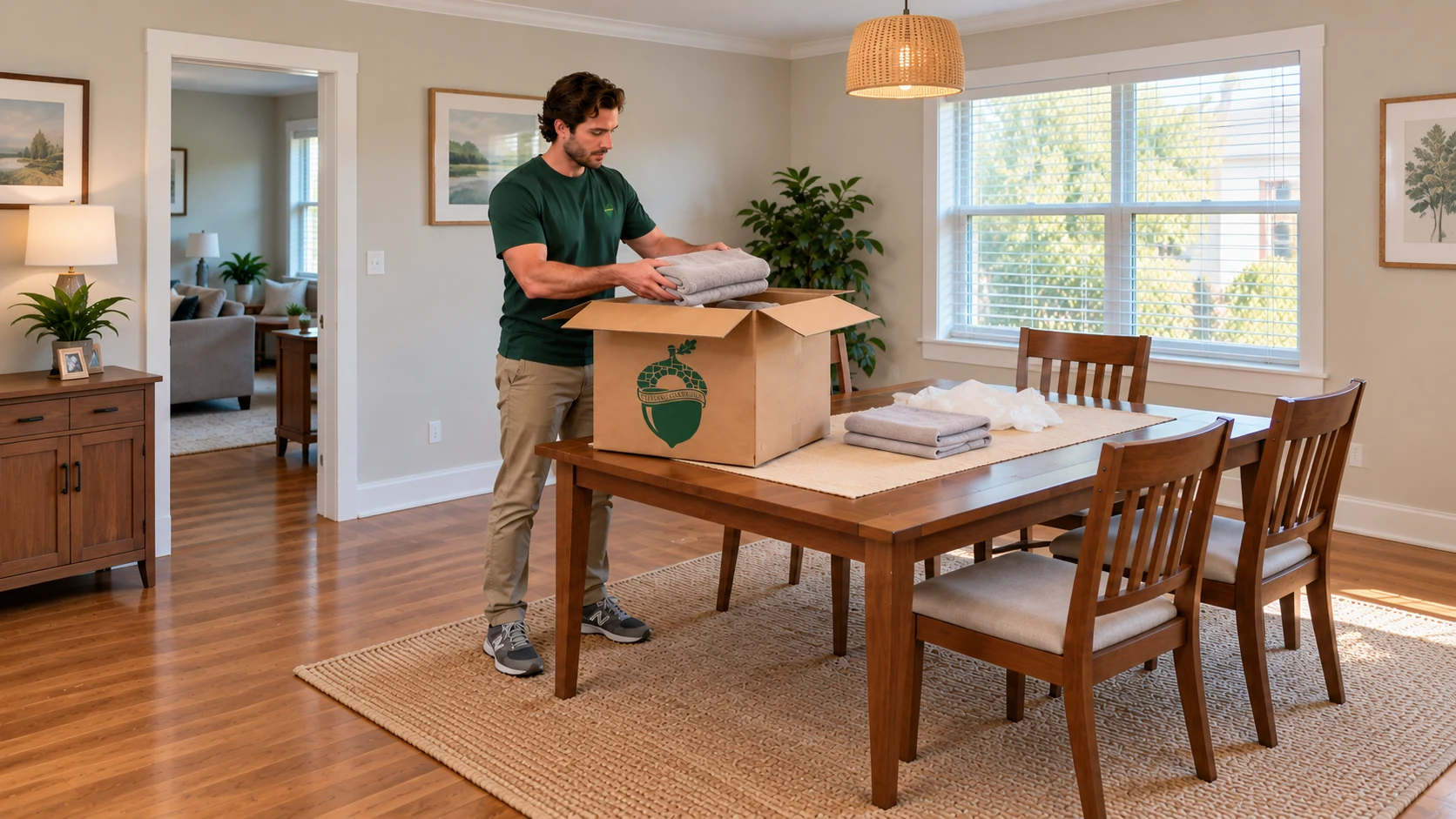
Basic unpacking opens the agreed boxes and lays their contents on suitable surfaces. That can make a kitchen counter, dining table or other agreed area usable for the next decisions. It does not automatically include choosing every cupboard, arranging a complete home or removing all the packaging. Confirm which rooms and contents take priority, who will direct the work and where the wrapping can be contained while the boxes are checked.
Show the receiving home before agreeing the visit. A room still being painted, a counter covered by contractors' equipment or furniture that has not reached its final place can prevent useful unpacking. Release the areas that are ready and leave the other cartons intact. If additional handling, storage or a return visit is needed, include it in the plan rather than opening boxes simply to close them again.
Imagine a duplex with two receiving rooms still closed
A household is moving into a duplex while work continues in two rooms. The kitchen and one bedroom are ready, but the other spaces cannot yet receive furniture or open cartons. The household marks the ready-room boxes separately and shows the team where sealed later-stage cartons can safely remain. The first unpacking task is the released kitchen and the essentials needed for the occupied bedroom.
When the closed rooms become available, the owner can arrange the remaining help around the actual furniture positions and surfaces. If furniture already in the property needs a later internal carry, that is an in-home moving task to review separately. Off-site holding belongs to storage and staged delivery. This keeps the preparation useful while avoiding repeated opening, repacking and handling of the same contents.
Choose where things belong; let the team place them
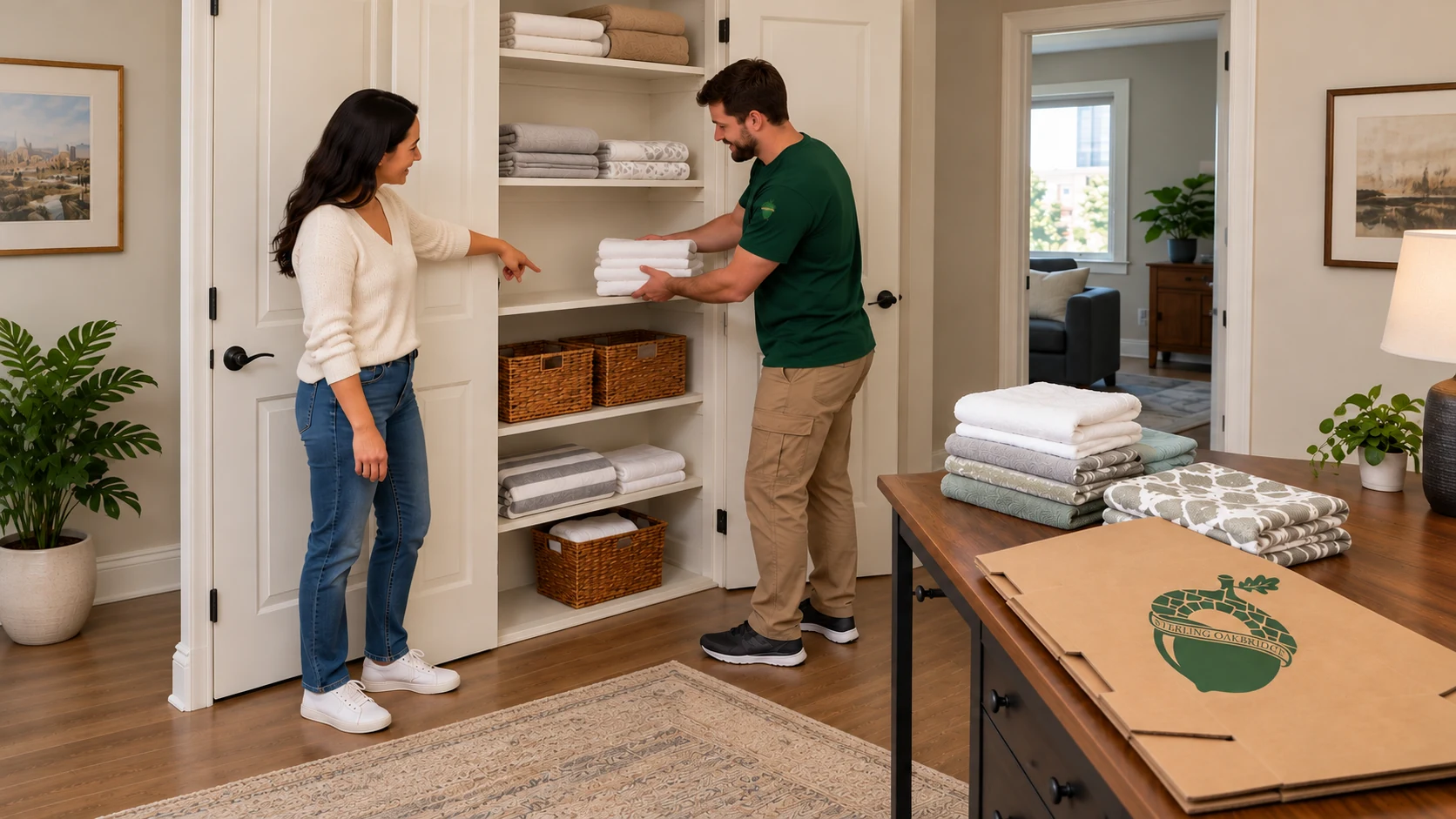
Home organizing is available as a separately agreed service directed by you. Once the boxes have been opened, you can identify the shelf, drawer or cabinet where each group belongs. Agree priorities such as everyday towels, breakfast dishes or a child's first-night clothes. A smaller team may be easier to direct when you want to make placement decisions as the work proceeds.
Make those instructions practical: identify the actual receiving shelf, clear it and separate anything that should not be placed there. If you need time to decide, the useful stopping point may be intact contents grouped on a clean surface. The team does not need to fill every cupboard to create progress. Personal papers, collections and items with uncertain destinations should remain under your direction.
Agree assembly and finishing as distinct work
Basic furniture disassembly and reassembly use moving labor time without a separate basic assembly surcharge. More complex flat-pack furniture, specialist construction or work on an unfamiliar model needs individual review. Supply photographs, model information, instructions and the hardware available. Unpacking a room does not establish that every piece of furniture can be rebuilt or altered during the same visit.
Individually scoped handyman work can include agreed finishing tasks such as suitable hanging or mounting. The wall, hardware, permissions and the person doing the work must be reviewed. Electrical or other technical connections are not implied by a general handyman booking. Send the intended task before the visit so that a towel-placement session is not unexpectedly asked to become an installation project.
For a new purchase still waiting at a seller or release point, review furniture delivery. If it is already at your property and needs an internal carry, describe that starting position. Keeping these steps clear makes the estimate more useful and allows the right work to be arranged without promising that one crew performs every specialist operation.
Decide what happens to the empty packaging
Unpacking produces used cartons, paper, plastic and sometimes foam. Before discarding anything, check the wrapping for small parts, screws, shelf supports and belongings. Keep materials that are needed for the unopened groups separate. Packaging removal is charged separately and must be requested; opening a box does not include taking every empty carton away.
For resident recycling, Arlington's Recycle Right instructions call for empty, flattened cardboard and loose recyclables, with plastic wrapping and foam removed. Plastic bags, film and Styrofoam do not belong in the ordinary recycling stream. In an apartment or condominium, confirm the actual property arrangement with management. These material rules do not establish that a private crew may use a resident facility or that all packaging has the same receiving route.
Agree an indoor grouping location that leaves circulation and door operation clear. The next step might be the property's permitted container, a separately arranged removal service or retained cartons for later use. If unwanted furniture is also involved, identify it as a separate removal group and review removal and disposal. Do not mix batteries, electronics or other special items into an ordinary packaging pile.
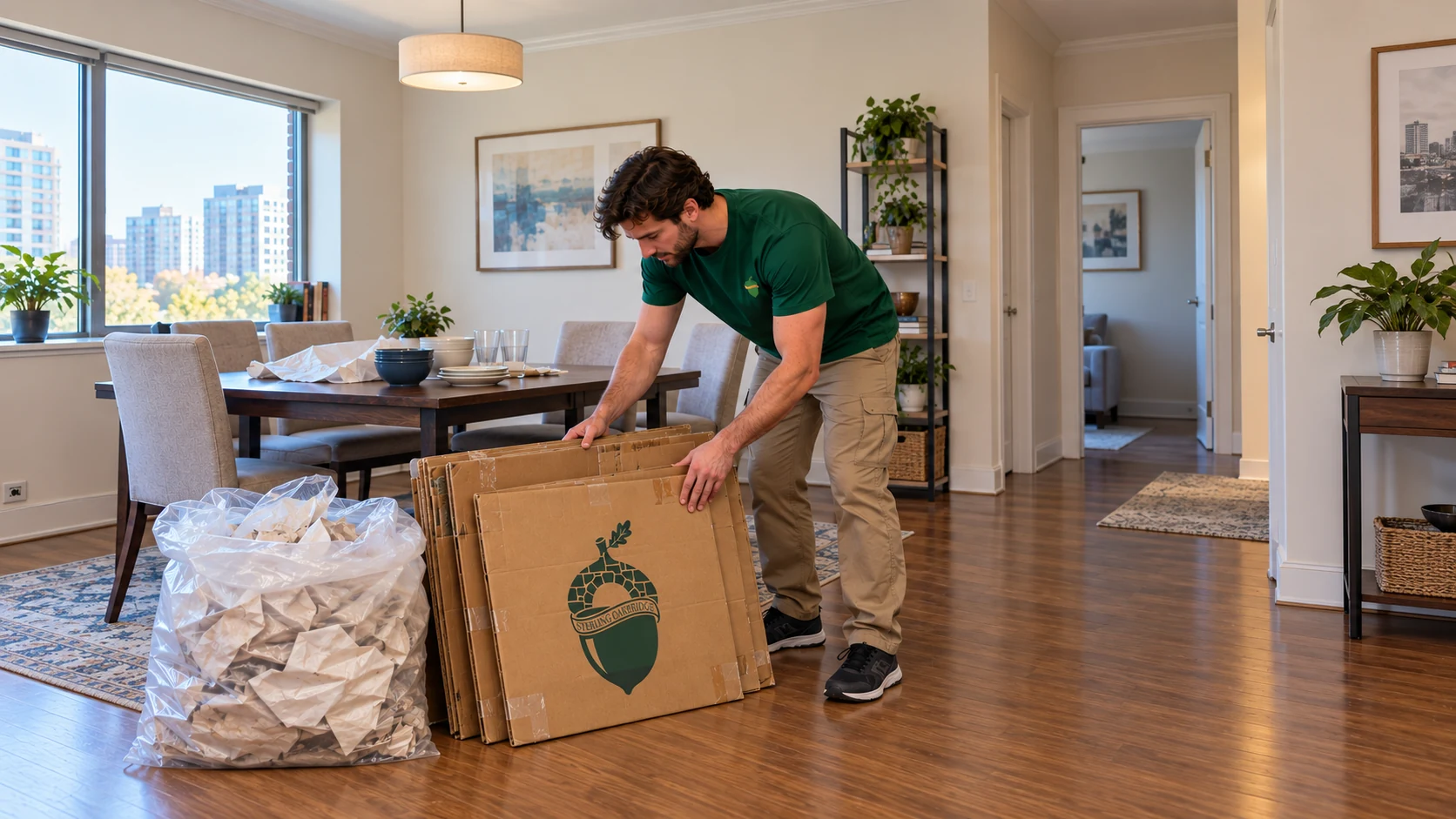
Consider returning to boxes after moving into an apartment
A resident has opened enough cartons to live in the apartment, but the remaining boxes occupy the dining area and the usable surfaces are disappearing. They photograph the unopened groups and choose two priorities: open the everyday kitchen items, then arrange towels on the shelves the resident selects. The planner can review a later visit and the actual room available for the work.
The resident also checks the building's packaging arrangement before booking removal. Basic unpacking, directed organizing and taking materials away are three separate choices. The agreed result might be a clear dining area, everyday contents placed as directed and empty packaging contained for its approved next step. It does not promise an immediately available crew, an entirely organized apartment or permission to leave materials beside any convenient dumpster.
Compare the whole paid scope
The useful comparison includes the work you would otherwise do yourself, the preparation the team will perform and the visits needed at the destination. Packing labor, moving labor, supplied boxes, optional unpacking, directed organizing, packaging removal and specialist work do not all follow one charging rule. Ask for the estimate to show the agreed division rather than treating “full service” as an unlimited bundle.
| Work or material | How it is treated | Information to supply |
|---|---|---|
| Packing and optional box unpacking | Charged for working time. | Exact contents, rooms and opening priorities. |
| Company-supplied cartons | Boxes used on your job are charged separately. | Contents needing suitable carton types and any usable boxes you supply. |
| Blankets, shrink wrap and tape | No separate material charge; preparation still takes labor time. | Furniture, fragile parts and the handling route. |
| Organizing, finishing, removal or another visit | Agree the particular scope and applicable price separately. | Placement directions, task details, access and the required date. |
A substantial inventory might justify four packers on a preparation day and six movers on move day. Those numbers illustrate separate kinds of work, not the staffing promised for a three-bedroom home. Packing and moving together may approach twice the budget of moving the same shipment already prepared, but that is an illustration rather than a standard multiplier. Your reviewed inventory, services and access determine the estimate.
Unpacking can also be discussed as additional time at delivery or as a later visit. For example, a larger project might need three or four more hours, or a separately arranged two-person visit. Neither is a cap or a booking promise. Decide whether you need contents on surfaces, placement under your direction, packaging removal or some combination; those choices change the work being estimated.
Connect preparation to storage and delivery
For a long-distance move, arrange receiving help around the actual delivery plan. Direct service uses a dedicated truck and the same moving crew at pickup and drop-off; a suitable consolidated shipment has a wider agreed window. The Arlington long-distance page explains those choices. Avoid reserving an unpacking appointment against an assumed arrival date before the shipment's receiving arrangements are reviewed.
An agreed long-distance flat rate stays the same for the same shipment and service scope even if the journey takes longer. Adding packing, cartons, stored belongings or destination work changes the scope to be reviewed in writing before that work. Local moves are usually hourly; estimated or minimum hours are not a fixed completion total. Make the preparation and receiving choices visible while the estimate is being assembled.
Storage needs its own inventory, handling and later delivery plan. Identify which cartons you will want during storage and which can remain sealed. If access to stored belongings is important, discuss it with the storage plan rather than relying on a label to make any carton reachable. The packing task is to prepare and identify the right groups; it does not establish storage access or include a second delivery.
Send the details that let us plan the work
Send photographs or a list showing the retained contents, both addresses, stairs or elevators and the route through the property. Include firm access windows, your move date, whether packing needs a separate visit and the rooms ready for unpacking. Show fragile construction, collections and complex furniture. Say which supplies you have and which personal items remain out until departure.
The move-planning team can use an item list, video review or an in-person survey as appropriate. Full packing may justify a closer review even in a small home. Once the scope is agreed, tell the team about added contents, a changed destination, a closed receiving room or a new finishing task before work starts. A current written plan is more useful than asking the crew to discover those changes on arrival.
Arlington's official jurisdiction information identifies an urban county with no incorporated towns or cities inside it. Use your exact Virginia address when arranging services and building access. The Arlington relocation guide covers local settling-in tasks; the Arlington moving page covers the broader household move.
Arlington packing and unpacking questions
Do you provide full packing in Arlington, Virginia?
Yes. Sterling Oakbridge can pack the household contents included in your agreed inventory, or take responsibility for selected rooms and fragile belongings. Send the contents, exact Virginia addresses, access details and dates. The plan should identify what you will pack yourself and what must remain available until departure.
How do full, partial and fragile-only packing differ?
Full packing covers the agreed household inventory. Partial packing covers named rooms or groups, while fragile-only work focuses on the listed breakable items. Make the boundary explicit: for example, the team packs the kitchen dishes and glassware while you finish ordinary clothing and books. Unpacking is a separate choice.
How is packing priced?
Packing is charged for working time, and company-supplied boxes used for the job are charged separately. Review the actual contents, preparation, access and visits before comparing totals. Local moving estimates are usually hourly; minimum or estimated hours do not guarantee completion within that time. Optional organizing, removal and specialist work need their own agreed scope.
Are boxes and protective materials included?
Company-supplied boxes are charged separately. Moving blankets, shrink wrap and tape carry no separate material charge, while the labor spent packing or preparing items still counts as working time. Show the contents and any usable cartons you already have so the estimate can identify suitable supplies and the work required.
Can packing and moving happen on the same day?
They can where the reviewed inventory, preparation and access allow a workable combined plan. A lightly filled studio or one-bedroom may suit that approach; a fuller or more complex household may benefit from a separate preparation visit. Show the cupboards and fragile contents, and provide any actual building work window before agreeing the sequence.
What should stay out for the last night?
Keep the bedding, toiletries, medicines, clothes, chargers, keys and food or simple kitchen items you still need physically separate from the moving cartons. Decide when the remaining items can be packed and how they will travel. Personal documents and other travel essentials should stay with you rather than being sealed into the shipment.
Can you estimate the carton count from the number of bedrooms?
The contents are the useful basis. Show the inside of cupboards, closets and other storage spaces, including collections and any basement or attic inventory. Twenty expected boxes turning into sixty or a hundred is an illustration of possible underestimation, not a forecast for an Arlington home. A closer inventory review helps plan the actual supplies.
Can we supply our own boxes?
Yes, include the cartons you intend to use in the inventory review so their condition and suitability can be assessed. Show sizes, weak or damp areas and the contents they will hold. Supplying boxes does not remove packing labor from the estimate, and fragile items may need a different container or preparation method.
Can we book only the dishes and other fragile items?
Yes. Name the dishes, glassware, frames, shelves or other breakable contents you want the team to prepare, and identify what you will pack yourself. Show construction and condition where relevant. The planner can review suitable wrapping, support and containers for the selected items without assuming every fragile object needs the same method.
Can hanging clothes be packed without folding them?
Hanging clothes can be reviewed for a suitable wardrobe carton and supported hanging arrangement. Show the quantity, garment lengths and any delicate pieces so the plan uses an appropriate container rather than forcing the contents into an ordinary box. Cartons used for the work remain separate from the packing labor charge.
Should dresser drawers be removed for packing?
Empty loose drawer contents into suitable cartons. Ordinary empty drawers can generally remain in the whole protected piece; do not assume that every dresser must be dismantled. Show fragile construction, loose parts, long removable legs or an unusually difficult route so any necessary preparation can be agreed for the actual furniture.
How should boxes for storage be labelled?
Use a written destination, room, short contents description, carton number and any opening priority. Keep storage cartons physically distinct from immediate home-delivery groups, with a matching inventory. Tell the planner which items you may need during storage; labels alone do not establish storage access, handling or an included later delivery.
Can you return to unpack boxes after we have moved?
Yes, a later unpacking visit can be reviewed even if you handled the original packing. Send photographs of the unopened groups, occupied rooms and available surfaces, then choose priorities. The date, crew, working time and any packaging removal must be agreed; an immediate return visit is not automatically included with moving.
What does basic unpacking leave us with?
Basic unpacking opens the agreed cartons and lays their contents on suitable surfaces. You can prioritize a kitchen, bedroom or another released area. It does not automatically choose every cupboard, organize the whole home or remove all packaging. Explain the surfaces available and who will direct the next placement decisions.
Can you put things in the cupboards we choose?
Yes, home organizing directed by you is available as a separately agreed service. Identify the actual shelves, drawers or cupboards and the groups to place there. Agree a manageable team and priorities so your instructions can guide the work. If a destination is undecided, contents can remain grouped on suitable surfaces while you choose.
Does unpacking include handyman work or electrical connections?
Unpacking does not automatically include installation. Individually scoped handyman finishing work can be reviewed from the task, wall, hardware, permissions and required executor. Electrical or other technical connections are not implied. Send photographs and details before the visit so the appropriate work and price can be agreed instead of discovered after arrival.
Will you remove all the empty cartons and wrapping?
Packaging removal is charged separately and must be requested. Before materials leave, check for small belongings, shelf supports, screws and other parts. Agree what is retained, what will be gathered and the approved next step for each material. Taking furniture or special items away needs its own scope and receiving route.
Can every Arlington apartment use County curbside recycling?
No. The County identifies a separate multifamily category, including apartments, condominiums and qualifying townhouse developments without County trash or recycling services. Property owners or managers provide the recycling system. Ask management about your actual container and preparation arrangement rather than assuming the County curbside option applies to the building.
Can cardboard, bubble wrap and foam go in one recycling pile?
Keep them separate. Arlington instructions call for empty, flattened cardboard and loose recyclables, with plastic wrapping and foam removed. Plastic bags, film and Styrofoam do not belong in the ordinary recycling stream. Confirm the actual property or receiving instructions before disposing of materials; paid unpacking does not itself include removal.
How much extra time should we allow for unpacking?
Review the contents and the result you want rather than treating a single number as a cap. A larger project might need three or four additional delivery-day hours, or a separately arranged two-person return visit. Those are discussion examples; rooms, access, placement decisions, crew availability and packaging removal can change the agreed work.
How do we schedule unpacking after a long-distance move?
Use the actual reviewed delivery arrangement before fixing the receiving visit. Direct delivery and suitable consolidated delivery have different scheduling conditions; a consolidated shipment has a wider agreed window. Identify who can receive, which rooms are ready and what opening help is needed. An assumed arrival date is not a confirmed unpacking appointment.
Will the estimator be one of the packers or movers?
Do not assume that the person reviewing the inventory will be on the working crew. Estimating and moving are separate roles. Record the agreed contents, access arrangements, overnight items and priorities in the plan so the crew can work from the same instructions. Specialist finishing work also needs its actual executor reviewed.
What happens if we add contents or destination work later?
Tell the planning team before the added work starts so the inventory, supplies, time and written scope can be revised. For long-distance flat-rate work, the price stays the same for the same agreed shipment and services; new packing, belongings, storage handling or destination work changes the scope to be agreed separately.
What should we send for a packing estimate?
Send the retained inventory or clear photographs, both addresses, access and firm dates. Include cupboard and closet contents, fragile construction, complex furniture, supplies you have, overnight items and any separate preparation visit. For unpacking, identify ready rooms, available surfaces, placement instructions and whether packaging removal or finishing work is wanted.
Plan your Arlington packing and receiving
Send the contents, addresses, dates and the work you want to hand over. We will review the preparation, supplies, access and receiving priorities for your estimate.
Request a packing estimate