
Virginia · Suffolk service planning
Full Packing and Unpacking in Suffolk, VA
Hand over the preparation you want help with, keep the remaining home usable and choose what should be ready after delivery.
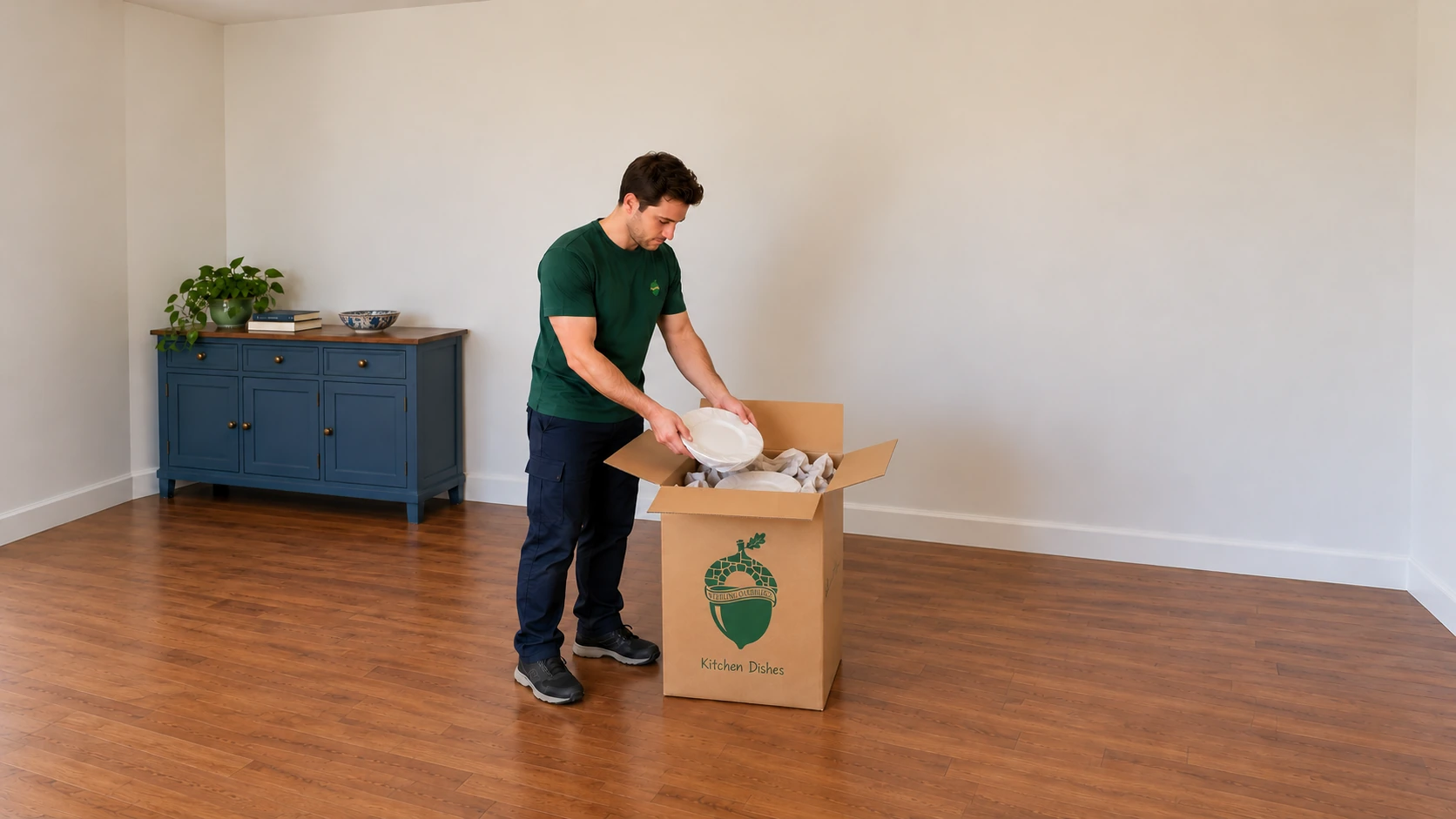
Sterling Oakbridge reviews full-house, selected-room and fragile-only packing in Suffolk city, Virginia, with optional box unpacking, directed organizing and separately agreed finishing or packaging collection.
Explore packing, costs and local examples
Decide which preparation will save useful time
Packing can occupy much more than the last evening before a move. A couple of weeks of evenings can disappear into sorting cupboards, protecting dishes and finding suitable cartons while work, meals and family routines continue. Professional preparation is a way to hand over that agreed task. Its useful boundary is the contents prepared and the time released for the household, rather than a promise that every home of a certain size takes the same day.
Full packing covers the retained household contents listed in the agreed scope. Partial packing can cover a kitchen, a library or selected fragile objects while you handle the rest. Identify the rooms and categories, including anything excluded, and say who completes your remaining preparation. If self-packing is falling behind, tell the coordinator before the crew arrives so the staffing, materials and sequence can be reviewed.
Choose receiving work independently. You may want sealed cartons delivered to their rooms, priority cartons opened onto available surfaces, or belongings put into cupboards under your direction. These are different amounts of work. Furniture unwrapping is part of delivery; opening cartons, organizing and taking away the empty materials need their own selected scopes.
Survey the Suffolk address and all its contents
The Suffolk 2045 comprehensive plan distinguishes downtown, northern suburban and rural development patterns. A downtown upstairs home, a northern attached home and a rural house can present different preparation space and carrying routes. The description of an area cannot establish the actual stairs, cupboard contents, usable floor space or vehicle position.
Show open cupboards, drawers, closets, bookcases and any attic, garage or outbuilding groups. List loose shelves, framed objects and glass within furniture, as well as what is already in cartons. A twenty-box idea can become sixty or a hundred when a substantial hidden inventory is reviewed; those numbers illustrate underestimation, not a Suffolk household average or a calculator. A smaller inventory may need much less.
Send photographs from each packing room through the route to the loading position. Identify steps, tight turns, shared entrances, lift hours and the surface on which preparation can happen. A rural approach also needs its actual gate, turning and carrying details. Obtain property requirements from the person controlling the building; neither a public street nor a private drive automatically supplies a permitted working area.
This service page concerns Suffolk city, Virginia. Suffolk County in New York is a different place. Give the complete street address, unit and intended entrance, and use the Suffolk relocation guide for the wider local arrival plan. Postal wording and a map pin cannot replace the actual route review.

Release the contents in stages
Agree when beds, everyday kitchen contents and work equipment can be released. Pack spare linen, less-used books and selected display items before the things still needed for breakfast, work or bedtime. Keep identification, medication, keys, personal valuables, chargers and travel essentials under the household's control. Name the last-night group and the person who decides when it can join the shipment.
A reviewed studio or one-bedroom inventory may allow preparation and a local move on one day. A large collection, many cupboards or restricted working hours can require an earlier visit even in a small home. A larger house often benefits from separating packing from loading. The actual contents, crew plan and access period determine the sequence; bedroom count does not reserve a completion time.
Keep a clear walking route and a designated place for completed cartons. Agree what can remain overnight and whether the property controller allows that arrangement. If a room must stay in use, protect its essentials from early preparation rather than expect the household to reopen completed boxes repeatedly. New purchases, goods awaiting another recipient and items approved for removal each need their own instructions.
Consider: selected preparation in a northern Suffolk home
Imagine a household in the Harbour View area with a full dish cupboard, a book collection and a work routine that continues until moving day. This is a hypothetical planning situation, not a report of a customer job. The home and its contents need their own survey; the area name supplies no standard floor plan or building rule.
The household packs clothing itself and releases the display dishes and less-used books for an earlier agreed visit. Everyday plates, the breakfast set and work equipment remain available. The estimate identifies those exclusions, the preparation materials and who will finish the remaining kitchen contents. Completed cartons occupy an agreed corner away from the entrance and ordinary circulation.
The result is a defined prepared group and a usable final night. It is not an entire house declared finished while essential contents are still in use. If the building limits working hours, the preparation and loading visits must fit the actual approved periods. Retain an available alternative for unfinished work rather than rely on a requested extension becoming permission.
Protect the contents through the whole journey
The contents need support inside the carton as well as protection on the outside. Ordinary dishes need suitable individual wrapping, cushioning and a carton that closes without pressing its flaps onto the pieces. Dense books need manageable containers. The method must withstand lifting, carrying, stairs, stacking and vehicle movement, not merely look neat beside a cupboard.
Review glass shelves, framed work and delicate construction separately. Safely removable shelves or long furniture legs may need preparation, identified fittings and matched parts. Empty ordinary drawers and normally retain them secured within the complete protected furniture. Integral supports and unusual assemblies need a method suited to the actual piece. Basic moving disassembly and reassembly use labor time without a separate basic assembly surcharge; complex work needs an individual quote.
Tell us about damage, unusual value and specialist requirements before ordinary packing is assigned. Custom crating and fine-art handling follow their own object and journey review. Suitable handling and gloves depend on the surface and grip. A photograph of a protected ordinary dish is not evidence that the same materials satisfy a lender, museum or separate insurer's specification.
Give each carton a real next destination
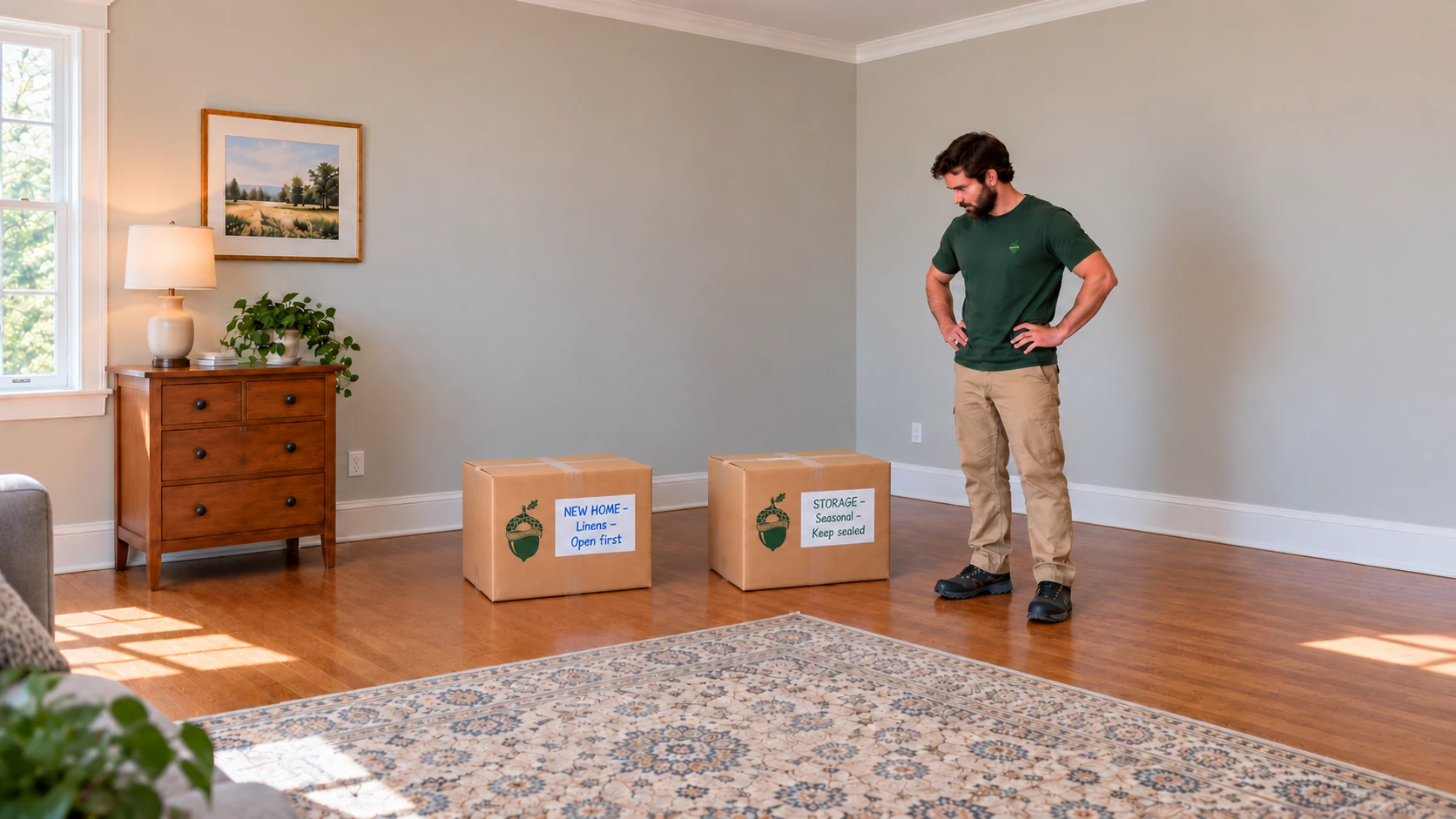
Write the next destination, receiving room and useful contents on each carton. Add a box identifier and opening priority where helpful. Color can reinforce the written instruction, but somebody unfamiliar with a color code should still know where the carton belongs. Use the same names on the inventory and receiving plan, and identify who will accept each group.
Separate new-home goods, an agreed storage group, belongings retained at the property and a named second recipient before loading. An item awaiting a decision should not silently become part of the shipment or the discard pile. Labels describe the decision; they do not arrange acceptance, storage capacity or a second delivery appointment.
For storage and later delivery, confirm the actual intake, affected inventory, location, dates, access, handling, release authority and price. Decide what must remain accessible during storage before it is packed away. If the arrangement cannot be confirmed, accept an available alternative before the departure removes your options. A label marked Storage is not a reservation.
Consider: a rural home with two receiving destinations
Imagine a household near Holland reducing the contents of a rural detached home before moving to a smaller place. Books and everyday linen will go to the new home, while a selected seasonal group is intended for separately arranged storage. The actual home, private approach and outbuildings are inspected through the survey; this example invents no standard rural inventory.
Decide which belongings are retained before packing begins. A bookcase in an outbuilding can add dense contents even when the bedroom inventory looks modest. Prepare those books in suitable cartons and use written new-home and storage labels. Keep anything approved for a recipient separate until that person has accepted the item and the receiving arrangements.
The useful result is two identifiable shipment groups with accepted next steps, rather than an undifferentiated stack that must be reopened at the destination. Confirm the storage arrangements and loading sequence while there is time to change them. If downsizing leaves unwanted furniture, compare a real recipient, an eligible public option and separately priced removal before paying to prepare and move it.
Open the rooms that matter first
Basic box unpacking opens the agreed cartons and places their contents on suitable available surfaces. It can make kitchen essentials, linen or working belongings accessible while less urgent cartons stay closed. Decide which groups should open, and keep receiving surfaces clear. Main furniture placement should come before cartons fill the circulation and every useful work surface.
Home organizing adds final placement according to the customer's instructions. Choose the cupboards, drawers and shelves, agree the scope and price, and identify somebody available to direct decisions. A smaller team can be easier to guide after the delivery crew has placed the furniture. The household retains control of private papers, valuables and decisions about keeping or discarding belongings.
For a substantial receiving task, discuss whether a few additional hours on delivery day or a later smaller visit would be useful. Three or four hours and a later two-person visit are possible planning examples, not promised durations, staffing or availability. You can also request help after beginning unpacking yourself: show the remaining cartons, occupied rooms and progress so the next visit preserves what is already usable.
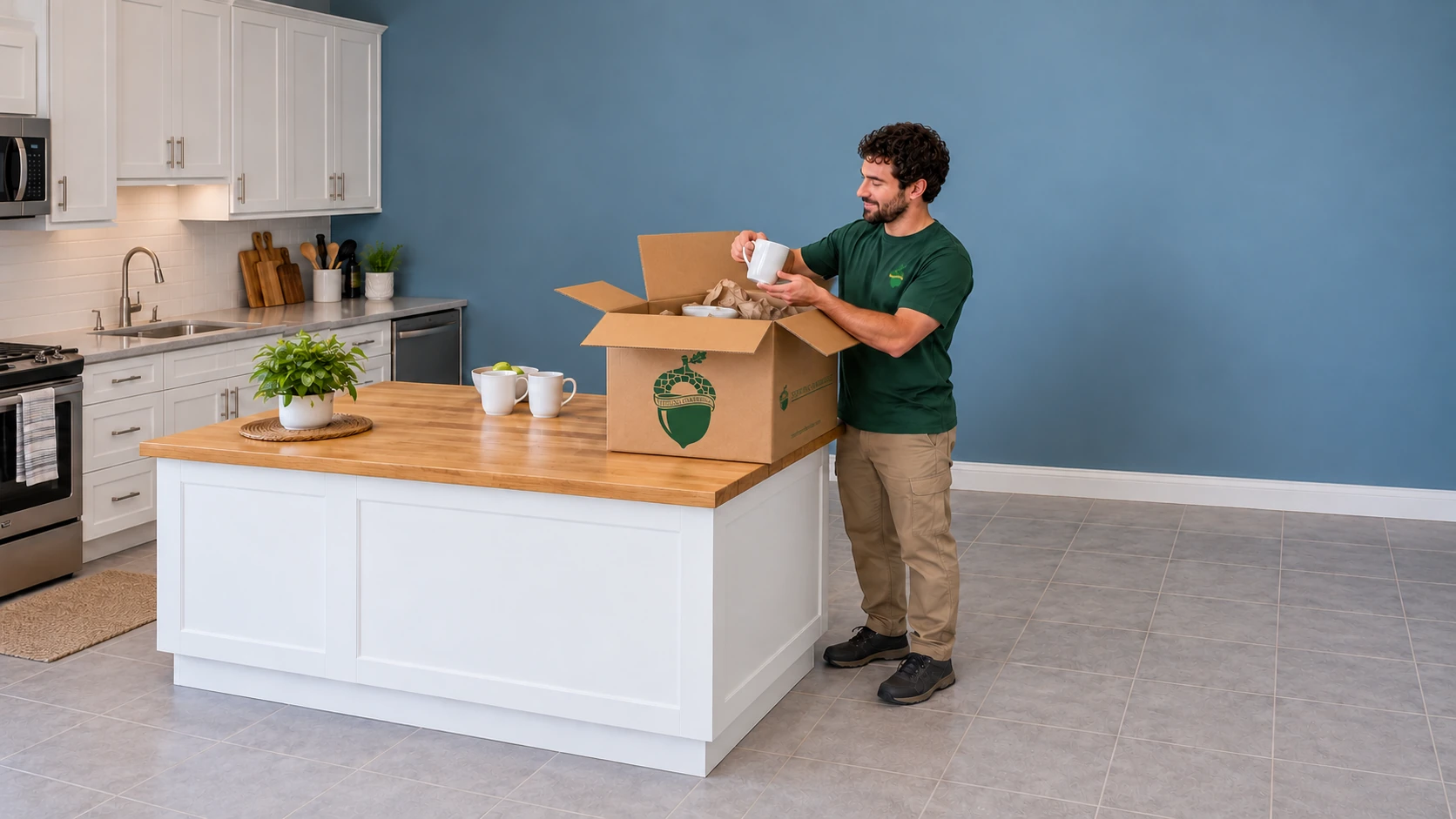
Specify handyman work as individual tasks, including the item, wall or support, fixings, permissions and intended result. Hanging, complex assembly and technical connections require their own agreement. An unpacking booking does not establish electrical work, restoration or a completely installed home. Furniture delivery and placement can have its own release and receiving sequence, while in-home moving addresses furniture that is already at the property.
Consider: making a downtown receiving home usable
Imagine receiving an upstairs downtown home before the next working day. Keys and the actual carrying route are available, but kitchen surface space is limited. The household wants everyday cups and linen accessible, while most belongings can remain in their labeled cartons. This is a hypothetical situation; it does not promise a particular property's access or a same-day finished home.
Place the main furniture first, leave the route clear and open only the agreed priority cartons onto suitable surfaces. Keep storage cartons sealed. Review the remaining paper for small fittings and belongings before it joins the empty-material group. The household can use the essential contents without having to decide the final position of every possession during unloading.
If final cupboard placement or mounting is wanted, agree that later work and its availability separately. Confirm how the used packaging will leave before a lease, handover or private collection deadline makes the decision urgent. The person receiving the shipment should know which tasks are booked, what remains theirs and which date requires another decision.
Plan the empty materials for the actual Suffolk service
Removal of empty packaging needs its own agreed scope and price. Gather used cartons, paper and wrapping separately from retained belongings, check folds for small parts and describe the quantity. Indoor gathering after unpacking is a preparation stage; it is not evidence that a municipal collection or a private removal trip has already been arranged.
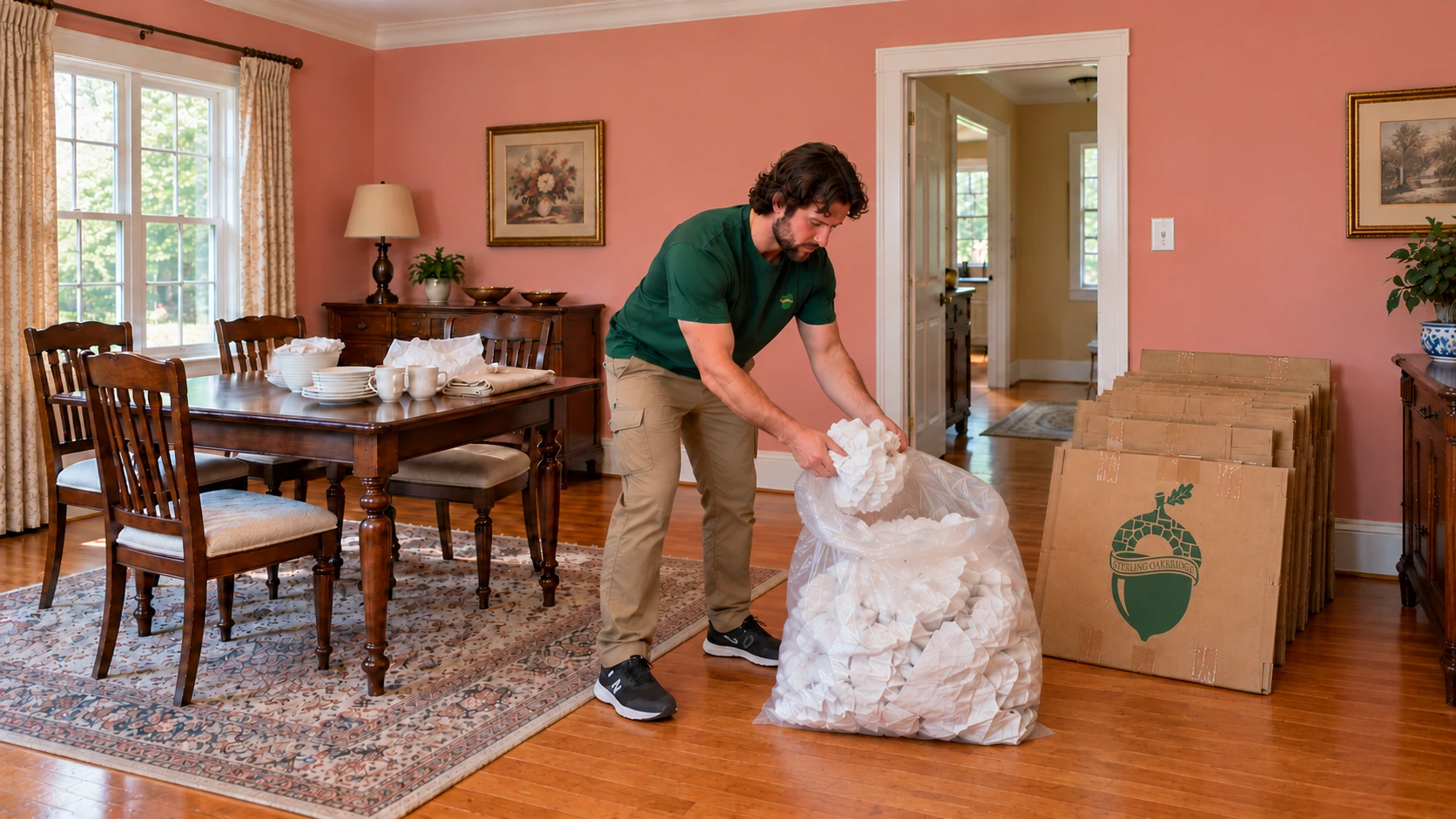
Suffolk's SPSA SORT instructions changed the ordinary household collection arrangement from July 1, 2026: household trash and recyclables can share either the blue or green can, with household waste securely bagged. Follow these current Suffolk instructions for the regular household can. That rule for the regular can does not mean every moving box or large packaging pile fits into it.
The City's refuse answers say the lid must close and loose bags beside the can are not collected. The City does not collect refuse on private roads. Establish whether the actual property uses the municipal service or another arrangement, and obtain the address's collection day and the property controller's instructions before deciding where the empty materials will wait.
For an eligible resident, ordinary Special Pick-Up includes boxes among its accepted examples and does not require an appointment. The published allowance is up to twelve special pickups in the July-to-June service year, with a twelve-cubic-yard limit for each; set-out is no earlier than twenty-four hours before the regular collection day. Household trash bags belong in the regular can stream, not this special pickup. An extra or oversized load needs its actual additional arrangement and charges checked.
Those resident instructions do not establish a paid contractor's access or entitlement. An apartment's private service and a particular material can require different arrangements. If public collection does not fit the address, quantity or date, agree a separately priced packaging collection or removal visit with an accepting route. Newly unwanted furniture, electronics or restricted material needs an identified list and its own suitable arrangement, rather than joining empty cartons by default.
Compare the complete paid scope
Packing labor is charged for working time, and company-supplied cartons are separate. Basic moving blankets, shrink wrap and tape have no separate material charge under current company terms. Specialist protection and crates need their own reviewed scope. Add preparation visits, optional unpacking, directed organizing, finishing, packaging collection, storage and return work explicitly so the comparison covers the result you intend to buy.
Substantial preparation plus moving can approach twice the budget for moving the same already-packed inventory. That is an illustration of the additional job, not a standard multiplier, rate or ceiling; the actual total can be lower or higher. Compare full and selected packing for the same contents and access, and see which evenings, remaining household tasks and receiving priorities each option addresses.
For a local or intrastate Virginia move, review the applicable charging and estimate terms for that move. Interstate flat-rate arrangements have their own written scope. Removing a group after accepting a flat rate does not automatically reduce the price; ask for a revised written estimate. A cheaper list that omits cartons, a return visit or the requested receiving work may leave a different job for the household.
Connect preparation with the transport and receiving plan
The Suffolk long-distance moving plan distinguishes direct and consolidated delivery windows beginning after pickup and loading are complete. A transport window does not book a separate unpacking appointment or guarantee that keys and rooms will be ready. Confirm the receiver, access period and useful priorities, then agree optional receiving work around the actual delivery arrangement.
If access or a handover fails, set a decision deadline and accept an available fallback covering the goods, responsible people, location, dates, access, handling and charges. Temporary holding, storage, a second trip and a return visit have different consequences. Keep personal essentials with the household so a changed shipment sequence does not remove the things needed for the next night.
Send the complete addresses and dates, photographs of open storage and carrying routes, retained and excluded contents, and the work you will do yourself. Add first-opening priorities, other destinations, property requirements and selected finishing or collection. The Suffolk moving services page connects those stages with the wider move; the written estimate should describe your actual preparation and receiving result.
Suffolk packing and unpacking questions
Can you pack the whole home or only selected contents in Suffolk?
Yes. Full packing covers the retained household contents agreed in the estimate. Selected work can cover named rooms, cupboards, books or fragile groups while you prepare the rest. Show those contents, identify exclusions and say who completes the remaining preparation. Choose box unpacking, organizing, finishing and collection separately so the written scope describes the result you want.
Is this Suffolk city in Virginia or Suffolk County in New York?
This page concerns Suffolk city, Virginia. Suffolk County in New York is a different jurisdiction. Send the full street address, unit, intended entrance and dates at both ends. The actual property, route and collection service need review; the city name and postal wording do not establish permissions, a floor plan or a carton quantity.
What should we show in the packing survey?
Show open cupboards, drawers, closets and bookcases, plus attic, garage and outbuilding groups. Include fragile objects, glass in furniture, loose shelves and already packed cartons. Photograph the whole route to the loading position and the proposed preparation space. Separate retained belongings, personal travel items, storage goods and anything awaiting a recipient or removal decision.
Can you estimate cartons from the bedroom count?
Bedroom count is a starting description, not an inventory. A substantial book or dish collection can change the materials and work in a modest home. An imagined twenty cartons might become sixty or a hundred after a large hidden group is reviewed, or a smaller inventory may need less. These examples are not local averages or guaranteed quantities.
Can packing and a local move fit into one day?
They can for some reviewed inventories and access periods. A compact studio is a possible example, rather than a promise based on floor area. Many fragile pieces, full storage areas or short building hours may require an earlier preparation visit. Confirm the contents, remaining household work, staffing, materials and working windows before relying on the complete sequence.
How do we keep the last night usable?
Release less-used contents first and name the everyday group that stays accessible. Keep medication, identification, keys, chargers, personal valuables, clothes, breakfast and bedtime essentials with their users. Agree when beds, work equipment and the remaining kitchen contents can be prepared, and who finishes them. Keep completed cartons out of ordinary circulation and avoid repeatedly reopening them.
Can you prepare dishes and books while we pack our clothing?
Yes, as selected packing with the groups agreed in advance. Show the actual dishes, book shelves and any unusual pieces so the materials and working time can be reviewed. Identify the clothing and everyday kitchen items you will retain and prepare yourselves. Tell the coordinator if that remaining work changes before the planned visit.
What should ordinary dish packing achieve?
It should support protected pieces inside a suitable carton through lifting, carrying, stacking and transport, with cushioning and space to close without pressure from the flaps. Show unusual, damaged or particularly valuable items separately. Custom crating and specialist art handling need their own review; an ordinary dish method does not establish compliance with a separate lender or insurer specification.
Should furniture drawers, shelves and legs be removed?
Empty ordinary drawers and normally retain them secured within the complete protected piece. Review removable shelves and safely removable long legs from the actual construction, with matching fittings identified. Integral supports need a suitable different method. Basic moving disassembly and reassembly use labor time without a separate basic assembly surcharge; complex work needs an individual reviewed quote.
What information belongs on a destination label?
Write the next destination, receiving room and useful contents. Add a carton identifier and opening priority where helpful, using the same names on the inventory and receiving instructions. Distinguish a storage group or second recipient before loading. Color can reinforce the written information, but the instruction should remain understandable to somebody who does not know the color code.
Does a Storage label arrange storage for our rural-home contents?
No. Confirm the selected inventory, actual intake, location, dates, access, handling, retrieval, release authority and price with the storage arrangement. Decide what must stay accessible before packing it away. If the requested arrangement is unavailable, accept a workable alternative before departure. A label identifies a plan; it does not reserve capacity or a later delivery appointment.
What does basic box unpacking leave ready?
It opens the agreed cartons and places their contents on suitable available surfaces. Choose priority groups and clear space first, with main furniture placed before cartons occupy the route. This can make everyday belongings accessible. Furniture unwrapping is part of delivery; final cupboard placement, individual finishing tasks and taking away the empty packaging are separate selected work.
How is home organizing different from unpacking?
Organizing puts belongings into the cupboards, shelves and drawers you choose, according to your instructions. Agree the priorities, scope, price and person available to direct decisions. A smaller team can be easier to guide once the furniture is placed. The household retains control of private papers, valuables and decisions about keeping or discarding items.
Can we book help after we have started unpacking ourselves?
Yes. Show the remaining closed cartons, your progress, occupied rooms and available surfaces, then agree a useful next result and a suitable visit. Prioritize what the household needs for its next routine. Scope, price and availability must be confirmed, and the work should preserve rooms already usable and personal belongings you intend to retain.
Does unpacking include hanging, mounting or technical connections?
Request those tasks individually and show the item, wall or support, fixings, permissions and intended result. Agree the executor, scope and price before relying on the work. Basic furniture assembly does not establish unlimited mounting or installation. Unpacking does not by itself include electrical work, restoration or a guarantee that every room will be completely installed.
What is charged separately from blankets and wrap?
Packing uses paid working time, and company-supplied cartons are charged separately. Basic moving blankets, shrink wrap and tape have no separate material charge under current company terms. Specialist protection, crates, optional unpacking, directed organizing, finishing, packaging collection, storage and return visits need their own explicit scope and charges in the written estimate.
Can packing and moving approach twice an already-packed moving budget?
Substantial preparation can make that a useful illustration for the same inventory and access, but the actual total may be lower or higher. It is not a standard rate, multiplier or ceiling. Compare preparation labor, cartons, specialist work, visits, transport and the optional receiving result. A lower total that omits requested work describes a different job.
How does Suffolk collect ordinary household trash and recyclables now?
The City’s SPSA SORT instructions effective July 1, 2026 allow household trash and recyclables together in either the blue or green can, with household waste securely bagged. The lid must close, and loose bags beside the can are not collected. Large moving boxes or a packaging pile may need the separate applicable collection arrangement rather than this regular-can route.
Do eligible residents need to schedule ordinary Special Pick-Up for boxes?
The City says ordinary Special Pick-Up does not require an appointment and lists boxes among accepted examples. Its allowance is up to twelve pickups per July-to-June service year, with a twelve-cubic-yard limit each. Set-out is no earlier than twenty-four hours before the regular collection day. Check the actual eligibility, remaining allowance and any extra or oversized arrangement.
Can we leave bags beside the can or mix them with special-pickup boxes?
The City says loose bags beside the can are not collected and household trash bags are not part of Special Pick-Up. Use the applicable regular-can arrangement with a closed lid for the accepted household stream, and follow the separate eligible special-pickup conditions for boxes. A larger pile, private service or restricted material needs its actual arrangement checked.
Does every Suffolk property receive City refuse collection?
No. The City states that it does not collect refuse on private roads. Establish the service for the actual address, including any property-managed or private arrangement, and obtain its collection day and holding instructions. Municipal resident rules do not establish a paid contractor’s eligibility. Do not release the home with an unaccepted pile or assume delivery day is collection day.
Is taking away the empty packaging included in unpacking?
No. Opening cartons uses paid unpacking time; removal has its own agreed scope and price. Check paper and folds for small retained belongings, identify the materials and quantity, and agree same-day or later collection and its accepting route. Indoor gathering can keep the room usable, but it does not itself book a municipal or private pickup.
Does a long-distance delivery window reserve our unpacking crew?
No. Direct and consolidated transport windows begin after pickup and loading are complete; they do not create a separate receiving appointment. Confirm the actual receiver, keys, route and usable rooms, then agree optional work and availability. Set a decision deadline and accept an available fallback covering the goods, responsibilities, location, dates, access, handling and charges if access fails.
What should we send for a complete Suffolk packing estimate?
Send the addresses and dates, open-storage and route photographs, retained and excluded contents, and the work you will complete yourselves. Identify full, partial or fragile-only preparation, final-night needs, destinations and first-opening priorities. Add property requirements, organizing, individual finishing tasks and material collection so the estimate covers preparation, transport and the receiving result you intend to buy.