
New Jersey · New Brunswick service planning
Packing and Unpacking in New Brunswick, NJ
Choose the preparation you want to hand over, keep the last night usable and decide what should happen when the cartons arrive.
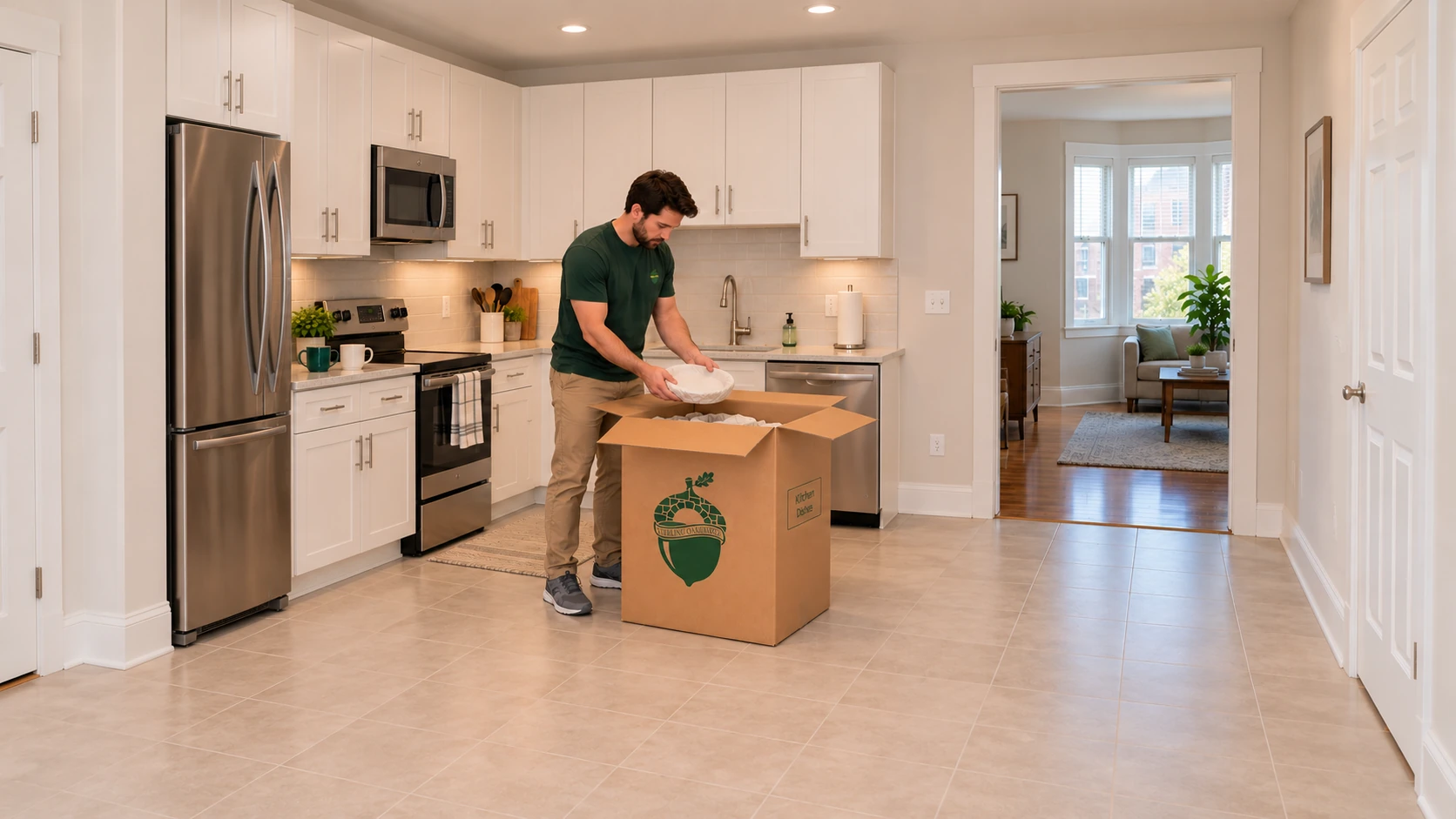
Sterling Oakbridge offers full or selected household packing and optional unpacking in New Brunswick, with organizing and finishing tasks agreed separately. Begin with the contents, both addresses and the result you need before returning to work or family routines.
Explore packing, costs and local examples
Choose which preparation will free useful time
Packing a home includes decisions as well as putting things into cartons. Someone must distinguish what belongs to the household, what will travel and what should remain available. Reviewing a cupboard, sorting papers, finding suitable protection and then restoring a usable kitchen can consume much of an evening. For one household the preparation might occupy a couple of weeks after work; another may have already completed most decisions. This is a conditional illustration, rather than a timetable for a New Brunswick home.
Full packing covers the retained contents and preparation accepted for the visit. Partial packing leaves named rooms or groups to you. Fragile-only help can focus on selected ordinary dishes or breakables while you handle clothes and other suitable belongings. Identify unusual art, glass components or valuable collections for an individual method review. The choice should leave a clear division of work, rather than a vague promise that the crew will finish whatever remains.
Consider: keeping a family's apartment usable until departure
Imagine two working adults with a child, a kitchen still used for breakfast and a separate moving appointment. They choose help with ordinary dish cupboards and the retained pantry containers, while packing most clothes themselves. They set aside a small cooking group, school necessities and the child's bedtime belongings until the named release time. This household gains help with a demanding preparation task while keeping a workable final evening.
Ask management whether the earlier packing visit, materials delivery and later moving visit each have accepted access. An elevator amenity or resident parking arrangement does not reserve those periods. If a preparation slot cannot be confirmed, the coordinator and property controller need to accept another feasible sequence before the plan depends on it. Compare that alternative's labor, materials and possible extra visit with the original scope.
Show the contents and their actual owner
Open cupboards, closets and bookcases during the inventory review. Include under-bed groups and any retained basement or garage contents; identify items that belong to a landlord or another resident. A bedroom count does not reveal the dishes, books, clothing, collections and accumulated supplies inside it. Someone expecting 20 cartons might discover enough contents for 60–100, but that is a planning example, not a carton calculator or a prediction for your home.
The 2020–2024 ACS housing table identifies New Brunswick city, not North Brunswick, East Brunswick or the whole 08901 postal area. It counts housing units, not buildings or packing jobs. The mix of smaller multi-unit structures, larger apartment buildings and detached homes supports reviewing different working settings; it does not establish an individual property's stairs, access, contents or packing demand.
Consider: separating one resident's belongings in a shared rental
Imagine a resident leaving a shared house with hanging clothes, books, dishes and a few owned furniture pieces. Other residents stay, and the dining furniture belongs to the landlord. The useful first step is to identify the departing resident's contents and mark the excluded groups before packing begins. Review the person's actual upper-room and shared-kitchen belongings instead of treating every visible object as part of the shipment.
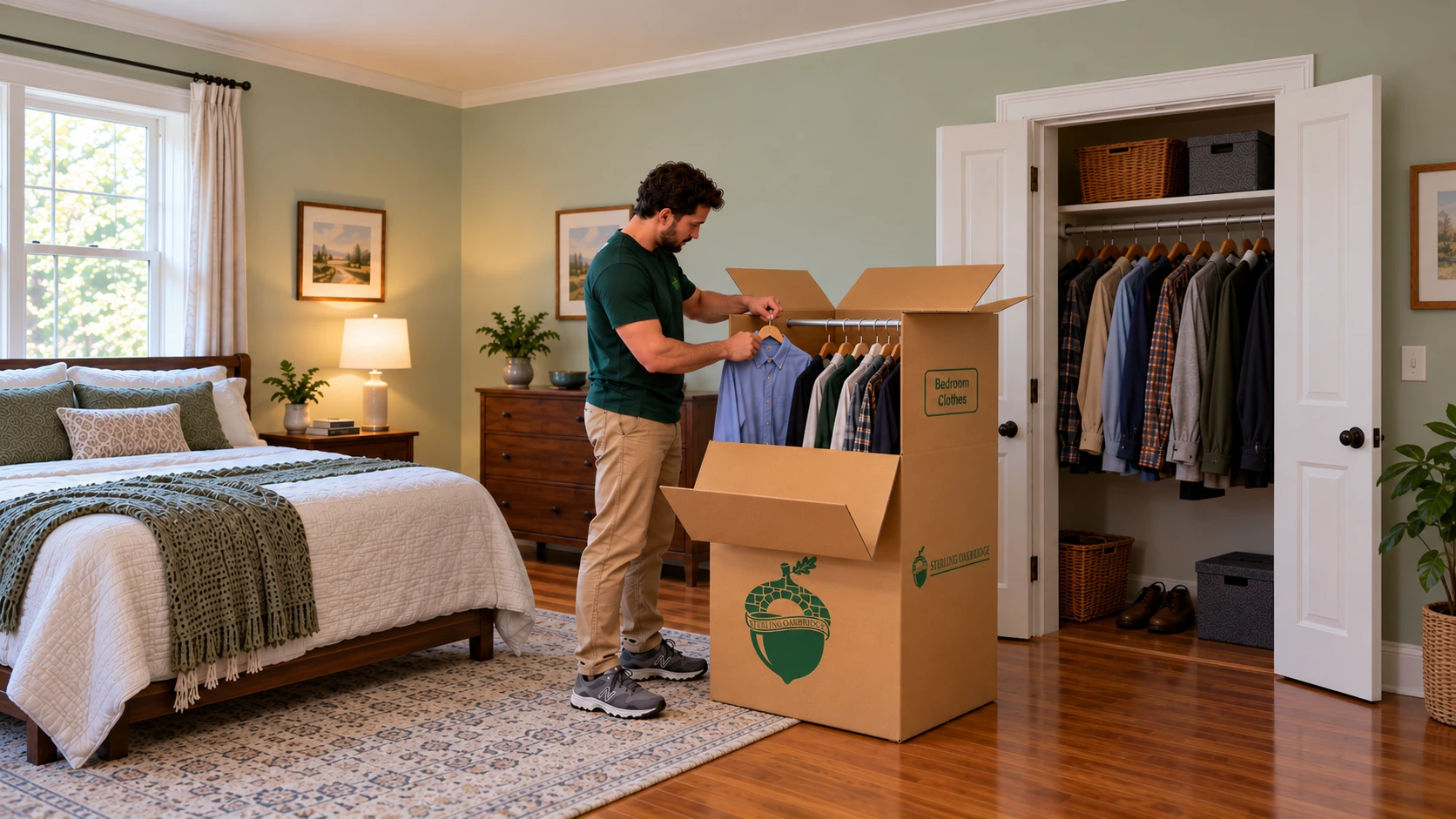
Prepare the selected hanging clothes with real closet access and a usable loading opening for the wardrobe carton. Put departure clothes aside first; books, shoes and folded items need their own preparation. Keep the corridor and other residents' rooms usable. If the destination is university housing, check the actual campus, hall and assignment with Rutgers Residence Life. The Rutgers–New Brunswick name includes campuses outside the City; a private shared rental does not inherit a university hall's arrival arrangement.
Match protection to the object and the whole journey
Ordinary dishes need individual protection, suitable cartons and cushioning that supports the contents through carrying, stacking, restraint and travel. Preparation is more than making a parcel look neat. Use the actual object's shape, fragility and receiving plan to choose its method; a collection of glass shelves or framed pieces is not interchangeable with everyday mugs. The fine-art service provides the handoff for individually reviewed specialist belongings.
Show furniture with its contents and construction before decisions about removable parts. Ordinary drawers are normally emptied and retained secured in the complete protected furniture. An integral support should not be removed as though it were a loose accessory. Basic moving blankets, shrink wrap and tape have no separate basic material charge; company-supplied cartons are charged separately. Confirm any object-specific specialist preparation in the written scope.
Leave a working area where contents can be protected without blocking the route. Materials, an open wardrobe panel or an occupied counter change the space available. Access photographs should show the actual room, doorway and destination for prepared groups, with measurements or a further survey where the coordinator needs them. Pictures begin that review; they do not prove that every bulky object will pass or that the building has approved the work.
Choose one day or an earlier preparation visit
Some reviewed studio or one-bedroom inventories can combine local packing and moving in one day. Full cupboards, several levels or a short carrying window may make earlier preparation useful even in a small home. A two-bedroom inventory can require a different sequence, and a larger household may benefit from a distinct preparation day. None of these descriptions sets staffing or a guaranteed duration.
For a substantial project, a proposal might use four packers on an earlier day and six movers for the move. Those numbers explain separating the tasks, not a standard crew assignment. Actual contents, material needs, access and the amount of owner work determine the recommendation. The person who surveys the job is not necessarily part of the moving crew.
Agree when each remaining group becomes available: beds, breakfast dishes, work equipment and any necessary child or household supplies. Keep identification, medicine, keys, chargers and essential clothing with the people who need them. An open-first shipment carton can still be unavailable in transit or storage. Before departure, check the rooms against the retained list and make sure excluded belongings have not joined the prepared groups.
Label where goods go next
Write the next destination or receiving group, room and useful contents on each carton. Add a carton number and opening priority when they help the receiving list. Color can reinforce the words, while a label such as Bedroom alone may not distinguish two addresses. Keep personal travel essentials outside groups that will be inaccessible.
Consider: dividing retained goods between a new home and a relative
Imagine a household moving into a smaller apartment while a relative accepts selected spare linens and books. Both are retained goods, but they have different receivers. Confirm the two addresses, which groups go where, each receiving period and who may accept them before preparing the labels. An unconfirmed plan to take things later can otherwise leave the wrong group at the first property.
If some remaining contents need storage, agree intake, inventory, access, later delivery and the additional handling and cost with the storage service. A proposed third destination is not an existing storage booking. Decide the available alternative before loading if any receiver is not ready: delayed loading until a confirmed receiving slot where origin access permits, or accepted storage and later delivery with their actual costs and release conditions. Resume the affected delivery and unpacking when both the destination and coordinator accept the revised plan.

Decide what useful unpacking should leave ready
Basic unpacking opens the agreed cartons and places their contents on suitable available surfaces. Choose the priorities and clear the surfaces first: ordinary dishes on a clean counter, for example, with room for used wrapping and empty cartons. This can make the next meal easier while leaving final cupboard placement for separately agreed organizing. Opening every carton into an already occupied room can remove the working space you need.
Consider: getting help with the remaining cartons after the first week
Imagine a household that moved in, unpacked necessities and then returned to work. Kitchen cartons remain, the dining table is crowded and a few unopened groups belong in another room. Describe those remaining contents and restore a usable counter before a later visit. Choose the selected kitchen result first, then identify any separately directed final placement. This is a defined return task, rather than a promise to organize the entire home in one session.
On a substantial project, optional unpacking might add three or four hours or use a later two-person visit. These are conditional planning illustrations, not an included allowance, fixed price or immediate return guarantee. Agree availability, access, priorities and what should remain unopened. If a room is still being painted or repaired, use the actual property controller's release and an accepted alternative; restart that room's work when it is usable and the coordinator confirms the revised scope.

Give organizing and finishing their own instructions
Home organizing places belongings in final locations under your direction. Choose a room, agree the priorities and show where each group belongs. A smaller team can be easier to direct when one household member must make the decisions. Confirm the work and price separately; the home-organizing service describes that receiving handoff.
Request handyman or installation work for the actual item. The wall or surface, fixings, permissions and accepted executor matter. Unpacking does not automatically include electrical reconnection, repairs, equipment setup or every mounting task. If a later purchase needs delivery, use the furniture-delivery service; if already delivered furniture needs another position, describe that in-home moving task. Show its route and construction before assuming it can be included in a remaining unpacking visit.
Set aside a retained-items place during the work. Match small parts to their furniture, keep private papers under household control and check carton interiors and used protection before declaring them empty. An unopened carton for a different room must remain distinguishable from outgoing packaging. The household retains decisions about ownership, final positions and disposal.
Separate empty materials before arranging removal
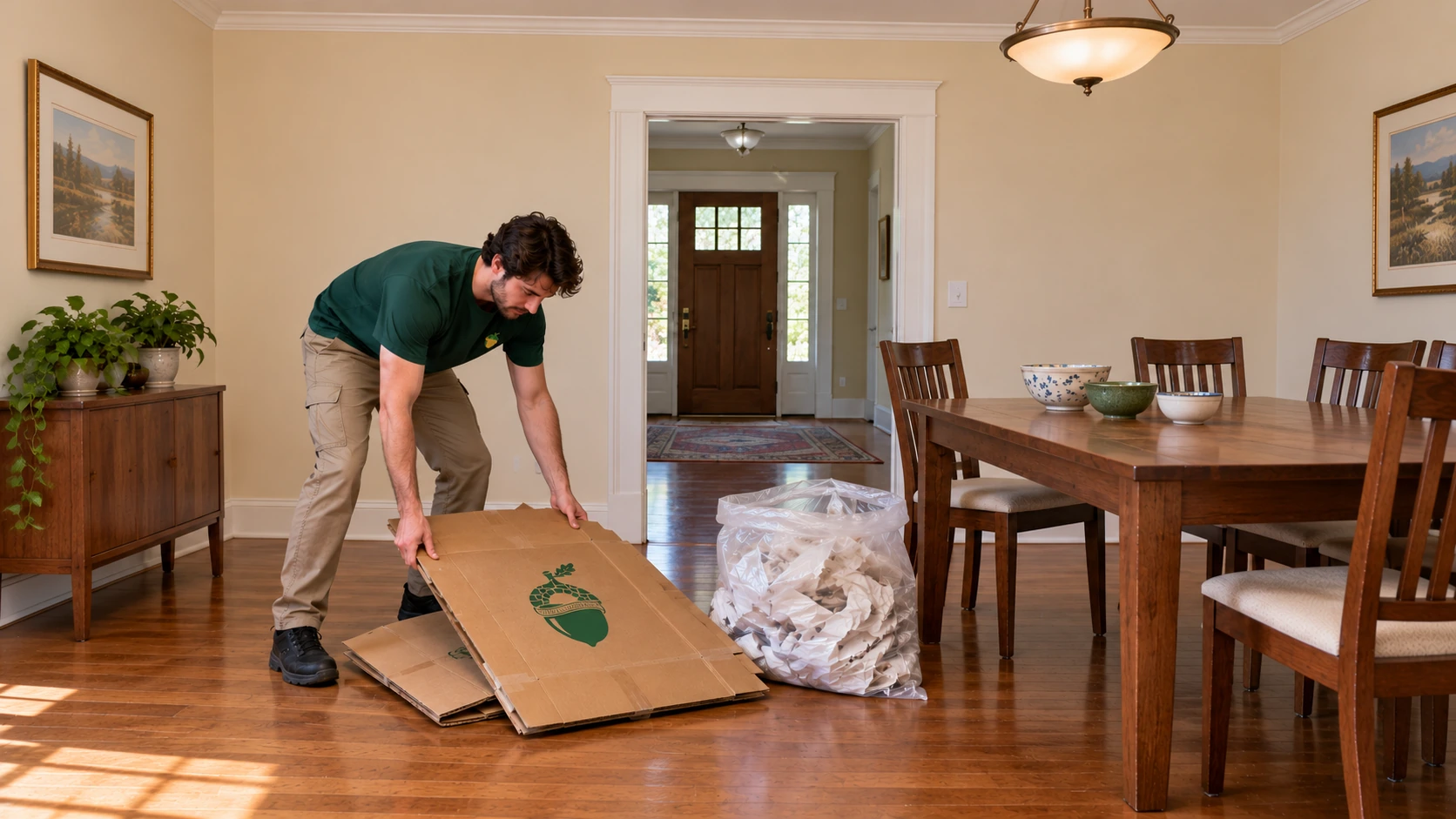
Gathering used packaging indoors does not book its removal. Taking it away needs a separately accepted scope and price, material groups, collector and date. Keep the outgoing area clear of personal belongings and confirm where the property permits materials to wait. A shared corridor or sidewalk is not an assumed holding area.
The City's 2026 collection guide directs large corrugated cardboard into flattened, tied bundles no larger than 4 × 4 × 1 feet. Small flat pieces can go loose in the recycling bin; recycling is not bagged. Keep plastic film and foam out of that curbside stream, and check the actual address's zone and collection arrangement. Building instructions and the accepted collector still matter.
A cabinet rejected late in the process needs a separate removal plan. The City requires appointments for extra refuse and bulk, with a combined six cans, bags or bulk items per unit per special collection. Its reservation form notes that some locations have private collection. These conditions do not book a pickup or approve a moving-company load. Confirm the actual address, materials and receiving route rather than leaving an unwanted item with the empty cardboard.
Match receiving help to the actual delivery plan
For a long-distance move, arrange optional unpacking around the accepted delivery model and window. Direct delivery uses a dedicated truck and the same moving crew at pickup and delivery; consolidation can serve a suitable small shipment with an agreed wider window. Neither model automatically books organizing, a later return or a particular building appointment. Keep the receiving person's availability and the unpacking labor scope explicit.
The New Brunswick long-distance page owns the delivery details. The agreed flat rate stays the same when the shipment and agreed work stay the same; added contents, extra packing or changed access can change scope and price. If a distant receiver cannot accept the goods, resolve an available plan and its costs with the coordinator before dispatch rather than assuming a loaded truck can wait.
For local access and the precise municipality, use the New Brunswick moving page and local moving guide. A residential service exception or loading condition is not a reserved work bay. Packing materials, preparation and carrying visits each need a feasible plan for their actual time and property.
Compare the complete paid scope
Packing labor is charged for working time, and company-supplied cartons are separate. Optional box unpacking also uses working time. Agree organizing, materials removal, specialist preparation, finishing tasks and extra visits individually. Include storage handling or later delivery if the selected plan needs them, and compare the same retained inventory and access when evaluating alternatives.
For a substantial inventory, adding packing to a move might approach two budgets for transporting those goods already prepared. It may be lower or higher; this illustration is neither a standard multiplier nor a ceiling. Local estimated hours help plan the crew and day but do not cap the final hours. Unfinished owner packing, shared elevators, traffic or changed contents can affect the work under the written terms.
Send complete addresses, dates, the contents of cupboards and storage groups, unusual pieces, routes on every level and building instructions. Identify your own preparation, final-night essentials, separate receivers and the finish you want after unpacking. For an NJ intrastate household move, the State's movers FAQ requires an on-site or virtual goods survey before the written moving estimate, including small moves. A preliminary list does not replace that survey; a standalone packing request should be described as its own work.
The useful proposal makes the handover clear: what the crew prepares, what you retain, when each stage can happen and what remains for a separately accepted visit. That gives you a practical basis for choosing help while keeping the household usable through departure and arrival.
New Brunswick packing and unpacking questions
What can I choose for a packing visit?
Choose full preparation of the accepted retained contents, partial help for named groups, or selected ordinary fragile contents. Identify what you will still prepare and what stays available. Unpacking, organizing, specialist work and material removal need their own agreed scope rather than being added by the word full.
Can I ask for help only with kitchen cupboards?
Yes. Show the exact dish cupboards and other selected contents, and identify what you will pack. Keep a small cooking and breakfast group available until its release time. Unusual glass, art or valuable collections need their own method review; an ordinary kitchen request does not establish every specialist procedure.
What preparation can I hand over instead of doing it after work?
Packing help can cover selected dish cupboards or closet groups, or the full retained contents agreed for the visit. You still decide ownership, what travels and what stays available. Compare that preparation with your evenings and household routine. A couple of weeks of evening work is an illustration for one household, not a prediction of your timetable.
How do you estimate the number of cartons?
Review the actual cupboard, closet, bookcase and stored contents, including relevant groups on other levels. Bedrooms and Census housing units do not count belongings. The illustration of expecting 20 cartons and discovering enough contents for 60–100 is a reason to review the inventory, not a prediction for a New Brunswick home.
Does New Brunswick in the postal address settle the municipality?
No. Use the complete street address and actual property authority. New Brunswick city is distinct from North Brunswick, East Brunswick and the wider postal area. Confirm the appropriate building, campus or municipal arrangement before relying on its access or collection rules.
What should remain accessible on the final night?
Keep the agreed sleeping, breakfast, school and work necessities available until their named release time. Carry identification, medicine, keys, chargers and essential clothing with the people who need them. An open-first carton loaded with the shipment may still be inaccessible during travel or storage.
Can packing and moving happen in one day?
Some reviewed inventories and access periods can support that sequence. Full cupboards, several levels, unfinished owner work or a short carrying window can make an earlier packing visit useful. Agree the retained contents, materials, staffing and release of essentials before relying on either plan.
Does an elevator amenity cover an earlier packing visit?
No. Ask the property controller to confirm the actual preparation visit, materials delivery and moving access as needed. An amenity or resident parking arrangement does not book them. If a period is unavailable, the coordinator and property controller need to accept another workable sequence and its costs before the job depends on it.
How do we pack only my belongings in a shared rental?
Identify your cupboard, closet and stored groups, owned furniture and destinations before preparation. Mark other residents' and landlord-owned belongings as excluded. Keep shared circulation usable and retain your own decisions about ownership, private papers and disposal; the crew should not have to infer what belongs to you.
What should I plan for hanging clothes?
Select the clothes that will travel, keep departure clothing apart and maintain closet access and a usable wardrobe-carton opening. Review folded items, shoes and accessories separately. The correct carton method supports the selected clothes; it does not make every closet group one packing task.
Are cartons and basic protective materials charged the same way?
Packing uses working time and company-supplied cartons are separate. Basic moving blankets, shrink wrap and tape have no separate basic material charge. Identify object-specific specialist preparation, additional visits and optional receiving work in the accepted estimate rather than assuming all materials or tasks are included.
Can belongings remain in ordinary furniture drawers?
Show the contents and construction during the review. Ordinary drawers are normally emptied and retained secured within the complete protected furniture. Loose removable parts and integral supports require different decisions; do not remove a structural piece merely to make packing appear easier.
What should labels say when two people receive the goods?
Identify the actual next address or receiving group, room and useful contents. A number and opening priority can help the receiving list, while color reinforces the written destination. Confirm each receiver and period first; the word Bedroom alone may not distinguish two addresses.
What if one receiving address or room is not ready?
Resolve an available alternative with the coordinator before loading or dispatch: delayed loading until a confirmed receiving slot where origin access permits, or accepted storage and later delivery with the extra handling and cost stated. Use the actual property controller's release for unfinished rooms. Resume the affected delivery or unpacking when the destination is usable and the coordinator accepts the revised plan.
What does basic unpacking leave for me?
It opens the agreed cartons and places contents on suitable available surfaces. Choose rooms and priorities and clear the necessary counter or table space. Final cupboard placement follows separately agreed organizing instructions; taking the empty materials away is also a separate scope.
Can I book help after attempting unpacking myself?
Yes. Describe the remaining cartons, occupied rooms, free surfaces and access, then agree availability and the selected finish. A later two-person visit or three or four extra hours can illustrate a substantial project's choices, but neither is an included allowance or promise of an immediate return.
How does organizing differ from basic unpacking?
Organizing places belongings in final positions under your instructions. Agree the room, priorities, work and price, and have the decision-maker available. A smaller team may be easier to direct; basic unpacking alone does not decide every cupboard position or produce a fully organized home.
Does unpacking include handyman work or equipment reconnection?
Request each finishing task for the actual item, surface, fixings and permissions, with its accepted executor and price. Unpacking does not automatically include mounting, electrical work, repairs or equipment setup. Describe later furniture delivery or in-home repositioning as its own route and handling task.
How do we avoid discarding small retained items with paper?
Use a separate retained-items place, match small parts to their belongings and keep private papers under household control. Check carton interiors and used protection before declaring them empty. Distinguish unopened goods for another room from outgoing materials before gathering or removal.
How should empty cardboard be prepared for City recycling?
The 2026 City guide calls for large corrugated cardboard to be flattened and tied in bundles no larger than 4 × 4 × 1 feet; small flat pieces may go loose in the recycling bin. Recycling is not bagged. Check the actual address's zone, collector and property instructions before setting anything out.
Can foam and plastic packing material join that cardboard?
Keep those materials out of the City curbside cardboard and paper stream. The 2026 guide excludes plastic bags and Styrofoam and directs plastic inserts away from recycling. Confirm the actual accepted route for each outgoing material; indoor gathering does not establish a collection booking.
Does basic unpacking include collecting the empty materials?
Taking materials away requires a separately agreed scope and price, collector, route and date. Decide where checked empty materials may wait under the property's instructions. A common corridor or sidewalk is not an assumed holding space, and gathering indoors alone does not arrange a pickup.
What if I no longer want a cabinet after packing begins?
Identify it before it joins the shipment and review removal and the accepted receiving route separately. City special collection needs an appointment and has a combined six cans, bags or bulk items per unit per scheduled special collection; some addresses use private collection. Those provisions do not authorize a moving-company load or book a pickup for your cabinet.
When should unpacking be arranged for a long-distance delivery?
Use the actual accepted transport model and delivery window, together with the receiver and building access. Direct delivery and consolidation do not automatically reserve optional unpacking, organizing or another visit. Confirm that labor scope separately and resolve an accepted alternative before dispatch if the receiver cannot take the goods.
How do I compare costs and obtain a useful proposal?
Compare the same retained inventory, preparation split, access and receiving result, including labor, cartons, extra visits and selected storage or finishing. A near-double budget is only an illustration for substantial preparation, not a standard multiplier. Send full addresses, dates, open-cupboard contents and routes; for an NJ intrastate household move the required on-site or virtual survey precedes the written moving estimate.