
Reading, Pennsylvania · Preparation and receiving
Packing and Unpacking Services in Reading, PA
Hand over the household preparation you want help with, from selected cupboards to the full retained inventory.
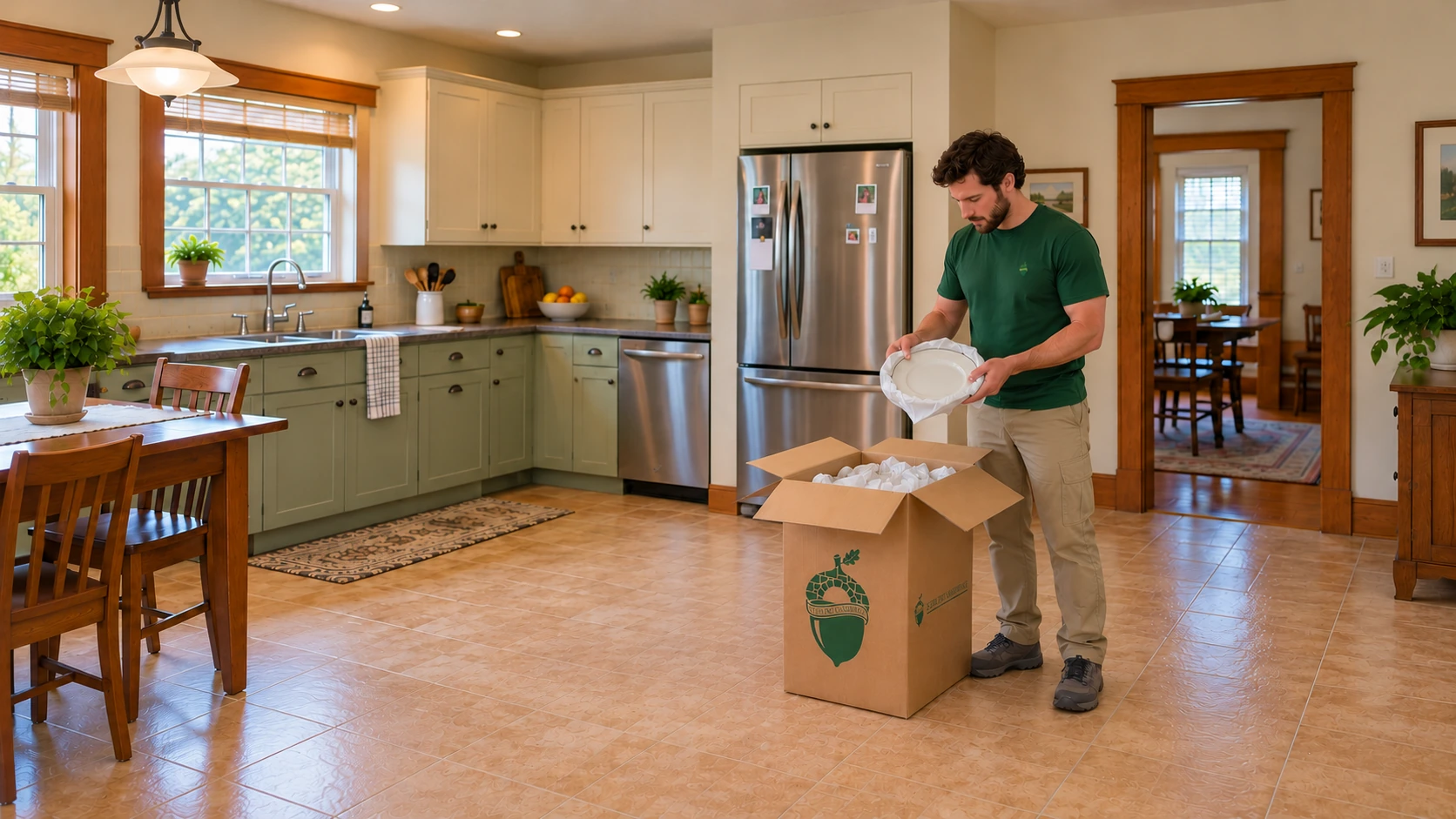
Sterling Oakbridge can pack the agreed contents in Reading and arrange optional carton unpacking after delivery, with final placement, finishing work and material removal chosen separately.
Request a packing estimate Call (475) 221-2030
Explore packing, costs and local examples
Choose the preparation you want to hand over
Moving preparation can occupy evenings long before the carrying starts. Shelves need sorting, kitchen contents need wrapping and finished cartons need somewhere to stand. A couple of weeks spent packing after work is a possible household experience, not a measured average. The reason to book help can be simple: keep that time for work, children, rest and the ordinary routines that still have to happen.
Full packing prepares the retained contents named in the plan. Partial packing assigns particular rooms or groups; fragile-only preparation focuses on the vulnerable pieces reviewed for the job. You might pack clothes and personal papers yourself while the team prepares books and dishes. Write down what remains your work so the final cupboard is not left between two assumptions.
| Task | Useful result | Agree before the visit |
|---|---|---|
| Full retained inventory | The included household contents are prepared for the agreed journey | What stays, what travels personally and which daily-use items close last |
| Selected or fragile groups | The named cupboards, collections or vulnerable items receive the chosen preparation | Exact contents, special methods and who completes the rest |
| Carton unpacking | Agreed contents are opened onto appropriate available surfaces | Ready rooms, priorities and where closed groups can safely wait |
| Directed organizing or finishing | Individually agreed placement or finishing follows the customer’s decisions | Instructions, permissions, executor and separate price |
The Reading moving page covers the broader shipment and carrying route. The Reading relocation guide explains the property and everyday arrangements. Here, decide which preparation and receiving work you want around that move.
Review the cupboards, shelves and storage before counting cartons
A room can look nearly ready while its cupboards still hold most of the work. Show dishes, books, pantry contents intended to travel, small appliances, shoes, bedding, lamps and framed pieces. Open closets and drawers. Include the attic, basement, garage or separate storage area rather than treating the visible furniture as the entire shipment.
The Centre Park association describes rows, twins and larger multistory homes, including basement storage. That makes a floor-by-floor inventory useful for an actual home there. It does not establish the contents, staircase or carton count of a particular address. Bedrooms and floor area help describe the property; they do not measure what is inside it.
A household expecting twenty cartons might need sixty or a hundred after opening the storage. Those numbers illustrate undercounting; they are not a quote for a Reading house or apartment. Photographs of the contents, followed by video or an in-person review where useful, let the estimate account for suitable cartons, cushioning, working time and the space needed to prepare them.
Decide what you will keep before paying to wrap it. Separate belongings staying at the property, going to another accepted recipient or awaiting their own removal arrangement. Keep identification, medicines, keys, private papers and valuables with the household. Customer cartons and totes need their own condition, strength, lid and labeling review.

Connect the preparation visit, final night and carrying window
A reviewed small inventory may support packing and a local move in one day. A larger collection, full cupboards, several floors or a restricted access period can make an earlier preparation visit more useful. A two-bedroom home may be more involved than expected, while a larger home can still be prepared by its owners if they choose that work. Agree the actual sequence rather than turn room count into a universal timetable.
For a substantial inventory, four packers on an earlier day and six movers on moving day are one possible staffing discussion, not the crew promised to every household. The point is that preparation can be separated from carrying. The plan needs the actual contents, available work space and permitted hours before staffing and dates can be confirmed.
Reserve a clearly identified final-night group: bedding, washing supplies, simple meal items, chargers and the things needed for school, care or work. Decide who packs that last group and when. Keep personal travel bags separate from the shipment. A bedroom that remains usable until the agreed final pass is more helpful than a last-night carton already sealed and staged for loading.
If a vehicle needs temporary curb space, RPA’s published sign-ordering procedure requires at least 48 hours. It says RPA posts and removes the signs, with a completed diagram for property or block requests. Review an earlier preparation visit separately from the loading appointment. Neither an order request nor a residential parking permit approves every position or building visit.
Three plans with different useful finishes
These are hypothetical household situations. They show how to choose the work; they are not reports of completed customer jobs, fixed crew sizes or typical Reading demand.
Consider: preparing a Centre Park home without packing away the final night
Imagine a household with retained books upstairs, ordinary dishes downstairs and seasonal contents in a basement. The owners can sort the keep-and-leave decisions, but another run of packing evenings would displace work and bedtime routines. Review every included area, then prepare the nonessential books and selected kitchen contents during an agreed earlier visit.
Choose a supported preparation surface and somewhere for completed cartons that does not fill the stair landing or shared route. Keep the last bedding and a small working kitchen group available. Before the earlier team leaves, identify the exact final pass and who will complete it; moving day should begin with a known remainder rather than a newly discovered floor of storage.
If an expected prep window changes, the household’s authorized contact and planning team need a decision time before the affected work starts. Choose an accepted alternative visit or a smaller agreed scope that can actually be completed. Confirm any additional trip and price, retain personal essentials and resume the original sequence only when the necessary access is available.
Consider: a smaller home, storage and a second recipient
Suppose a household is retaining fewer rooms of furniture and contents. Some linens and kitchen items go to the new home, seasonal groups need confirmed storage, and a relative has agreed to receive selected belongings. Establish what that person will take and when, then identify the actual storage arrangement, access, holding period and later delivery.
Make those decisions before wrapping. Write the destination and useful room or contents on each retained carton, mark matching furniture and keep a list. Two completed destination groups can illustrate the method; the actual shipment may need further named groups. An unconfirmed recipient or a phone number for a storage facility does not complete the plan.
Keep unwanted furniture outside the paid packing list once its next step is agreed. Furniture and waste removal need their own item, preparation and receiving-route review. If the receiving home cannot take a retained piece, the useful saving comes from settling that decision before repeated wrapping and handling, not from assuming that everything left over can go to a City collection.
Consider: asking for help after you have started unpacking
Imagine the household has moved in and opened some cartons, but work resumes before the linen cupboards and kitchen are usable. Show the remaining closed groups, the contents already on surfaces and the rooms that can receive work. Ask for an available later visit with an explicit result, such as opening the selected kitchen group and placing linens under the customer’s direction.
Start with safe circulation, agreed furniture positions and enough clear surfaces. Basic unpacking can bring contents onto those surfaces; customer-directed organizing can then place them on chosen shelves. Keep the person making placement decisions available. A smaller team can be easier to guide through an occupied home than several people waiting for the same answer.
Before empty materials leave, check paper and cartons for small hardware, accessories and retained items. Keep cardboard, paper, film and other material groups separate for the agreed route. A later visit, packaging removal and any finishing task need their own scope and price; an earlier move does not guarantee immediate return availability.
Protect the contents through the complete handling path
Protection has to suit carrying, support inside the carton, stacking, restraint and movement during travel. A fragile word or an attractive exterior does not do that work. Books belong in manageable small cartons. Ordinary dishware needs individual protection, supported cushioning and a suitable container with a real closure. Selected hanging clothes can use an appropriate wardrobe carton; other clothes and linens may suit different preparation.
Show glass doors and shelves, pictures, lamps, collections and unusual pieces before the method is chosen. Protect removable parts and keep their matching hardware identified. Ordinary furniture drawers are generally emptied and retained secured in the protected piece. Safely removable long legs and integral supports call for different construction decisions; a photograph of the actual furniture is more useful than a blanket instruction to remove everything.
Clean handling and any gloves must suit the material and grip. Valuable, delicate or unusual art can require the methods explained in fine art and antiques handling; a crate is a reviewed protection choice, not the default for every small frame. Basic furniture preparation uses moving labor time, while complex assembly or specialist protection is assessed separately.
Give each retained group a destination people can use
Use written destination, room, useful contents, carton number and priority. Color can make groups easier to recognize, but it should reinforce words rather than replace them. An upstairs bedroom label cannot explain whether that carton first goes to the new home, a second address or storage.
Keep personal travel items and things remaining at the origin outside the loading groups. Align the inventory list, preparation area and receiving instructions. Storage and later delivery need an accepted arrangement and their own handling plan; repeatedly opening a carton to discover its contents or destination adds avoidable work.
Choose unpacking, final placement and finishing separately
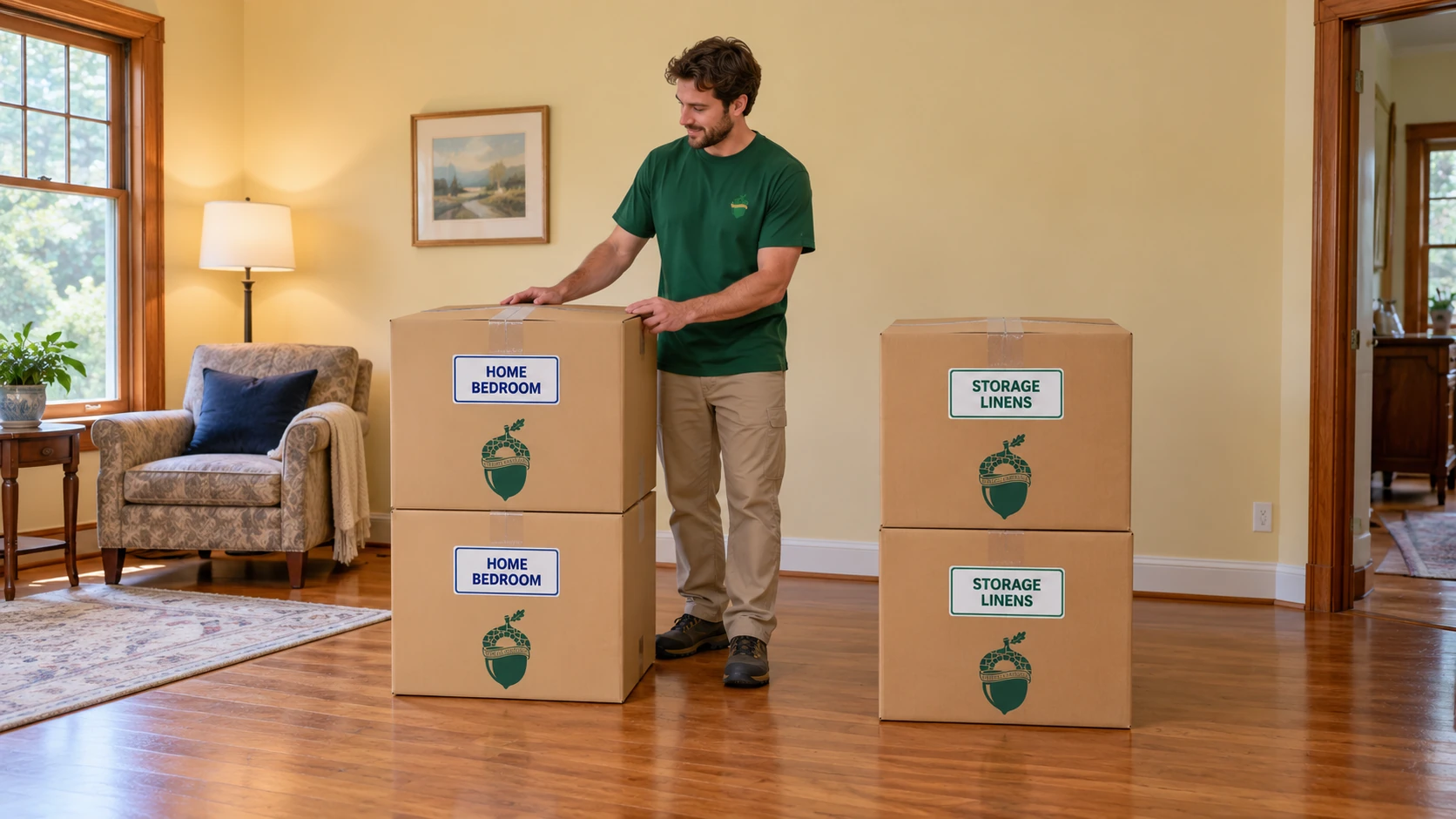
First make the receiving route and agreed furniture positions usable. Basic carton unpacking opens the selected contents onto appropriate available surfaces. Choose priority rooms and enough clear space; closing off the only walking route with open boxes makes the next task harder. Furniture is unwrapped as part of delivery, while opening household cartons is optional labor.
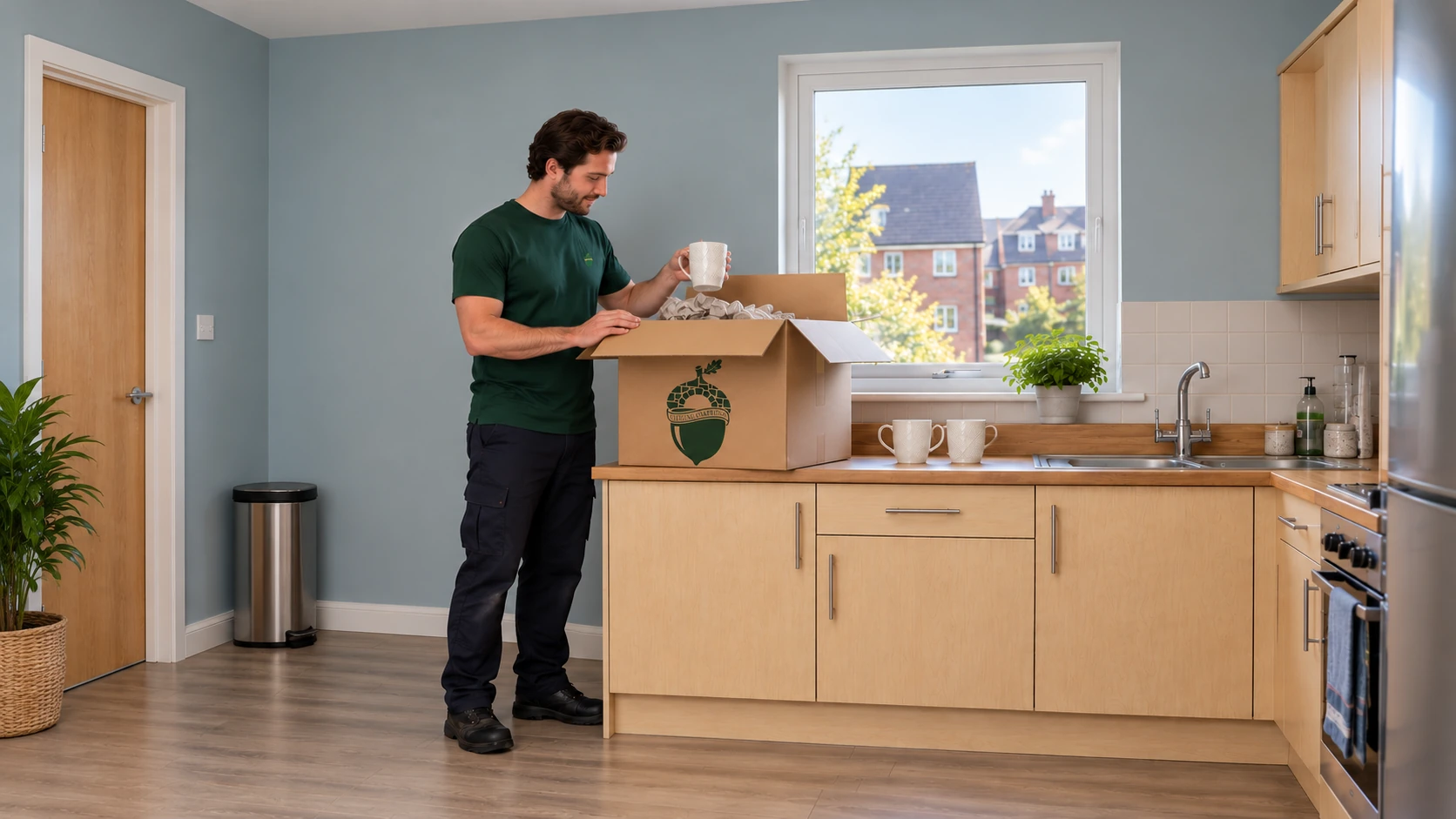
Home organizing follows the customer’s placement instructions and has an individually agreed scope and price. Decide which shelf or drawer receives each group and who can answer questions during the visit. The aim can be a useful linen cupboard or a working kitchen area, rather than an unexplained promise that the entire home will be finished.

Basic furniture disassembly and reassembly use moving labor time without a separate basic assembly fee. Agreed handyman finishing, picture hanging or television mounting needs the actual object, wall, hardware, permission and executor reviewed. Packing does not automatically include electrical hookup, repairs or restoration. A later in-home furniture move and a separately purchased item’s furniture delivery have their own purposes.
For a long-distance shipment, book receiving help against the written delivery arrangement. Reading long-distance moving explains direct service with a dedicated truck and the same crew, and consolidated service with a wider agreed window. Do not reserve unpacking around an assumed exact arrival. Confirm keys, ready rooms, the authorized receiver and any separate visit.
Compare the complete paid scope
Ask the estimate to separate packing work, cartons, moving, any earlier preparation or return visit, specialist protection and the receiving tasks selected. Packing and box unpacking use working time; boxes are charged separately. Moving blankets, shrink wrap and tape have no separate material charge. Organizing, handyman tasks and packaging removal have their own agreed scope and price.
For one retained inventory, packing plus moving might approach twice the cost of moving the same belongings already packed. That is a planning illustration, not a standard multiplier, rate or ceiling; the actual result can be below or above it. Compare offers against the same contents, access and work instead of comparing a full preparation plan with a carrying-only price.
On a substantial project, unpacking could add three or four hours at delivery or be arranged as a later visit by two people. Those are examples to discuss, not a guaranteed duration or staffing offer. Include the remaining contents, receiving surfaces, decision-maker, building hours and any extra trip when the team reviews the job.
If both ends are within Pennsylvania, use the applicable in-state tariff and estimate process. The interstate illustrations do not set every Pennsylvania moving price. For a long-distance move quoted at an agreed flat rate, unchanged shipment and scope keep that price even if the journey takes longer; additions and changed work are reviewed separately in writing. The moving and long-distance pages provide the route-specific context.
Separate empty materials from retained belongings
Packaging removal is available when agreed and is charged separately. Specify the material types, likely amount, access and whether collection is wanted with unpacking or later. Keep small parts and retained belongings out of used paper before it is gathered. Taking empty cartons does not automatically include unwanted furniture, electronics or restricted waste.
Reading includes paper and cardboard among its recyclable materials, while City preparation guidance requires empty, clean and dry recyclables. Keep suitable paper and cardboard apart from film, foam and unsuitable contaminated material. The City lists Styrofoam and dirty cardboard as problem non-recyclable material; do not treat every item of packing waste as recyclable.
Plastic film and clear packaging wrap are not accepted in curbside recycling. A temporary indoor grouping sack does not establish the correct collection presentation or a shop’s willingness to accept that load. Check the actual material and receiving arrangement rather than rely on a recycling symbol alone.
The City’s ordinary service applies to smaller residential buildings; buildings with seven or more units and commercial properties use private haulers. Establish the building’s collection arrangement and the property’s actual municipality. Resident eligibility is not permission to leave a crew’s commercial load. The removal service owns the detailed material and destination review.
Send a useful starting inventory
Send both complete addresses and units, practical dates and a room-by-room description including storage. Photograph cupboards, collections, unusual furniture and the preparation and carrying routes. Identify full or selected packing, what remains in use until the last night, every retained destination group and the receiving help you want.
A clear item list may be enough for a straightforward small job; full packing, unusual contents or access restrictions can call for video review or an in-person survey. A Reading postal name does not establish Reading City jurisdiction. Include the actual municipality and property contact so parking, building access and collection are considered for the right address.
Reading packing and unpacking questions
Can I book packing for selected rooms rather than the whole home?
Yes. Name the rooms, cupboards, books or fragile groups you want prepared, then identify who packs everything outside that list. Full packing covers the retained contents agreed for the shipment; a room label alone can leave uncertainty about drawers, high shelves and storage. Include the work you want at delivery separately.
How do I choose between full, partial and fragile-only packing?
Choose against the actual contents and the time you want to keep. Full preparation hands over the agreed retained household inventory. Partial preparation assigns named groups; fragile-only work concentrates on individually reviewed vulnerable pieces. Show collections, glass and any specialist objects so the protection method can be assessed rather than inferred from the word fragile.
Can you pack everything on moving day?
A reviewed smaller inventory may fit preparation and a local move into one day. More contents, full cupboards, stairs or a restricted carrying window can justify an earlier packing visit. A two-bedroom or larger home is not an automatic crew formula. Review what must be finished before carrying begins and agree when the last daily-use group is packed.
What should remain available for the final night?
Keep medicines, identification, keys, valuables, travel documents, chargers and personal essentials with the household. Leave an agreed small group for sleeping, washing, simple meals and any child or work routine until the final pass. Show the packers that group and assign who closes it; a last-night label on a box already sealed in the shipment cannot keep it usable.
Can you estimate cartons from my number of bedrooms?
Bedroom count is background information. Open cupboards and show books, dishes, closets, drawers, attic and basement storage, plus what you will retain. A household expecting twenty cartons might discover sixty or a hundred when everything is included; those are examples of missed contents, not a Reading home estimate. The actual inventory determines supplies and labor.
Are boxes included in the packing price?
Boxes are charged separately. Packing is working time, with the actual material and preparation scope reviewed for the order. Moving blankets, shrink wrap and tape have no separate material charge under the company policy. Ask the estimate to distinguish cartons, packing work, transport and any specialist protection or extra visit rather than assume one description includes all of them.
Can I use my own cartons or plastic totes?
Show their condition, sizes, strength, lids and intended contents before the work is planned. Usable customer containers can form part of the agreed preparation, but one large light-duty carton is a poor substitute for suitable book or fragile-item protection. Keep lids and matching pieces together, and agree who supplies any missing cartons or cushioning.
How do you prepare books, ordinary dishes and framed pieces?
Use manageable small cartons for books and individually protected, supported contents for ordinary dishes. The container, cushioning and closure must suit the actual items. Show frames, glass doors, shelves and unusual or valuable pieces separately; specialist art protection or a crate is an individually reviewed choice. A fragile label does not replace the physical protection.
Do all drawers and furniture legs need to come off?
No. Ordinary drawers are generally emptied and retained secured in their own protected furniture. Safely removable long legs, glass and shelves need a construction-specific plan, while integral parts should not be treated as detachable. Basic disassembly and reassembly use moving labor time without a separate basic assembly fee; complex pieces and specialist work need individual review.
Can you separate belongings for a new home, storage and another person?
Yes, with each group included in the agreed plan. Record the destination, receiving room, useful contents, carton number and priority in words; color can reinforce the written label. Confirm the second recipient and storage arrangement before dispatch, including later delivery and charges. Mark the matching furniture and keep a list so a carton is not opened simply to discover where it belongs.
Does a Reading mailing address establish City parking rules?
No. A Reading postal address can be in another municipality. Send the full street and unit address and establish the actual property jurisdiction before applying Reading City parking or collection procedures. Include any building manager’s permitted entrance and work hours separately; the mailing city does not approve a truck position or a preparation visit.
How far ahead should I arrange temporary no-parking signs in Reading?
Reading Parking Authority’s published ordering procedure requires at least 48 hours and says RPA posts and removes the signs. Specific-property and block requests need the completed block diagram. Identify the spaces, dates and hours for the actual visit and follow up on the order. Submitting it is not an issued arrangement or a street closure.
What is included in basic carton unpacking?
The agreed cartons are opened and their contents placed on suitable available surfaces. Choose the first rooms and clear space for that work. Furniture unwrapping belongs to delivery; opening the contents of boxes is optional labor. Final shelf or drawer placement, handyman work and packaging removal are separate choices to include in the plan.
Can I arrange unpacking after trying it myself?
Yes, ask for a later visit with a clear remaining inventory and useful finish, subject to the team’s availability. Show which cartons are open, where belongings already rest and which rooms can accept work. Choose whether you want contents on surfaces or customer-directed final placement. Keep retained items apart from used paper so small parts do not leave with the packaging.
Can someone put belongings into the cupboards where I want them?
Customer-directed home organizing is available with an individually agreed scope and price. Identify the actual shelf or drawer and the order of rooms, and have someone available to make placement decisions. A smaller team can be easier to direct. This is a separate step from basic unpacking and does not promise an automatically organized whole home.
Can you also hang pictures, mount a television or do finishing work?
Those are individually reviewed handyman tasks. Send the object, wall and hardware information, permitted work hours and any required approval, then agree the executor, scope and price. Basic furniture reassembly is a different part of moving labor. Packing help does not by itself include electrical hookup, general repairs or restoration.
Will you take the empty cartons and used paper away?
Agreed packaging removal is available and priced separately. Describe the amount and types of material, the access and whether removal is wanted with unpacking or on another visit. Check paper for small parts and retained belongings first. Collect suitable cardboard and paper separately from film, foam and unwanted household items; the accepted receiving route must fit the actual material.
Can all packing materials go in Reading curbside recycling?
No. Reading accepts suitable clean paper and cardboard and requires recyclables to be empty, clean and dry. Plastic film and clear packaging wrap are not curbside-recyclable, and Styrofoam and dirty cardboard are problem non-recyclable material. Check the current City material tool and your building’s collection arrangement. A municipal household service is not a booking to remove the crew’s commercial load.
What if I decide not to keep furniture after it has been packed?
Tell the planning contact before that item is handled further. Identify whether it stays, has an accepted recipient or needs separately reviewed removal, then update the work and price as needed. Late changes can create unpacking, repeated handling or another trip. Packing-material removal does not automatically include furniture, electronics or restricted waste.
How should unpacking be booked for a long-distance delivery?
Choose receiving help against the actual written delivery arrangement. Direct service uses a dedicated truck and the same crew at pickup and delivery; consolidated service has its own wider agreed window. Do not base an unpacking visit on an assumed exact arrival day. Confirm keys, rooms, surfaces and the authorized receiver, and include any separate visit in the estimate.
How should I compare packing and moving estimates in Pennsylvania?
Compare the same retained inventory, preparation, two-ended access, trips and receiving work, with boxes and optional tasks shown. For a wholly Pennsylvania move, use the applicable in-state tariff and estimate process rather than assume an interstate flat rate. The company’s agreed long-distance flat-rate price stays the same for unchanged scope even if travel takes longer; extra contents or work are reviewed separately in writing.
What can I send now to request a packing estimate?
Send both complete addresses and units, useful dates, room-by-room contents including storage, and photos of cupboards, collections and access. Identify full or selected preparation, what stays in use until the last night, every delivery or storage group and the receiving help you want. A clear item list may suit a simple job; full packing or unusual contents can call for a video review or an in-person survey.
Choose the help you want before and after moving
Send the contents, both addresses and useful dates. Tell us what you want packed, what stays accessible and which receiving tasks you want included.