
Philadelphia · Household preparation and receiving
Full packing and unpacking in Philadelphia, PA
Put the preparation in our hands and keep your evenings for the life still happening at home.
Sterling Oakbridge packs the whole agreed household or selected contents, with optional box unpacking, customer-directed organizing and separately priced packaging removal.
Explore packing, costs and local examples
Give us a clear packing boundary
Full packing prepares the retained contents included in your plan. Partial packing can select the kitchen, a room, a book collection or another identifiable group. Fragile-only work can cover specified dishes, glass and small framed pieces while you pack clothing and other ordinary belongings. You do not need to hand over every cupboard to get useful help.
Make the boundary visible before the visit: what is going, what you will pack, what the crew prepares and what must remain available. Sorting ownership, deciding what to discard and choosing a destination are household decisions. Packing protects the belongings you have chosen. Keep uncertain items apart until someone authorized can decide.
A couple of weeks of evenings spent sorting and wrapping can compete with work, meals and rest. Professional packing transfers the agreed preparation work; it does not remove the need for your choices. Start with the cupboards and collections taking the time you would most like to recover, then compare that selected scope with full packing.
Show the cupboards, shelves and extra spaces
A lightly furnished room can still contain a full dinner service, books, ornaments and several drawers. Show open cupboards, hanging clothes, shelves, under-bed storage and any retained attic, basement or garage contents. Identify glass in furniture, removable shelves and objects with an awkward shape. The survey should see the work concealed by closed doors.
An initial expectation of twenty cartons might become sixty or a hundred after the contents are reviewed. Those are examples of underestimation, not a Philadelphia average or an allowance for a particular bedroom count. Dense books, light bedding and fragile glass need different containers and handling. Quantities, suitable cartons and preparation time follow the actual contents.
Philadelphia housing also varies within the same broad label. The City Planning Commission’s 2008 Rowhouse Manual distinguishes several forms and notes alterations to the original plans. Its illustrations are useful context, not a floor plan for your home or a current building-code assessment. Show where contents are kept and where completed cartons can stand without taking over the route through the house.
Finish the packing without packing away the household
Less-used contents can be prepared first while beds, a small meal set, work equipment and personal essentials stay available. Choose a pack-last group and tell everyone where it is. Keep keys, medication, identity and travel documents, chargers and items needed during the household journey with you rather than inside the loaded shipment.
A suitable studio or one-bedroom local move may fit packing and moving into one day. A fuller two-bedroom home or a household with more possessions may need an earlier preparation day. Neither outcome follows from the bedroom count alone. Both visits need usable property access, a place for finished cartons and an accepted work period.
For a substantial inventory, planning might consider four packers on an earlier day and six movers for the move. That is a staffing illustration, not a standard crew. Work backward from the contents, carrying route and deadline. If packing is unfinished or another cupboard is added, tell us while the preparation and moving plan can still be adjusted.
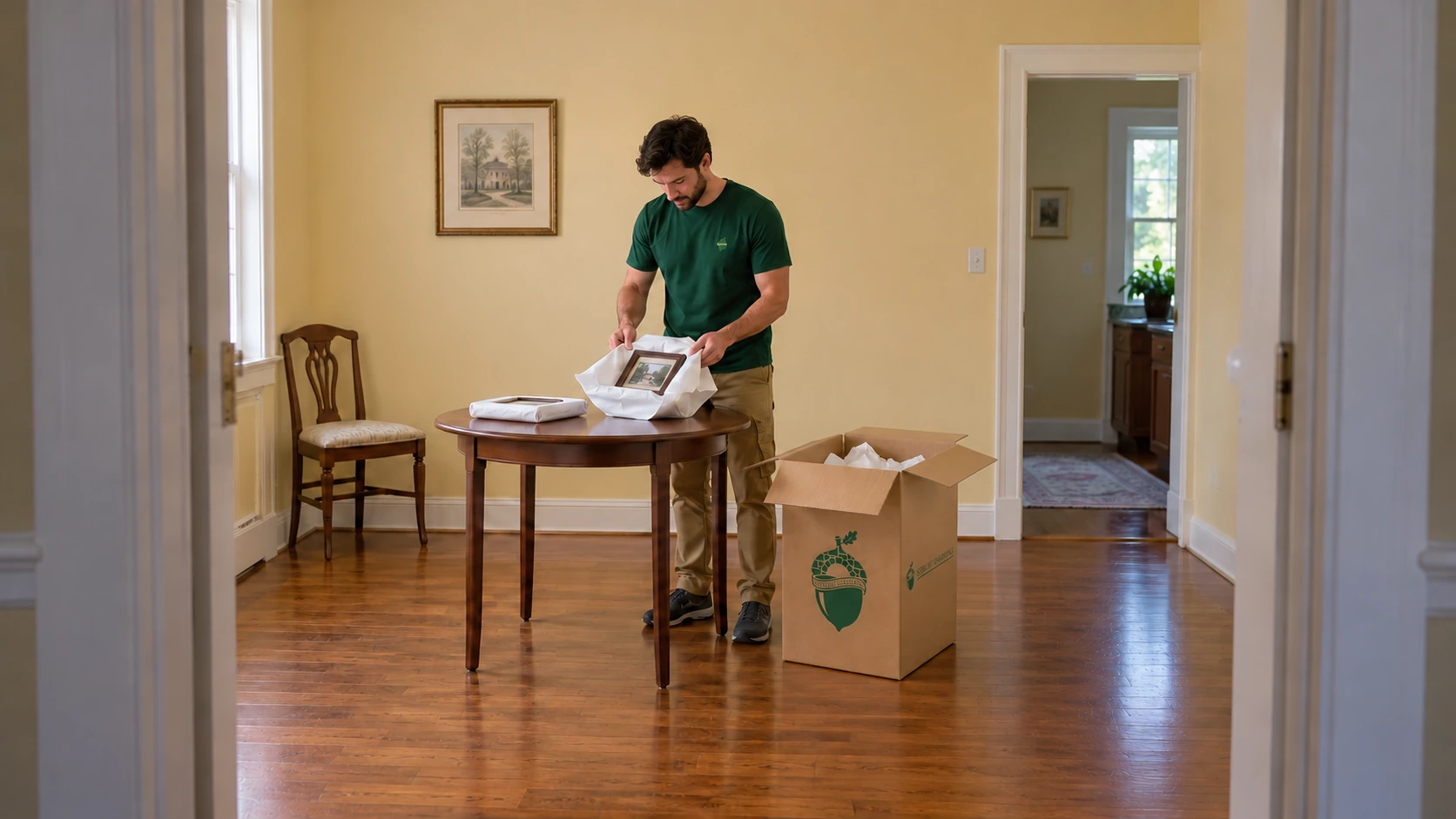
A Queen Village household selects the fragile collection
Imagine a household in a Queen Village rowhouse keeping its books and ordinary clothing under its own control while handing over a dinner service and small framed family photographs. The historic manual identifies several rowhouse forms in this area; the example does not assign one stair or room arrangement to every Queen Village home.
Review the retained fragile pieces together and agree their protection before the visit. Leave a clear existing table for preparation and a floor position for suitable cartons. The household keeps a simple final-evening meal set outside that group. Finished cartons wait in an agreed room position, leaving the entry and the route to the stairs usable.
The useful result is specific: the selected collection is prepared, and the household knows which books, clothes and last-use items it still has to finish. If a larger glazed work, mirror or unusual frame is found, show it for individual review rather than treating it as another small photograph.
Protect contents for carrying, support and transport
Preparation has to work beyond the room where the carton is filled. Contents will be lifted, carried over thresholds, supported within the load, restrained and transported. Wrap fragile pieces individually and use suitable cushioning and a carton matched to their weight and shape. A fragile label helps identify a group; it cannot support glass or replace protection between objects.
Review loose glass shelves, cabinet contents, mirrors, framed pictures and collections separately from the furniture body. Ordinary dishes and small frames do not all require a custom crate. Larger, unusually fragile or high-value objects may need another method. Use the art and antiques service for that object-specific discussion, including any special packing or protection terms.
Suitable handling depends on the surface and grip. A clean working area and appropriate protection matter more than one glove rule for every material. Keep prepared furniture parts, fittings and instructions associated with their piece, and identify self-packed fragile cartons before loading.
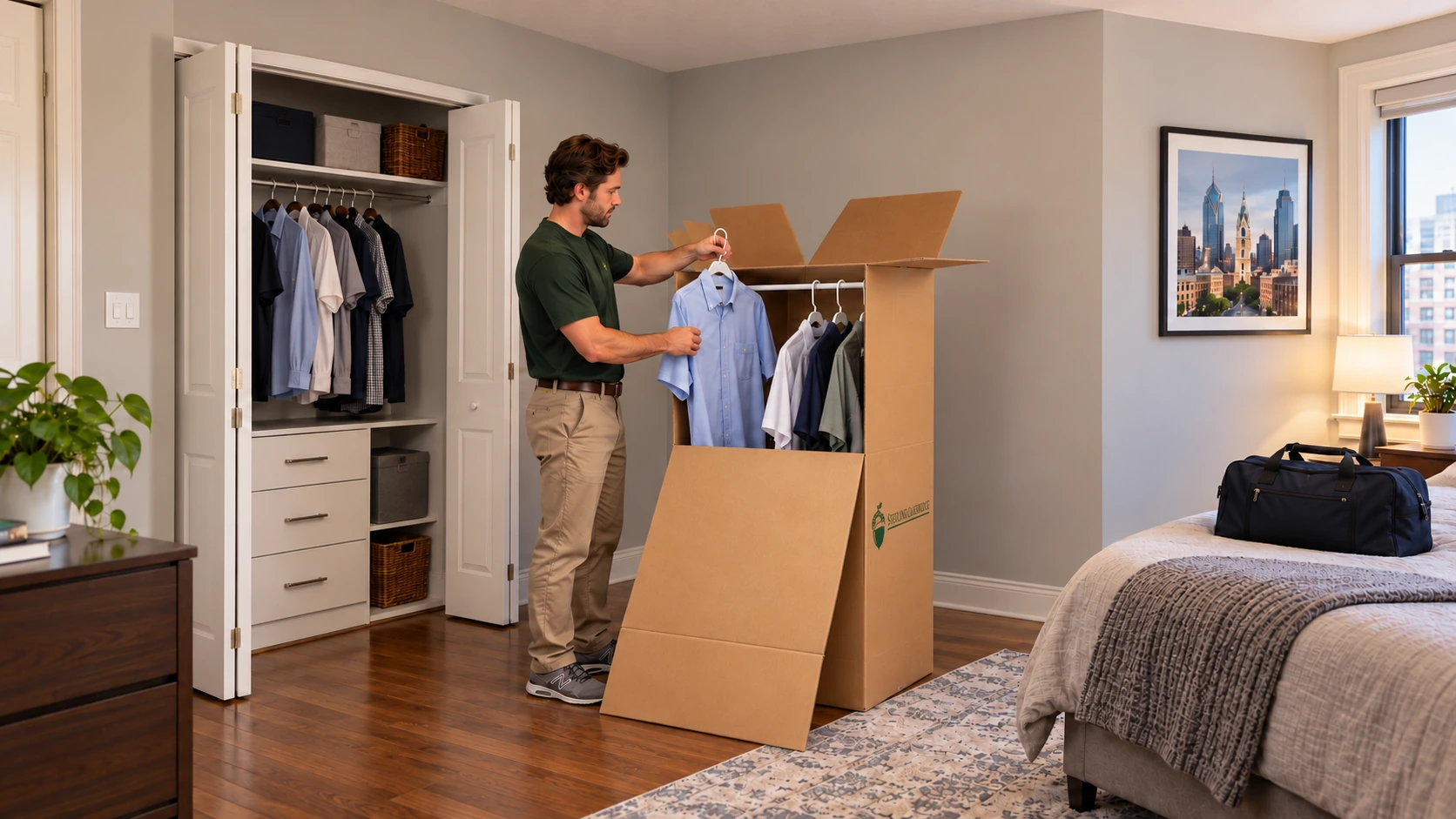
A Center City apartment keeps work clothes available
Consider an apartment household with a workday immediately before departure. Hanging shirts can be transferred into suitable wardrobe cartons while a small overnight clothing set stays with the household. Show the garment lengths, hanging space and the actual doorway and carrying route; a wardrobe carton is a container to plan, not a reason to assume every item can remain on its hanger.
The building’s written instructions determine preparation access, any lift reservation, common-area protection and where finished groups may wait. An earlier packing visit and the later furniture-carrying window are separate appointments. The Philadelphia building-access guide helps collect those instructions; the property must confirm the actual arrangement.
Pack for the next use, including a storage interval
Mark destination, receiving room and useful contents on the carton, with an identifying number and priority where helpful. Color can reinforce the written information, but a green mark alone does not tell the receiver whether a box belongs in the new apartment or storage. Avoid exposed private documents or access codes in labels.
Agree a distinct group for each address or stage before packing. Identify cartons that must remain closed and the first-use belongings that should not disappear into storage. Record who receives each group and how the written plan relates to the loading and delivery order. For a gap between homes, storage and later delivery have their own access, handling and charges.
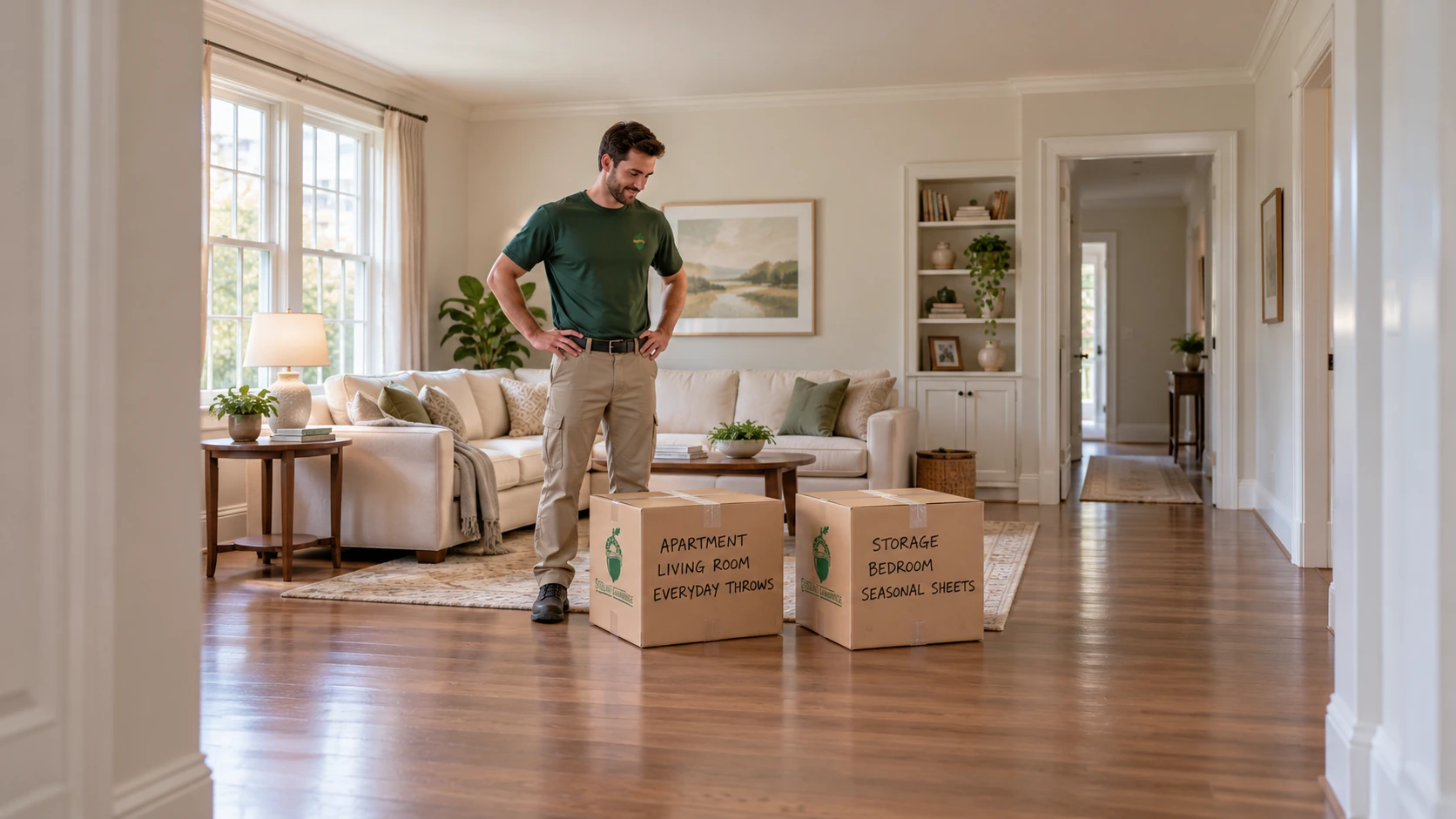
A Northwest household sorts a smaller-home shipment
Imagine a Northwest Philadelphia household taking everyday living-room throws to a smaller apartment while retaining seasonal bedding for separately arranged storage. The household has already decided to keep both groups. This is a destination decision, not a removal job or a claim that every Northwest home has the same layout.
Show the actual linen cupboards and any upstairs or basement contents still included. Write the apartment room and everyday contents on one group, and storage plus the seasonal contents on the other. Keep the cartons within the agreed inventory and ask how a future storage release will be identified. A later room becoming ready does not automatically include another delivery.
Use unpacking to make a room useful
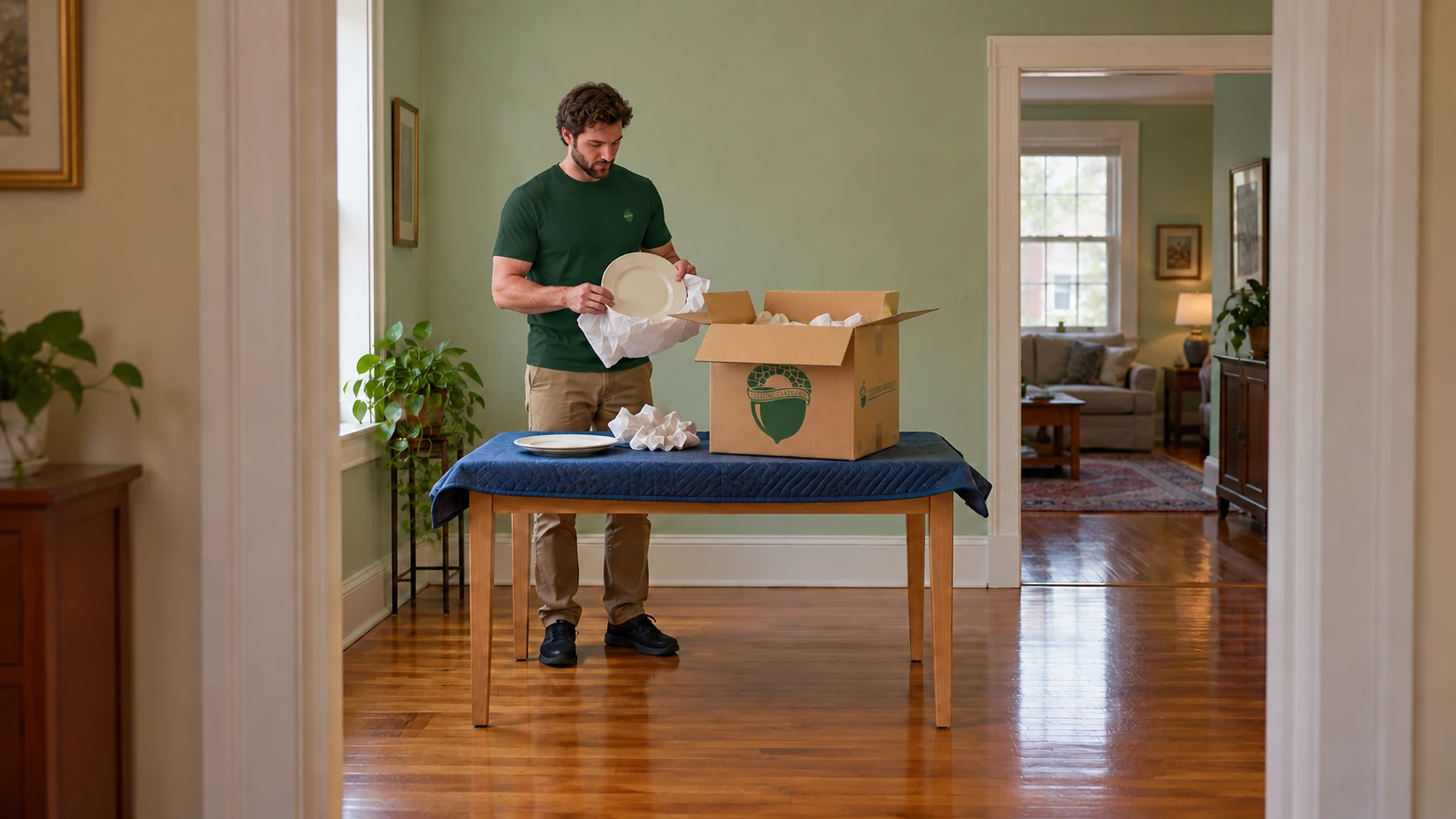
Basic box unpacking opens the selected cartons and places their contents on suitable available surfaces. It removes wrapping from those contents and groups the used packaging in the agreed place. Choose the priority rooms and clear their working surfaces before the visit. A kitchen with usable everyday dishes can be a better first result than several partly opened rooms.
That stage does not decide where every item belongs in a cupboard or drawer. Keep personal and undecided items identifiable, protect the route through the room and check paper for small fittings, lids and other loose parts before discarding it. Packaging collection and transport away from the property are separate requested work.
A West Philadelphia household asks for help after trying first
Consider a household that has unpacked its clothing but still has kitchen cartons and a dining-room group in a West Philadelphia home. An unfinished room cannot yet receive its contents. A later visit can concentrate on the everyday dishes and available surfaces while the other group remains closed in an agreed dry holding position.
List what is still boxed, which surfaces are clear and what the household can direct during the visit. If cupboard placement is wanted, identify it as organizing. Work on an unavailable room, furniture returns or another delivery needs a separate arrangement. A previous move does not reserve an immediate return crew.
For a substantial project, unpacking may add three or four hours on delivery day, or a later two-person visit may be easier to direct. These are planning examples. The actual contents, rooms, building access, service scope and crew availability determine the arrangement.
Decide where things belong and which finishing jobs matter
Home organizing puts belongings into the places you choose. Name the cupboards, drawers and shelves to complete first, and keep someone available to approve placement. A smaller team can be easier to direct when there are many personal decisions. You can select that work for a kitchen or another room without promising a complete household reset in one visit.
Furniture is unwrapped at delivery. Agreed basic furniture disassembly and reassembly use moving labor time without a separate basic assembly fee. New flat-pack construction, complex furniture, picture hanging, mounting and other handyman work need their exact scope reviewed. Wall conditions, hardware, property permission, technical work and the person performing it must be agreed; opening a carton does not include every installation.
Use in-home moving for furniture already at the property that needs another room or floor, and furniture delivery and assembly for a released purchase requiring collection or first assembly. Those services have different starting points from unpacking retained household contents.
Book receiving help against the delivery arrangement
For an interstate or Canada household shipment, the Philadelphia long-distance plan distinguishes direct and consolidated delivery. The delivery clock starts after pickup and loading finish. Match unpacking to the agreed receiving window, keys, property access and the availability of someone who can direct the work. An earlier packing day is a separate stage.
For a shipment quoted on the eligible long-distance flat-rate basis, unchanged inventory, access and services keep the agreed price the same even if travel or delivery takes longer. Extra packing, more belongings, changed access or another storage or receiving stage changes the scope and needs written agreement. A longer journey wholly within Pennsylvania uses its applicable tariff rather than automatically becoming an interstate flat-rate move.
Choose where the empty packaging goes
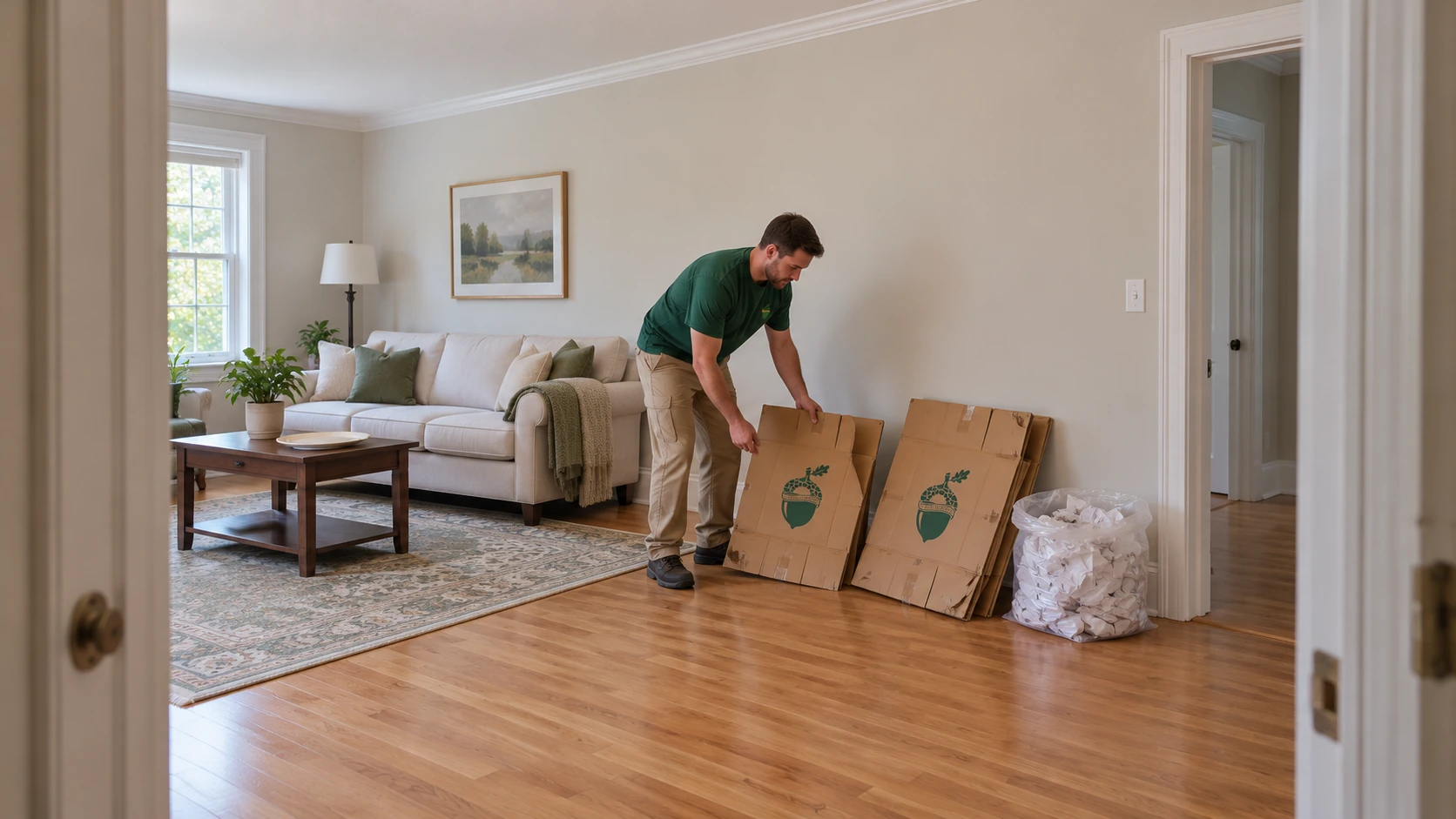
First keep reusable cartons and check all packing paper for retained belongings. Then separate cardboard, paper, film, foam and any contaminated material. Collecting empty packaging indoors, taking it away and disposing of unwanted furniture are different tasks. Tell us which removal you want and the actual quantity so it is included in the quote.
For eligible City recycling, Philadelphia directs residents to remove packing inserts, collapse and fold empty clean cardboard, and put it inside the recycling bin. Keep plastic bags, bagged recycling and Styrofoam out; ceramic pieces are also excluded. Do not use an intact moving carton as the container for mixed recyclables.
The municipal collection rules depend on the property, including parcel status, unit count and any private collection. Qualifying condos and co-ops have a separate eligibility process. Use the actual building’s arrangements rather than assuming that a Philadelphia apartment receives curbside service.
The same rules publish seasonal set-out windows, with different hours in the defined Center City area. Establish the address’s collection day and applicable current window before putting materials outside. A company removal load needs its own suitable receiving route; residential eligibility does not admit a contractor load. The Philadelphia disposal plan owns the wider material and hauling questions.
Compare the same contents and the complete work
Packing uses paid working time and company-supplied cartons are charged separately. Moving blankets, shrink wrap and tape carry no separate material charge; that does not make packing labor or every container free. Include specialist protection, any preparation visit, moving, storage, optional unpacking, organizing and requested packaging removal in the comparison.
For a substantial retained inventory, packing plus moving might approach twice the cost of moving the same contents already packed. It can be below or above that illustration. There is no standard multiplier: a selected fragile group, a full set of cupboards and a later organizing visit are different jobs. Compare complete written scopes rather than one hourly figure or an assumed carton count.
For household-goods transport entirely within Pennsylvania, the state’s shipper information distinguishes hourly tariff charges through forty miles from weight-and-mileage charges over forty miles. The estimate rule requires the written estimate at least forty-eight hours before the move unless you agree in writing to shorter notice. The applicable rates, packing, containers and other selected work belong in that record; a preparation estimate is not a promise that a move finishes within estimated hours.
The City’s official statement identifies Philadelphia City and County as sharing the same boundaries. Use the actual municipality for each address beyond the City. Start your request with the retained contents, both addresses, dates, rooms that must stay usable, what you will pack and the receiving help you want. Our planning team can then choose an item-list, video or in-person review appropriate to the work. You do not have to resolve every measurement before asking.
Philadelphia packing and unpacking questions
Can I choose only part of the packing?
Yes. You can hand over selected rooms, cupboards or an identifiable fragile group while preparing the rest yourself. Full packing covers the retained contents agreed for the job. Name what the crew prepares, what you will finish and what must remain available so the boundary is clear before the visit.
Does the bedroom count tell you how many cartons I need?
No. Open cupboards, shelves, hanging clothes and retained basement, attic or garage contents show the packing work. Twenty cartons becoming sixty or a hundred is an illustration of underestimating contents, not a bedroom-based allowance or local average. The actual items determine containers, materials and preparation time.
Does a small Philadelphia rowhouse mean a small packing job?
Not necessarily. A compact home can hold books, a dinner service, collections and several storage spaces. Philadelphia’s historic Rowhouse Manual also distinguishes different forms and altered plans. Show the actual contents and a usable place for finished cartons; the home’s type does not establish the inventory or stair route.
How can I keep the last evening usable?
Pack less-used contents first and retain a clearly identified pack-last group. Keep bedding, a simple meal set and anything needed for work or the household journey available. Keys, medication, documents and immediate essentials should travel with you. Agree who closes the remaining group after its final use.
Can packing and a local move happen in one day?
Yes, a suitable studio or one-bedroom job may fit both stages after the contents and access are reviewed. A fuller two-bedroom home or larger inventory may benefit from an earlier packing day. Both visits need accepted access and room for prepared cartons; the bedroom count does not reserve a one-day completion.
Are four packers and six movers the standard team?
No. Four packers on an earlier day and six movers on moving day illustrate one substantial inventory. Staffing follows the actual contents, preparation, carrying route and accepted work period. Request a plan for your household rather than treating that example as a fixed crew or price.
Can my clothes stay on hangers?
Suitable hanging garments can use wardrobe cartons with a supported hanging rail. Show garment length, closet access and the route out of the room. Keep the clothing needed before departure separate. Some garments or other closet contents need a different method; one wardrobe carton is not a promise to leave every item hanging.
Does every fragile piece need a custom crate?
No. Ordinary dishes and small framed pieces can use appropriate individual protection, cushioning and suitable cartons. Show larger glazing, unusual frames, art and high-value pieces for object-specific review. The method must support the item during carrying and transport; a fragile label alone does not provide that support.
How should I separate belongings for an apartment and storage?
Identify the two retained groups before packing and write the destination, receiving room and useful contents on each carton. Add an identifying number and first-use priority where helpful. Keep essentials out of storage, and record who receives each group. Storage, access during holding and later delivery have separately agreed stages and charges.
Can I use only colored labels?
Use color alongside written destination and contents information. A color can help the receiver recognize a group, but it does not explain which apartment room receives it or whether it stays in storage. Keep the labeling consistent with the inventory and receiving instructions, without putting private access codes on exposed cartons.
What should stay outside the moving shipment?
Keep keys, medication, identity and travel documents, chargers, essential clothing and first-night needs with the household. Identify anything still required for work, meals or care before departure. Tell everyone preparing the home where that group is so it is not mistaken for the last carton to load.
What result does basic box unpacking provide?
It opens the selected cartons and places their contents on suitable available surfaces, with used wrapping grouped in the agreed place. Choose priority rooms and clear those surfaces first. Final cupboard or drawer placement is organizing, and taking packaging away is separate requested work; neither automatically follows from opening a carton.
Can you put things away in cupboards and drawers?
Yes. Customer-directed home organizing is available as an agreed scope. Identify the cupboards, drawers or shelves to complete first and keep someone available to approve placement. It can be selected for one room. A smaller team may be easier to direct, but the actual work, time and availability still need agreement.
Can I request help after trying to unpack myself?
Yes. A later visit can concentrate on the cartons and rooms still needing work. Describe what remains boxed, the surfaces available and any organizing you want. A previous move does not reserve an immediate return crew, so arrange the actual visit and building access before relying on a date.
What if a receiving room is still unfinished?
Leave its identified group closed in an agreed suitable holding position and open the rooms that are ready first. Confirm who releases the unfinished room and any later work. Furniture returns, off-site storage or another delivery add their own arrangements; an unavailable room does not automatically add those stages to the original job.
Will unpacking take three or four extra hours?
It may on a substantial project, but that is a planning illustration rather than a time cap. A later two-person visit may sometimes be easier to direct. The actual cartons, priority rooms, surfaces, building access, selected work and crew availability determine the arrangement and charge.
Does unpacking include furniture assembly or mounting?
Furniture is unwrapped at delivery, and agreed basic disassembly and reassembly use moving labor time without a separate basic assembly fee. Complex or first-time construction, mounting and handyman finishing need individual review. Confirm the object, wall, hardware, permissions, technical work and executor before treating an installation as included.
When does a long-distance delivery window start?
After pickup and loading finish. An earlier packing day is separate. Direct and consolidated delivery have different receiving arrangements, so coordinate unpacking with the agreed window, keys, property hours and an authorized receiver. The long-distance plan and actual written scope determine the arrangement; an estimated arrival is not a building reservation.
Does a longer journey increase an agreed flat rate?
For an eligible long-distance flat-rate shipment, unchanged inventory, access and services keep the agreed price the same even if travel or delivery takes longer. Added belongings, extra packing, changed access or another storage or receiving stage changes the scope and needs written agreement. Wholly Pennsylvania household transport uses its applicable tariff.
Are packing labor and company cartons free?
No. Packing uses paid working time and company-supplied cartons are charged separately. Moving blankets, shrink wrap and tape carry no separate material charge. Those material terms do not make a packing visit, every container or specialist protection free. Include the selected preparation and receiving work in the estimate.
Should I budget exactly twice the moving price for full packing?
No. Packing plus moving approaching twice the cost of the same shipment already packed is an illustration for a substantial inventory, not a standard multiplier. The total can be lower or higher. Compare the same contents and include cartons, preparation visits, specialist work, storage, optional receiving help and requested removal.
How do I prepare empty moving cartons for Philadelphia recycling?
Remove packing inserts and check for retained belongings. Collapse and fold clean cardboard into the recycling bin, following the City’s current list. Keep plastic bags, bagged recycling, Styrofoam and ceramic pieces out. Reusable supplies can be kept separately; requested company packaging removal has its own scope and charge.
Does every Philadelphia apartment have City collection?
No. Municipal eligibility depends on the property, including parcel status, unit count and any private collection. Qualifying condos and co-ops have their own eligibility process. Obtain the actual building instructions and use the address’s collection day and applicable seasonal window; defined Center City hours differ. Residential eligibility does not admit a contractor load.
What should I send for a packing estimate?
Send retained contents, both addresses, dates, access, what you will pack and the receiving result you want. Identify fragile pieces, pack-last essentials, storage groups and optional removal. For household transport wholly within Pennsylvania, use the applicable tariff and a written estimate at least forty-eight hours before the move unless you agree in writing to shorter notice. The planning team recommends the review method.