Cambridge offers a practical life without a household car, especially near its squares and rail stations. Compare eight neighborhoods and the individual home, understand school and preschool enrollment, then arrange utilities, furniture collection and the permits and access your move needs.
Compare the front-door journey to everyday destinations.
01 /
Start with the decision in front of you
You can use this guide before choosing an address or after the move is booked. Start with the task you need to settle, then use the chapter links for the details.
Start with the address, then compare the neighborhood
Cambridge is its own city across the Charles River from Boston, with its own school district, parking applications and municipal services. A listing described as being near Harvard, Inman or Kendall Square still needs an exact address. Square names describe useful centers of activity; they are not a substitute for a municipal boundary or the instructions for a particular property.
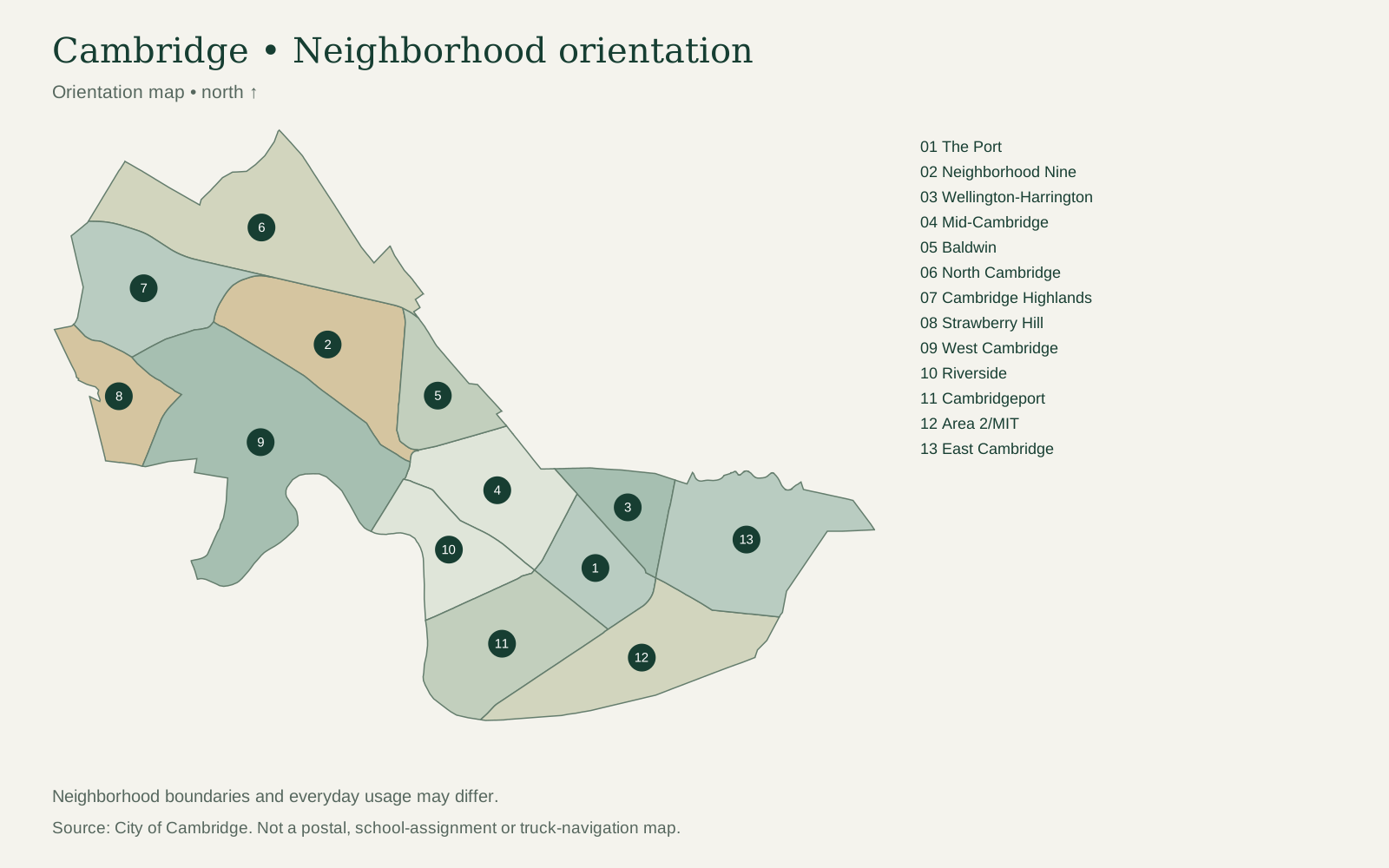
The City's Community Development Department uses 13 planning neighborhoods. The map provides that official geographic frame, while the neighborhood comparisons below focus on eight areas that help illustrate different housing and access questions. The other five remain part of Cambridge; this is a selective comparison, not a claim that the city has only eight neighborhoods. Cambridge neighborhood planning.
When an address is near Somerville, Arlington, Belmont or Watertown, verify the municipality before starting a permit or school application. Use Cambridge GIS and address tools for municipal context and the responsible department for the final answer. Postal delivery information, planning neighborhoods and school assignments serve separate purposes.
For a Cambridge–Boston comparison, use the Boston relocation guide for the other city. You can compare the two daily routines without treating their rules as interchangeable.
The map adds real streets, water, selected bicycle facilities, libraries and six rail stations to the City GIS geography. The original 13-neighborhood overview remains available. Neither map assigns a school, locates a property entrance or approves a truck route.
The City’s 13 planning neighborhoods with eight comparison areas named, real streets and water, and selected rail, bicycle and library connections. North is up; this is an orientation map, not a school assignment or truck route. Explore the map.
03 /
Find the area that fits your routine
Compare the local routines below, then use the housing checklist and access worksheet for the individual property. A neighborhood name cannot settle a particular home’s condition, school assignment or moving access.
East Cambridge
East Cambridge combines a longstanding residential area with an industrial history along the Charles River, north of Kendall Square. The square and the planning neighborhood are useful reference points, but their names do not identify a particular building entrance.
Longstanding homes, larger apartment buildings and former industrial sites offer different entrances and shared access. Identify the receiving door and loading position.
Daily travel
Kendall/MIT on the Red Line and Lechmere on the Green Line serve different ends of the area. Cambridge Street adds a local shopping route.
Before choosing
An address described as Kendall-oriented can still use a different delivery street; the building instructions settle the entrance.
Wellington-Harrington
This small residential neighborhood runs between East Cambridge and Inman Square along the Somerville boundary. CDD describes closely spaced three-story homes, a useful reason to examine access at the unit level.
Closely spaced three-story homes make stairs, bicycle storage, bins and the usable carry route especially relevant.
Daily travel
Inman Square and Cambridge Street are local commercial references; the nearest useful rail station may require a longer walk or a bus.
Before choosing
The Somerville boundary, shared entrances and the legal curb position need address-level attention.
The Port
The Port, also called Area Four in older material, is a dense residential neighborhood north of Massachusetts Avenue. Its position offers a different starting point from an address directly in Central Square.
Residential blocks and the former industrial Osborn Triangle differ in building type and access. Compare the actual floor, shared entrance and storage.
Daily travel
Central Square is the principal transit and shopping center along the Massachusetts Avenue edge; Main, Prospect and Hampshire Streets add local destinations.
Before choosing
The approved curb, bicycle lanes and route into the building must work together; a station-distance claim does not settle unloading.
Cambridgeport
Cambridgeport lies beside the Charles River, with CDD boundaries including River Street, Massachusetts Avenue and the Grand Junction rail line. Riverside access and a Central Square trip should be assessed as different daily journeys.
Older homes, upper floors and newer managed buildings can have different stairs, courtyards and entrances.
Daily travel
Central Square provides rail and bus connections, while Charles River paths offer a different daily route. Distance to either varies across the neighborhood.
Before choosing
Memorial Drive’s state-road truck restriction remains separate. A river location does not establish a property’s flood exposure or loading entrance.
Mid-Cambridge
Mid-Cambridge extends between the Central, Harvard and Inman areas. It is primarily residential while also containing institutional uses, so a broad neighborhood label leaves several possible daily routines.
Compare stairs, bicycle storage, laundry and work-from-home space in this predominantly residential and institutional area.
Daily travel
Central, Harvard and Inman Squares serve three corners; Massachusetts Avenue is a useful commercial and transport spine.
Before choosing
Nearby schools do not guarantee assignment. Match the individual home to the actual daily route and furniture entrance.
Baldwin
Baldwin is the current name for the neighborhood labeled Agassiz in older sources. It stretches from the Harvard area toward Porter Square and the Somerville line, with Harvard and Lesley campus areas among its residential surroundings.
Private homes, condominiums and university housing can have different key and move-in procedures; include stairs and shared access.
Daily travel
Harvard and Porter are commercial and Red Line references at either end, with Massachusetts Avenue between them.
Before choosing
Baldwin is the name adopted in 2021 for the former Agassiz neighborhood. University affiliation does not establish access to a particular property.
North Cambridge
North Cambridge occupies the city's northern area adjoining Somerville, Arlington and Alewife Brook Reservation. Its relationship to the rail corridor and city edges makes the exact address especially useful when comparing routes.
Single- and multifamily homes and larger apartment buildings offer different entrances, storage and vehicle access.
Daily travel
Porter combines Red Line, commuter rail and buses; Alewife serves the western end. Massachusetts Avenue supplies a separate shopping corridor.
Before choosing
Somerville and Arlington boundaries, rail corridors, roads and final turns make the exact address important. Station names alone can conceal a long approach.
West Cambridge
West Cambridge lies west of Harvard Square, toward Fresh Pond and the Charles River. CDD describes a lower-density residential area; that broad character still covers different distances from transit and everyday destinations.
Lower-density housing can bring exterior maintenance and private-drive responsibilities alongside more space.
Daily travel
Harvard Square, Huron Avenue, Concord Avenue and Mount Auburn Street serve different parts; some homes depend more on buses or longer walks.
Before choosing
Fresh Pond and the Charles River are different recreation settings. Private-drive permission and a legal truck approach remain property-specific.
04 /
Compare the home, the lease and the cost of living in it
Begin a housing search with the routines the home must support. Write down the journeys you make most often, the amount of storage you need, whether you will keep a car, and any access requirement that would rule out a unit. Then compare actual homes against that list. A preferred neighborhood with an unsuitable stairway or an impractical daily trip can be the wrong fit even when the listing photographs look convincing.
During a viewing, follow the entire route from outside to the unit. Look at the entry, stair turns, elevator if present, common corridors and the place where deliveries arrive. In the home, check usable room dimensions, storage, laundry arrangements, light and the space you would use for work. Ask which furnishings or appliances remain. A floor plan is useful, but it does not show every obstruction that matters when your own furniture arrives.
Use the same questions for every shortlisted home
Compare
Record before deciding
Recurring costs
Rent or ownership payment, utilities you pay, parking, internet and any separately charged shared facilities.
Initial cash and timing
Amounts due, what each charge covers, due dates and any period when you would be paying for two homes.
Everyday access
Stairs, elevator reliability questions for management, bicycle storage, parcel handling and laundry route.
Move-in access
Key time, booked loading or elevator window, insurance-document instructions and who approves them.
Maintenance
Whom to contact, how to report a problem and who handles private paths, snow clearance and shared areas.
Ask for the utility responsibilities in writing. A quoted rent with heating included is not directly comparable with one where the resident pays for heating separately. If the owner can provide relevant historical usage, check the period, unit and occupancy before using it in your budget; another household's bill is not a prediction of your own. Keep one-time moving costs separate from the monthly cost of living in the home.
Do not assume an old rental-cost checklist correctly describes broker fees. Cambridge's current guidance explains the Massachusetts change effective August 1, 2025, under which the person who hires the broker is responsible for the fee. Ask whom a broker represents and review the applicable terms before agreeing to a charge. City guidance on rental broker fees.
The City's renter resources connect tenants with housing information and the relevant rights guidance. Use those resources for a disputed term or an affordable-housing enquiry. A neighborhood recommendation cannot establish program eligibility, available housing or whether an individual lease term is appropriate.
Use small book cartons and keep the route through the room clear.
05 /
Living without a car, and when one helps
Yes: Cambridge is a practical city for living without a household car. Homes near Central, Harvard, Porter or Kendall Square are useful starting points because rail, shops and other daily destinations come together. Lechmere serves East Cambridge; Alewife serves the northwest. Farther from these centers, a bus connection or longer walk can make the same routine less convenient. This is a judgment from the city's compact geography and transport connections, rather than a promise about every address.
About 33% of Cambridge city households had no vehicle available in the 2024 ACS five-year estimate for 2020–2024, with a margin of error of about two percentage points. Vehicle availability does not tell us whether living without one was a choice or how easy those households found it.
The useful connections
The Red Line links Alewife, Porter, Harvard, Central and Kendall/MIT with Boston. Lechmere is on the Green Line. Buses extend the network beyond the stations; Porter also has commuter rail. The City transit directory describes public shuttles as well, including fare-free EZRide connections around Lechmere and Kendall and toward Cambridgeport. These services have different routes and operating periods.
Walking covers more than commuting when the home is near groceries, a pharmacy, laundry and places you enjoy. Cycling adds reach, with separated lanes and paths in parts of the city. Bluebikes lets riders aged 16 and older borrow at one station and return to another; 16- and 17-year-olds need guardian approval. An available bike and an open return dock are part of the trip. A bicycle facility on one street does not make the whole route protected.
Where a car expands the options
A car makes regional visits, bulky shopping and destinations away from useful transit easier. Cambridge lists car sharing, including Zipcar. Zipcar's regional service offers hourly or daily round trips, with membership approval and a valid license; return the car to its pickup location. Vehicle availability and the booked price vary. If you cannot drive, rentals do not solve that gap: include taxis or other rides with a driver for journeys transit cannot reasonably serve.
The main compromises are late trips, service disruptions, winter conditions, heavy loads and friends, leisure or medical appointments beyond the convenient network. Add those trips to the housing comparison alongside work and school. A cheaper rent can be offset by recurring extra transport costs.
Make the address comparison concrete
Use the MBTA trip planner for an outward and return journey on the relevant day, then include the walk through the building, crossings, station entrance, transfers and final walk. With a stroller or mobility aid, include accessible entrances and elevators; current service and elevator alerts identify disruptions. July 2026 closure notices describe past works, not a permanent condition.
Compare a regular work or study trip, an everyday errand and a reasonable alternative when the main route is unavailable. For cycling, include secure storage at both ends and any stairs at home. For a car, include private-parking costs or the resident-permit process. These address-specific checks refine an already useful citywide conclusion.
Test crossings, bicycle connections and the whole journey from home.
06 /
Places for an ordinary week
Cambridge's squares combine useful errands with places to spend time: Central around Massachusetts Avenue and Prospect Street, Harvard around Massachusetts Avenue and Brattle Street, Porter farther north, and Kendall toward MIT. Their value is the collection of nearby destinations, rather than a promise that every home in the named neighborhood is equally close. Include groceries, a pharmacy, laundry and a leisure trip in the address comparison.
A library you can use from the first week
The Main Library at 449 Broadway has an accessible entrance, Wi-Fi, computers, printing and scanning, study rooms and a children's room. It is a practical stop for documents, studying and family activities as well as borrowing books. Call 617-349-4040 for visit questions. The map also locates the branch libraries, including Central Square at 45 Pearl Street, Valente at 826 Cambridge Street and O'Neill at 70 Rindge Avenue, from the City's GIS library layer.
Green space with different purposes
City parks and open spaces include Cambridge Common near Harvard Square, Danehy Park toward the northwest and Lechmere Canal Park in East Cambridge. Select the facilities that fit the household; athletic reservations and event use have separate permits. Dog access depends on the particular area, rather than on its green color on a map.
Fresh Pond is a drinking-water reservoir with a surrounding recreation area. It is not a swimming or fishing destination. The Reservation rules set dawn-to-dusk access and prohibit swimming, fishing and boating in the pond. The access guide provides walking, bicycle, bus and Red Line approaches, and the trail map and dog rules help select an entrance and suitable activity.
During a viewing visit, include carrying shopping upstairs and storing a bicycle or stroller. A favorite destination across the city can serve a weekend without meeting a daily need. Keep those two roles distinct when comparing homes.
Test the outdoor routes that would become part of your routine.
07 /
Separate school choice, registration and preschool
The nearest public school is not automatically your child's school. Cambridge Public Schools uses Controlled Choice; the Student Registration Center (SRC) handles registration and assignment. The January kindergarten lottery gives a proximity preference to two schools identified by walking distance in the CPS finder, excluding Montessori and immersion options. Outside that lottery, applications follow Controlled Choice on a first-come basis. Proximity is not a guaranteed place.
Register for kindergarten or school-age education
Choose the correct year and grade. Current-year applicants can register now; K–8 registration for September 2027 opens January 4, 2027. The SRC also lists the separate high-school process.
Prepare the registration documents. Bring a birth certificate or passport, immunization and health records, one Cambridge address proof such as a signed lease, one occupancy proof dated within 30 days such as an electricity bill, and one accepted adult identity document. Include applicable guardianship, IEP/504, school and language records. Kindergarten also requires a lead-test record; the checklist explains physical and tuberculosis documentation.
Submit through Aspen online, in person or by email. The SRC accepts completed forms and document scans at src@cpsd.us. Its office is at 459 Broadway, first-floor SRC entrance; call 617-349-6551, Monday–Friday, 8:30 a.m.–3:30 p.m., except holidays.
Finish the review and receive the assignment. Language assessment or special-services review may be needed before assignment. Then arrange transport, first-day instructions, meals, aftercare and collection of the child.
Before a long-distance arrival
The advance-registration procedure starts with secured housing: a signed lease or purchase contract, or a university housing letter giving the address and dates. Provide the required utility evidence; included utilities or an account not yet billed have specific letter alternatives. The child cannot begin attending until the move to Cambridge is complete. Keep these papers and district correspondence outside the moving cartons.
Preschool uses a different application
Apply through the Cambridge Preschool Program (CPP), managed by the Office of Early Childhood. Cambridge residents, or families with verified proof of upcoming residency, can apply. For 2027–2028, the initial application window is October 1–November 13, 2026, for children aged three or four by August 31, 2027. Rank 6–10 programs in the central online application and upload the documents; a submitted application still needs verification and a placement response. For arrival during the current year, contact cpp@cpsd.us or 617-349-1798; seats are limited and the current-year enrollment cutoff is May 1.
Under the CPP eligibility rules, eligible four-year-olds have guaranteed enrollment. Three-year-olds with priority status also have guaranteed enrollment; other three-year-olds can apply only for limited CPS or DHSP seats. Non-priority three-year-old DHSP tuition is not free. Priority criteria include qualifying income, homelessness or foster care. CPP funds the school-day, school-year portion for four-year-olds. Priority children receive free extended-day and summer care if their program offers it; other families may pay extra. An offered place does not automatically cover every hour your family needs.
Older Junior Kindergarten wording should not direct a new preschool application. Kindergarten uses CPS registration; preschool uses CPP. Arrange afterschool, holidays and summer care separately from either assignment.
08 /
Open the right accounts and record who is responsible
List each service the home needs before scheduling transfers: electricity, heating fuel if separate, water, internet and any building-managed systems. For each, record who pays, the service address and unit, the start date and whether someone must provide access. Ask the landlord, manager or closing contact to identify what stays in the owner's name. This prevents both a gap in service and an unnecessary account request.
Cambridge operates its own municipal Water Department. Whether a resident deals directly with an account depends on the property arrangement. A renter should confirm the lease responsibilities; a purchaser should coordinate the handover with the closing and utility contacts. Do not assume the arrangement at your previous Massachusetts home applies to this address.
For electricity, opening or transferring service is separate from choosing the supply product. Cambridge's electricity-supply explanation distinguishes Eversource's distribution and billing role from supplier choice, including the City's community-electricity program. The supply choice does not create a new delivery account or guarantee savings.
Use the utility's own start, stop or transfer process after confirming the provider and the exact service address. For internet, check serviceability at the unit and any installation access with the building. An existing wall socket is not confirmation that your chosen service is active or that an installer can enter when the truck arrives.
Keep confirmation numbers and dates together. If utilities are included in university or rented housing, obtain the documentation needed for other arrangements, such as school registration. On arrival, verify the services you expected to be available and use the property's maintenance contact for a problem with a shared system.
For municipal water questions or handover, contact 617-349-4770 or cwd@cambridgema.gov, 250 Fresh Pond Parkway. For electricity-bill or supply-program help, the City Energy Helpline is 617-430-6230, cambridge@allinenergy.org. These contacts resolve a particular account or responsibility after the basic service plan is clear.
09 /
Arrange the belongings you will not take
Decide what is leaving with you, what will be donated or collected and what needs disposal before the final packing week. This is especially useful when a move-out deadline falls before the next collection opportunity. A plan for unwanted furniture should name the item, the approved disposal method, the collection date and who will place it out.
Cambridge uses item-specific disposal guidance. Some bulky items need a permit; the general furniture rule allows one piece per week on trash day, with exceptions. Use the City's Get Rid of It Right and large-item guidance for the actual object. Do not assume the instructions for a wooden table also apply to an appliance, television or exercise machine.
Mattresses and box springs need their own booking
The City's current UTEC program charges $45 per mattress or box spring, effective July 20, 2026. Residents in buildings with more than 12 units should ask management about the disposal arrangement before booking. The current City mattress-program notice links to the booking provider and explains the charge.
Do not leave a mattress or box spring with ordinary trash. Book through UTEC mattress recycling and put the items at the curb or in view of the street by 7 a.m. on the confirmed pickup day. UTEC cannot collect from inside a home or apartment. Do not leave items in the street or walkway before that date; for a collection problem, call 978-856-3997. The specific July 2026 City notice supersedes older general wording that still calls the service free. A mattress and a box spring are two $45 items.
For the new home, ask where recycling, trash and any composting are kept and who moves containers to the collection point. A managed building can have arrangements different from the next house. Save the address-specific collection information and check holiday changes through the City's recycling and collection resources.
Keep disposal separate from the moving inventory. Mark items staying behind and complete donation or collection handovers before they can be confused with packed belongings. If you want the mover to perform any additional removal, discuss that task explicitly; it is not automatically part of transporting the household.
For City curbside collection, put carts out after 6 p.m. the previous evening or by 7 a.m. on collection day, and bring them back by 6 p.m. Plastic trash bags may go out only on collection morning. The ordinary furniture rule is one piece per week on trash day, with item-specific exceptions; appliances and some large electronics require separate permits. DPW answers collection questions at 617-349-4800 or theworks@cambridgema.gov, 147 Hampshire Street. Managed buildings and private collection retain their own arrangements.
10 /
Arrange everyday parking for your own vehicle
A Moving Van Permit does not cover everyday parking for your personal car. A resident sticker applies to signed permit-only spaces; it does not reserve the space outside your home. Private parking has its own property agreement.
For the ordinary resident application
The City process requires Massachusetts registration in your name, at the Cambridge address and Cambridge garage code, plus matching residency proof from the past 30 days: one qualifying utility bill or two accepted pieces of mail or statements. A lease is not accepted for this ordinary application. Bring the registration, evidence and payment to 344 Broadway, or apply online and wait for the permit to arrive by mail. Unpaid parking tickets prevent issuance. Exceptions for leased, borrowed and rental vehicles use the specific City branches.
While transferring registration
A move within Massachusetts can qualify for a one-week temporary permit; an out-of-state move can qualify for one or two weeks. The listed prices are $20 for one week or $30 for two. That temporary application accepts a lease or purchase-and-sale agreement, or alternative residency evidence. A visitor permit cannot cover a Cambridge resident's own vehicle.
The 2027 change
The 2027 permit season raises the standard annual fee from $25 to $75. It reduces the limit from four permits to two per resident and introduces a financial-hardship waiver. The automatic age-65 waiver ends; a valid disability plate or placard still qualifies for no-cost issuance. The City also announces a free visitor-permit pilot.
Online renewals open December 1, 2026; first-time online applications open in January and in-person service starts January 4, 2027. Existing 2026 permits expire March 31, 2027. From April 1, only a 2027 permit is valid. Transportation answers questions at 617-349-4700.
Keep ordinary parking administration separate from the move-day booking. Read the block's signs and add street-cleaning dates to your routine. For a private space, record the assigned space, access device, permitted user and snow or maintenance duties; availability on a viewing day is not a parking agreement.
11 /
Plan for the date and the conditions at both properties
Compare dates before committing
Summer and month-end demand can make planning tighter. In Sterling Oakbridge's scheduling experience, pressure often builds from roughly the 25th through the 3rd, with another busy period around mid-month. This is a practical reason to compare available dates, not a guarantee that another date costs less or that a crew is free.
Start once a move is likely. Check lease or closing times, the building's booking lead time, the curb procedure and any packing day together. Choose a slot only after the mover has reviewed the work that must fit. If the date is fixed, resolve the limiting approvals first and keep an approved fallback available.
A move around a university arrival period needs close attention to keys, building bookings and the actual streets used for access. Check the relevant institution or property notice for your address and year. A general September moving story does not establish which entrance is available at a particular building or whether your reservation has been approved.
For winter dates, check the Cambridge Snow Center near the appointment for snow-emergency parking and current instructions. Agree who will clear and maintain the private steps, path and loading approach. Conditions can differ between collection and delivery even when both are in Cambridge.
For a wet day, discuss floor protection and where packed items can wait under cover. For hot weather, separate belongings that you need to keep with you or that require special preparation, and ask the mover about handling concerns for the actual items. Weather planning should change a practical decision, not become a generic list that is detached from the home.
Review the plan once the date is close enough for current information to be useful: street works or restrictions, building access, permit details and the contact at each end. If something changes, update the relevant arrangement directly. A booking email from several weeks earlier should not be the only information available to the people carrying out the move.
During a declared snow emergency, vehicles on streets signed “No Parking during Snow Emergency” can be ticketed and towed. The Snow Center lists the designated garages; its free-parking arrangement is for Cambridge residents with resident permits, and vehicles must leave within two hours after the ban is lifted. Snow-removal restrictions can also continue on particular streets afterward. A moving reservation does not remove those obligations. Clear a usable path to the curb and keep the entrance and private steps safe for the actual unloading window.
12 /
Reserve the Cambridge curb space the move will use
A Cambridge Moving Van Permit reserves a street position for loading or unloading. Start by deciding whether public curb space is needed: a private loading area or driveway has a different owner and its own permission. The moving vehicle, the property entrance and the available space need to work together before you select the application.
1. Establish the right location and permit type
The City can issue this permit for City-owned streets. A state-owned street or other owner's land requires that owner's arrangements. If you plan to use a moving container or crate, select its separate permit rather than the moving-van application. The City's street occupancy overview describes the types; van permits are limited to two consecutive days and container/crate permits to three.
Ask the property manager to identify the moving entrance and any private loading alternative. Then ask the mover or rental provider for the actual vehicle length and the room needed behind it. Describe the proposed area accurately; a nearby loading zone, bus stop, driveway or accessible parking space should not be treated as ordinary reservable curb.
2. Apply and pay before the deadline
The live Moving Van application requires both application and payment at least seven calendar days before the start date. Its ordinary occupancy window is 8 a.m.–4 p.m.; the vehicle may stay overnight only when two consecutive days have been paid for. Apply earlier when you can so that the permit and property arrangements can be settled together. Submitting an unpaid application does not start the review.
Have the address, date, vehicle length and any relevant meter numbers ready. If someone applies on your behalf, agree who will watch for the City's response and resolve a question. Keep the application reference and payment confirmation with the move plan. An application in progress is different from a permit that has been approved.
3. Budget for the space being reserved
Cambridge moving-van base fees
Reserved length
Base fee per day
20 or 40 feet — one or two spaces
$60
60 feet — three spaces
$80
80 feet — four spaces
$100
100 feet — five spaces
$120
120 feet — six spaces
$140
Metered reservations add $13 per meter per day; electronic payment charges may also apply. These are municipal charges, separate from the mover's estimate. Check the current application fee schedule when paying.
4. Confirm approval, signs and the usable window
The City posts the signs and removes them afterward. Compare the approved location and dates with the building booking, and report any discrepancy while there is time to correct it. The application limits late changes, so contact the City promptly when a date changes instead of assuming the existing reservation follows the new date.
Count rear-ramp space in the length request. Unattached trailers are not allowed. Cambridge does not allow side ramps, and ramps must not block sidewalks or extend into bicycle or travel lanes. Use a position that allows the planned unloading method while maintaining pedestrian access. A reserved length alone does not solve an unusable route from the truck into the building.
5. Recheck the area before unloading
If a vehicle occupies the permitted area, the application directs you to Cambridge Police's non-emergency line, 617-349-3300. Keep the permit available and allow for the fact that resolving an obstruction may take time. Do not substitute a blocked bike lane or bus stop for the approved position. Street cleaning and snow emergencies can also require a vehicle to move; check current restrictions alongside the permit.
Share the final arrangement with the mover and the building contact. The practical result should be one agreed arrival location and a period when the curb, entrance and any booked elevator can all be used.
Permit questions go to Cambridge Transportation at 617-349-4700, cdot@cambridgema.gov, 344 Broadway. Apply and pay early enough to meet the seven-day deadline; a building reservation alone cannot reserve the street.
13 /
Keep river-road and city-street restrictions separate
Truck access is a separate question from where the vehicle can park. DCR's current warning identifies Memorial Drive in Cambridge, plus Storrow Drive and Soldiers Field Road in Boston, as roads that are not open to moving trucks and vans. Do not use a passenger-car route as proof that the moving vehicle may take those roads. DCR river-road restrictions.
Cambridge also publishes a municipal truck-restricted street list, which permits delivery vehicles serving an address on the restricted street. Most listed restrictions apply all day; Kirkland and Quincy Streets have the listed 11 p.m.–6 a.m. restriction. That local-delivery context is not a general exemption from DCR restrictions. The driver needs to check the actual street, vehicle and destination rather than treating every restriction as the same rule.
Give the mover both the postal address and the entrance used by commercial deliveries. If management supplies directions, ask whether they are intended for the vehicle being used. Check the final turns, the approach to the reserved curb or loading bay and any gate or overhead clearance. An address that works for a parcel van may require a different arrangement for a larger moving vehicle.
For an interstate delivery, settle access before the truck is dispatched. If the proposed vehicle cannot reach or unload at the property, any different vehicle or transfer arrangement needs to be agreed in advance, including its scope and cost. Avoid choosing a smaller or larger truck on route assumptions alone; inventory and property access have to be considered together.
14 /
Prepare a route through the building, not just a door code
Make an access record for both homes. Start at the intended truck position and follow the path all the way to the room where the largest piece will go. Record obstacles in order. This shows where a plan works and where a measurement or approval is still missing.
Match the access check to the property
Property feature
What to gather
Decision it supports
Walk-up or upper-floor home
Exterior steps, door openings, stair flights, landings and turns.
Whether large pieces can pass and which handling or disassembly needs assessment.
Elevator building
Usable cab and door dimensions, service hours, booking contact and loading entrance.
Whether the elevator can carry the inventory and whether delivery fits the booked period.
Courtyard or rear entrance
Gate width, surface, thresholds, carry distance and permission to use the route.
Whether the apparent shortcut is actually available for moving.
Private loading bay or garage
Clearance, vehicle restrictions, turning room, access instructions and booking.
Which vehicle and unloading position are workable.
Measure openings where the furniture will pass and photograph the difficult turns. Include the shape of a large piece, not only its longest dimension. Arms, legs, backs and projecting details can matter at a landing. For a piece that may need disassembly, ask the mover to assess the method and include the work in the scope. Do not assume an item that entered the old home can pass through the new one.
Ask the property for its written move-in rules. Those may address an elevator booking, insurance documentation, protection of common areas, loading hours or the person authorized to admit a crew. Requirements differ by property. Send the actual document to the mover rather than relaying an approximate insurance limit or a neighbor's instructions.
Keep the entry and shared exits usable while packing. Decide where cartons can wait without blocking the furniture route, and where a receiving contact will meet the crew. If you will arrive separately, ensure that the person at the property has the correct keys and authority to grant access. An unanswered intercom can disrupt a carefully reserved delivery period.
Finish by reconciling the two access records with the inventory. Mark any unresolved piece or route before booking. This makes the estimate more accurate and gives you time to decide whether furniture should be disassembled, placed in another room or excluded from the move. For hiring and estimate inputs, see Cambridge moving planning.
Write down every access window
Ask management
Record the answer
Why it matters
Who approves the move?
Tenant, owner, association or manager; contact and booking deadline
A tenant's request may still need an owner's authorization.
Which route and elevators?
Dock, basement transfer, each elevator, stairs, clear dimensions and load limits
A dock elevator to the basement and a second elevator to the unit create two separate handling stages.
Is elevator use exclusive?
Reserved or shared, operator/key control, other scheduled deliveries
A booked time does not necessarily mean a dedicated elevator; ask whether other moving companies will share it.
When can each stage happen?
Materials delivery, packing, protection installation, carrying and final cleanup
Dock hours and elevator hours may differ; the whole route must be available.
What documents or labor conditions apply?
Actual COI wording, any union requirement, staff or security booking
Send the written building rules to the mover before agreeing the date.
Are payments or deposits requested?
Who requests and pays, basis, due date, refund conditions and inspection record
Separate building charges from moving labor; clarify disputed requirements before paying.
What happens if time runs out?
Last carrying time, cleanup deadline, extension contact and approved next slot
Do not assume an extension or leave belongings in an unauthorized common area.
These are questions for the particular property, not rules applying to every building in the city. Confirm which windows are approved and which are only requested, and give the mover one written record for each address.
Prepare before a short carrying window
Agree the route and volume. Have the mover assess how the items will pass through all limited sections, including shared or sequential elevators.
Arrange materials. Confirm when cartons and protection can be delivered and taken to the work area. Materials may need their own elevator access.
Complete the agreed preparation. Schedule packing and furniture preparation before the carrying period where permitted. If full packing is booked, readiness means the agreed access and scope, not an unexpected requirement to pack everything yourself.
Use the slot for its intended work. Allow for protection, carrying and clearing the route within the approved times. Agree another slot or separate stages if the assessed work will not fit.
More workers do not automatically increase the capacity of one elevator. A lobby, passenger elevator or unreviewed staircase is not an assumed overflow route. Arrange an approved, workable alternative before dispatch.
Check when the business can resume work
For an office, shop or workshop, name the receiving person and the functions needed for reopening. Confirm who prepares equipment, disconnects it, installs it and checks operation. For IT, agree responsibility for reconnection and testing before the old system is switched off. For a restaurant, plan equipment and food stocks separately, with the appropriate technical and storage arrangements.
A moving slot does not prove that power, network connections or equipment are ready. Where continued operation matters, discuss stages and a confirmed temporary working arrangement with the people responsible for those functions. The commercial moving section explains the service request; specialist operating procedures belong with the relevant technical team.
For a rental, clarify who is requesting any fee or deposit and on what basis. Massachusetts limits certain tenant payments to a lessor or agent; an association charge needs its own applicability review. See Massachusetts tenancy payment rules.
Ask management which entrance and elevator are available for the move.
15 /
Put the preparations in an order that works
The most useful moving checklist follows dependencies. Housing evidence is needed for some registrations; the vehicle and loading entrance are needed before reserving the right curb length; a later delivery needs a confirmed receiving arrangement. Keep one record of those decisions, with the owner and confirmation for each.
A Cambridge arrival sequence
When
Resolve
Keep available
Assign a lead
When the address is secured
Municipality, lease or closing terms, key availability, daily journeys and any school or preschool process.
Housing documents, official application links and property contacts.
Household contact with the property or transaction contact
Before finalizing the move
Inventory, packing scope, access at both ends, delivery timing and any storage gap.
Measurements, photographs and written moving arrangements.
Household contact with the mover and building manager
Early enough for the city deadline
Vehicle length, public or private loading, permit application and payment, building booking.
Application reference, approval and the person responsible for each task.
Permit applicant with the building contact
Before leaving the old home
Utility dates, unwanted-item collections, items traveling with you and final access check.
Collection confirmations, essentials bag and a clear list of items staying behind.
Household contact and packing provider
On arrival
Keys, intended loading point, room placement and the agreed inventory/condition handover.
Receiving contact, floor plan and move paperwork.
Receiving contact with the moving crew
During the first weeks
Remaining registrations, everyday parking, waste routine and any open property issue.
Confirmation numbers and the correct service or maintenance contact.
Household member responsible for each account or registration
On the first day, make the home usable before opening every carton. Keep essential documents, medications and personal necessities accessible. Check that expected utilities are working, identify the building's maintenance contact and leave shared routes clear. Put larger furniture in the intended place before filling the surrounding room with unpacked items.
For children, confirm the district or provider's actual start arrangements and the daily journey. For a car, complete the relevant parking and registration process rather than relying on the temporary move-day arrangement. For unwanted packing material, use the building's collection system and the City's item guidance.
When the address, inventory and access are ready to discuss, the Cambridge moving page explains the service and estimate process. For the wider state or a move involving another city, use the Massachusetts moving page and the related materials below.
Use the questions that fit the property
Situation
Settle this first
Rental or walk-up
Vacating and key times, stair route and any gap between leases
Managed rental or condo
The approving parties, each access window, documents and payment conditions
Purchase or new construction
Confirmed possession and usable access; review the remaining reserve whenever closing changes
Student or fixed turnover
The exact housing-program dates and any temporary accommodation actually available to you
Business premises
Access plus the people, infrastructure and specialist work needed to resume operation
For example, Harvard University Housing has its own key and moving arrangements. Use the policy for your landlord or program. For a purchase, confirm possession with the parties handling the transaction; the CFPB closing overview explains the general sequence.
Agree a Plan B while it is still available
Choose the fallback before the last point at which it can be arranged. That might be before a storage reservation expires, a building deadline passes or a specialist releases the date. An application or a supplier's phone number is not a confirmed resource.
Trigger and decision time
What missing confirmation or change activates the alternative, and when will you decide?
Owner and contact
Who can change the plan and authorize the agreed costs? Name a backup contact.
Alternative and approval
Specify the new slot, separate stage or storage arrangement, who will carry it out and the permissions required.
People, belongings and access
Confirm where people and pets will be, who receives the goods and what must remain accessible before final delivery.
Costs and notifications
Agree waiting, storage, cancellation or repeat-delivery conditions and who must be told about the change.
Restart
Identify the confirmation that permits the next stage and who checks it.
If keys are delayed, suitable confirmed storage and later delivery may provide the alternative. If a dock or elevator is unavailable, use an approved new window or reviewed route; moving the queue to an unauthorized common area does not resolve the access problem. For an interstate household shipment, review the carrier's delivery and storage terms; FMCSA's delivery guidance describes that context.
If only a day or two remains, first establish what access and work are possible. Tell the mover what is packed, what is not and which deadline is unavoidable. Agree the achievable scope and an authorized alternative where needed. A short notice period does not shorten an external approval deadline.
16 /
Questions before you arrive
Can I live in Cambridge without a car?
Yes. Cambridge is a practical choice for living without a household car, especially near Central, Harvard, Porter, Kendall or Lechmere and everyday shops. Walking, rail, buses and Bluebikes can support errands, social life and appointments as well as commuting. About 33% of City households had no vehicle available in the 2020–2024 ACS estimate; that shows the arrangement is common without proving it is easy for everyone.
A car expands regional, late-trip and bulky-shopping options. Zipcar offers occasional driving, but requires a valid license and membership approval. If you cannot drive, budget rides with a driver where transit is impractical. Farther-from-station homes, winter and disruptions add compromises. The transport chapter gives the actual connections, choices and statistical limits.
Is Cambridge part of Boston for permits and schools?
No. Cambridge is a separate city with its own public-school registration and permit departments. Use Cambridge CPS for a Cambridge home and Cambridge Transportation for a City-street moving reservation. Boston rules apply to the Boston end of a cross-city move. Memorial Drive is a separate state-road restriction; a Cambridge permit does not allow a moving truck onto it. See enrollment and vehicle routes.
Is the nearest public school the school my child will attend?
No automatic assignment follows from being nearest. CPS uses Controlled Choice. The January kindergarten lottery gives proximity preference to two schools based on walking distance, with Montessori and immersion exceptions; outside it, registration is first-come within Controlled Choice. Submit the grade- and year-specific application and required documents through the Student Registration Center, then receive the assignment. For September 2027, K–8 registration opens January 4, 2027. Call 617-349-6551 or email src@cpsd.us; the school chapter gives the documents and relocation process.
Should preschool applications go through the same process as kindergarten?
No. Preschool uses the Cambridge Preschool Program (CPP), administered by the Office of Early Childhood; kindergarten uses CPS registration. Cambridge residency or verified upcoming residency is required. For 2027–2028, children must be three or four by August 31, 2027, and the initial CPP application window is October 1–November 13, 2026. Eligible four-year-olds have funded school-day enrollment, and priority three-year-olds also have guaranteed enrollment; other three-year-old seats are limited, and non-priority DHSP tuition is not free.
Apply through the central CPP portal, rank programs and submit the documents. Extended-day and summer care have separate funding conditions. For arrival during the current year, contact 617-349-1798 or cpp@cpsd.us about limited remaining places. See the preschool steps and eligibility sources.
Do I need separate arrangements for the truck, building and personal car?
Yes. Reserve City curb space through the Moving Van Permit, arrange the building entrance and elevator with management, and obtain the appropriate personal-car parking permit separately. For a moving van, application and payment are due at least seven calendar days ahead; the ordinary window is 8 a.m.–4 p.m., with a maximum of two consecutive days. The City posts the signs. Match the approved curb window with the building booking and keys. Private or state-owned locations use their own owner’s arrangements. See fees and application steps and personal-car parking.
Can I leave an unwanted mattress with ordinary trash?
No. Mattresses and box springs need separate recycling collection through UTEC. Cambridge’s program charges $45 for each mattress or box spring from July 20, 2026; a mattress plus a box spring costs $90. Book first, then place the items curbside or in view of the street by 7 a.m. on the confirmed day. UTEC cannot enter the home to collect them; do not put them in the street or walkway before that date. In buildings with more than 12 units, contact management about the arrangement first. Older general City wording still says free, but the specific current notice states the charge. DPW can resolve City collection questions at 617-349-4800. See the different furniture and appliance rules.
Are the eight neighborhood comparisons the whole city?
No. Cambridge has 13 official planning neighborhoods; this guide compares eight. The selection includes rail-centered areas, dense residential neighborhoods and the lower-density western side. The map retains the whole city’s planning geography and adds real streets, water and selected daily connections. The five areas outside the comparison are MIT/Area 2, Riverside, Neighborhood Nine, Cambridge Highlands and Strawberry Hill. Consult the City neighborhood directory for all 13. Neighborhood boundaries do not guarantee a school place or a truck approach.
Continue planning
The other side of your move
Explore the local guide or plan the moving services for this location.
Official procedures and local resources are linked beside the answers above. Reopen the relevant page when arranging a date: fees, schedules and application requirements can change.