Maine / City relocation guide

Moving to Portland

Find your place in Portland, Maine—from peninsula neighborhoods to mainland homes and island routines. Compare daily life, then work through the local procedures and access arrangements for your move.

Portland: arrival
A local perspective on Portland.

01 /

Understand Portland before comparing addresses

Portland city, Maine includes a mainland city and island communities in Casco Bay. A property described as “Greater Portland” may instead be in South Portland, Westbrook or Falmouth, each with its own municipal procedures. Begin with the actual municipality on the property record and the full address. Keep that identity consistent in the school enquiry, utility arrangements and moving estimate.

The Census Bureau’s July 1, 2025 estimate puts Portland city’s population at 69,911. That is a city figure, not the population of the wider metro area. The distinction also matters for housing figures: a citywide survey cannot tell you what a particular peninsula apartment or island house costs today. Census QuickFacts for Portland city provides the geography and dates behind the numbers.

On the mainland, compare the peninsula with neighborhoods beyond it by the routine you will actually repeat: work, school, shopping and getting home. For an island property, add passenger schedules, freight handling and the journey from the pier. Casco Bay Lines identifies Peaks, Little Diamond, Great Diamond and Cliff as Portland islands; Long Island and Chebeague are separate towns. See its island community overview.

The map and selected neighborhood comparisons help you orient yourself. Neighborhood names describe places and community identities; they do not replace municipal boundaries, school assignment tools or property-specific access checks. The City’s neighborhood and island directory also distinguishes association information from City-verified rules.

Portland: peninsula
Portland: peninsula
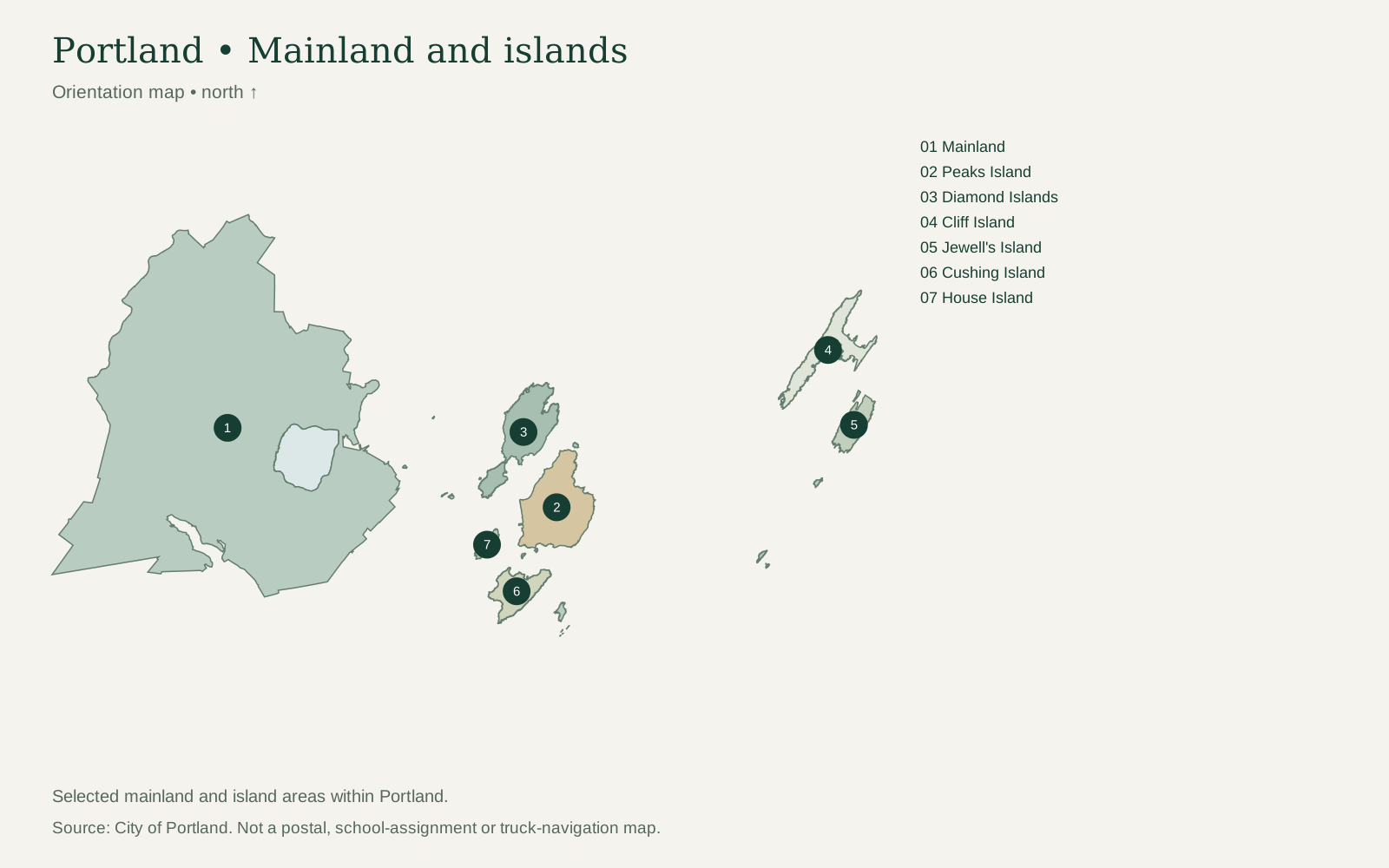
Portland orientation map from municipal GIS, with numbered area key
Mainland and selected islands within the municipal geography. Map prepared September 7, 2026. Open full-size map.

02 /

Find the area that fits your routine

Start with the routines and property features that matter to your household. These selected areas help you compare; school assignment and building access have their own checks below.

Munjoy Hill / East End

A peninsula search centered on Munjoy Hill and Portland’s East End, with the Eastern Promenade as a useful outdoor reference. The City directory identifies a distinct neighborhood organization; it does not promise the same outlook or housing form on every street.

Local reference ↗
Housing & setting
Compare the actual floor, entry, room sizes and light. If an apartment is reached by stairs, include the landing turns in the furniture survey before buying large pieces for the new rooms.
Daily travel
Walk the route between the home, everyday errands and the waterfront. Test the return uphill or with shopping if that is part of the journey you would repeat.
Before choosing
Check the block’s parking signs: parts of the East End have daytime maintenance restrictions. Keep that curb check separate from the building’s moving hours.

Bayside

The Bayside Neighborhood Association describes an area between Forest Avenue, Franklin Arterial, I-295 and Congress Street. It is a separate neighborhood from East Bayside, with a mix of residential and commercial uses.

Local reference ↗
Housing & setting
The association describes older architecture alongside newer development. Compare the actual building and its frontage: shared entrances, receiving arrangements and business deliveries can matter as much as the apartment layout.
Daily travel
Use the Bayside Trail and the walk toward downtown as practical comparisons. Record the route to the particular bus stop or workplace you need instead of treating every location as equally convenient.
Before choosing
For moving, locate the approved loading entrance and check how long the vehicle can legally stay. Business loading activity and a household move may need different arrangements.

East Bayside

East Bayside lies east of Franklin Street and has its own neighborhood organization. The Bayside Trail passes through its commercial and residential surroundings and connects with other local trails.

Local reference ↗
Housing & setting
Compare the building type, floor and included amenities rather than importing assumptions from a listing elsewhere in Bayside. Ask where residents receive parcels and where larger deliveries should arrive.
Daily travel
Walk the connection toward the trail and the destinations you would use. Include crossings and the final approach, particularly if the household plans to travel with a bicycle, stroller or mobility aid.
Before choosing
Document the route from the legal stopping point to the unit. In shared or managed buildings, confirm which entrance and elevator are available during the moving appointment.

Parkside

The neighborhood association describes Parkside between Park Avenue, Congress Street, Weymouth Street and Forest Avenue and highlights Deering Oaks as an important local space. These are association descriptions, not a parcel or school-boundary map.

Local reference ↗
Housing & setting
The association highlights a dense streetscape with older homes. Compare the particular unit’s stairs, storage and maintenance arrangements. Ask how heat and shared spaces are managed, especially where one building contains several households.
Daily travel
Test the route to Deering Oaks and the errands around your actual home. Compare the everyday walking path with the route you would use to reach a station or a regular bus.
Before choosing
Photograph stair returns and the intended curb space. Parts of Parkside have daytime street-maintenance restrictions, so check the specific frontage and day before arranging loading.

West End

The City’s West End historic-district resource describes a varied mix of building types and lot sizes and provides maps and property designations by street. It gives an address-specific starting point for a search involving older buildings; the neighborhood should not be reduced to one type of home.

Local reference ↗
Housing & setting
Compare the individual home’s layout and condition. If considering a converted house or a property with older finishes, ask about shared access and the surfaces that need protection; do not assume all buildings have the same arrangement.
Daily travel
Try the routes you would repeat for work, groceries and outdoor time. Account for the way home and the actual parking arrangement if part of the household will drive.
Before choosing
Measure doorways, hall turns and stair landings for larger furniture. Identify any fragile trim or newly finished floor while the handling and protection plan is being agreed.

Deering Center

An off-peninsula comparison with everyday resources along Stevens Avenue. Portland Public Library’s Burbank Branch is at 377 Stevens Avenue, opposite Deering High School. Keep Deering Center separate from other neighborhoods using the Deering name.

Local reference ↗
Housing & setting
Compare usable indoor space, storage and outside responsibilities as well as the payment. Where a home has a driveway, establish what access belongs to the property and whether it is shared.
Daily travel
Compare the route to Stevens Avenue and Burbank Library with your work journey. Baxter Woods offers another local walking option between Stevens and Forest avenues; its woodland surfaces differ from the paved waterfront trails.
Before choosing
Send driveway approach and entrance photographs for the moving survey. Turning space, branches and the path to the door matter even where there is more room than at a peninsula curb.

Back Cove

Distinguish the residential neighborhood from Back Cove itself and its surrounding trail. The trail connects toward Payson Park, Bayside and the Eastern Promenade, giving a concrete outdoor reference for comparing nearby addresses.

Local reference ↗
Housing & setting
Compare the home’s position, usable storage and the route between parking and the entrance. Being near the cove does not establish a water view, a parking space or a particular property condition.
Daily travel
Walk from the prospective home to the portion of the trail you would use. A loop for exercise and a direct route to work may involve different distances and crossings.
Before choosing
Inspect the specific driveway or frontage and the approach in poor weather. Keep the truck position and furniture route in the survey rather than inferring easy access from the neighborhood name.

Peaks Island

A Portland island whose daily routine includes the ferry connection. Compare the home-to-pier journey, sailing and Portland-side destination as one trip, and consider the return after work or an evening activity.

Local reference ↗
Housing & setting
Clarify the property’s year-round arrangements, heating, water, deliveries and waste collection. A house suitable for a short visit still needs to meet the household’s ordinary requirements throughout the year.
Daily travel
Check the actual passenger schedule and a disruption alternative. Vehicle transport and household freight use separate conditions from a passenger trip, so larger purchases need their own plan.
Before choosing
Before setting a moving date, confirm company acceptance, the ferry or freight method, the island receiving contact and the route from landing to home. Use the island chapter for the detailed sequence.

03 /

Compare the whole home, not just the advertised payment

Use housing statistics to understand the city’s broad context, then build a separate budget from current properties. Census QuickFacts reports the following for the 2020–2024 American Community Survey period. These are historical estimates covering occupied homes across Portland city; they are not current asking prices, available inventory or neighborhood-level quotations.

MeasurePortland city, 2020–2024How to use it
Median gross rent$1,577Citywide survey context; compare live listings separately
Median value of owner-occupied homes$489,600A survey measure of occupied homes, rather than a sale-price forecast
Owner-occupied housing share46.9%Context for the mix of rented and owner-occupied housing

Source: U.S. Census Bureau, Portland city QuickFacts. Use the same dataset and geography when comparing another city.

Make a comparison sheet for the homes you would actually rent or buy

Record the payment and what it includes, the heating system, responsibility for utilities, parking, laundry, storage and access. A property with an attractive monthly figure may require separate heat, a paid parking arrangement or a longer daily journey. Use actual quotes and lease terms rather than adding a citywide average to every listing.

  • Inside the home: usable room dimensions, working storage, laundry arrangements and the space needed for work or study.
  • Getting in: floor, stairs, elevator, entrance width, accessibility needs and the route for large furniture.
  • Operating the home: who maintains heat, clears snow, handles repairs and pays each bill.
  • Outside the home: the location of a legal parking space, bicycle storage and the walking route to the places you use most.
  • The handover: possession time, keys, permitted moving hours and any work that must finish before you arrive.

Use Portland’s rental resources before signing

The City’s Housing Safety & Rent Control office provides rental registration, inspection and housing-rights resources. It links to the current rent-control guidance and the rental registration system. If a listing or proposed increase raises a question, use those current resources and the office responsible for the rule; a neighborhood guide cannot determine whether a specific unit is exempt or what its lawful rent should be.

Request the lease and building rules early enough to compare them with your needs. Keep promised repairs, included services, pet arrangements and any storage space in the written agreement. At handover, record the condition of the home and the keys or access devices you receive. These records also help separate a pre-existing condition from something noticed during the move.

For a search involving an older West End property, the City’s historic-district resource supplies maps and designations by street. Use the exact property record when considering future work on the home. Neighborhood character, a formal designation and the condition of one building are separate parts of the decision.

Portland: housing
Portland: housing

04 /

Test the complete daily journey

A useful commute comparison starts at the front door and ends where you actually need to be. Include the walk to a stop or station, a transfer, parking if needed, and the final approach to work or school. Test a return trip at the time you normally leave. A convenient morning journey can look very different after an evening shift or an activity.

Metro provides local routes in Portland and several neighboring communities, with express connections toward Yarmouth, Freeport and Brunswick. The official routes and services page connects current schedules, rider alerts, trip planning and accessibility services. Use its live information for the day of the week you need; route names and proximity alone do not establish frequency.

Travel patternWhat to testWhat to record
Bus to a regular destinationBoth directions on the working day, including walking and any transferUsable departures, last return and an alternative when service changes
Driving into or out of the peninsulaThe destination parking arrangement and the final streetsWhere the vehicle stays, restrictions and the cost of any paid parking
Rail travelGetting to the station and connecting at the other endTrain schedule, reservation conditions and the total door-to-door trip
Island travelHome to pier, sailing, terminal to destination, then the returnSeasonal schedule, disruption information and the last suitable sailing

The Downeaster serves Portland Transportation Center at 100 Thompson’s Point Road, with stations toward Brunswick and Boston North Station. Consult the operator’s station directory and current schedule. The station journey belongs in the comparison; a rail connection is not proof that a particular daily commute will work.

Plan where a household car can stay

Portland residents in designated residential sticker zones may obtain a free residential parking sticker. It removes the one- or two-hour limit on designated streets near the home; it does not reserve a space. The sticker does not override meters, street-maintenance restrictions, no-parking or overnight restrictions, loading-zone rules or snow bans. Read the City’s residential parking guidance, then use its zone maps, eligibility information and online application link to check the actual home and vehicle. Include off-street parking or another lawful arrangement in your housing comparison if the street rules do not suit your routine.

For walking or cycling, inspect the connections between your home and a useful trail. Crossings, gradients, surface condition and a place to store a bicycle can matter more than a straight-line distance. Keep a winter or poor-weather alternative where your routine depends on an outdoor route.

For a household moving vehicle, make a separate route plan. New England 511 publishes roadwork, closures, restrictions and current conditions. The actual truck dimensions, posted restrictions and building approach still need to be checked by the carrier.

05 /

Establish school assignment and enrollment together

Begin with the student’s grade, the actual Portland home address and the intended start date. Portland Public Schools provides a school locator through its school assignment page. A real-estate neighborhood label, nearby school building or ZIP code does not guarantee an assignment. Verify the arrangement for the school year in which the student will enter.

High-school enrollment follows a different route: the district describes preference among Casco Bay, Deering and Portland High, with a lottery for Casco Bay. Contact the relevant school before relying on a place. Keep that decision separate from assumptions about an elementary or middle-school catchment.

Plan Pre-K as a separate application

Pre-K has its own application and placement process. For 2026–27, the district’s current application page gives an eligible birth-date range of October 16, 2021 through October 15, 2022. As checked September 11, 2026, the enrollment office says that year’s lottery is closed and directs new applicants to the waitlist. An application or waitlist entry does not confirm a place. A family offered a seat must then complete registration within the response period in its placement notice. Use the next school year’s published eligibility and application instructions when planning a later move.

Review childcare and travel around the offered site before relying on that placement. The Pre-K program overview lists different site schedules and Wednesday early release. Neighborhood placement and the need for transportation affect which openings a family can be considered for. Ordinary transportation is not offered for outside-neighborhood placements or Peaks Island Pre-K; the district separately provides transportation when an IEP requires it. Confirm the applicable arrangement with PPS, including any support needs. Work out before- and after-program care, pickup and the adult’s commute, and keep a childcare alternative while waiting for a confirmed place.

Prepare the documents that complete registration

The district’s required enrollment documents include original proof of birth, immunization records and proof of Portland residency after the initial online application. Residency evidence needs the guardian’s name and current home address. Use the district’s examples to decide which records to prepare, and keep them accessible during the move.

Families who need English-language assistance are directed to the Multilingual Family Welcome Center. If housing is temporary or unstable, contact the district about enrollment support rather than assuming that missing standard paperwork prevents attendance. The district publishes a process for those situations.

Resolve the journey to school as well as the place

Ask how the student will travel, where the handover or stop is and what happens after activities. Island middle- and high-school students attending PPS have a district ferry-pass program. Confirm the arrangements for a new arrival directly with the school, including obtaining the pass and the route beyond the terminal.

Before the first day, settle the start date, transfer of relevant school records, any support arrangements and the best contact for unanswered questions. Keep an adult’s own commute compatible with the child’s schedule. This is a more useful basis for a housing decision than a broad claim that a whole neighborhood has “the best schools.”

06 /

Assign an owner and a start date to each household service

Read the lease or closing information before opening accounts. Make a short list of electricity, heating fuel or gas, water and wastewater, internet, and any services managed by the building. For each, record who pays, who maintains the equipment, who requests a change and when service should begin. An included utility and a tenant-held account need different actions.

Central Maine Power’s moving page provides start, stop and transfer options. Prepare the service address and requested dates, then use the provider’s own secure process for identity and account details. If you are transferring service, consider whether the old home still needs power for cleaning or the final handover while the new home is being set up.

Portland Water District has a start, stop and change process, with separate customer-service handling for a brand-new connection and certain other service types. Clarify owner and tenant responsibilities before making the request. An island or unusual property should have its actual water arrangement confirmed with the owner; do not assume every Portland address uses the same connection.

For heat, identify the system and fuel actually installed. Ask the owner or seller about account arrangements, equipment maintenance and the controls you need to operate. A generic listing term such as “utilities separate” is not enough to estimate responsibility.

For internet, check availability at the complete address and unit, including the installation appointment and any permission needed to reach the building equipment. Keep confirmation numbers and effective dates together. Before arrival, test that the essential services are active; a submitted request and a completed connection are different stages.

07 /

Plan for routine collection and the things you are leaving behind

For applicable City curbside collection, Portland uses purple pay-as-you-throw bags for trash and the blue cart for recycling. The City requires both at the curb by 6:30 a.m. on the collection day. Its trash page links the address lookup and holiday schedule. Confirm the arrangement with the building if bins are shared or a private hauler is involved.

Portland’s trash and recycling guidance says recycling should be loose in the cart. Leave the requested clearance for the collection vehicle and avoid using the recycling cart as storage for bagged household trash. The same page links accepted-material guidance and the current bulky-waste program.

Separate three streams before packing

  • Ordinary household waste: prepare it for the building’s collection system.
  • Reusable belongings: arrange a recipient or collection before the move and confirm that the item has actually been accepted.
  • Large or special items: follow the City’s bulky-waste, transfer-station or material-specific instructions.

A sofa or mattress should not be left beside routine bags in the hope that it will disappear on collection day. The bulky-waste collection page is the starting point for the applicable process. Check season, eligibility, accepted items and the booked date before removing something from the home.

For an island address, consult the island information linked by the City, including the current heavy-item schedule. An arrangement for mainland curbside collection does not establish what happens on a particular island. When unpacking, set aside clean cardboard separately and agree in advance whether any packing-material removal is included in your moving service.

08 /

Arrange a legal place for the moving truck

Portland explicitly allows parking spaces to be reserved for moving vans by purchasing an On-Street Occupancy Permit. The City’s parking-permit overview links to the Street/Sidewalk Occupancy process. Start with the exact frontage, date, vehicle and expected duration so the requested space fits the move and the building’s access window.

Distinguish a short loading stop from reserved space

The commercial loading-zone rules limit eligible commercial or combination-plated vehicles to 30 minutes. Individual signs may further restrict hours or vehicle types. That is not an all-day moving arrangement. A household’s residential parking sticker also does not reserve a moving-truck position or override loading restrictions. Determine the lawful arrangement for the actual work rather than assuming every stop needs the same permit.

Apply, pay and prepare the approved space

  1. Document the frontage and vehicle requirements. Record the street, side, nearest intersection and proposed loading period. Photograph the signs and path to the entrance. Ask the carrier for the working space needed around its vehicle and loading equipment; truck length alone does not describe that area.
  2. Submit the occupancy application. The Street/Sidewalk Occupancy page directs applicants to the Citizen Self Service Portal and gives a submission window of five to ten business days before the permit start date. Treat that as the City’s published planning guidance, not a promise that an application will be approved within a fixed time. Confirm the current charge and any location-specific conditions during the application. Permit questions go to Public Works at 207-874-8822.
  3. Complete payment and obtain approval. Payment is required before issuance. The City says a payment made after 3 p.m. cannot lead to issuance until the next business day. Assign responsibility for the application, payment and approved documents, and leave room in the schedule for that sequence. The City’s sign-printing FAQ says signs can be printed after the occupancy permit has been approved.
  4. Post signs and submit the tow sheet. The official Emergency No Parking signs FAQ requires placement on the business day before the planned parking ban, before 5 p.m. After posting, complete and send the tow sheet to the applicable departments. The City inspects the signs, which is why the posting time matters. Obtain the current tow sheet and its submission instructions with the permit; account for weekends and holidays when arranging who will post.
  5. Check the space and use the correct contact if it is blocked. Recheck posted restrictions, street maintenance, roadwork and any active snow ban before the move. The reserved-space obstruction FAQ directs readers to the towing numbers at the bottom of the tow sheet; the department to call depends on the hour. Keep that document available instead of relying on one general phone number for every situation.

Coordinate the curb with the entrance

If the plan occupies or closes a sidewalk, the occupancy page requires a pedestrian-routing plan. Describe containers, equipment and any proposed sidewalk use in the application instead of assuming a truck-space reservation covers them. Preserve a workable access route for pedestrians and the building while the work is underway.

Match the approved curb period to the building’s elevator, service-door and key arrangements. Keep both sets of instructions with the carrier and name a contact who can resolve each part. If the intended position becomes unusable, agree a lawful alternative before unloading; a longer carry can change the work. This chapter covers municipal preparation; the Portland moving service page explains service selection and the estimate.

09 /

Inspect the full route through the building

A successful furniture delivery depends on the narrowest or most awkward part of the route. Walk from the proposed truck position to the final room. Include gates, thresholds, exterior steps, shared hallways, stairs, lift doors and the last turn into the room. A floor plan usually leaves several of these details out.

For apartments and condominium buildings

Obtain the management instructions before choosing a final moving window. Ask about service-door access, elevator reservations, required insurance documents, protection for shared areas, loading duration and the person who can unlock or supervise access. These are property requirements; they are not universal rules for every Portland apartment.

Measure the usable elevator interior and its door opening, and include the approach to the elevator. Photograph stair turns from both directions where possible. Tell the planner about a door that cannot be removed, a low landing ceiling or any shared passage that must stay in use. For a large piece, provide its dimensions and ask for the proposed handling method while the plan can still be revised.

For houses, porches and driveways

Identify the entrance that can actually be used for furniture. A side door may offer a better route than the everyday front entrance, but only if the path and permission are clear. Show driveway slope, turning room and overhead obstructions. Ask before placing a heavy vehicle on private paving or an area the owner has not approved for loading.

Point out finishes that require particular care and agree on appropriate floor, rail and door protection. If furniture needs disassembly, identify the pieces and responsibility for reassembly. Keep small hardware together and clearly associated with its item. Do not leave the handling decision until a piece is halfway through a tight opening.

Make the room plan usable on arrival

Mark the intended destination of large pieces and check that their final position leaves doors and necessary walking routes usable. Clear packing material from the active carry path. If repairs, painting or new flooring will still be underway, coordinate the work and possession date before scheduling delivery.

For people who use mobility equipment or have limited stair access, review the everyday route as carefully as the furniture route. A building that accommodates a moving crew for one day may still be unsuitable for the household’s regular needs.

A protected sofa supported on furniture dollies before the next carry.

10 /

Treat island life and island freight as a separate decision

An island home adds a transport stage to ordinary activities. Test a workday and an evening return, then consider groceries, appointments, school, visitors and bulky deliveries. Include the route between home and pier, waiting, the sailing and the journey from the Portland terminal. The Casco Bay Lines commuter center links schedules, service information and distinct vehicle and freight guidance.

Peaks, Little Diamond, Great Diamond and Cliff are within Portland. Long Island and Chebeague are separate towns, even though the same ferry operator serves them. Confirm municipal and school arrangements for the island you mean rather than transferring a rule from a neighboring destination.

Peaks vehicle service

Casco Bay Lines publishes a commercial-vehicle reservation process for Peaks: at least 24 hours’ notice, with reserved vehicles at the terminal at least 30 minutes before departure. Rates depend on total vehicle length, including protrusions. The Peaks vehicle page explains the current conditions. Confirm the actual vehicle and sailing with the operator before relying on that option.

Downbay is a different vehicle arrangement

The Downbay vehicle page describes an unscheduled reservation service for cars and light pickups, limited to 5,500 pounds including cargo and 6 feet 6 inches in height. It has no same-day vehicle round trip. This is not a general route for a household moving truck.

For a larger shipment, ask the operator about an appropriate freight method and confirm who will transport it from the island landing to the home. The household, carrier and receiving contact need one agreed plan; a ticket for one part of the journey does not settle the others.

Prepare the handover between stages

Casco Bay Lines distinguishes carry-on belongings from shipped freight and publishes requirements for secure packaging. Read its freight information before assuming furniture can travel with a passenger. Send the operator a meaningful description of the load and ask about acceptance, handling and collection at the destination.

  • Who brings the items to the departure point, and who accepts them there?
  • How will cartons and pieces be identified against the inventory?
  • Who receives the shipment at the island landing, and with what transport?
  • Where can items wait if the final property is not yet accessible?
  • What happens if a sailing or receiving arrangement changes?

Before agreeing an island move with Sterling Oakbridge, confirm company availability for the whole proposed job and the division of responsibility at every transfer. Ask for any separate freight, storage or handling stage to be made clear in the written scope.

For costs and conditions, follow the current Casco Bay Lines rates and tariff. The operator says the tariff controls if its web summaries differ. This guide does not copy a fare table, so a date change or vehicle change can be priced against the current terms.

Portland: waterfront

11 /

Build a useful routine beyond the commute

Make a small map of the places your household uses most: groceries, pharmacy, work or school, a library, and somewhere to spend time outdoors. Visit at the times you expect to use them. Check the route with groceries or a stroller if that is part of your routine; the way home can matter as much as the destination.

Portland Public Library offers local services and a library-card application process. Its using-the-library guide explains the identification and current-address evidence to bring. Keep those records accessible after moving, and use the library’s own site for current locations, hours and services.

For outdoor time, the Eastern Promenade Trail provides a waterfront route and access to East End Beach. The Bayside Trail connects commercial and residential areas and links with other trails. The Back Cove Trail offers a different loop and connections toward Payson Park. Compare the route from your home rather than treating every nearby green area as equally usable.

Trail surfaces and maintenance differ. The Portland Trails guidance covers conditions, signs and responsible use. A paved waterfront route, a stone-dust loop and a woodland path can serve different purposes. Choose the walk that fits the day and the household, and keep a practical alternative when weather changes access.

For a new household, settling these ordinary routines early makes the home choice easier to evaluate. It also turns arrival week into a set of manageable tasks instead of a series of unfamiliar errands between unpacking sessions.

Off the peninsula, Burbank Library at 377 Stevens Avenue provides a concrete reference for a Deering-area routine. Nearby Baxter Woods has a main route between Stevens and Forest avenues and more uneven side trails. This offers a different outdoor setting from the waterfront; inspect the surface and route that suit your household.

Portland: parks
Portland: parks

12 /

Plan for the season in which you will live and move

Portland’s street-maintenance parking system needs attention even when there is no snow. On the peninsula and in the Nathan Clifford area, the City generally lists restrictions from October 1 through May 31; the Old Port has year-round restrictions. There are daytime exceptions on the East End and in parts of Parkside and Bayside. The official maintenance page says posted signs take precedence over its summaries.

Read the signs where your vehicle will actually stay and identify a legal alternative before a restricted period. An emergency snow ban is a separate announcement, so do not infer its status from the routine maintenance calendar. Use the City’s current parking information and announcements when conditions change.

For the home and the moving day

Agree who clears the walkway, outside steps, driveway and loading-to-door path. Decide where snow can be placed without closing the working route. Tell the carrier about slopes and exposed approaches, and allow the plan to respond to the conditions on the day rather than promising the same timetable in every season.

Keep floors protected from moisture and grit during loading and unloading. If the household is arriving before the furniture, have essential clothing and bedding accessible and confirm that heat and electricity are working. A clear arrival plan is useful even when weather only causes a short change.

For everyday walking, check the condition and maintenance of the actual route. Portland Trails identifies some City-plowed trails, but that does not promise an immediately clear or ice-free surface. For island routines, recheck the season’s sailing schedule and the operator’s current notices. Choose appointment and delivery plans with the complete journey in view.

Portland: winter
Portland: winter

13 /

Turn the chosen home into an arrival plan

Use this sequence as a planning checklist, not as a set of municipal application deadlines. The City, school, utility and building supply the actual timing requirements for their part of the work.

StageFinish these decisionsKeep this record
Before committing to the homeMunicipality, daily journey, full housing costs, school questions and usable accessComparison notes, written terms and unresolved questions
Once the home and date are knownService availability, estimate scope, building window, curb procedure and utility datesWritten scope, contacts and required approvals
Before packing finishesItems to move, dispose of or keep with you; destination rooms and large-piece accessInventory, packing allocation and room plan
Before the truck departsKeys, receiving contact, usable parking, building access and any active disruptionCurrent instructions and a contact for each part of the move
During the first weekCollection routine, service confirmations, school start and household errandsAccount dates, local schedules and outstanding follow-up

Pack a personal arrival group separately from the main load: documents, keys, chargers, everyday toiletries, clothes and essential first-night items. Keep school enrollment records and utility confirmations available. Give the people helping you a clear way to tell what must remain with the household.

At the new home, confirm the room plan before larger items are placed. Check the inventory and note questions while the relevant piece can still be identified. Locate the building’s practical essentials with the owner or manager: the agreed waste area, access controls and the contact for a repair or service issue.

If the property is on an island, add the receiving handover and the return arrangements for people and equipment. Complete the ordinary household steps as well; the ferry plan does not open a utility account or settle the school start date.

When you are ready to arrange the move itself, the Portland moving page brings the services, estimate information and preparation into one place.

14 /

Questions before you arrive

Is South Portland part of Portland city?

No. It is a separate municipality. The same applies to Westbrook and Falmouth. A Greater Portland property search can include them, but municipal, school and property arrangements must follow the actual address.

Are Peaks Island and Chebeague under the same municipal rules?

No. Peaks is within Portland; Chebeague is a separate town. The shared ferry connection does not make their municipal or school systems identical.

Do the Census rent and home-value figures describe today’s listings?

No. The figures here are 2020–2024 survey estimates for Portland city. Use current properties and their actual included costs to build a household budget.

Does the nearest public school determine enrollment?

Use Portland Public Schools’ address and grade-specific assignment process. High-school preference, including the Casco Bay lottery, is separate from neighborhood assignment.

How do I reserve street space for a moving van?

Portland offers an On-Street Occupancy Permit for moving-van reservations. Apply through the City’s Citizen Self Service Portal using its five-to-ten-business-day planning window, complete payment before issuance, then follow the approved sign and tow-sheet instructions. Post Emergency No Parking signs before 5 p.m. on the business day before the parking ban.

Can I send furniture on a passenger ferry ticket?

Casco Bay Lines separates carry-on belongings from shipped freight and vehicle transport. Confirm acceptance, packing, handling and the island receiving arrangement using the operator’s current freight guidance.

What should I arrange first after choosing a home?

Confirm possession and building access, school enrollment if relevant, utility responsibility and dates, the moving service scope and the correct curb process. Those decisions allow the detailed schedule to be built around confirmed conditions.

Sources & useful local resources

Your next step

Bring the plan together

Use the city moving page to prepare the inventory, access details and questions for your estimate.